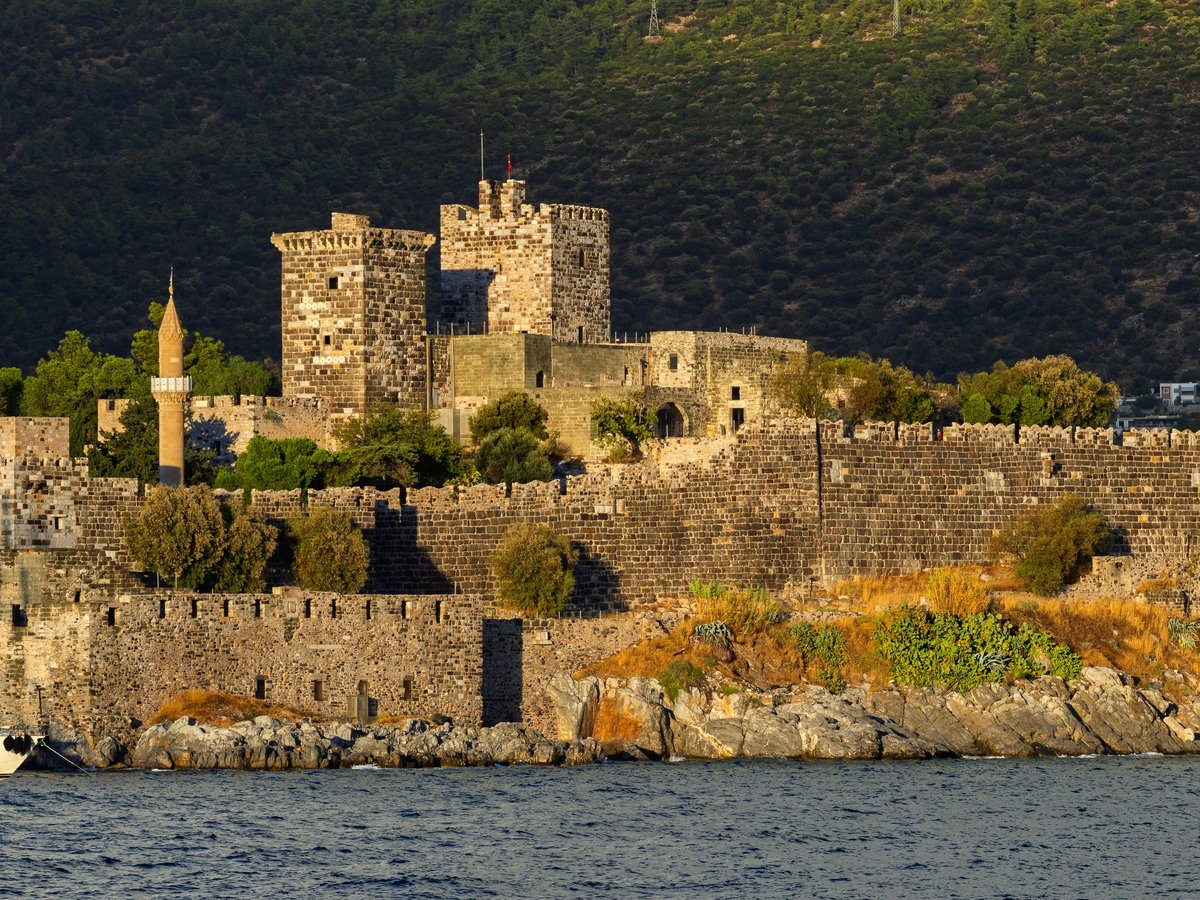
What's the food culture in Bodrum?
Bodrum eats in the Aegean Turkish tradition, centered on olive oil preparations, wild greens, and fish grilled whole over charcoal. Çökertme kebabı, veal over crisp fried potatoes with yogurt, is the local signature. The best seafood sits in Gümuşlük fishing village, 18km from central Bodrum. Aegean meze runs on cold plates before any main course, and local markets supply the herbs that separate the cooking from Istanbul.
Breakfast in Bodrum runs late. Most locals sit down around 9:30 or 10am for a full Turkish kahvaltı spread, not the quick tea-and-simit routine common in Istanbul. Tomatoes, cucumber, beyaz peynir (white cheese), olives from the Milas groves 30km inland, kaymak with honey, and eggs cooked in a small copper sahan pan. Breakfast restaurants along Neyzen Tevfik Caddesi near the marina serve this spread for 250-350 TRY per person. Lunch tends toward a gözleme from one of the yufka stands in the streets behind Bodrum Castle. Dinner is the main event, and it starts around 8:30pm at the earliest. Before 8pm you'll likely be eating alone. Seaside restaurants fill up around 9, and a proper meze-and-fish dinner can stretch past midnight with rakı. Turkish uses Latin script, so sounding out menu items is straightforward, and most Bodrum restaurants post English menus or have staff who can explain the meze options.
Gümuşlük is where you eat fish in the Bodrum peninsula. This former fishing village sits 18km west of central Bodrum, on the site of ancient Myndus. Stone ruins from that city are still visible beneath the shallow water between the shore and Tavşan Adası (Rabbit Island). Tables line the waterfront, 3-4 meters from the Aegean, and the fish arrives whole, grilled over hardwood charcoal. Levrek (sea bass) and çipura (sea bream) run 400-600 TRY per fish depending on weight. Mimoza and Limon are the two restaurants you'll hear most from repeat visitors. To be fair, both have gotten pricier as Gümuşlük gained fame, but the fish still beats anything along the Bodrum marina, where you're paying 30-40% more for the castle view. Go on a Tuesday or Wednesday in summer to avoid the İstanbul weekend crowd. Book through WhatsApp or Instagram DM in July and August. The phone system works, but you'll need Turkish.
The Tuesday market (Salı Pazarı) fills several blocks near the bus station in central Bodrum. Dried oregano sells in kilo bags for 150 TRY, local honey comes from the hills of Muğla province, and strings of dried Urfa peppers hang from the awning poles. The herb vendors sell bundles of wild radika (dandelion greens) and semizotu (purslane) for 20-30 TRY each. These end up in the zeytinyağlı preparations (olive oil cold dishes) that define Aegean cooking. Worth noting, Yalıkavak 20km north has its own Thursday market with more organic produce and local tulum cheese. For gözleme at the Bodrum market, women press spinach-and-cheese or potato filling by hand into thin yufka on a convex saç griddle, 80-100 TRY. The dough goes paper-thin on that hot iron, and you can hear the butter hit the surface from 10 meters away.
Çökertme kebabı is Bodrum's signature dish. A 200-250 gram serving of thin-cut veal arrives over matchstick-fried potatoes, doused in warm yogurt and tomato-pepper sauce. Kocadon in the old town has served it for over 30 years and charges around 350 TRY. Soggy potatoes mean a reheated batch, so head to a lokanta a few streets back from the Bodrum waterfront, where families eat and the frying happens to order. Meze culture in the Aegean runs 8-12 cold plates before any hot course arrives. Atom (finely diced tomato and walnut), deniz börülcesi (samphire dressed in lemon and Milas olive oil), and ahtapot salatası (octopus with red onion) are the three that reveal a kitchen's level. The midye dolma carts appear near Cumhuriyet Caddesi after 10pm, 10-15 TRY per mussel, squeezed with lemon. Turnover from those carts tends to be fast enough from June through September that freshness is rarely an issue.
Signature dishes
-
Çökertme kebabı
Bodrum's signature kebab. Thin veal slices served over crisp fried potato strips with warm yogurt and tomato-pepper sauce. The potato frying is the quality marker. Order it for lunch, when kitchens tend to be less rushed.
-
Zeytinyağlı enginar
Artichoke hearts braised in olive oil with carrot, potato, and lemon, served cold. The Aegean coast grows Turkey's best artichokes. Available March through May at most Bodrum meyhanes.
-
Kabak çiçeği dolması
Zucchini flowers stuffed with herbed rice, sometimes a touch of lamb mince, then lightly fried or steamed. A June-through-August seasonal item that vanishes from market stalls by mid-morning.
-
Ahtapot ızgara
Whole octopus grilled over charcoal, tenderized by the traditional beating method. Dressed in olive oil, lemon, and capers. Gümuşlük fishing village is the best place to eat it.
-
Gözleme
Thin yufka flatbread folded over spinach-cheese or potato filling, pressed on a convex saç griddle. Market women make these to order. The finished product should be paper-thin and lightly blistered.
-
Midye dolma
Mussels stuffed with spiced rice, pine nuts, and currants, served cold with a squeeze of lemon. Bodrum's waterfront vendors sell them from carts after dark, always eaten standing.
-
Keşkek
Wheat berries and slow-cooked lamb pounded into a thick porridge. A traditional celebration and wedding dish in Muğla province. Rarely on restaurant menus, but appears at village festivals in the Bodrum hinterland.
Meal times
Kahvaltı (breakfast) arrives around 10am. Lunch is light, often skipped for a gözleme at 1-2pm. Dinner starts after 8:30pm and can stretch to 1am or later with meze and rakı.
Tipping
Round up or leave 5-10% in cash at sit-down restaurants. Some upscale marina spots add 10-15% servis ücreti (service charge) to the bill. Check before adding more.
Dietary notes
Aegean Turkish cooking is naturally vegetarian-friendly. Zeytinyağlı (olive oil) dishes and meze spreads offer 5-8 meat-free options at most restaurants. All meat is halal by default. Gluten-free is harder. Bread, börek, and gözleme dominate the carb options, and cross-contamination awareness is low outside hotel kitchens.
Go deeper into Bodrum
Last verified by automated review (v1.7.2) on . What is automated review?