What cultural etiquette should I know for Bodrum?
In Bodrum, visitors break the dress rules far more often than the manners. Swimwear is fine on Gümbet and Bitez beaches but not on Cumhuriyet Caddesi or inside Tepecik Mosque. Greet people with "merhaba," say "kolay gelsin" to anyone you see working, leave a 5 to 10 percent cash tip, and accept whatever tea a shopkeeper offers.
The one date that catches first-timers off guard is 10 November. At 09:05 that morning, the minute Atatürk died in 1938, sirens sound across Turkey and Bodrum stops: drivers on Neyzen Tevfik Caddesi pull over and step out of their cars, and waiters at the marina cafes stand still with trays in their hands. Stand still and stay quiet for that minute, even halfway through ordering a simit. On 29 October, Republic Day, red flags hang from almost every balcony in Bodrum town, and locals take that pride seriously, so leave the flags out of jokes and ironic photos. The reverence for the Republic's founder is real, and the law backs it up, as the taboo list below explains.
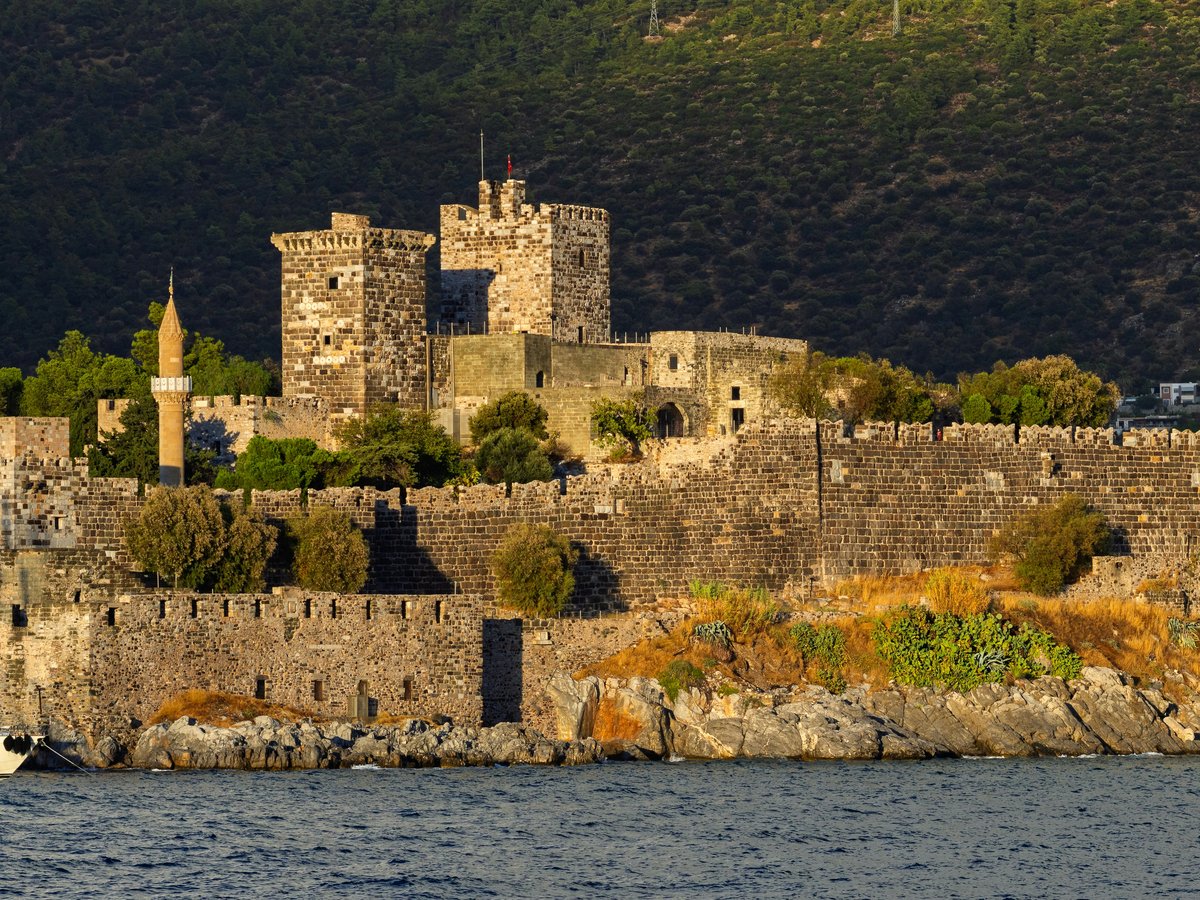
Tea is how business starts in the Bodrum Çarşı lanes behind Bodrum Castle. A carpet or leather seller might offer çay in a tulip glass that is too hot to hold, so hold it by the rim, sip it, and know that accepting it does not commit you to buying anything. A polite "sağ olun" (thanks) and a smile get you out of the shop without offence. Bargaining is expected for carpets, leather and the blue nazar eye charms, where a first offer of about 60 percent of the asking price is normal, but don't haggle over food, pharmacy prices, or the fixed menus along the Bar Street end of Cumhuriyet Caddesi. Shopkeepers there will read it as an insult, not a game.
Bodrum town is relaxed by Turkish standards, but its villages are not. In Etrim, the carpet-weaving village in the hills above Ortakent, and in Mazı, on the quieter north side of the peninsula, cover your shoulders and knees and ask before you photograph women working at looms or in their gardens. Expect Ramadan around 8 February to 9 March 2027: restaurants in Bodrum town and Yalıkavak stay open during the fast, but eating, drinking or smoking in the street in a village before the evening iftar meal is rude. Late-season Bodrum is gentle. Tonight it is a clear 17.8°C, which makes a light layer more useful than a beach cover-up in the castle-side lanes after dark.
At a meyhane, the traditional tavern, around Bodrum's Kale Caddesi, rakı arrives with a jug of water and a bucket of ice, and when you add the water it turns milky white and smells strongly of aniseed. Toast with "şerefe" and touch the rim of your glass lower than an older person's. If a Turkish host invites you to dinner, they will almost certainly try to pay, so offer once, firmly, then let them. Splitting the bill item by item, which Turks call "Alman usulü" (the German way), comes across as cold between friends. Blowing your nose loudly at the table is rude. Step away to the restroom instead.
Cultural norms
Greetings in Bodrum follow broader Turkish convention: a handshake with eye contact is standard between men, while with women you wait for the offered hand rather than initiate. Close acquaintances greet with a kiss on each cheek. "Merhaba" works anywhere, and adding "nasılsınız" signals genuine warmth. Bodrum is one of the most relaxed towns on the Aegean, and swimwear is normal along the marina and at beach bars, but covering shoulders and knees is expected when entering the Bodrum Mosque near the castle. Women should carry a headscarf for mosque visits; one is sometimes lent at the entrance but not always.
On the dolmuş minibuses running between Bodrum centre and peninsula villages, pass your fare forward through other passengers to the driver rather than holding up the queue. In restaurants, ten to fifteen percent is the expected tip, left in cash even when paying by card. At a traditional lokanta where service is not included, leaving only small coins rather than rounding up reads as dissatisfaction. Splitting the bill is uncommon; one person typically pays.
Pointing the sole of your shoe toward someone is a genuine insult, not a relic. Blowing your nose at the dinner table is considered deeply rude; step away. Avoid photographing military sites along the coast without checking signage, as the Turkish military treats this seriously.
Greetings
Say "merhaba" (hello) to anyone, "günaydın" before noon, and "kolay gelsin" (may it go easy) to shopkeepers, fishermen at Bodrum harbour, and anyone else you see working. Men shake hands; friends kiss on both cheeks. A hand on the heart is a polite way to decline, and with older people, let them offer their hand first.
Don't do this
- Insulting Atatürk or the Turkish flag. Under Law 5816 this is a criminal offence, and that includes a joke caught on someone's phone at a Bar Street club.
- Walking shirtless or in a bikini along Cumhuriyet Caddesi, through the Bodrum Çarşı lanes, or into a supermarket away from Gümbet and Bitez beaches.
- Topless sunbathing on public beaches. Turkish beaches do not accept it, even in liberal Bodrum.
- Walking in front of someone who is praying, or entering Tepecik Mosque during Friday midday prayers.
- Eating, drinking or smoking in the street in Etrim or Mazı during Ramadan daylight hours.
- Photographing women in the hill villages without asking first.
- Haggling over restaurant bills, pharmacy prices or fixed-price menus.
- Calling the Greek island of Kos, visible from Bodrum's waterfront, part of "Turkey" or getting into Greek-Turkish politics at the table.
- Pointing the soles of your feet at an older person while sitting on cushions in a village teahouse.
Tipping
Leave 5 to 10 percent in cash at restaurants, even when a servis charge is on the bill, because tips added by card rarely reach the staff. Round taxi fares up to the next 10 lira, give hamam attendants 100 to 200 lira (about $2 to $4), and tip a gulet crew about 5 to 10 percent of the charter price.
Dress code
Swimwear belongs on the beaches at Gümbet, Bitez, and Kumbahçe Bay. Shirtless men on Cumhuriyet Caddesi and in the Bodrum Çarşı shops come across as rude. For Tepecik Mosque, cover your shoulders and knees, and women should also cover their hair. In the villages of Etrim and Mazı, wear long shorts and keep your shoulders covered.
Religious norms
The call to prayer, the ezan, sounds five times a day from Tepecik Mosque above the marina. Take off your shoes at the door, carry them in the plastic bags provided, avoid midday on Fridays, and don't photograph people while they pray. Women can borrow a headscarf at the entrance. During Ramadan, expected around February to March 2027, villages observe the daytime fast far more strictly than Bodrum town does.
Last verified by automated review (v1.7.2) on . What is automated review?