Stay in Bangkok in April
78 hotels in the Trip.com pool for Bangkok, from US$8 a night.
Opens Trip.com on Fri 2 Apr to Sun 4 Apr 2027; change the dates there.
April is the hottest month in Bangkok. Average highs reach 34.2°C (94°F), and 73% humidity makes the afternoon heat feel significantly worse than the thermometer suggests. You step outside in Sukhumvit at noon and the moisture settles on your skin within seconds. Bangkok's residents call this the 'naa rawn' season and stay indoors through most of the afternoon.
Songkran, the Thai New Year festival, is the single reason thousands of travelers willingly brave this heat. For 3 days in mid-April, Bangkok becomes a city-wide water fight. Silom Road and Khao San Road turn into open-air battlegrounds where strangers soak each other with hoses, water guns, and buckets of ice water. The Silom stretch alone tends to draw over 100,000 participants on its peak day. Mind you, Bangkok largely shuts down outside the water zones. Staff at family-run shops and restaurants head home to their provinces, leaving whole stretches of Yaowarat and Ari quieter than you'd expect from a capital of over 10 million.
Outside Songkran week, April feels noticeably quieter than the November-through-February peak. Hotel rates in the Silom and lower Sukhumvit corridors typically drop 30-40% from December highs. You can walk into popular spots near Thonglor BTS without a reservation. The savings are real, but so are the 2-3 shirt changes per day. April's 88mm of rainfall across roughly 13 rainy days arrives in short, fierce afternoon bursts that cool the air briefly before the humidity settles right back.
Why visit in April
- Songkran transforms Bangkok into the largest water fight on earth, an experience travelers plan entire trips around and one of Southeast Asia's most participatory festivals
- Hotel rates outside the Songkran holiday drop well below peak-season prices, with rooms available across budget tiers that would require months-ahead booking in cooler months
- Peak mango season means the best khao niew ma muang (mango sticky rice) of the year, with fruit vendors across the city selling Nam Dok Mai mangoes at their sweetest and cheapest
- Shorter queues at the Grand Palace, Wat Phra Kaew, and other Rattanakosin-area temples compared to the November-February crush
Worth knowing
- The hottest month of the year, with the heat index reaching genuinely dangerous levels during midday hours and minimal natural shade across most temple complexes and outdoor attractions
- Songkran closures shut businesses across entire neighborhoods for 3-5 days, complicating logistics for travelers who need banking, government services, or reliable restaurant access
- Air quality sometimes dips as residual haze from agricultural burning in Thailand's northern provinces drifts south, though Bangkok readings tend to stay moderate rather than reaching the severe levels recorded in Chiang Mai
- Late-April thunderstorms arrive suddenly with strong lightning and can strand you between covered areas if you're mid-route through an open neighborhood
Best for
Think twice if
Bangkok's hottest month delivers relentless daytime heat compounded by moisture-heavy air. Mornings start warm near 27°C (80°F) and climb steadily until early afternoon, when the combination of heat and humidity makes prolonged outdoor activity genuinely uncomfortable. Evenings cool slightly but rarely drop below the mid-20s. Rain arrives in concentrated afternoon downpours, often preceded by dramatic cloud build-ups visible across the skyline from Rattanakosin to Sathorn. Late April sees these bursts increase in frequency as the wet season approaches.
Seasonal caution
- Heat index regularly exceeds 40°C (104°F) between 11am and 3pm. Heatstroke is a real risk for travelers arriving from temperate climates, particularly during outdoor sightseeing at exposed temple complexes with minimal shade. Drink water constantly and seek air conditioning immediately if you feel dizzy, nauseous, or stop sweating.
- Short but intense thunderstorms develop rapidly in late April with strong lightning. They rarely last more than 40 minutes but can catch you without shelter. After 2pm, stay aware of darkening skies and keep within reach of covered areas.
Year-round climate
Averages from the last 5 years.
| Month | Avg high (°C) | Avg low (°C) | Rainfall (mm) |
|---|---|---|---|
| Jan | 32 | 22 | 12 |
| Feb | 33 | 24 | 54 |
| Mar | 34 | 26 | 59 |
| Apr | 34 | 27 | 88 |
| May | 33 | 26 | 199 |
| Jun | 33 | 26 | 163 |
| Jul | 31 | 26 | 255 |
| Aug | 32 | 25 | 222 |
| Sep | 31 | 25 | 339 |
| Oct | 31 | 24 | 233 |
| Nov | 31 | 24 | 108 |
| Dec | 32 | 23 | 14 |
Holidays and festivals in April
Public holidays
- Chakri Memorial Day(วันจักรี)6 April 2027
- Songkran Festival(วันสงกรานต์)13 to 15 April 2027
Headline events
Songkran (Thai New Year)
April 13-15 (celebrations in Bangkok often begin April 12 and extend to April 16)
Thailand's New Year festival and the largest water festival in the world. Bangkok's main celebration zones transform as foam machines, water cannons, and pickup trucks loaded with barrels line the streets. Thai pop music blasts from competing sound stages along the major corridors. The traditional side runs parallel. Families pour scented water over elders' hands in the 'rot nam dam hua' blessing, and temples host sand chedi building ceremonies. The water play typically runs from noon until around 10pm, with peak intensity between 3pm and 7pm.
Best things to do in April
Songkran Water Fights on Silom Road
festivalJoin the most participatory street festival on earth. The road closes to traffic and fills with revelers armed with every conceivable water delivery device, from toy pistols to industrial-grade pump guns. Sound stages blast Thai pop and EDM from both ends. You will be soaked within 30 seconds of entering the zone.
Songkran happens only once a year, in mid-April. This is a 3-day window that cannot be experienced at any other time.Booking tipNo ticket needed, but book a hotel within walking distance by February at the latest. Properties near the celebration zones sell out months ahead.
Dawn Visit to Wat Arun
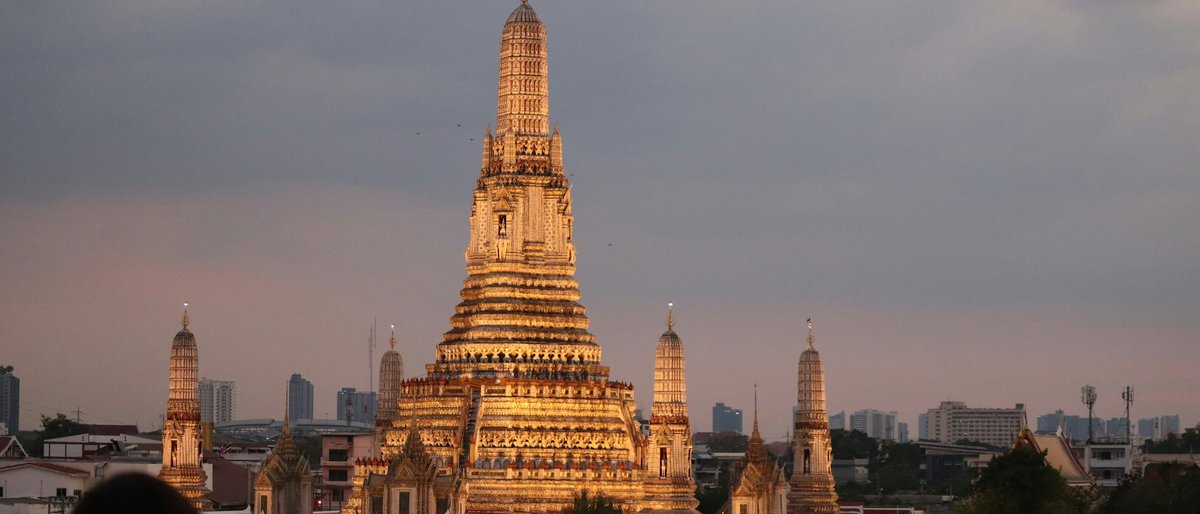
sightseeingThe Temple of Dawn, founded in 1656, is striking at any hour but particularly so in the soft light before 7am. The Khmer-style prang catches the early morning sun, and its ceramic-tiled surface glows with warm tones above the Chao Phraya River. Few visitors show up this early, and the temperature sits near the day's low.
April's extreme afternoon heat makes early morning the only comfortable window for outdoor temple visits at exposed complexes.Booking tipWat Arun opens at 8am, but the exterior views from the Tha Tien pier side are best at first light. Take the cross-river ferry for 4 THB.
Evening Food Tour Through Yaowarat (Chinatown)
foodBangkok's Chinatown comes alive after dark, when the pavement-level heat finally eases. Street vendors along Yaowarat Road fire up woks for pad thai, char-grilled satay, and bowls of ba mee egg noodles. The charcoal smoke and sizzle of oyster omelets hitting hot pans carry across the crowded lane.
Temperatures drop to the upper 20s after sunset, making evening street food the most comfortable outdoor dining option in April.Booking tipSelf-guided works well. Start at the Hua Lamphong end of Yaowarat Road around 6pm and walk northwest.
Rooftop Drinks Above the Skyline
nightlifeBangkok's rooftop bar scene offers genuine relief from street-level heat, with breezes that rarely reach the ground. Sunset views stretch across the Chao Phraya and the high-rises of Sathorn from perches 30-60 floors up. Cocktails typically run 350-500 THB.
Above the 30th floor, wind speeds pick up and the temperature can feel 3-5°C cooler than street level. April evenings are the best part of the day.Booking tipArrive before 6pm on weekdays to skip the wait. Weekend reservations at popular spots should be made 2-3 days ahead.
Songkran Merit-Making at Sanam Luang
cultureWhile tourists focus on the water fights, the spiritual heart of Songkran plays out at temples across Bangkok. Sanam Luang, the royal ceremonial ground near the Grand Palace, hosts traditional sand chedi building and water-pouring rituals. Monks receive offerings of new robes. The incense smoke and chanting offer a quieter counterpoint to the chaos elsewhere in the city.
The blessing ceremonies and temple sand-building rituals happen only during the Songkran period each year.Thai Cooking Class
foodAn air-conditioned cooking school is one of the most practical ways to spend a scorching April afternoon in Bangkok. Most classes run 3-4 hours and include a morning market visit when the air is cooler, followed by hands-on preparation of 4-5 dishes. You leave with practical skills and a full stomach.
April's midday heat makes indoor activities the smart choice between late morning and mid-afternoon. A cooking class fills those peak-heat hours productively.Booking tipBook at least 3 days ahead. Classes near the old city tend to fill up during Songkran week.
Chatuchak Weekend Market at Opening Time
shoppingThe largest market in Thailand sprawls across 27 acres with over 15,000 stalls selling everything from vintage clothing to handmade ceramics. By 10am, the narrow covered lanes trap heat and become sweltering. Arrive when sections start opening between 7am and 8am on Saturday or Sunday, when the air is still tolerable and vendors are setting up.
The difference between a 7am and noon visit to Chatuchak in April is the difference between comfortable browsing and heat exhaustion. Early timing matters more this month than any other.Booking tipTake the BTS to Mo Chit station. Bring cash, a refillable water bottle, and a bag for purchases. Most vendors don't accept cards.
Evening Chao Phraya River Cruise
sightseeingA river trip after sunset catches breezes off the water that Bangkok's canyon-like streets never get. Wat Arun's illuminated spire and the Grand Palace walls glow against the dark sky as the boat passes. Public ferries cost 15-30 THB per ride, while dinner cruises run 1,200-2,500 THB per person.
The river corridor feels noticeably cooler than inland Bangkok on April evenings, making it one of the few naturally comfortable outdoor experiences this month.Booking tipFor the budget version, take the Chao Phraya Express Boat from Sathorn Pier around 6:30pm and ride north to Phra Arthit Pier.
What to eat in April
In season: fruit
Nam Dok Mai Mango
Thailand's prized dessert mango reaches peak ripeness in April. The flesh is buttery, almost custard-like, with a floral aroma that fills the bag before you open it. Sold at fruit stalls for roughly 40-60 THB per kilogram.
Durian
Eastern Thailand's durian harvest begins arriving in Bangkok markets by mid-April. The Mon Thong variety dominates, with thick, creamy flesh and the polarizing smell that gets it banned from hotels and the BTS. Early-season prices start around 150-200 THB per kilogram.
Lychee
Northern Thai lychee from Chiang Mai province reaches Bangkok's wholesale markets by early April. Smaller and sweeter than the Chinese variety found in Western supermarkets, with a floral fragrance you can smell before peeling the shell. Priced around 80-120 THB per kilogram at street stalls.
On menus now
Khao Chae
A traditional Thai summer dish of jasmine-scented chilled rice served with intricate side dishes including stuffed peppers, shrimp paste balls, and sweetened shredded pork. This palace-origin recipe appears on Bangkok restaurant menus only during March through May. Most spots in the Bang Rak area serve it for 250-400 THB.
Street food peaks
Khao Niew Ma Muang (Mango Sticky Rice)
The iconic street dessert hits its best form when the mango harvest peaks. Warm coconut-cream sticky rice carries a nutty, slightly salty sweetness under cold mango slices. Street stall prices drop to roughly 60-80 THB per serving during the April glut.
What to drink
Nam Krajiab (Roselle Juice)
Deep red roselle-flower drink served ice-cold from nearly every street drink cart in Bangkok. The tartness cuts through the humidity, and at 15-25 THB per cup it might be the best-value refreshment in the city during the hot season.
Regular events in April
Chakri Memorial DayFree
National holiday commemorating the founding of the Chakri Dynasty by King Rama I. A wreath-laying ceremony typically takes place at the King Rama I Monument near the Memorial Bridge. Government offices and banks close for the day.
April 6National Thai Heritage Conservation DayFree
Celebrates the birthday of Princess Maha Chakri Sirindhorn, who championed heritage preservation. Museums and cultural sites across Bangkok often offer free or reduced admission, including the Bangkok National Museum in Rattanakosin.
April 2Best places this April
Lumphini Park
parkBangkok's central green space covers 142 acres and becomes an early-morning refuge in April. Monitor lizards sun themselves along the lake edges while joggers circle the paths. The air under the tree canopy feels noticeably cooler than the surrounding streets. Best visited between 5am and 7am, when you'll share the space with runners, tai chi practitioners, and families.
SilomWat Phra Kaew and the Grand Palace Complex
templeThailand's most sacred temple, within the Grand Palace compound built in 1782, houses the Emerald Buddha. April's thinner tourist crowds mean shorter entry queues than the cool-season peak. The strict dress code is enforced at the gate. Go at the 8:30am opening to stay ahead of the heat.
RattanakosinKhao San Road
streetOriginally laid out in 1892, Bangkok's famous backpacker strip becomes the epicenter of tourist-facing Songkran celebrations. During the festival, the entire road and surrounding sois fill with water warriors, sound systems, and grilled-meat vendors. Outside Songkran, April brings quieter-than-usual foot traffic and walk-in guesthouse rates.
BanglamphuBangkok National Museum
museumFounded in 1874 and housed in the former Wang Na Palace, this is Southeast Asia's largest museum. Its air-conditioned galleries make it an ideal midday refuge from April's heat. The Thai History Gallery and Royal Funeral Chariot Hall contain artifacts spanning the Sukhothai through Rattanakosin periods.
RattanakosinDusit Palace
historic siteThe European-inspired royal compound, established in 1899, includes the Ananta Samakhom Throne Hall with its Italian Renaissance dome. The surrounding tree-lined boulevards provide marginally more shade than downtown Bangkok. Check opening schedules before visiting, as access is sometimes restricted during royal events.
DusitYaowarat Road (Chinatown)
neighborhoodBangkok's Chinatown stretches along Yaowarat Road with its distinctive Chinese-Thai shophouses and neon signage. After dark in April, the street transforms into an open-air food court where evening temperatures make outdoor eating tolerable. The gold shops, Chinese shrines, and narrow sois packed with market stalls give this area a density distinct from anywhere else in the city.
Samphanthawong
Your packing checklist
Tick items off as you pack. Your progress saves in this browser.
All packed — have a great trip.
Insider tips
BTS Skytrain and MRT stations are fully air-conditioned and free to enter without a ticket at most stations. Locals use them as cooling shelters during the midday heat. You can spend 10-15 minutes recovering before heading back outside.
During Songkran, waterproof your valuables before leaving the hotel, not at the edge of the celebration zone. Roaming water trucks patrol residential sois, and you can get drenched 500 meters from any official celebration area.
Bangkok's solo-traveler safety score sits at 7/10 (see the TTDI Solo-Safety Index). The main risk in April is heat-related illness, not crime. Carry your hotel's address card printed in Thai script for taxis, since many drivers don't read Roman letters.
Mango sellers at Talat Khlong Toei, the wholesale market near the port, sell Nam Dok Mai mangoes at roughly half the price of tourist-facing fruit stalls along Sukhumvit. Go before 8am for the best selection.
Avoid these mistakes
- Scheduling a midday walking tour of the Grand Palace complex. The open grounds have minimal shade, and April's heat can cause heat exhaustion within 30-40 minutes of direct exposure. Arrive at the 8:30am opening and plan to finish by 10:30am.
- Assuming the Songkran water fights are avoidable during mid-April. Even taking a taxi across town means opening a window at a red light and getting blasted by a passing group. The water finds you whether or not you're participating.
- Drinking beer instead of water during the Songkran celebrations. The combination of direct sun, constant physical activity, dehydration from being repeatedly drenched, and alcohol leads to heat exhaustion faster than most visitors expect. Stick to water and electrolytes until after sunset.
- Booking domestic flights for the peak Songkran travel days without schedule flexibility. Suvarnabhumi and Don Mueang airports handle massive passenger volumes as Bangkok residents return to home provinces. Delays of 2-4 hours are common.
Practical tips for April
Chakri Memorial Day on April 6 closes banks and government offices citywide. The Songkran holiday period shuts most non-tourist businesses for 3-5 days starting around April 12, with banks and post offices among the first to close and last to reopen. ATMs operate throughout, but some mall exchange booths keep shorter hours during both holidays. BTS and MRT services may shift to reduced evening schedules during festival week. Book accommodation at least 2 months ahead if staying near the main celebration zones. Many laundry services and neighborhood shops close for the entire holiday stretch. Quick-dry synthetic fabrics vastly outperform cotton in April's constant moisture. Download the Grab app before arriving for reliable transport pricing, since some taxi drivers refuse to run meters during festival periods. Travel insurance with medical coverage is worth carrying, as heat-related hospital visits by tourists are not uncommon in April and private hospitals in Bangkok can charge 3,000-10,000 THB for an ER consultation.
FAQ
Is April a good time to visit Bangkok?
April is a fair month for Bangkok, not ideal. It's the hottest time of year, with afternoon heat intense enough to make extended outdoor sightseeing uncomfortable. The major exception is Songkran, the Thai New Year water festival in mid-April, which transforms the city into an experience worth traveling specifically for. If Songkran is your draw, April is well worth it. For general sightseeing and temple visits, the cooler months from November through February offer far more comfortable conditions.
What is the weather like in Bangkok in April?
Hot and humid with occasional afternoon rain. Bangkok's April temperatures are the highest of any month, with mornings that start warm and afternoons that become oppressive. Humidity hovers in the low 70s throughout. Rainfall comes in short, intense afternoon bursts rather than all-day drizzle, clearing relatively quickly before the moisture builds back. Late April tends to see more frequent showers as the wet season approaches. Nights stay warm enough that air conditioning is essential for sleep.
Is Bangkok crowded in April?
International tourist crowds thin considerably compared to the cool-season peak from November through February. Hotel availability improves and popular attractions have shorter queues. The significant exception is Songkran week, when domestic tourism increases sharply as Thai families travel and celebrate. The main celebration streets become densely packed during those days. Outside that window, April is one of the quieter months for visiting Bangkok.
What should I wear in Bangkok in April?
Light, loose-fitting clothing in breathable fabrics works best. Linen and moisture-wicking synthetics dry faster than cotton, which stays damp in the humidity. You'll need at least one outfit with covered shoulders and knees for temple visits. During Songkran, wear clothes you don't mind getting soaked and leave electronics in a waterproof bag. Sandals or quick-dry shoes are more practical than sneakers, which stay wet for hours if caught in rain or water fights.
How many days do you need for Bangkok in April?
For a Songkran-focused trip, 4-5 days covers the festival period plus recovery time and a couple of early-morning temple visits. For general Bangkok sightseeing in April's heat, 3-4 days is enough for the major sites, since you'll want to limit outdoor time to mornings and evenings. To combine Bangkok with Chiang Mai for a different Songkran atmosphere, budget 7-8 days across both cities.
Things to Do in Bangkok in April

Bangkok Private Highlights Tour with Local Guide
City tour: 8 hours.
via Viator Free cancellation
 Half-Day Floating Market and Railway Market Tour from Bangkok
Day trip: free cancellation.
via Viator Free cancellation
 Bangkok: Floating Market and Train Market Experience
Day trip: 8.5 hours, free cancellation.
via Viator Free cancellation
 Experience Real Bangkok by Bike
City tour: 3 hours, free cancellation.
via Viator Free cancellation
 Hidden Bangkok Longtail Boat Tour to Big Buddha&Canal Life 2hrs
Cruise: 2 hours, free cancellation.
via Viator Free cancellation
 UNESCO's Ayutthaya Historical Park: Full-Day Tour from Bangkok
Day trip: 11.5 hours, free cancellation.
via ViatorFind a flight to Bangkok
Live fares to Bangkok appear here once cookies are accepted.
Last verified by automated review (v1.7.2) on . What is automated review?