When's the best time to visit Bangkok in 2026?
Go between November and February: daytime highs sit near 31°C, rain falls on few days, and the Rattanakosin Island temple circuit is walkable before noon. December and January are the driest and busiest months, and hotel rates reach their yearly high around New Year. Avoid April's 35°C heat and September, Bangkok's wettest month.
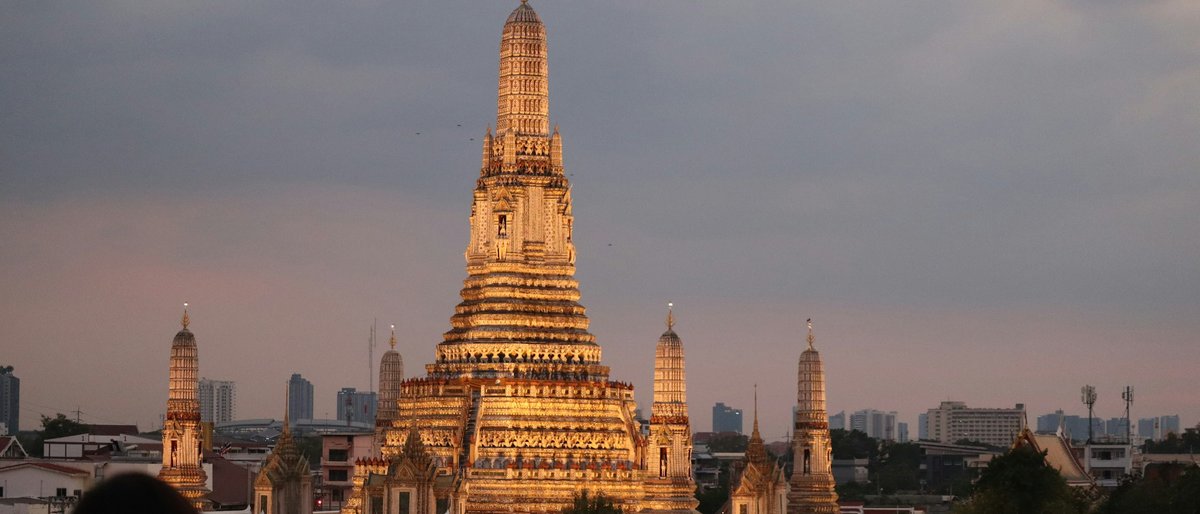
Book November through February, and if your dates are flexible, aim for the last week of November through mid-December: by then the monsoon has drained off, and the Christmas-to-New-Year price peak on Sukhumvit and along the Chao Phraya riverfront has not started yet. December mornings drop to around 21 to 23°C, and that matters more than it sounds. The Grand Palace and Wat Phra Kaew require covered shoulders and knees, and in long trousers at 11am in April, those stone courtyards radiate heat like a griddle, while in December the same walk is comfortable. Loy Krathong also falls on a November full moon, and that night the river below Wat Arun and around Asiatique fills with candlelit banana-leaf floats, the smell of incense and melted wax hanging over the piers.
The cool season has three costs, and each one has a fix. Crowds at Wat Pho build from 10am when the tour groups arrive, so get there for the 8am opening and see the Reclining Buddha in near-quiet. Rates for the nights around 31 December climb sharply, so first-timers should book a Silom or riverside room by September. The third cost gets less attention: Bangkok's PM2.5 readings tend to rise from January into February, when crop burning and still air leave a grey, faintly smoky haze over the skyline, and anyone with asthma should check the morning AQI before booking a rooftop bar on Sathorn Road for that evening.
March is hot but manageable. April is the month we'd tell first-timers to skip: afternoon highs reach around 35°C, nights rarely fall below 27°C, and by noon the tin-roofed lanes of Chatuchak Weekend Market feel like an oven that smells of diesel and grilled pork. The exception is Songkran, the Thai New Year water festival on 13 to 15 April, when for three days Khaosan Road and Silom Road become one long water fight. That is great fun if you came for it and miserable if you planned temple visits, because you will be soaked on every street in Rattanakosin. Keep your phone in a sealed dry bag for all three days.
From June to October, the rain sets the schedule, with storms that usually roll in mid-afternoon carrying a crack of thunder and the smell of wet asphalt, pour warm rain for an hour, and clear by evening. That makes June to August workable for budget travelers who plan indoor afternoons at the Bangkok National Museum or the malls along Rama I Road. September is the wettest month, averaging over 300 mm, and the low streets around Sukhumvit Soi 11 and Ratchadaphisek can flood ankle-deep within 20 minutes. October is still wet: at midnight on 16 October it was 25.4°C, with 98% humidity, a feels-like temperature of 31.6°C, and an overcast sky.
Month-by-month outlook
- Jan Ideal
- Feb Ideal
- Mar Shoulder
- Apr Avoid
- May Avoid
- Jun Shoulder
- Jul Shoulder
- Aug Shoulder
- Sep Avoid
- Oct Shoulder
- Nov Ideal
- Dec Ideal
Year-round climate
Averages from the last 5 years.
| Month | Avg high (°C) | Avg low (°C) | Rainfall (mm) |
|---|---|---|---|
| Jan | 32 | 22 | 12 |
| Feb | 33 | 24 | 54 |
| Mar | 34 | 26 | 59 |
| Apr | 34 | 27 | 88 |
| May | 33 | 26 | 199 |
| Jun | 33 | 26 | 163 |
| Jul | 31 | 26 | 255 |
| Aug | 32 | 25 | 222 |
| Sep | 31 | 25 | 339 |
| Oct | 31 | 24 | 233 |
| Nov | 31 | 24 | 108 |
| Dec | 32 | 23 | 14 |
November to February brings highs near 31°C, December lows of 21 to 23°C, and little rain. April highs reach about 35°C. The monsoon runs June to October, and September is wettest at over 300 mm.
Go deeper into Bangkok
Last verified by automated review (v1.7.2) on . What is automated review?