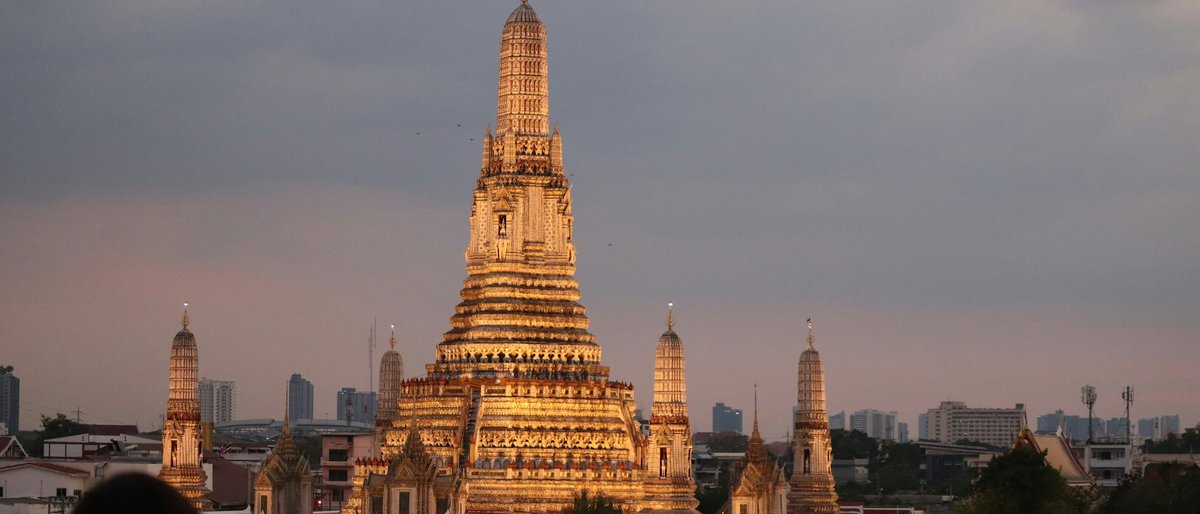
Bangkok isn't the first city that comes to mind when you think about outdoor adventures, and that's fair. It's flat, it's hot, and the traffic can feel like its own endurance sport. But spend some time here and you start to notice things. The Chao Phraya River cuts through the city with a working energy that's nothing like a postcard river: ferries, longtail boats, barges hauling rice. Green spaces pop up between the concrete in surprising ways. Lumpini Park at dawn is full of tai chi practitioners, monitor lizards the size of your leg, and joggers sweating through the humidity before the city fully wakes up. The canal networks (the khlongs) still thread through older neighborhoods where life happens on the water. And within a couple hours' drive, you're into proper jungle, limestone karst, and national parks that feel a world away from Sukhumvit Road. The catch, of course, is the heat. November through February is your window for comfortable outdoor time. The rest of the year, you're managing the sun and the monsoon rains, which tends to mean early mornings or late afternoons. But if you work with the climate instead of against it, Bangkok and its surroundings have more outdoor character than most people give them credit for.
Outdoor activities
-
Cycling the Bang Krachao Green Lung
Bang Krachao sits in a bend of the Chao Phraya just south of central Bangkok: technically Samut Prakan province, but it feels like someone dropped a chunk of countryside into the city. You cross by ferry from Klong Toei pier and rent a bike on the other side for around 50-80 baht. The network of raised concrete paths winds through mangroves, fruit orchards, and small communities. It's flat, shaded in parts, and pleasant. The Sri Nakhon Khuean Khan Park anchors the area with a decent botanical garden. Plan two to four hours to loop the main paths without rushing. You'll pass vendors selling coconut ice cream and som tam along the way. Weekend mornings get busy with Bangkok cyclists, so a weekday visit tends to be quieter.
- Difficulty
- Easy: flat terrain, paved paths
- Duration
- 2-4 hours
- Best season
- November to February for cooler temperatures, though it's rideable year-round if you start early
-
Rock Climbing at Khao Chin Lae (Lopburi Province)
About two and a half hours north of Bangkok, Khao Chin Lae is a limestone crag that's been drawing Thai climbers for years. The routes are mostly bolted sport climbs ranging from 5.8 to 5.12, with around 40+ routes on several walls. The rock is solid limestone with good features: pockets, crimps, the occasional tufa. It's not Railay, but it's the closest real climbing to Bangkok without getting on a plane. The local climbing community is welcoming, and you can usually find partners through Bangkok climbing gyms or online groups. Bring your own gear or arrange rentals through a climbing gym in the city beforehand. The approach walk is short: maybe 15 minutes from the road.
- Difficulty
- Moderate to advanced depending on route: beginners should go with experienced climbers
- Duration
- Full day including travel
- Best season
- November to February: cooler and drier rock conditions
-
Running in Benjakitti Park and Forest Park
The expanded Benjakitti Forest Park, connected to the older Benjakitti Park near Queen Sirikit convention center, gives runners a surprisingly long loop through wetlands, elevated boardwalks, and landscaped green space. The combined distance is roughly 3-4 kilometers per loop, and you can stack laps. The boardwalk sections through the constructed wetland feel almost rural: herons fishing, dragonflies everywhere, the sound of frogs in the evening. It's become one of the more popular running spots for expats and locals in the Sukhumvit area. The surface is mostly paved or rubberized track. Early morning or after 5 PM to dodge the worst of the heat.
- Difficulty
- Easy: flat, paved, well-maintained
- Duration
- 30 minutes to 2 hours depending on distance
- Best season
- Year-round, but November to February is most comfortable
-
Muay Thai Training at Open-Air Camps
This might not be your typical 'outdoor activity,' but training Muay Thai at one of Bangkok's open-air camps is as physical as anything on this list and connected to the city's character. Camps like Sor Vorapin near Khao San or various spots along the Chao Phraya still train in partially open-air facilities where the heat becomes part of the conditioning. Drop-in sessions typically run 200-600 baht. You'll do pad work, bag work, clinching, and enough skipping rope to remind you that your cardio isn't as good as you thought. The smell of liniment oil and the rhythmic thwack of shins on pads: that's Bangkok.
- Difficulty
- Moderate to hard: scalable to fitness level, but the heat adds a serious factor
- Duration
- 1.5-2 hour sessions, usually morning and afternoon
- Best season
- Year-round, though the cool season is noticeably more bearable for intense training
-
Night Cycling Tours Through Old Bangkok
Several operators run night cycling tours through the older parts of Bangkok: Chinatown, the flower market at Pak Khlong Talat, the lanes around the Grand Palace area. Riding at night solves two problems at once: the temperature drops to something manageable, and the traffic thins out enough to make cycling feel safe rather than suicidal. You'll roll through narrow soi where street food vendors are firing up woks, past temples lit golden against the dark, and along quiet stretches of the river. Most tours cover about 20-25 kilometers at a gentle pace. It's a different city after dark: slower, more fragrant, slightly mysterious.
- Difficulty
- Easy: flat roads, moderate pace, guides handle navigation
- Duration
- 3-4 hours, typically starting around 7 or 8 PM
- Best season
- Year-round, though rainy season (June to October) means you might get caught in a downpour
-
Wakeboarding at Thai Wake Park (Lumlukka)
About 45 minutes north of central Bangkok in Pathum Thani, Thai Wake Park runs cable-tow wakeboarding on a purpose-built lake. It's a proper setup: full-size cable system, kickers, rails, and a sliders for more advanced riders. Beginners can rent gear and get a quick lesson. The water is warm, the falls don't hurt much, and there's a chill vibe with food stalls and seating around the lake. Expect to pay around 500-700 baht for a couple of hours. It's popular with younger Thai riders on weekends. The setting isn't glamorous (think industrial Pathum Thani) but the riding is legit.
- Difficulty
- Beginner-friendly with cable tow, though tricks require practice
- Duration
- 2-4 hours
- Best season
- Year-round: it's a controlled lake, so rain doesn't matter much
Day hikes
-
Khao Yai National Park Trails
Khao Yai is the closest serious national park to Bangkok: about three hours northeast by car. It's a UNESCO World Heritage Site and one of the best-preserved monsoon forests in mainland Southeast Asia. Several day-hike trails start from the visitor center area. The Haew Narok waterfall trail and Haew Suwat waterfall trail are the most popular, both through dense forest with a real chance of seeing gibbons, hornbills, and macaques. The trails are well-marked but can be slippery in wet season. Wild elephants are present in the park: rangers will advise on recent sightings and which trails to avoid. A guide is required for some trails and strongly recommended for others. Park entry is currently 400 baht for foreigners.
- Difficulty
- Easy to moderate depending on trail: the waterfall trails involve some elevation change and uneven footing
- Duration
- Full day including 3-hour drive each way; individual trails range from 1-4 hours
- Best season
- November to February for dry trails and cooler temperatures; June to October has fuller waterfalls but muddier paths
-
Erawan National Park (Kanchanaburi)
About three hours west of Bangkok, Erawan's seven-tiered waterfall is the draw here. The trail follows the cascade upward through each level, and the lower tiers have pools where you can swim: the water is a milky turquoise-green from dissolved limestone. Small fish nibble at your feet in the pools, which is either charming or ticklish depending on your disposition. The trail to the upper tiers gets progressively steeper and rougher, with some scrambling over wet rocks required for levels five through seven. The top tier is beautiful and far less crowded than the bottom. Bring water shoes with decent grip. The park limits visitors and can close upper trails in wet season.
- Difficulty
- Easy for lower tiers (1-3), moderate for middle (4-5), moderately strenuous for upper tiers (6-7) with some rock scrambling
- Duration
- Full day: 3 hours driving each way, 3-4 hours for the full trail with swimming stops
- Best season
- November to May for best trail conditions; the falls are most dramatic in late rainy season (September-October) but upper trails may close
-
Kaeng Krachan National Park
Thailand's largest national park lies about three hours southwest of Bangkok in Phetchaburi province. It's wilder and less visited than Khao Yai, with denser forest and more challenging terrain. The road up to the Panoen Thung viewpoint is a common day-trip target: you drive partway and then hike the final stretch to a summit that overlooks a sea of fog in the early morning during cool season. The main forest trails require a ranger guide and are best arranged through the park office in advance. Birders come here specifically: the park has recorded over 400 species. The leeches during rainy season are legendary, so plan accordingly.
- Difficulty
- Moderate to strenuous: trails are less developed than Khao Yai, terrain is hilly
- Duration
- Full day minimum: most visitors stay overnight at park lodges or nearby guesthouses
- Best season
- November to February for the fog viewpoint and comfortable hiking; avoid late monsoon season when roads may flood
-
Namtok Phlio National Park (Chanthaburi)
A longer day trip or easy overnight: roughly three and a half hours southeast of Bangkok. The main waterfall trail is short and well-maintained, winding through lowland tropical forest along a stream. The pool at the base of Phlio Waterfall is full of huge carp that are considered sacred and can't be fished, so they've grown bold and enormous. The surrounding forest has troops of dusky langurs and some striking bird species. It's a less intense outing than Khao Yai or Kaeng Krachan: more of a forest soak than a serious hike. Combine it with a visit to Chanthaburi's gem market and cathedral town for a fuller day trip.
- Difficulty
- Easy: short, shaded, well-maintained paths along the stream
- Duration
- Full day with driving; the hike itself is 1-2 hours
- Best season
- Year-round, though the waterfall is most impressive during and just after rainy season
Water activities
-
Kayaking the Bangkok Canals (Khlongs)
Several outfits run guided kayak trips through Bangkok's canal networks, on the Thonburi side of the Chao Phraya. Paddling through the khlongs is a strange and compelling experience: you're gliding past wooden houses on stilts, small temples, orchid farms, and the occasional monitor lizard sunning on a concrete bank, all while skyscrapers loom in the background. The water quality varies, to be honest. Some stretches are cleaner than others, and the smell after heavy rain can be pungent. But the intimacy of seeing Bangkok from water level, at paddling speed, is something you don't get any other way. Most guided trips run 2-3 hours and provide all equipment.
- Difficulty
- Easy: calm water, no rapids, suitable for beginners
- Duration
- 2-3 hours for guided trips
- Best season
- November to February for the most pleasant conditions; rainy season means higher water levels which can make paddling easier but the downpours are intense
-
Longtail Boat Trip Through Khlong Lat Mayom Floating Market Area
Not paddling yourself, but being on the water counts. Hiring a longtail boat at Khlong Lat Mayom on the western outskirts of Bangkok gets you into a network of canals lined with fruit orchards: pomelo, mango, coconut palms bending over the water. The floating market itself operates on weekends, but the canal network is there every day. The boats are loud (the characteristic roar of a repurposed car engine on a long propeller shaft) and the drivers navigate at surprising speed through narrow waterways. You'll see kingfishers, water monitors, and the occasional snake. The spray on a hot day feels good.
- Difficulty
- Easy: you're a passenger, no skill required
- Duration
- 1-2 hours for a canal loop
- Best season
- Year-round; weekends for the floating market activity
-
Swimming and Beach Day at Koh Si Chang
Koh Si Chang sits in the upper Gulf of Thailand, reachable by minivan to Si Racha (about 1.5-2 hours from Bangkok) and then a 40-minute ferry. It's not a tropical postcard island: the water is greenish rather than turquoise, and the beaches are small. But Tham Phang Beach has calm, swimmable water, and the island has a relaxed, un-touristy feel that's hard to find this close to the capital. You can rent a motorbike and explore the old royal palace ruins, a hilltop temple with gulf views, and a Chinese shrine built into a cave. The seafood restaurants along the waterfront serve crab and shrimp that came off the boats that morning.
- Difficulty
- Easy: beach swimming, gentle water
- Duration
- Full day trip or overnight
- Best season
- November to April for calmest seas and clearest water
-
Stand-Up Paddleboarding on the Chao Phraya
A few operators now offer SUP sessions on calmer stretches of the Chao Phraya, typically in the early morning before river traffic picks up. It takes some nerve: the current is real, and cargo barges don't stop for paddleboarders. But on the right stretch, usually near Bang Krachao or in side channels off the main river, it's a surreal way to see the city. You're standing at eye level with temple spires, warehouse walls, and riverside communities going about their morning routines. The water isn't clean enough that you'd want to fall in by choice, but it happens. Bring a dry bag for your phone.
- Difficulty
- Moderate: requires basic SUP balance and comfort with river current
- Duration
- 1.5-2 hours
- Best season
- November to February for calmer water and cooler mornings
-
Rafting on the River Kwai (Kanchanaburi)
Kanchanaburi province, about three hours west of Bangkok, offers rafting on stretches of the Kwai Noi and Kwai Yai rivers. The rapids are mostly Class I-II: this isn't whitewater adrenaline territory, but rather a pleasant float through forested limestone scenery with occasional splashy sections. Several operators run day trips from Bangkok that combine rafting with a visit to the Bridge over the River Kwai and maybe Erawan Falls. The river water is cleaner than anything in Bangkok proper, and the temperature is refreshing. Rainy season means higher water levels and slightly more energetic rapids.
- Difficulty
- Easy to moderate: Class I-II rapids, no experience needed
- Duration
- Full day from Bangkok including transport; 1-2 hours on the water
- Best season
- June to November for higher water and better rapids; dry season is gentler and more scenic
Parks & gardens
-
Lumpini Park
FreeBangkok's oldest and most well-known public park sits between Silom and the Ratchadamri area. At 57 hectares, it's big enough to feel like a genuine escape. The mornings are the best time: by 5:30 AM, the paths are full of joggers, aerobics groups with boomboxes, and elderly couples walking laps around the lake. The monitor lizards are the park's unofficial mascots, some of them a solid meter and a half long, lumbering between the trees or swimming in the lake with surprising grace. Pedal boats are available on the lake. There's a small outdoor gym area. On Sundays, it can feel like the whole neighborhood has turned out.
Highlights: Dawn joggers and tai chi groups, enormous monitor lizards basking by the lake, pedal boat rentals, mature rain trees providing deep shade
-
Benjakitti Forest Park
FreeThe newer extension of Benjakitti Park opened in 2022 and it's well-designed: the landscape architecture firm did good work here. Elevated boardwalks wind through constructed wetlands where reeds and aquatic plants have already started to take over in a way that feels organic rather than manicured. The canopy walk gives you a treetop perspective that's unusual for Bangkok. Connected to the older Benjakitti Park with its lake and running track, the combined green space stretches from Queen Sirikit MRT to practically Sukhumvit. The wetland sections attract a surprising number of bird species for a park surrounded by skyscrapers.
Highlights: Elevated canopy walkway through the wetlands, bird-watching in the constructed marshes, connected running path to the older Benjakitti lakeside park
-
Rot Fai Park (Wachirabenchathat Park)
FreeOut in the Chatuchak area, Rot Fai Park tends to feel less touristy than Lumpini. It's popular with Thai families, on weekends when people set up picnics and kids run around the open lawns. The park has a decent-sized lake, a butterfly garden, and paths that wind through sections of mature trees. There's a cycling lane that connects through to the adjacent Queen Sirikit Park and Chatuchak Park, giving you a combined green corridor that's one of the longer car-free stretches in Bangkok. The atmosphere leans more local: you'll hear Thai pop music from portable speakers and smell charcoal grills from the food stalls near the entrance.
Highlights: Connected green corridor with Queen Sirikit Park and Chatuchak Park for longer walks or rides, butterfly garden, relaxed local weekend atmosphere with picnicking families
-
Sri Nakhon Khuean Khan Park (Bang Krachao)
FreeThe centerpiece of the Bang Krachao green lung, this park sits on what used to be agricultural land in that river bend south of the city. It's got a botanical garden section with labeled tropical plants, a small lake, and paths through secondary growth forest. The air quality here is noticeably different from the Bangkok side of the river: something about the density of vegetation. Getting here is half the experience: you take a ferry across the Chao Phraya and then cycle or take a motorbike taxi along elevated paths through the mangroves. It feels remote, which is strange given that you can still see condo towers in the distance.
Highlights: Ferry crossing to reach the park adds to the adventure, botanical garden with labeled tropical species, noticeably cleaner air within the mangrove canopy
-
Suan Luang Rama IX
Further east in the Prawet district, this is one of Bangkok's larger parks and it rarely appears in tourist guides, which is part of its appeal. The botanical gardens here are more structured than most Bangkok parks: there's a Chinese garden, a herbal garden, and extensive water features. The grounds were originally created for King Rama IX's 60th birthday. It's a proper half-day visit if you want to explore the whole thing. The lake has fish you can feed, and the landscaping has mature enough trees to provide real shade. The downside is the location: you'll need a taxi or Grab to reach it from most tourist areas.
Highlights: Extensive themed botanical gardens including Chinese and herbal sections, large lake with feeding fish, far fewer tourists than Lumpini or Chatuchak parks
Practical tips
- Sun and Heat Management
- The Bangkok sun is brutal, between 11 AM and 3 PM from March through May. UV index regularly hits extreme levels. A wide-brimmed hat, SPF 50 sunscreen applied generously and reapplied every couple of hours, and UV-blocking sunglasses are non-negotiable. Light, long-sleeved shirts in moisture-wicking fabric work better than tank tops: they keep the sun off your skin and the sweat evaporates. Start outdoor activities at dawn. By 9 AM in hot season, the heat is already oppressive. Carry more water than you think you need: 2 liters minimum for any activity over an hour, and electrolyte packets are cheap at any 7-Eleven.
- Hydration Strategy
- You'll sweat more than you realize in Bangkok's humidity, which regularly exceeds 80%. The dehydration sneaks up on you because the sweat doesn't evaporate: it just soaks your clothes. Drink before you're thirsty. Water is cheap and available everywhere; big bottles from 7-Eleven cost 10-15 baht. For longer hikes at national parks, bring a hydration bladder or multiple bottles. Coconut water from street vendors is a solid natural electrolyte source and costs 20-30 baht. Avoid the temptation to just drink iced coffee all day: the caffeine contributes to dehydration in this climate.
- Footwear and Gear
- For city parks and flat cycling, any decent athletic shoe works fine. For national park trails, during or after rain, proper trail shoes with aggressive tread are worth it: laterite and clay trails in Thai forests become skating rinks when wet. Sandals with heel straps work for canal kayaking and casual cycling on Bang Krachao. For Erawan's waterfall trail, water shoes or sport sandals with grip are almost essential for the upper tiers. Most outdoor gear is available in Bangkok at shops along Chakkaphatdi Phong Road near Khao San, or at Robinson and Central department stores. Quality varies: for serious hiking gear, buy before you travel or try the MBK Center where a few shops stock international brands.
- Rainy Season Preparation
- Bangkok's monsoon runs roughly June through October, with the heaviest rains typically in September and October. The rain comes in intense bursts: often a massive downpour lasting 30-90 minutes in the afternoon, then it clears. Mornings are usually dry. A compact rain jacket or poncho takes up almost no pack space and saves you repeatedly. Quick-dry clothing is more practical than cotton during this period. Trails at national parks get muddy and leech socks become useful at places like Kaeng Krachan. On the plus side, the city cools down during rain, waterfalls are at their most powerful, and tourist crowds thin out considerably.
- Getting to National Parks Without a Car
- If you don't want to rent a car, minivans departing from various points around Bangkok serve most national parks. Victory Monument area and Mo Chit are common departure points. Khao Yai is trickier without your own wheels since the park itself is spread out: consider joining a day tour or hiring a driver for the day through your hotel or a Grab booking. For Erawan, public minivans run from Bangkok's Southern Bus Terminal to Kanchanaburi town, then local songthaews cover the last stretch to the park. Tour operators on Khao San Road run cheap day trips to Kanchanaburi and Erawan, though these tend to feel rushed. A private driver for the day costs roughly 2,000-3,000 baht and gives you much more flexibility.
- Wildlife and Safety
- Monitor lizards in Bangkok parks look prehistoric but are harmless unless cornered: give them space and they'll ignore you. In national parks, wild elephants are the most serious concern at Khao Yai and Kaeng Krachan; follow ranger guidance on trail closures and never approach them. Macaques at popular trailheads will steal food and bags if given the chance: keep snacks sealed and bags closed. Mosquitoes carry dengue in urban Bangkok and malaria in border-area forests; DEET-based repellent is your best defense. Leeches in forests during rainy season are annoying but not dangerous: tuck pants into socks and check periodically. Snakes exist but encounters are rare on well-trafficked trails.
FAQ
Is Bangkok too hot for outdoor activities?
It depends on when you go and what time you start. November through February (the cool season) is pleasant, with morning temperatures around 22-26°C. Even in hot season (March-May), early morning activities before 9 AM are manageable. The key is adapting your schedule to the climate rather than fighting it. Locals exercise at dawn or after sunset for good reason. Mid-day outdoor exertion from March through May, when temperatures hit 36-40°C with high humidity, is something you should approach carefully or simply avoid.
Do I need hiking boots for day trips to national parks near Bangkok?
Trail shoes with good grip are usually sufficient for parks like Khao Yai and Erawan. Full hiking boots are overkill for most Thai trails and will make your feet uncomfortably hot. The exception might be Kaeng Krachan in wet season, where ankle support on muddy slopes has some value. For Erawan specifically, you'll want water shoes or sport sandals for the waterfall sections where you're walking over wet limestone. Whatever you wear, make sure the soles have aggressive tread: smooth-soled shoes on wet Thai clay is a recipe for a bad fall.
Can I kayak in Bangkok's canals without a guide?
Technically some people do bring their own inflatable kayaks to the canals, but navigating the khlong network without local knowledge is tricky: water levels change with tides and rain, some channels dead-end, and you need to know which stretches are passable. A guided trip is strongly recommended for your first time, as the guides know the route, handle logistics, and can communicate with longtail boat drivers who share the waterways. Guided trips typically cost 1,200-2,500 baht per person and include equipment and water.
What's the closest beach to Bangkok for a day trip?
Bang Saen beach in Chonburi is the closest at about 1.5 hours by car, and it's popular with Thai families on weekends: busy, not glamorous, but swimmable. Koh Si Chang, reached via Si Racha, is a better option if you want something with more character: a small island with a couple of quiet beaches, seafood restaurants, and historical sites. Hua Hin is about 2.5-3 hours south and has a proper beach town experience. Pattaya is closer but the main beach water quality is questionable. For clear water, you're looking at Koh Samet (3-4 hours plus ferry), which starts to push the limits of a comfortable day trip.
Is cycling safe in Bangkok?
In traffic? Mostly no. Bangkok drivers are aggressive by necessity, lanes are suggestions, and motorcycles appear from every direction. But Bangkok has some legitimately safe cycling areas: Bang Krachao's dedicated bike paths, the connected Chatuchak-Rot Fai-Queen Sirikit park corridor, and guided night tours through quieter old-city streets. Several parks have internal cycling lanes too. For road cycling, some enthusiast groups do early Sunday morning rides when traffic is lightest, typically starting around 5 AM. If you're renting a bike, stick to parks and dedicated paths rather than mixing with regular traffic.
Are national park entry fees different for foreigners?
Yes, and this still catches people off guard. Thai national parks currently charge foreign visitors significantly more than Thai nationals: typically 200-400 baht for adults versus 20-40 baht for Thais. Khao Yai is 400 baht for foreigners. Some parks have reduced rates if you have a Thai work permit or residence documentation. The dual pricing is a longstanding policy and isn't likely to change. even at the higher rate, entry is still a good deal for a UNESCO-listed national park: you'd pay more for a parking spot at many Western parks.
Outdoor experiences in Bangkok
 Free cancellation
 Half-Day Bangkok Bike Tour Including Lunch
Outdoor experience: 4 hours, free cancellation.
via Viator
Bamboo Bicycle Tour in twilight: watch dancing Fireflies in Bangkok
Outdoor experience.
via Viator Free cancellation
 Colors of Bangkok
Outdoor experience: 4 hours, free cancellation.
via Viator Free cancellation
 Maeklong, Floating Markets and Ancient Ayutthaya -from MBK Center
Outdoor experience: 12 hours, free cancellation.
via Viator Free cancellation
 Private 'Breeze & Pleased’ Canal Boat Ride - 2hrs (self-guided)
Outdoor experience: 2 hours, free cancellation.
via Viator Free cancellation
 Bangkok Bike Tour: Chinatown, Flower Market & Turtle Feeding
Outdoor experience: 4 hours, free cancellation.
via Viator Free cancellation
 Adventure in Bangkok Green area
Outdoor experience: 4 hours, free cancellation.
via Viator Free cancellation
 Bangkok Escape: Jungle Bike Tour in Bang Krachao
Outdoor experience: 4 hours, free cancellation.
via ViatorLast verified by automated review (v1.7.1) on . What is automated review?