Bangkok doesn't really have a grid or a center in the way Western cities do. The Chao Phraya River splits the city roughly in two: the old royal core and Chinatown sit on the east bank near the river, while Thonburi sprawls across the west side, quieter and more residential. From the river, the city pushes eastward through the business towers of Silom and Sathorn, past the shopping madness around Siam, and then stretches out along Sukhumvit Road for what feels like forever. The BTS Skytrain and MRT subway follow these corridors, so your experience of Bangkok tends to depend on which line you're near. Mind you, the distances between neighborhoods can be deceptive: two places that look close on a map might be forty minutes apart in traffic. The river used to be the city's main artery, and honestly, the express boats along it are still one of the fastest ways to move north-south. Most visitors plant themselves somewhere between Siam and lower Sukhumvit, which is practical enough, but each district has its own rhythm. The old town feels like a different city entirely from the glass-and-steel corridors around Asok. That contrast is half the point.
Neighborhoods
-
Rattanakosin (Old City)
This is where Bangkok started, and it still feels like the ceremonial heart of the place. The Grand Palace and Wat Pho anchor the southern end, with their gold spires catching light above whitewashed walls. The streets are narrow and often clogged: tuk-tuks, tour buses, monks in saffron robes, vendors selling garlands of jasmine that hit you before you see them. The architecture is mostly low-rise, with shophouses and government buildings that haven't changed much in decades. It's loud in a different way than the rest of Bangkok: less car horns, more temple bells and tourist chatter. The pace slows after dark when the day-trippers leave and the area gets peaceful, just river breeze and the occasional cat.
- Best for
- History-focused travelers, temple enthusiasts, and photographers who don't mind being far from the train lines
- Key streets
- Maharaj Road runs along the river with views of Wat Arun across the water. Na Phra That Road connects the major temples. Thanon Tanao has some of the best old shophouse architecture left in the area: look for the hand-painted signs above the hardware shops.
-
Banglamphu and Khao San
Khao San Road gets all the attention, but Banglamphu is the actual neighborhood, and it has more going on than backpacker bars. Yes, Khao San is still a sensory assault: fried insects sizzling on carts, bass thumping from open-front bars, the sweet-sharp smell of cheap pad thai mixing with Chang beer. It is what it is. But step one block onto Soi Rambuttri or further into Phra Athit Road along the river and things settle into something more livable. Old teak houses, a few art galleries, university students from Thammasat hanging around. The area has a scrappy, slightly worn-in quality. Nothing polished.
- Best for
- Budget travelers, solo backpackers, and anyone who wants walkable access to the old city without paying old-city hotel prices
- Key streets
- Phra Athit Road for riverside bars and the Santichaiprakarn Park at its end. Soi Rambuttri for guesthouses and quieter restaurants. Samsen Road heading north gets increasingly local: good for cheap Thai massage and laundry shops that still charge by the kilo.
-
Chinatown (Yaowarat)
Yaowarat is sensory overload in the best possible way. The main road is a canyon of gold shops and neon signs in Chinese and Thai, with traffic that barely moves. The real action is in the sois: narrow alleys where the smells change every ten meters. Roast duck fat, incense from a tiny shrine tucked between auto-parts shops, dried seafood, the metallic tang of a gold-smelting workshop. The buildings are old five-story shophouses with ornate facades crumbling just enough to look interesting. During the day it's a working commercial district. At night, along Yaowarat Road itself and the streets around Wat Mangkon Kamalawat, it transforms into one of Bangkok's densest street food corridors. The MRT station opened here a few years back, which has made it much easier to reach but hasn't really changed the character yet.
- Best for
- Street food obsessives, photographers, anyone who likes their cities dense and unfiltered
- Key streets
- Yaowarat Road is the spine. Soi Texas (Charoen Krung Soi 20-something, nobody uses the official number) has some of the oldest bars in Bangkok. Sampeng Lane is a narrow market alley running parallel (wholesale fabric, toys, and dried goods) that feels like stepping back fifty years.
-
Silom and Sathorn
This is Bangkok's financial district, and during weekday lunch hours the sidewalks are packed with office workers in pressed shirts. The architecture shifts to glass towers and older concrete mid-rises, with Lumphini Park providing a green buffer at the eastern end: one of the few places in central Bangkok where you can hear birds instead of traffic. Silom Road itself is wide and commercial, with a street market appearing each evening. Sathorn runs parallel to the south, slightly more upscale, with embassy residences and serviced apartments. The area around Sala Daeng BTS has Bangkok's most concentrated cluster of rooftop bars and high-end restaurants. Patpong sits between Silom and Surawong roads: still there, still doing its thing, though it feels more like a relic than anything else these days. The night market on the street is decent for knockoff bags if that's your thing.
- Best for
- Business travelers, couples wanting upscale dining without Sukhumvit's sprawl, and anyone who values being near Lumphini Park for morning runs
- Key streets
- Silom Soi 19 and 20 for a cluster of Thai restaurants that feed the office crowd: cheap and consistent. Sathorn Soi 10 and 12 for boutique hotels in converted houses. Convent Road connects Silom to Sathorn and has a leafy, almost colonial feel with wine bars and brunch spots.
-
Siam and Pathum Wan
This is the commercial center and BTS interchange, and it has the feeling of being perpetually busy. Siam Paragon, MBK, CentralWorld: the malls here are destinations in themselves, not just shopping but eating, cinema, even aquariums. The street level is a maze of pedestrian overpasses connecting one air-conditioned interior to another. Below the elevated walkways, Rama I Road moves slowly with buses and taxis. There's not much in the way of old architecture here: it's been built over repeatedly. The area around Jim Thompson House and Suan Pakkad Palace are the exceptions, preserved wooden houses that feel incongruous next to the concrete and glass. The noise level is constant: construction, traffic, the BTS announcement jingle you'll hear in your sleep after three days.
- Best for
- Shoppers, first-time visitors who want to be at the center of the transit network, and families with kids who'll appreciate the malls and Sea Life aquarium
- Key streets
- Siam Square Soi 5 through 11 for local fashion boutiques, student cafes, and mango sticky rice vendors. Henri Dunant Road heading south passes Chulalongkorn University: the campus is pleasant to walk through. The pedestrian overpass from Siam BTS heading east toward Chit Lom passes above some of the city's busiest intersections and gives you a good elevated view of the organized chaos below.
-
Sukhumvit (Lower: Nana to Asok)
Lower Sukhumvit between BTS Nana and Asok is Bangkok's most international corridor. You'll hear Arabic around Soi 3, Japanese around Soi 33, Korean on Soi 12. The main road is a permanent traffic jam flanked by street vendors, massage parlors, and an odd mix of five-star hotels and budget guesthouses. Soi Cowboy between Soi 21 and 23 is the area's most visible red-light strip: neon-lit and impossible to miss, though small and contained to a single block. The real character of lower Sukhumvit is in its variety. You can eat Lebanese, Indian, Japanese, and Isaan Thai food all within a fifteen-minute walk. The architecture is unplanned and chaotic: gleaming condo towers next to crumbling three-story buildings with laundry hanging off balconies.
- Best for
- International food lovers, nightlife seekers, business travelers near the Asok-Sukhumvit MRT/BTS interchange, and anyone who wants maximum convenience
- Key streets
- Sukhumvit Soi 11 is the nightlife and restaurant soi: long, packed, and open late. Soi 3 (Soi Arab or Soi Nana Nuea) for Middle Eastern restaurants with outdoor seating. Soi 16 for a quieter residential feel with a few hidden Japanese izakayas.
-
Sukhumvit (Upper: Phrom Phong to Ekkamai)
This stretch feels like a different city from lower Sukhumvit. It's where Bangkok's young professional and creative class has settled, and it shows. Thong Lo (Soi 55) is the main artery: a long soi lined with wine bars, craft coffee shops, Japanese restaurants, and condo towers with names like The Esse and Noble Remix. The side streets are quieter, with old houses converted into cafes or galleries. Ekkamai (Soi 63) has a similar feel but slightly less polished, with more local Thai restaurants mixed in. Phrom Phong is anchored by Emporium and EmQuartier malls and Benchasiri Park, and tends to attract Japanese expat families: you'll notice the signage. The pace is faster than old Bangkok but not frantic. People here dress well. The coffee is good.
- Best for
- Mid-range to upscale travelers, couples, food-focused visitors willing to spend a bit more, and digital nomads who want a comfortable base with good cafes
- Key streets
- Thong Lo (Sukhumvit Soi 55) from the mouth up to about Thong Lo Soi 17 for restaurants and bars. Ekkamai Soi 10 for a cluster of warehouses converted into restaurants and event spaces. The stretch of Sukhumvit between Phrom Phong and Thong Lo BTS has several covered markets worth ducking into, including the small Khlong Toei Fresh Market off Rama IV if you want to see where restaurant chefs buy their produce.
-
Ari
Ari feels like what happens when a residential Thai neighborhood gets slowly colonized by good taste. It's north of the main tourist belt, centered on BTS Ari station, and the streets are lined with low-rise shophouses that have been turned into coffee roasters, record shops, and restaurants that don't have English menus. The pace is noticeably slower than Sukhumvit or Silom. Dogs sleep on the sidewalk. You hear Thai, not English. The architecture is modest, no gleaming towers, just two- and three-story buildings with plants growing out of every available surface. On weekends there's a small farmers' market. The food scene is strong but quiet: think a curry shop run by someone's grandmother next to a third-wave coffee place with pour-over equipment that costs more than the rent.
- Best for
- Travelers who've been to Bangkok before and want a local neighborhood feel, remote workers, and anyone tired of tourist infrastructure
- Key streets
- Ari Soi 1 through 4 for the densest cluster of cafes and restaurants. Phahon Yothin Soi 7 heading east gets increasingly residential and is good for aimless walking. The stretch of Phahon Yothin Road right at the BTS station has a small night market on weekends.
-
Thonburi
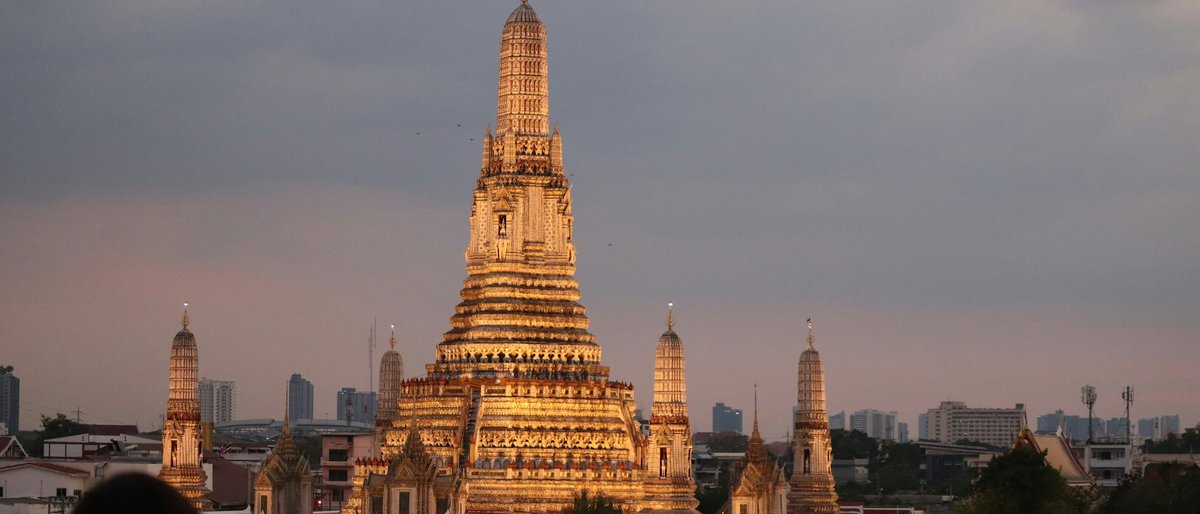
Cross the river and Bangkok changes. Thonburi is the west bank: historically the older settlement, now largely residential and much less developed for tourism. The khlongs (canals) that used to define all of Bangkok still function here, with long-tail boats puttering between wooden houses built on stilts over the water. Wat Arun is technically in Thonburi, so everyone crosses over for that, but few people explore further. The streets are narrower, the traffic lighter, the food cheaper. You'll see fewer foreigners in an hour here than in five minutes on Sukhumvit. There's a genuine neighborhood quality: fruit vendors who know their customers by name, temples where monks live and study rather than pose for photos.
- Best for
- Repeat visitors, culture-focused travelers, anyone wanting quiet accommodation at lower prices with easy river access to the old city
- Key streets
- Arun Amarin Road for the stretch between Wat Arun and the Royal Barges Museum. Wang Lang Market near Siriraj Hospital for one of Bangkok's best covered food markets: totally local, very cheap. The khlongs around Khlong Bangkok Yai are navigable by long-tail boat and give you that Venice-of-the-East thing that the tourist brochures promise but the east bank no longer delivers.
-
Chatuchak and Northern Bangkok
Chatuchak is known primarily for the weekend market: over 15,000 stalls spread across 35 acres, which sounds like a statistic until you're lost inside it, drenched in sweat, surrounded by vintage denim and ceramic teapots and the smell of coconut ice cream. During the week, the area is much calmer. Chatuchak Park and the connected Queen Sirikit Park and Rod Fai Park form Bangkok's largest green space: families picnic, joggers circle the ponds, and there's an outdoor train museum in Rod Fai Park that neighborhood kids treat as a playground. The area around BTS Mo Chit and MRT Chatuchak is developing fast with new condos, but it still has more of a neighborhood feel than central Bangkok. The Or Tor Kor Market next to the weekend market is a proper fresh market: clean, well-organized, and excellent for tropical fruit and prepared Thai food.
- Best for
- Weekend market enthusiasts, families wanting green space, budget travelers who don't mind being 20 minutes north of the center by BTS
- Key streets
- Kamphaeng Phet Road runs along the southern edge of the markets: the vintage and antique section (Sections 1, 25, 26) is on this side. Inside the market, Section 8 has the best art and Section 2-4 the best clothing. Phahon Yothin Road heading north from the BTS has a growing number of restaurants catering to the new condo residents.
-
Riverside (between Sathorn and Chinatown)
The stretch of river between Saphan Taksin BTS and Chinatown has become Bangkok's luxury hotel corridor: Mandarin Oriental, Shangri-La, Peninsula, and the newer Capella all sit along here. But the neighborhood itself has layers. Charoen Krung Road, which runs parallel to the river, is Bangkok's oldest paved road and currently the center of the city's contemporary art scene. Warehouse 30, a converted WWII-era warehouse complex, hosts galleries and design studios. The side streets between Charoen Krung and the river are dense with old printing shops, Chinese medicine stores, and hole-in-the-wall noodle places that haven't changed their recipes or their prices in years. The area has a golden-hour quality to it: low light filtering between old buildings, the smell of the river mixing with frying garlic.
- Best for
- Luxury travelers, art and design enthusiasts, couples wanting a romantic riverside setting, and anyone interested in Bangkok's history layered alongside its contemporary creative scene
- Key streets
- Charoen Krung Soi 28-36 for the gallery cluster and Warehouse 30. Captain Bush Lane and the streets around the old customs house have some of the best-preserved colonial-era architecture in the city. Soi Charoennakorn on the Thonburi side, accessible by hotel shuttle boats, has ICONSIAM mall and a floating market inside it that is surprisingly good despite being in a mall.
FAQ
Which Bangkok neighborhood is best for first-time visitors?
Lower Sukhumvit between Nana and Asok tends to be the most practical base for a first visit. You're right at the BTS-MRT interchange, which connects you to basically everywhere in about 30 minutes. The area has the widest range of hotels at every price point, international restaurants if you need a break from Thai food, and 7-Elevens on every corner. That said, it's also the most generic-feeling part of Bangkok. If you want more character and don't mind navigating boats instead of trains, Banglamphu near Khao San puts you walking distance to the temples and old city, which is where most first-timers spend their first two days anyway.
Is it worth staying on the Thonburi side of the river?
It can be, if you've done Bangkok before and want a different perspective. Hotels in Thonburi are generally 30-40% cheaper than equivalent quality on the east bank, and the river ferries connect you to the old city in minutes. The trade-off is that getting to Sukhumvit or Silom requires either a long taxi ride through traffic or a combination of boat and BTS. For a short trip focused on temples and the old city, Thonburi makes geographic sense. For nightlife or shopping-heavy trips, you'll feel isolated.
How do neighborhoods connect: is the BTS enough to get around?
The BTS Skytrain and MRT subway cover Sukhumvit, Silom, Siam, Chatuchak, and now parts of Chinatown and the riverside. But the old city (Rattanakosin, Banglamphu, most of Chinatown's back streets) has no rail at all. For those areas, you're looking at river boats, taxis, or tuk-tuks. The Chao Phraya Express Boat is useful and runs from Saphan Taksin all the way up past Banglamphu. Budget about 30-45 minutes to cross between the old city and the Sukhumvit corridor, and significantly more during rush hour, which in Bangkok means roughly 7-9am and 4-7pm.
Where should I stay if I care most about food?
Chinatown for street food density: Yaowarat after dark is arguably the best street food corridor in Southeast Asia, and that's not hyperbole. Ari for the emerging Thai restaurant scene with a local feel. Thong Lo for upscale Thai and Japanese dining. Silom for the office-worker lunch spots that serve the kind of Thai food you can't find outside Thailand: regional curries, Isaan grilled meats, southern-style rice and curry shops. Honestly, Bangkok rewards eating across neighborhoods rather than sticking to one area, and the BTS makes it easy enough to hop around for meals.
What about safety: are some neighborhoods better to avoid at night?
Bangkok is generally safe at night by big-city standards. The tourist areas (Sukhumvit, Silom, Khao San, Chinatown) have people out at all hours and well-lit streets. The usual common-sense rules apply: watch for motorbike bag-snatchers if you're walking on quiet sois late at night, and be skeptical of anyone who approaches you unprompted near tourist sites with a deal that seems too good. Specific to neighborhoods, Khlong Toei's residential areas south of the fresh market are rougher and not interesting for visitors. Nana Plaza and Soi Cowboy are safe to walk through even if the scene isn't your thing: they're commercial, well-lit, and have security.
How far in advance should I book accommodation in Bangkok?
Bangkok has a massive hotel supply, so outside of peak season (roughly November through February, plus Chinese New Year and Songkran in April) you can often book a week or even days ahead without paying a premium. During Songkran, prices spike and popular areas like Silom and Khao San fill up because that's where the water fights are most intense. For luxury riverside hotels, two to three weeks ahead is generally enough. For budget guesthouses in Banglamphu, you might want a buffer during high season but off-peak you'll find walk-in availability. Worth noting that Bangkok hotel prices fluctuate significantly on booking platforms, so checking midweek versus weekend rates can save you 20-30% at the same property.
Last verified by automated review (v1.7.1) on . What is automated review?