What cultural etiquette should I know for Bangkok?
Never point your feet at anyone or at a Buddha image: it's the single cultural mistake Bangkok visitors make most. Greet with a wai (palms together, slight bow) but only reciprocate, don't initiate with service staff. Temples require covered knees and shoulders. Lese-majeste is a criminal offence; jokes about the monarchy are off limits.
The feet thing catches everyone. In Thai Buddhism, feet are the lowest, dirtiest part of the body: spiritually contaminated, if you like. So when you sit on a temple floor at Wat Pho or Wat Arun, tuck them behind you or to the side, soles pointing away from any Buddha image. On the BTS or MRT, never prop your feet on the opposite seat. If you accidentally step over someone's belongings at a street food stall on Yaowarat, a quick apologetic nod goes a long way. The head, conversely, is sacred. Don't ruffle a child's hair, don't pat anyone on the head, don't reach over someone's head to grab something off a shelf. That warm, sticky 37-degree air at Sanam Luang will tempt you to touch your own head constantly, just be mindful of whose space you're in.
The wai is Bangkok's handshake, but the mechanics matter more than tourists realize. Palms together at chest height, fingertips near your chin, slight bow of the head. You reciprocate when someone wais you: a hotel receptionist, a restaurant host. You do not initiate a wai with your Grab driver, a street vendor, or someone younger than you serving your food. That reverses the social current and creates awkwardness, not warmth. A smile and a "khop khun khrap" (men) or "khop khun kha" (women) handles 90% of interactions. Mind you, the kha/khrap particle at the end of sentences is the real politeness marker here. Drop it and you sound curt, even if your Thai is otherwise passable.
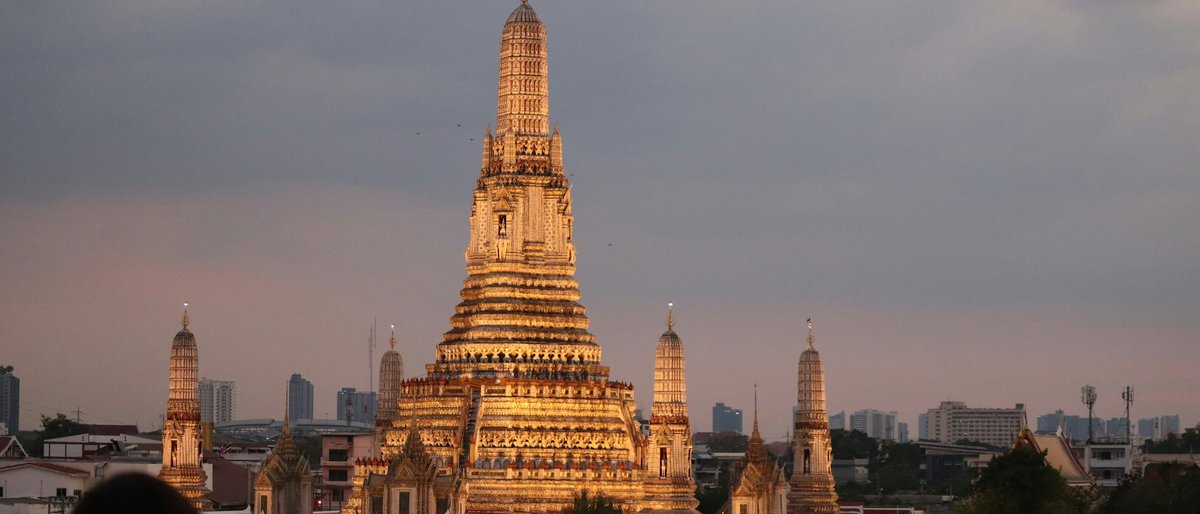
Temples have a dress code that's enforced, not suggested. Wat Phra Kaew at the Grand Palace turns people away at the gate, no shorts above the knee, no sleeveless tops, no see-through fabrics, no yoga pants. Wat Arun is slightly more relaxed but still checks. Some temples lend sarongs at the entrance; don't count on it. Shoes come off before you step onto any raised floor inside a temple building. The ordination hall (ubosot) is the strictest zone: silence, no photography of monks during ceremonies, women must not touch or hand anything directly to a monk. If you need to pass something, place it on a cloth or table first. That said, most monks in tourist-area temples are used to confused foreigners and will gently redirect you rather than scold.
Tipping is not expected the way it is in the US, but it's welcome and increasingly common in tourist districts. At a sit-down restaurant in Silom or Thonglor, leaving 20-40 baht on the table is generous. At a spa or massage shop on Sukhumvit, 50-100 baht depending on the service. Street food vendors and tuk-tuk drivers don't expect tips. Hotel bellhops, 20 baht per bag. Worth noting: some upscale restaurants now add a 10% service charge; check the bill before doubling up. The current rate sits around 32 baht to the dollar, so a 40-baht restaurant tip is roughly $1.25.
The monarchy is where cultural etiquette turns into law. Lese-majeste (insulting the king, queen, or heir) carries a sentence of up to 15 years per offence. This is not a theoretical statute; prosecutions happen, including against foreigners. No jokes, no memes, no offhand remarks, not even at 2am on Khao San Road after several Changs. Stand for the royal anthem before movies in cinemas: everyone does, and sitting it out draws real hostility. Thai banknotes carry the king's image; stepping on a dropped bill is technically an offence. The reverence is genuine and runs deep, and treating it as quaint or performative will lose you goodwill faster than anything else in the city.
Cultural norms
Bangkok rewards visitors who learn the wai: palms pressed at chest height for peers, fingertips at the chin or nose for elders. Shoes come off before temples and most homes; in conservative shops the gesture is appreciated even when it isn't required. Buddha images are sacred whether monumental or kitsch: climbing on, posing in front of, or pointing your feet toward them registers as real disrespect, and the police take it seriously. The local language is Thai; central tourist arteries carry English signage but a single 'sa-wat-dee-kaa' (women) or 'sa-wat-dee-krap' (men) opens doors faster than any translation app. Thai humour leans on lightness and saving face: raising your voice in public reads as a serious failure of composure, never as assertiveness.
Greetings
Press your palms together at chest height, fingertips near your chin, and bow your head slightly: that's the wai. Reciprocate when offered; don't initiate with service workers or anyone younger serving you. End every sentence with "khrap" (men) or "kha" (women) to sound polite rather than blunt.
Don't do this
- Pointing your feet at people or Buddha images: feet are spiritually unclean in Thai Buddhism
- Touching anyone's head, including children: the head is the most sacred body part
- Disrespecting the monarchy in any way: lese-majeste carries up to 15 years in prison
- Stepping on Thai banknotes: they carry the king's image
- Women touching or handing objects directly to monks
- Pointing at people or temple objects with your index finger: use an open palm instead
- Raising your voice or showing visible anger in public: loss of face (sia naa) shuts down all goodwill
- Wearing shoes inside temples, homes, or some shops: check for a pile of shoes at the entrance
- Taking photos of monks during ceremonies in the ordination hall
- Public displays of affection beyond hand-holding: still considered inappropriate in most neighborhoods
Tipping
Not expected but welcome. Restaurants: 20-40 baht on the table. Massage/spa: 50-100 baht. Hotel bellhop: 20 baht per bag. Street food and tuk-tuks: nothing. Check bills at upscale spots: a 10% service charge may already be included. At ~32 THB per dollar, a 40-baht tip is about $1.25.
Dress code
Temples enforce covered knees and shoulders: Wat Phra Kaew at the Grand Palace turns people away for shorts, tank tops, yoga pants, and see-through fabric. Some lend sarongs; don't rely on it. Outside temples, Bangkok is relaxed, but very short shorts in malls or government buildings draw stares. Shoes off on any raised temple floor.
Religious norms
Thailand is roughly 95% Theravada Buddhist. Remove shoes before entering any temple building. Never climb on or pose disrespectfully with Buddha statues: it's illegal and carries fines. Women must not touch monks or hand them anything directly; place items on a cloth or table. In the ordination hall (ubosot), stay silent and skip photography during ceremonies. Monks eat before noon; offering food after midday is a misunderstanding of the practice, not generosity.
Last verified by automated review (v1.5.J.2) on . What is automated review?