How do I get around Bangkok?
BTS and MRT for anything on the east bank; Grab for the gaps and late nights; Chao Phraya Express orange-flag boat for riverside temples. Load a Rabbit card with 500 baht at any BTS station. Taxis are cheap if the meter runs: Grab removes the negotiation. Tuk-tuks are for the photo, not the commute.
Book the connection
One search across trains, buses & flights: live times and prices for Bangkok.
The BTS Skytrain and MRT subway cover most of the areas visitors care about: Sukhumvit, Silom, Siam, Chatuchak, Chinatown since the MRT extension, and the riverside near Wat Arun. A Rabbit card from any BTS counter costs 100 baht for the card itself plus whatever you load; 500 baht of stored value covers roughly two full days of hopping between stations. The MRT still runs its own token system but now accepts contactless Visa and Mastercard at the gates, which saves you juggling two cards. Rush hour on the BTS between Siam and Asok is rough: a 37°C platform, bodies pressed tight against the doors, the AC inside the car barely compensating. Travel between 9:30 and 16:00 or after 20:00 and you'll have room to breathe. One thing that trips people up: BTS and MRT don't share a fare system. Transferring at interchange stations like Asok/Sukhumvit means tapping out of one network, walking through a connecting corridor, and tapping into the other. Budget for the double fare.
Grab is the right answer for most trips that don't fall on a rail line. Fare is shown before you book, the driver's route is tracked, and you can pay by card or cash. A typical ride from Sathorn to Thonglor runs about 90 to 120 baht depending on demand: roughly 3 to 4 USD at the current rate of about 32 baht to the dollar. Metered taxis have a 35-baht flagfall and charge around 6 to 8 baht per kilometer, which sounds cheap until the driver claims the meter is broken or offers to take you on a "shortcut" through gridlocked side streets. If you do flag one down, insist on the meter. They refuse? Close the door and try the next one: there is always a next one. After midnight Grab prices surge, but they remain predictable. Worth noting: motorcycle taxis, the guys in numbered orange vests parked at the mouth of every soi, are fast and cheap for short hops. Maybe 20 to 40 baht to zip down a long alley. They weave through traffic at speeds that will either thrill or terrify you. Passenger helmets are still hit or miss.
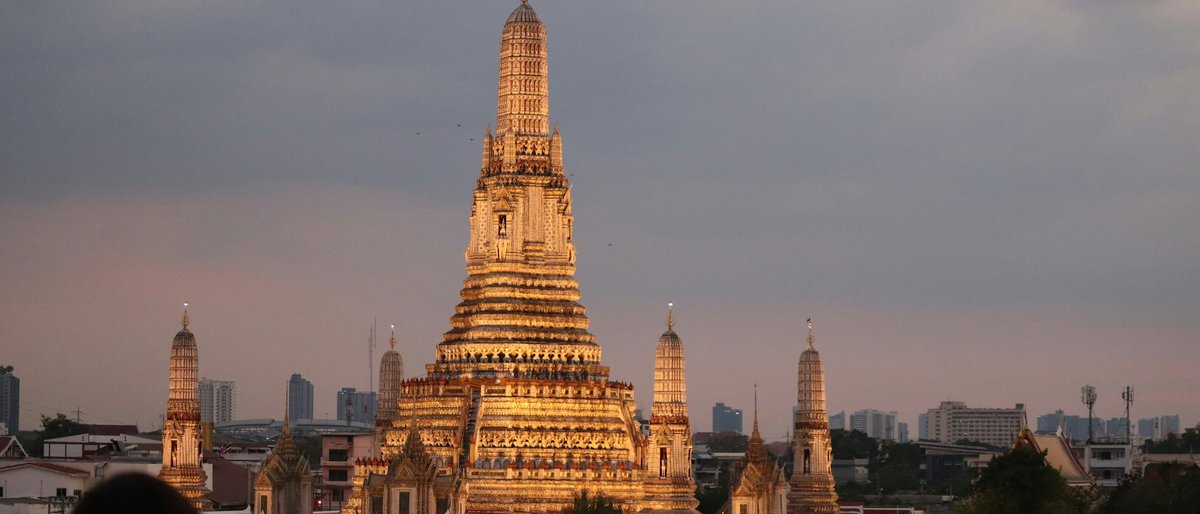
The Chao Phraya Express Boat is the fastest way to move north-south along the river, and at 16 baht per ride on the orange-flag line it is the cheapest transit in the city. Piers are numbered. Sathorn Central connects to BTS Saphan Taksin, and from there you can reach Wat Arun by hopping off at Tha Tien pier and catching a 5-baht cross-river ferry, the Grand Palace area at Tha Chang, and Khaosan Road's nearest landing at Phra Athit. Skip the blue-flag tourist boat at 50 baht: same piers, slightly better seating, an English commentary you won't need twice. The Khlong Saen Saep canal boat handles east-west trips that neither the BTS nor MRT cover well: Pratunam to the Golden Mount to Ramkhamhaeng for 10 to 20 baht. The boats are narrow, the murky water splashes over the gunwales (it smells exactly like you'd expect) and the whole thing feels like it shouldn't work in a capital of eleven million. It works.
Walking in Bangkok is a test of patience more than stamina. Sidewalks along Sukhumvit disappear into food carts, motorcycle parking, and construction scaffolding. Crosswalks exist but carry no real authority: cars slow down sometimes, sometimes not. The heat is the larger obstacle. Even in the cooler months of December and January, midday temperatures sit above 30°C, and from March through May you are looking at 35 to 38°C with humidity that pastes your shirt to your back within ten minutes. That said, some neighborhoods reward the effort. The sois around Ari station have tree cover, decent pavements, and coffee shops where you can duck in when the sun gets brutal. Yaowarat Road in Chinatown is best on foot after dark, when the temperature drops a few degrees and the street food stalls fire up: the smell of charcoal-grilled pork satay and wok-fried pad see ew thick in the warm air, the clatter of metal spatulas on steel woks mixing with traffic noise. As for tuk-tuks: they are louder, slower, hotter, and more expensive than Grab. They exist for the photograph. Take one ride for the memory, then use your phone.
On-the-ground: metro available · ride-hail apps work.
Primary modes of transit
- BTS Skytrain
- MRT subway
- Grab
- Chao Phraya Express Boat
- Khlong Saen Saep canal boat
- metered taxi
- motorcycle taxi
- walking
Bangkok's network by the timetable
Read from the published timetables, not from memory: 70 operators, 1,684 routes and 13,954 stops within 40 km of the centre.
- Operators, by routes here
- Department of Land Transport (896)
- Bangkok Mass Transit Authority (219)
- State Railway of Thailand (161)
- Thai Smile Bus (154)
- The Transport Company Limited (37)
- Supattra Travel Co.,Ltd (32)
- SB Suntivich Tour (29)
- nakhonchaiair (17)
- and 62 more
- Routes by mode
- 1,475 Bus
- 162 Rail
- 38 Ferry
- 5 Tram
- 4 Metro
- Weekday service
- 00:00 to 23:37
- Fares in the timetable
- THB 0.00 to 1364.00
- Timetables valid
- 2026-01-01 to 2026-12-31
Read 2026-09-14, version 20260913, from one feed:
- Office of Transport and Traffic Policy and Planning (the operator's own local feed, Mobility Database source 1831). Licence
Ready to book the connection?
Compare trains, buses & flights to and around Bangkok on Omio: live times & prices in one search.
Compare on Omio →More transport questions
How do I get from the airport to Bangkok?
Take the Airport Rail Link from Suvarnabhumi (BKK): 45 baht ($1.40), 26 minutes to Phaya Thai, then transfer to BTS Skytrain. Runs 6am to midnight. After hours, book a Grab from the arrivals curb; expect 450–550 baht ($14–17) to Sukhumvit. From Don Mueang (DMK), the A1 bus to BTS Mo Chit costs 30 baht and takes about 45 minutes.
Full answerHow do I get to Bangkok?
Suvarnabhumi (BKK), 32 km east of central Bangkok, handles nearly all international flights. Don Mueang (DMK), 29 km north, serves regional low-cost carriers like AirAsia and Nok Air. Nonstop from London runs 11 hours at £550–800; from the US west coast, 15–17 hours at $900–1,400 round-trip. May through June delivers the cheapest fares.
Full answerWhat are the best day trips from Bangkok?
Ayutthaya is the strongest single-day trip from Bangkok for couples: 80 km north, about 90 minutes by train, 20 baht third-class. Rent bikes at the ferry landing and ride the temple ruins together. On weekends, Amphawa's evening floating market and firefly boat tours beat Damnoen Saduak for pairs.
Full answerLast verified by automated review (v1.5.J.2) on . What is automated review?