What should I pack for Bangkok?
Pack lightweight, quick-dry clothing that covers knees and shoulders: the Grand Palace and Wat Pho turn away visitors in shorts, and the 200-baht sarong rental at the gate is a forced upsell. Bring closed-toe shoes for Bangkok's uneven sidewalks, a light layer for frigid AC, and leave the umbrella: 7-Eleven sells them for 80 baht.
Shop the packing list (15 items)Bangkok runs hot. Not vacation-warm: wet-towel-on-your-face hot. Daytime temperatures sit between 28°C and 36°C most of the year, and humidity tends to hover around 70%. Three quick-dry shirts on rotation will save you from the laundry pile, but here's the thing most people miss: you also need a light long-sleeve layer. The BTS Skytrain, shopping malls along Sukhumvit, and most sit-down restaurants crank the AC to what feels like 18°C. You'll walk in dripping and walk out shivering. The other non-negotiable is knee-and-shoulder coverage for temples. The Grand Palace, Wat Pho, and Wat Phra Kaew all enforce a strict dress code: guards at the entrance check, and they're not flexible about it. If you show up in shorts, you'll be directed to a rental booth selling thin sarongs for 200 baht, roughly $6 USD. Bring one pair of lightweight pants you can pull on over shorts, and a scarf or shawl that covers shoulders. Problem solved.
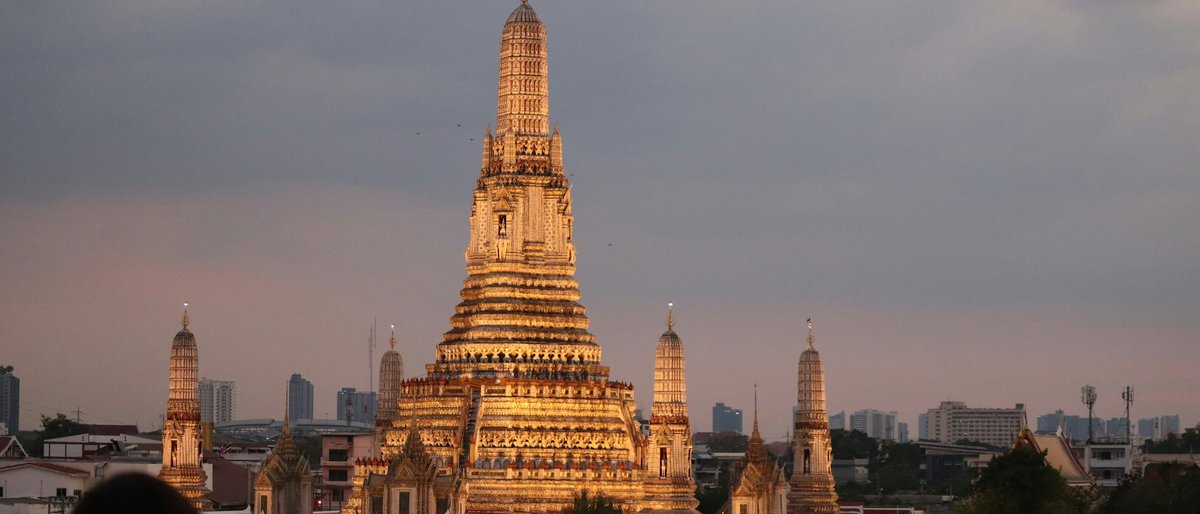
Footwear matters more here than in most cities. Bangkok sidewalks are an obstacle course: loose tiles, drainage grates with gaps wide enough to catch a heel, puddles that appear from nowhere after a 20-minute downpour. Sandals work fine for night markets along Yaowarat and casual meals, but you'll want one pair of closed walking shoes with decent grip for temple days and longer walks. Wat Arun's steep central prang has steps that are narrow and slick from centuries of foot traffic. Fashion sneakers with flat soles tend to struggle there. Worth noting: you remove shoes at every temple entrance, so slip-ons save you real time when you're hitting three or four temples in a day. A pair that handles both walking and easy on-off is the sweet spot.
Thailand uses 220V electricity with Type A, B, and C outlets: your US or European plug will likely fit without an adapter, but 110V appliances like American hair dryers or curling irons will burn out. Leave those at home. A portable charger is close to mandatory; between Google Maps navigation, Grab ride-hailing, and the constant photo-taking at places like the Grand Palace and Sanam Luang, your phone battery won't last a full day out. If you're visiting between June and October, a compact dry bag earns its weight: afternoon storms during monsoon season drop hard and fast, and you might be caught mid-tuk-tuk with your phone and wallet exposed. A ziplock bag works in a pinch, but a proper 5-liter dry bag from Decathlon on Ratchadaphisek runs about 300 baht, roughly $9 USD.
Skip packing anything you can buy cheaper at a Bangkok 7-Eleven or Boots pharmacy, and there is a 7-Eleven on what feels like every third block. Mosquito repellent: Soffell spray at Boots costs around 150 baht, about $4.70 USD, roughly half what you'd pay for OFF! back home. Sunscreen: Biore UV Aqua Rich at Watsons runs about 250 baht for the watery-texture formula that works under heavy humidity without leaving you greasy. Umbrellas: 80 baht at any convenience store, and you'll lose it in a taxi within the week anyway. Paracetamol: a 12-pack of Tylenol at 35 baht. Even basic cotton t-shirts at Pratunam Market start around 100 baht if you need emergency replacements. The one thing that's harder to find locally is Western-strength deodorant: Thai brands tend to run milder, so bring your own if that matters to you.
Essentials
- Quick-dry shirts (3 on rotation): you'll sweat through cotton before lunch in 36°C heat Shop
- Lightweight pants or skirt covering knees: mandatory for Grand Palace, Wat Pho, and Wat Phra Kaew entry Shop
- Shoulder-covering scarf or shawl: temple guards check at the door and will turn you away Shop
- Closed walking shoes with grip: Bangkok sidewalks have open drainage grates and slick tiles after rain Shop
- Slip-on sandals: you remove shoes at every temple entrance, and at many restaurants too Shop
- Light long-sleeve layer: BTS stations, malls, and restaurants blast AC to around 18°C Shop
- Portable charger (10,000 mAh minimum): Google Maps plus Grab plus photos drains a full battery by mid-afternoon Shop
- Swimwear: hotel pools and day-trip boats to Ko Si Chang or Ko Samet Shop
- Deodorant from home: Thai brands tend to run milder than Western formulas Shop
- Small quick-dry towel: useful for wiping sweat between temple visits and not always provided at budget hotels Shop
Seasonal extras
- Compact dry bag or waterproof phone pouch (Jun-Oct monsoon): afternoon downpours hit hard with almost no warning Shop
- Packable rain jacket (Jun-Oct): more useful than an umbrella when you're in a tuk-tuk or squeezing through market lanes Shop
- Extra quick-dry layer (Nov-Feb cool season): mornings at temples like Wat Arun can feel surprisingly cool at 20-22°C Shop
- Higher-SPF sunscreen (Mar-May hot season): UV index regularly hits 11+ and temperatures push past 38°C with a heat index above 42°C Shop
- Moisture-wicking underwear (Mar-May): the humidity makes cotton unbearable during peak heat months Shop
Buy on arrival
- Mosquito repellent: Soffell spray at Boots, around 150 baht (~$4.70 USD), half the US price
- Sunscreen: Biore UV Aqua Rich at Watsons, about 250 baht (~$7.80 USD), works better under humidity than most Western brands
- Umbrella: any 7-Eleven, 80 baht (~$2.50 USD), treat it as disposable
- Paracetamol: 12-pack Tylenol, 35 baht (~$1.10 USD) at any pharmacy counter
- Aloe vera gel: 7-Eleven house brand, 50 baht (~$1.55 USD), better for sunburn than hauling a bottle from home
- Cotton t-shirts: Pratunam Market, from 100 baht (~$3.10 USD) each if you need emergency replacements
- Reusable water bottle: fill free at filtered stations inside malls and BTS stations rather than buying plastic every hour
Last verified by automated review (v1.5.J.2) on . What is automated review?