Stay in Bangkok in September
78 hotels in the Trip.com pool for Bangkok, from US$8 a night.
Opens Trip.com on Fri 25 Sep to Sun 27 Sep 2026; change the dates there.
September is the wettest month of the year in Bangkok. The average high sits at 30.8°C (87°F) with overnight lows near 25°C (77°F), and the humidity wraps around you like a warm, damp cloth the moment you step outside. Afternoon storms arrive most days between 2pm and 5pm, drop rain for 60-90 minutes, then clear. Mornings tend to be warm and partly cloudy, giving you roughly 5-6 hours of dry weather before the sky opens.
Bangkok handles its monsoon well, to be fair. The BTS Skytrain runs above the flooded streets. Wat Pho and the Grand Palace open their gates on schedule. Food vendors under permanent awnings along Yaowarat keep serving regardless of the downpour rattling the corrugated roofing above them. You're visiting during the lowest ebb of tourist season, which means hotel rates across Sukhumvit and Silom drop to their annual floor, and sites that normally require patience and queuing become surprisingly approachable.
If you have flexibility with your dates, November through February offers dry skies and cooler air. But if September is your window, the tradeoff has real appeal. This is the cheapest month to visit Bangkok, the least crowded time at its temples and markets, and a stretch when the city's indoor strengths come into focus. Air-conditioned complexes like Siam Paragon and Terminal 21 become de facto social spaces during the afternoon storms, with free entry and reliable Wi-Fi.
Why visit in September
- Hotel rates across Sukhumvit and Silom drop to their annual floor, with 4-star rooms frequently available below 2,000 THB per night at properties that charge more than double during the November-February peak
- The Grand Palace compound and other major temple sites have noticeably shorter queues in September, and the reduced foot traffic makes the courtyards and halls considerably more pleasant to explore
- Temperatures sit several degrees below the March-April extreme, making morning walks between Rattanakosin's temple complexes more tolerable than they would be 5 months earlier
- The monsoon transforms Lumphini Park into the greenest version of itself, and the post-storm golden light in late afternoon rewards patient photographers with warm, low-angled sun breaking through cloud gaps
Worth knowing
- September receives more rain than any other month in Bangkok by a wide margin, with nearly 100mm more than August and more than double what November brings
- Humidity averages 84%, which means clothes dry slowly, leather goods risk mold in hotel rooms, and the air feels dense and warm even after dark when temperatures barely dip
- Low-lying neighborhoods including parts of Lat Phrao and lower Ratchadaphisek experience periodic street flooding after heavy downpours, disrupting surface transit for hours at a stretch
- Some outdoor rooftop bars and river-cruise operators reduce their schedules or close outright during the worst monsoon weeks, limiting evening options
Best for
Think twice if
September delivers Bangkok's heaviest rainfall of the year at 339mm, spread across roughly 28 days. The storms tend to build through mid-afternoon, peak between 3pm and 5pm, then clear by early evening. The hours before noon are your reliable window for outdoor plans. Between storm cycles, intense sunshine can push the heat index 5-7°C above the actual air temperature. After dark, the saturated air holds temperatures in the mid-20s Celsius, making air conditioning less a comfort than a necessity for sleep.
Seasonal caution
- September's accumulated monsoon rain saturates Bangkok's drainage system, and localized flooding can close pedestrian underpasses and block side-street access for hours after heavy storms. Never wade through floodwater, which often carries sewage and conceals open drainage grates
- Afternoon thunderstorms frequently produce lightning. Avoid open-air rooftops, exposed elevated walkways, and the Chao Phraya riverbanks during active storms. If you are on a longtail boat when lightning appears, head for shore immediately
Year-round climate
Averages from the last 5 years.
| Month | Avg high (°C) | Avg low (°C) | Rainfall (mm) |
|---|---|---|---|
| Jan | 32 | 22 | 12 |
| Feb | 33 | 24 | 54 |
| Mar | 34 | 26 | 59 |
| Apr | 34 | 27 | 88 |
| May | 33 | 26 | 199 |
| Jun | 33 | 26 | 163 |
| Jul | 31 | 26 | 255 |
| Aug | 32 | 25 | 222 |
| Sep | 31 | 25 | 339 |
| Oct | 31 | 24 | 233 |
| Nov | 31 | 24 | 108 |
| Dec | 32 | 23 | 14 |
Best things to do in September
Morning temple walk along the Rattanakosin waterfront
culturalThe old royal quarter stretches along the east bank of the Chao Phraya and contains Bangkok's densest cluster of historic sites. Start at the Grand Palace compound, built in 1782, walk south past the Democracy Monument, and end near the ferry pier opposite Wat Arun. The route covers about 3km and takes 2-3 hours with stops.
Overcast September light creates soft, even illumination on gold leaf and ceramic tilework without the harsh shadows of dry-season noon. The courtyards hold noticeably fewer visitors than in December or January.Booking tipNo booking required. Arrive by opening time to maximize your dry-weather window and finish the walk before noon.
Thai cooking class with seasonal ingredients
foodSeveral cooking schools across Bangkok offer morning market visits followed by hands-on preparation of 3-5 Thai dishes. Schools along the Silom and Ari corridors tend to adjust their menus seasonally, working wet-season fruits into dessert courses alongside standard curries and stir-fries.
Smaller September class sizes mean more hands-on time per student, and seasonal longan and custard apple appear in the dessert modules, ingredients absent from the dry-season rotation.Booking tipBook 3-4 days in advance. Some schools consolidate to fewer weekly sessions during September's low season.
Yaowarat evening food walk
foodBangkok's Chinatown runs for about 1.5km along Yaowarat Road and its branching sois, lined with food stalls, shophouses, and restaurants that trace back over a century. The evening food scene starts around 6pm and runs past midnight, with most vendors cooking under permanent awnings or inside open-front shophouses.
The covered stall density along Yaowarat makes it Bangkok's most rain-resistant food district. Smaller September crowds mean shorter waits at popular wok stations, and the cooler evening air after a storm makes walking the strip more comfortable than it is in April.Chatuchak Weekend Market morning session
shoppingChatuchak's more than 8,000 stalls spread across 35 acres on the north side of Bangkok, offering everything from vintage clothing and ceramics to tropical plants and street food. The market opens at 9am on Saturday and Sunday.
September foot traffic drops to a fraction of the high-season volume. Vendors in the outdoor sections are more open to negotiation, and the covered indoor halls offer shelter if rain arrives early.Booking tipNo booking needed. Take the BTS to Mo Chit station. Plan to leave by noon, as afternoon storms make the uncovered sections unpleasant.
Chao Phraya express boat ride
sightseeingThe Chao Phraya Express Boat runs public commuter ferries along Bangkok's central river, with stops near Rattanakosin, Yaowarat, and several major temple piers. A full ride from Saphan Taksin pier to Nonthaburi covers the route in about 45 minutes.
September's higher water levels keep the river full and the boats moving smoothly. Morning rides offer views of Thonburi's riverside communities under soft monsoon light, without the tour-boat congestion of peak season.Booking tipNo booking needed. Board at any pier. The orange-flag boats are cheapest, while blue-flag tourist boats cost more but include English commentary.
Traditional Thai massage at monsoon-season rates
wellnessBangkok's massage and spa industry offers discounts during September to attract the reduced tourist population. Treatments range from traditional Thai massage to herbal compress and oil treatments at mid-range spas across Sathorn and Thong Lo.
September's low occupancy means walk-in availability at spas that are fully booked weeks ahead in December and January. Some properties offer extended sessions or complimentary add-ons during the slow period.Booking tipWalk-ins work for most neighborhood massage shops. For hotel spas, calling the morning of your visit is usually sufficient in September.
Khlong boat tour through Thonburi's canals
sightseeingLongtail boats navigate the narrow khlongs on Bangkok's west bank, passing traditional stilted houses, orchid farms, and small temple compounds. Tours typically run 60-90 minutes and depart from piers near the Wat Arun ferry crossing.
September's monsoon raises water levels in the canal network, opening routes that are too shallow for boats during the dry months of December through March. The vegetation along the khlongs reaches its peak density and greenness.Booking tipMorning departures between 9am and 10am are best. Afternoon storms make the open-air boats uncomfortable. Negotiate rates at the pier rather than booking through a hotel, which typically adds a markup.
What to eat in September
In season: fruit
Longan (lamyai)
September marks the peak of the northern Thai harvest, when prices at Bangkok markets like Khlong Toei reach their annual low. The translucent flesh tends to be sweeter and more fragrant than the exported varieties found outside Thailand.
Custard apple (noi na)
September begins the 3-month Thai custard apple season. The soft, creamy flesh tastes like a cross between vanilla pudding and pear, best eaten chilled after a rainy afternoon.
Sapodilla (lamut)
The brown-skinned fruit with caramel-flavored flesh starts appearing at Bangkok street stalls in September and peaks through December.
On menus now
Jok (rice porridge)
Rainy mornings drive locals to porridge stalls for bowls of broken-rice congee topped with minced pork, a soft egg, sliced ginger, and white pepper. Served from around 6am at carts near BTS stations across Bangkok.
Street food peaks
Kanom jeen nam ya
Fermented rice noodles topped with aromatic fish curry, a wet-season staple found at sidewalk setups across Banglamphu. The warm, spicy broth pairs well with September's cooler mornings.
What to drink
Nam khing (hot ginger drink)
Warm ginger water sweetened with palm sugar, a rainy-season comfort drink sold from covered roadside carts. The heat and gentle spice make it a natural match for damp September evenings.
Regular events in September
Sart Thai (Thai Ancestor Day)Free
A Buddhist merit-making occasion honoring deceased relatives and ancestors. Thais visit temples to present food offerings, listen to monks chant, and transfer merit. The exact date follows the waning moon of the 10th Thai lunar month, placing it in September most years. Many temples in the Rattanakosin district hold afternoon ceremonies with communal meals.
Mid-to-late September (exact date follows the Thai lunar calendar)Mahidol DayFree
A national commemorative day honoring Prince Mahidol Adulyadej (1892-1929), known as the father of modern Thai medicine. Medical institutions hold wreath-laying ceremonies, particularly at Siriraj Hospital on the Thonburi bank of the Chao Phraya. Not a public holiday, but officially observed across Thai universities and hospitals.
September 24Mid-Phansa temple ceremoniesFree
Buddhist Lent (Phansa) runs from July through October, and September sits in its middle stretch. Temples across Bangkok hold weekly merit-making events, candle offerings, and open Dharma talks during this period. The ceremonies tend to be quieter and more intimate than the opening and closing Phansa rituals, and visitors are welcome to observe.
Throughout September (Phansa runs July to October)Best places this September
Wat Arun
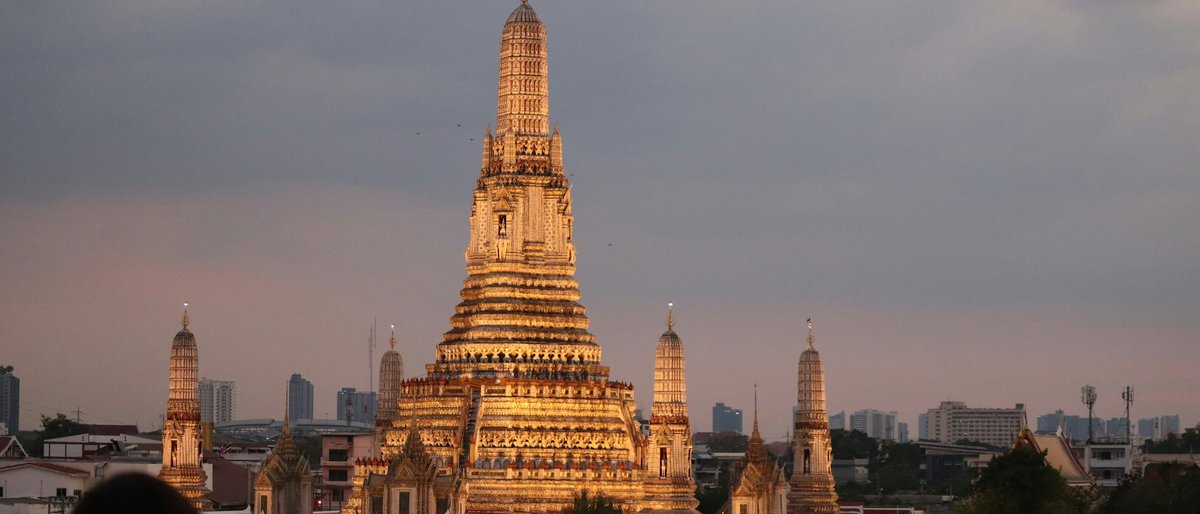
templeThe temple's central prang rises roughly 80 meters, covered in fragments of Chinese porcelain and colored glass. The structure traces back to 1656, predating the Grand Palace by over a century. From the east bank on an overcast September afternoon, the ceramic detailing stands out sharply against grey skies, and the ferry crossing from Tha Tien pier takes under 5 minutes.
ThonburiLumphini Park
parkBangkok's most prominent public park covers 142 acres between Silom and Wireless Road. In September, the monsoon fills the artificial lake to its brim and the tree canopy thickens to the densest shade of green it reaches all year. Early-morning visitors before 7am can walk the 2.5km perimeter loop in relative quiet, watching monitor lizards patrol the muddy shore.
SilomBangkok Art and Culture Centre (BACC)
galleryA 9-floor contemporary art space at the intersection of Rama I Road and Phaya Thai Road, connected directly to the BTS National Stadium station. Free admission to the main galleries. September exhibitions sit in the mid-year rotation, typically quieter and more experimental than the crowd-drawing year-end shows.
Pathum WanJim Thompson House Museum
museumThe former home of American silk entrepreneur Jim Thompson, who disappeared in Malaysia's Cameron Highlands in 1967. The traditional Thai teak houses were assembled from 6 separate structures and contain Thompson's collection of Southeast Asian art and antiques. The tropical garden surrounding the compound reaches peak lushness during September's rains, with frangipani and heliconia in bloom.
Pathum WanAsiatique the Riverfront
marketA converted warehouse complex along the Chao Phraya, housing over a thousand shops and restaurants under covered roofs. The free shuttle boat departs from Saphan Taksin BTS station starting at 5pm. September's low-season evenings mean the riverside dining terraces and Ferris wheel are accessible without the waits common in the high season.
Charoen KrungBangkok National Museum
museumThailand's largest museum, open since 1874, occupies a former palace on the northwest corner of Sanam Luang. The permanent collection spans Sukhothai-era bronze sculptures, Khmer stone carvings, royal funeral chariots, and traditional musical instruments. September's reduced foot traffic lets you spend time with individual pieces without being moved along by tour-group flow.
RattanakosinKhao San Road area
districtThe 400-meter road, laid out in 1892 during the reign of King Rama V, anchors Bangkok's backpacker district. September strips away the peak-season intensity, leaving the bars, pad thai carts, and secondhand bookshops with a more relaxed feel. The covered sois branching off the main road, including Soi Rambuttri and Phra Athit Road, stay dry during storms and tend to offer cheaper food than Khao San itself.
Banglamphu
Your packing checklist
Tick items off as you pack. Your progress saves in this browser.
All packed — have a great trip.
Insider tips
The covered walkway system connecting BTS stations along Sukhumvit, stretching from Nana through Asok to Phrom Phong, lets you walk roughly 2km between shopping malls and restaurants without touching the rain. Locals treat this elevated corridor as their primary September commute route.
Grab ride-hailing prices rise 2-3x during heavy rain as demand overwhelms supply. If the storm is still active, shelter in a 7-Eleven or cafe for 30-40 minutes. The elevated pricing drops sharply once the rain eases, saving you 200-300 THB per ride.
Street food stalls with permanent metal awnings stay open through storms, while pushcart vendors pack up at the first heavy drops. If you want to eat during the rain, head for the shophouse-lined sections of Yaowarat or the covered stalls near Victory Monument.
September is the month to ask for hotel upgrades. Front-desk staff at mid-range and 4-star properties know their occupancy is at its lowest, and a polite request at check-in often results in a higher room category at no extra charge.
Avoid these mistakes
- Wearing flip-flops or open sandals on flooded streets. September's standing water hides broken pavement, open drainage grates, and sharp debris. Closed-toe waterproof shoes prevent injuries that can sideline a trip.
- Booking a rigid outdoor itinerary with fixed timed entries at multiple sites. By early-to-mid afternoon on most September days, rain will force changes. Structure your mornings and keep afternoons open for indoor alternatives or spontaneous shelter-and-eat sessions.
- Packing only one pair of shoes. September humidity and daily rain make overnight drying unreliable. A second pair of lightweight waterproof shoes means you never start the day in damp footwear.
- Dismissing the Chao Phraya express boats because of the rain. The public ferries operate through everything except the most severe storms, and they are often the fastest way to move north-south when road traffic stalls during downpours.
Practical tips for September
Book accommodations within a 5-minute walk of a BTS or MRT station. When heavy rain hits, Bangkok's surface traffic gridlocks and taxis become nearly impossible to flag down, while the elevated and underground rail networks keep running regardless. Most temple complexes open at 8:30am, so schedule outdoor visits for the first 3-4 hours of the day while skies are driest. September may coincide with Sart Thai, a Buddhist merit-making day whose exact date depends on the lunar calendar, and government offices and some banks close for the occasion. Plan administrative errands around it. Carry a mix of small-denomination banknotes (20, 50, and 100 THB) for street food vendors and motorbike taxis, who rarely have change for the 1,000 THB notes that ATMs dispense. Dress modestly for temple visits. Covered shoulders and knees are enforced at major temple compounds year-round, and vendors near the entrances sell wraps if you arrive underprepared. Most of Bangkok's indoor museums and galleries close on Mondays, which matters more in September when you are relying on rainy-day alternatives.
FAQ
Is September a good time to visit Bangkok?
September is the toughest month for weather, and most travel guides would steer you toward the November-February window instead. But the answer depends on your priorities. If you are watching your budget, September's hotel rates and empty restaurants are a genuine advantage. If you are flexible about outdoor plans, you will find a version of Bangkok that feels more local and less performative than peak season. If your trip depends on outdoor sightseeing in reliable weather, pick another month.
What is the weather like in Bangkok in September?
Warm and wet, with a daily rhythm you can learn to work around. The morning might look bright and promising, then clouds stack up by early afternoon and the rain arrives in a heavy, concentrated burst. The evenings often clear. The overall sensation is warm humidity rather than cold rain, so getting caught in a storm is uncomfortable and sticky rather than chilling. You will want to shower and change after getting soaked, but you will not be shivering.
Does it rain all day in Bangkok in September?
Almost never. The monsoon pattern in Bangkok follows a mid-afternoon cycle. You might get 3-4 days across the month where the rain persists from morning to night, but that is the exception. The typical September day gives you clear or partly cloudy mornings, a concentrated afternoon downpour lasting 60-90 minutes, and a drier evening.
Is Bangkok crowded in September?
The opposite. September typically sees the fewest international visitors of any month. Sites like Wat Phra Kaew and the Bangkok National Museum, which draw long queues in January, are walkable without waiting. Restaurants that require reservations in the November-February peak have open tables for walk-ins. The BTS and MRT still get crowded at rush hour with local commuters, but tourist congestion drops to its annual low.
Is September safe for solo travelers in Bangkok?
Bangkok scores 7/10 for solo-traveler safety (see the TTDI Solo-Safety Index), and that assessment holds regardless of season. September's specific risks are weather-related rather than security-related. Watch for slippery surfaces, stay out of flooded intersections, and be alert to lightning during afternoon storms. The BTS and MRT systems are safe at all hours for transit between neighborhoods.
Things to Do in Bangkok in September

Bangkok Private Highlights Tour with Local Guide
City tour: 8 hours.
via Viator Free cancellation
 Half-Day Floating Market and Railway Market Tour from Bangkok
Day trip: free cancellation.
via Viator Free cancellation
 Bangkok: Floating Market and Train Market Experience
Day trip: 8.5 hours, free cancellation.
via Viator Free cancellation
 Experience Real Bangkok by Bike
City tour: 3 hours, free cancellation.
via Viator Free cancellation
 Hidden Bangkok Longtail Boat Tour to Big Buddha&Canal Life 2hrs
Cruise: 2 hours, free cancellation.
via Viator Free cancellation
 UNESCO's Ayutthaya Historical Park: Full-Day Tour from Bangkok
Day trip: 11.5 hours, free cancellation.
via ViatorFind a flight to Bangkok
Live fares to Bangkok appear here once cookies are accepted.
Last verified by automated review (v1.7.2) on . What is automated review?