Stay in Bangkok in January
78 hotels in the Trip.com pool for Bangkok, from US$8 a night.
Opens Trip.com on Fri 1 Jan to Sun 3 Jan 2027; change the dates there.
January is Bangkok's driest, coolest month, and for most travelers it is the single best time to be here. Daytime temperatures average 32°C (89°F), nights settle around 22°C (71°F), and the whole month typically delivers about 12mm of rain across 2 rainy days. Humidity sits near 60%. By Bangkok standards, that qualifies as comfortable. You can spend an entire afternoon walking through Rattanakosin's temple district without the drenching sweat that a July visit would guarantee.
This month falls in the heart of peak season. The November-to-February window draws the bulk of Bangkok's international tourists, and January sits right in the thick of it. Lines at the Grand Palace, built in 1782, stretch longer than any other time of year. Chatuchak Weekend Market fills its 15,000-plus stalls to capacity every Saturday and Sunday. The rooftop bars along Silom and Sathorn run full every night. Worth noting, January lacks a defining festival. There is no Songkran, no Loy Krathong. The draw is the weather itself, and that alone fills Sukhumvit's hotel corridor weeks in advance.
If you want Bangkok at its physical best and can absorb peak-season pricing, January is likely the strongest month on the calendar. The air is dry, the skies stay clear most days, and the evening breeze along the Chao Phraya carries the charcoal-smoke scent of Yaowarat's street food stalls without the wall of humidity that traps it close to the pavement in the wet months.
Why visit in January
- Lowest rainfall of any month, with clear skies on roughly 29 of 31 days. You can plan outdoor itineraries with near-total confidence.
- Evening temperatures drop enough to make rooftop dining and night markets along Ratchadaphisek genuinely pleasant rather than an endurance test.
- Air quality tends to be at its best for the year. Bangkok sits far enough south that the northern agricultural burning season, which peaks in March, has minimal effect in January.
- Full tourist infrastructure runs at capacity. River ferries, BTS Skytrain, and MRT operate extended hours, and restaurants that close during low season are all open.
Worth knowing
- Hotels, guided tours, and popular restaurants all carry peak-season premiums you won't find in June or September.
- The Grand Palace and Wat Phra Kaew draw their largest crowds, with mid-morning queues that can stretch past 45 minutes.
- January lacks a month-defining festival, leaving no single cultural anchor for trip planning.
- Popular restaurants in Thonglor and Ari may need weekend reservations 3-5 days ahead, which is unusual for Bangkok.
Best for
Think twice if
Bangkok's cool season at its peak. Days are warm but manageable, well below the oppressive heat and saturating humidity that define April and May. Rain is almost absent. You might go the entire month without seeing a single downpour. Mornings and late evenings carry a genuinely cool edge, enough that some locals pull out light jackets on the BTS platform before sunrise. The sun sets around 18:05 and rises near 06:40, giving roughly 11.5 hours of daylight.
Year-round climate
Averages from the last 5 years.
| Month | Avg high (°C) | Avg low (°C) | Rainfall (mm) |
|---|---|---|---|
| Jan | 32 | 22 | 12 |
| Feb | 33 | 24 | 54 |
| Mar | 34 | 26 | 59 |
| Apr | 34 | 27 | 88 |
| May | 33 | 26 | 199 |
| Jun | 33 | 26 | 163 |
| Jul | 31 | 26 | 255 |
| Aug | 32 | 25 | 222 |
| Sep | 31 | 25 | 339 |
| Oct | 31 | 24 | 233 |
| Nov | 31 | 24 | 108 |
| Dec | 32 | 23 | 14 |
Holidays and festivals in January
Public holidays
- New Year's Day(วันขึ้นปีใหม่)1 January 2027
Best things to do in January
Full-day Rattanakosin temple walk
sightseeingThe old royal core stretches from the Grand Palace through Wat Phra Kaew, consecrated in 1785, to Sanam Luang and across the river to Wat Arun. The route covers roughly 4-5 km on foot. In January, you can manage this at a leisurely pace without the heat exhaustion that makes it risky in the hot months.
Temperatures sit 5-8°C below the hot-season peak, and humidity at 60% instead of 80%+ makes sustained outdoor walking safe and pleasant.Booking tipArrive at the Grand Palace by 8:30am. Tour-bus crowds appear by 10:00 and the queue can exceed 45 minutes. Dress code is strictly enforced: covered knees and shoulders.
Cycling Bang Krachao
outdoorThis 12 km² green area in a bend of the Chao Phraya has elevated concrete paths winding through tropical gardens, small temples, and the Bang Nam Pheung floating market. Bike rental runs about 80-100 THB for a half day. The route takes 2-3 hours at a relaxed pace.
Dry ground, no mud on the paths, and comfortable morning temperatures make January the ideal month for the full cycling loop.Booking tipTake the BTS to Bang Na, then a short taxi to the Klong Toei pier. Cross by longtail boat for 10 THB. Start by 8am to ride before the midday heat builds.
Chatuchak Weekend Market all-day browse
shoppingThe full market runs at capacity during dry January weekends. A thorough visit takes 5-6 hours across 27 sections covering handmade ceramics, vintage clothing, antique Buddhas, and Thai handicrafts. In monsoon months, half the open-air sections flood or close early.
Dry weather keeps every outdoor section open all day. Lower humidity makes the denser indoor corridors tolerable for longer stretches.Booking tipGo Saturday at opening (9am) to beat the afternoon crowds. The vintage and antique sections (1, 25, and 26) fill fastest.
Evening Chao Phraya river cruise
experienceA dozen operators run dinner and cocktail cruises between Saphan Taksin pier and the old city. The route passes the temples of Thonburi lit up at night, the palace walls, and the riverside warehouses converted to restaurants. January evenings drop below 25°C with almost no chance of rain cancellation.
Clear skies and cool breezes. In monsoon months, evening storms force cancellations roughly 3-4 times per month. January makes that near impossible.Booking tipBook sunset departures (around 17:30) at least 3 days ahead. Upper-deck seating on the popular boats sells out on weekends.
Lumphini Park morning routine
outdoorBangkok's central park opens at 4:30am. In January you'll find joggers, tai chi groups, and aerobics classes filling the paths before dawn. Monitor lizards cruise the lake edges, unbothered. The park covers 57 hectares between Silom and Sathorn, with a shaded running loop of about 2.5 km.
Pre-dawn temperatures near the yearly low make January the only time outdoor exercise in central Bangkok feels genuinely refreshing.Yaowarat night food crawl
foodChinatown's main artery and its side sois become an open-air food hall after 6pm. Charcoal-grilled seafood, ba-mee noodle stalls, and mango sticky rice carts line both sides of the road for roughly 800 meters. The smell of wok hei and roasting oysters carries for blocks.
January's lower humidity makes walking and eating for 2-3 hours comfortable rather than draining. Stall variety is at its peak during high season.Booking tipStart between 18:00 and 19:00. By 21:00 the most popular stalls begin running out. Take the MRT to Wat Mangkon station, opened in 2019, which drops you into the heart of the food district.
Dusit Palace and Bangkok National Museum day
cultureThe Dusit Palace complex, established in 1899, includes the Ananta Samakhom Throne Hall with its Italian Renaissance dome. Pair it with the Bangkok National Museum, founded in 1874, about 3 km south near Sanam Luang. Both reward slow visits of 2-3 hours each and require walking between buildings in the open air.
Both sites involve significant outdoor walking between pavilions and galleries. January's moderate temperatures make the transit comfortable where hot-season heat would cut your visit short.Booking tipThe National Museum offers free English-language tours on Thursdays and Saturdays at 9:30am. Arrive by 9:15 to secure a spot.
Rooftop sunset drinks with skyline views
nightlifeBangkok has over a dozen rooftop bars above the 50th floor, concentrated along the Silom-Sathorn corridor and upper Sukhumvit. January's clear skies mean unobstructed views across the skyline. Sunsets around 18:05 paint the Chao Phraya gold.
January typically delivers the clearest skies of the year. Monsoon and haze seasons both peak later. Evening temperatures allow comfortable open-air seating.Booking tipMost rooftop venues enforce a smart-casual dress code: no shorts, no flip-flops. Some require Friday-Saturday reservations. Check policies before arriving.
What to eat in January
In season: fruit
Thai highland strawberries
Thailand's strawberry season runs December through February. Farms near Chiang Mai's Doi Ang Khang send crates south to Bangkok's fresh markets. You'll find them at produce stalls throughout the city, bright red and smaller than Western varieties, with a sharper tartness that pairs well with sweetened condensed milk.
Som (mandarin oranges)
Cool-season citrus peaks in January across Bangkok. Sweet, loose-skinned Thai mandarins appear at street carts and fruit stalls in netted bags of 10-12. In years when Chinese New Year falls in late January, Yaowarat's supply rises even further.
Som-o (pomelo)
Thailand's pomelo harvest runs November through February, and January brings the sweetest fruit. The Thong Dee variety, pale pink inside, appears at carts city-wide for 40-80 THB depending on size. The thick rind peels away to reveal segments with a grapefruit-like tang but no bitterness.
On menus now
Mu kratha (Thai BBQ steamboat)
Bangkok's tabletop barbecue combines a domed grill with a surrounding broth moat. Street-side mu kratha stalls set up nightly year-round, but January's cooler evenings draw the biggest crowds. The smell of charcoal and sizzling pork drifts through neighborhoods like Din Daeng and Huai Khwang after dark.
Street food peaks
Jok (rice congee)
Cool mornings pull Bangkokians toward jok vendors before 7am. The slow-cooked rice porridge comes with a cracked egg, minced pork, and a drizzle of ginger-soy. It is comfort food for the predawn chill. Longtime stalls cluster around Banglamphu and the older Chinatown lanes.
Kluay ping (grilled bananas)
Charcoal-grilled banana skewers are a year-round street snack, but the cooler January evenings make the charcoal vendor stalls especially appealing. The caramelized skin develops a smoky-sweet crunch. Sold at most night markets for 10-20 THB per skewer.
Regular events in January
New Year's Day (Wan Khun Pi Mai)Free
National public holiday. Many government offices and some businesses close. If January 1 falls on a weekend, the following Monday is typically a substitute holiday. Shopping malls at CentralWorld and Siam Paragon run late-season New Year sales through the first week.
January 1National Children's Day (Wan Dek)Free
Government buildings, military bases, and some attractions open to the public for free. Sanam Luang fills with stages, games, and performances for families. Some BTS stations offer free rides for children under 12. Military aircraft and tanks go on display at bases across the city.
Second Saturday of JanuaryTeachers' Day (Wan Khru)Free
National Teachers' Day. Schools hold ceremonies where students present flower arrangements (phan phum) to their teachers. Not a public holiday, but schools are closed. Tourist areas near universities like Chulalongkorn and Thammasat may see student processions carrying elaborate floral tributes.
January 16Best places this January
Lumphini Park
parkThe 57-hectare green space sits between Silom, Sathorn, Witthayu, and Rama IV roads. January mornings bring the lowest temperatures of the year, drawing joggers and tai chi groups before sunrise. The lake surface reflects the surrounding skyscrapers when the air is still and cool.
Silom-SathornWat Arun
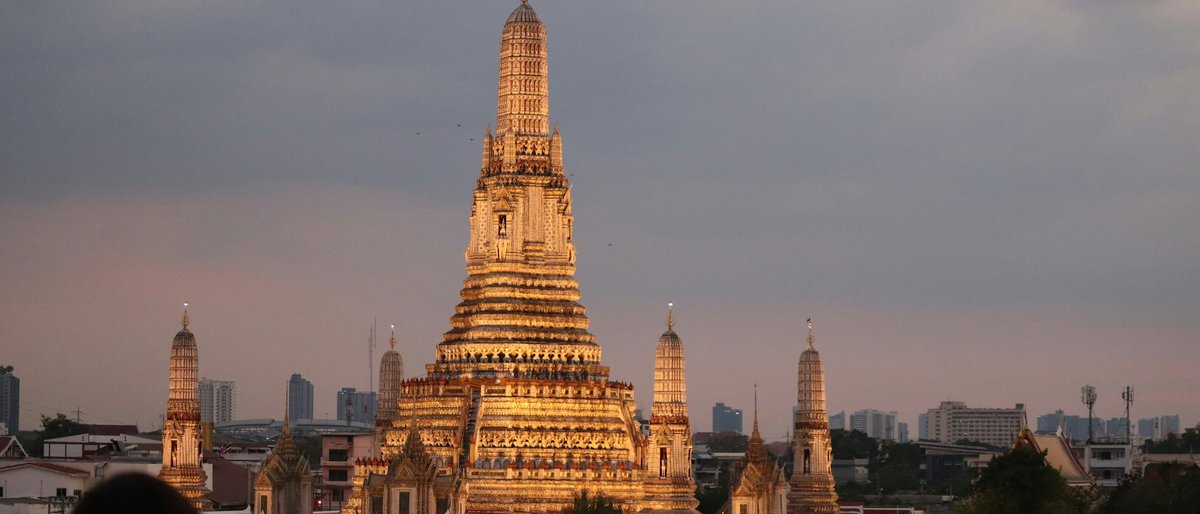
templeThe 82-meter Khmer-style prang on the Thonburi bank dates to 1656 and catches golden light in late afternoon. January's clear skies produce sharper photographs than any other month. You can climb partway up the central spire for river views toward the Grand Palace.
ThonburiYaowarat Road (Chinatown)
food districtA 1.5 km stretch of Chinese-Thai commerce since the 1780s. In January, the cool air lets you linger at charcoal seafood grills and noodle stalls without the monsoon-season rush to find cover. Late January in some years sees early Chinese New Year decorations and red lanterns going up.
YaowaratChatuchak Weekend Market
marketThailand's largest market fills every section during January's dry weather. The outdoor vintage, plant, and pet sections that flood or shutter during monsoon months run at full capacity. Open Saturday-Sunday, 9am to 6pm. The surrounding Chatuchak Park offers shade between browsing sessions.
ChatuchakPak Khlong Talat (flower market)
marketBangkok's largest flower market sits along the Chao Phraya near Memorial Bridge. January brings cool-season blooms: chrysanthemums, marigolds, and orchids in peak supply. The market runs 24 hours but peaks between midnight and dawn when wholesale trucks unload. Cooler January nights make the 3am visit less punishing than in the hot months.
Phra NakhonSanam Luang
landmarkThe ceremonial open field opposite the Grand Palace hosts the largest National Children's Day events in the country each January. Outside event days, the field draws evening kite flyers and food vendors. The Democracy Monument stands a short walk east along Ratchadamnoen Avenue.
RattanakosinBang Krachao
natureA 12 km² island of green in a bend of the Chao Phraya, reachable by longtail boat from Klong Toei pier. Elevated cycling paths wind through tropical gardens, Sri Nakhon Khuean Khan Park, and a small floating market. January's dry ground keeps all paths open and mud-free.
Phra Pradaeng
Your packing checklist
Tick items off as you pack. Your progress saves in this browser.
All packed — have a great trip.
Insider tips
Pak Khlong Talat, the flower market near Memorial Bridge, sells the same garlands and bouquets at a fraction of what tourist-oriented stalls on Silom charge. Go between midnight and 4am for wholesale prices and the full spectacle of trucks unloading jasmine and marigold by the crate.
The Khlong Saen Saep canal boat runs east-west across the city for 10-20 THB, covering in 20 minutes what a taxi in January peak-season traffic would take 50 minutes to manage. Board at Pratunam pier heading toward Sukhumvit, or Phan Fa pier for Rattanakosin. Hold the rope railing and duck when the conductor pulls the tarp over the boat at low bridges.
Or Tor Kor Market, next to Chatuchak, sells higher-quality produce than the main market's food stalls. The Thai highland strawberries and pomelo here are hand-sorted and noticeably better. The building is also air-conditioned, which matters even in January once the midday sun is overhead.
If the Grand Palace queue looks unbearable by 10am, cross the river to Wat Arun first. The ferry costs 4 THB. By the time you've climbed the prang and returned, the Palace queue often shortens after 14:00 when morning tour groups leave.
Bangkok's 7-Elevens stock effective local sunscreen (Biore UV, Banana Boat) for 150-300 THB. No need to pack full-size bottles from home. Every 7-Eleven is air-conditioned, open 24 hours, and spaced roughly every 200 meters in central Bangkok, making them reliable cool-down stops between temple visits.
Avoid these mistakes
- Scheduling a Grand Palace visit for midday, even in January. At 32°C with limited shade on the palace grounds, heat fatigue sets in quickly after an hour. Go at opening (8:30am) when temperatures sit closer to 25°C and the grounds are relatively empty.
- Not booking accommodation far enough ahead. January sits in the middle of peak season. Waiting until 1-2 weeks before arrival means paying premium rates for whatever remains, often farther from the BTS and MRT lines that make the city navigable.
- Over-packing warm clothes for 22°C nights. That temperature feels warm by most standards outside the tropics. A single thin long-sleeve layer handles both the evening coolness and the aggressive indoor air conditioning. Jackets and hoodies will sit untouched in your bag.
- Defaulting to taxis during rush hour (7:30-9:30am, 16:30-19:30) on Sukhumvit or Silom. January's tourist volume compounds normal Bangkok traffic. The BTS Skytrain covers these corridors in a fraction of the time. An Asok-to-Siam trip that takes 8 minutes on the BTS can take 40-50 minutes in a taxi.
Practical tips for January
The New Year's holiday period can extend to a substitute Monday if the 1st falls on a weekend, affecting some government services and banks. The exchange rate sits near 32.67 THB per 1 USD. Currency exchange booths in the Siam and Asok BTS areas tend to offer better rates than airport counters, often by 1-2 THB per dollar. Book popular dinner restaurants in Thonglor and Ari 3-5 days ahead on weekends. BTS and MRT trains operate from approximately 06:00 to midnight. After midnight, taxis and the Grab app (Southeast Asia's ride-hailing standard) are your options. Metered taxis start at 35 THB. Temple dress codes are enforced year-round at all major sites: no shorts above the knee, no sleeveless tops. The Grand Palace provides wraps for rent, but the queue to borrow them adds 10-15 minutes. Bangkok's tap water is not drinkable. Bottled water costs 7-10 THB at any convenience store.
FAQ
Is January a good time to visit Bangkok?
January is likely the best single month to visit Bangkok. It has the lowest rainfall of any month, the most comfortable temperatures, and the clearest skies. The trade-off is peak-season crowds and pricing. If weather is your priority, January wins. If budget matters more, consider late February or early November when conditions are still reasonable but rates soften.
Is Bangkok safe for solo travelers in January?
Bangkok scores 7/10 for solo-traveler safety (see the TTDI Solo-Safety Index). Peak season means well-lit streets, busy transit until midnight, and plenty of other travelers at major sites. Standard precautions apply: watch for tuk-tuk scams near the Grand Palace (drivers claiming sites are 'closed today'), keep valuables close on packed BTS carriages during rush hour, and use licensed metered taxis or the Grab app after dark. Solo dining is completely normal in Bangkok at any time of year.
Is Bangkok crowded in January?
Yes. January falls in the heart of peak tourist season, which runs November through February. Major temples, Chatuchak Weekend Market, and the Rattanakosin district draw their largest visitor numbers. That said, Bangkok absorbs tourists well. The city has over 10 million residents and deep commercial infrastructure. Crowded means 30-minute queues at top attractions and full restaurants on weekend evenings, not shoulder-to-shoulder gridlock across the city.
Is Bangkok good for families with children in January?
Bangkok scores 6.5/10 for family friendliness (see the TTDI Family-Friendliness Index). January's mild weather removes the biggest obstacle, which is heat exhaustion for small children. National Children's Day, on the second Saturday of the month, opens government buildings and military bases for free, with rides and performances at Sanam Luang. Sidewalks are uneven and stroller-unfriendly in older neighborhoods like Rattanakosin, so a carrier works better for toddlers than a wheeled stroller.
What should I wear in Bangkok in January?
Light, breathable clothing for warm days. Cotton or linen works best. Pack one thin long-sleeve layer for air-conditioned interiors, which often drop to 18-20°C even when it's 32°C outside. All major temples require covered shoulders and knees for both men and women. Evenings feel comfortable in short sleeves for most visitors, though some travelers from warmer climates may want a light cardigan after sunset.
Things to Do in Bangkok in January

Bangkok Private Highlights Tour with Local Guide
City tour: 8 hours.
via Viator Free cancellation
 Half-Day Floating Market and Railway Market Tour from Bangkok
Day trip: free cancellation.
via Viator Free cancellation
 Bangkok: Floating Market and Train Market Experience
Day trip: 8.5 hours, free cancellation.
via Viator Free cancellation
 Experience Real Bangkok by Bike
City tour: 3 hours, free cancellation.
via Viator Free cancellation
 Hidden Bangkok Longtail Boat Tour to Big Buddha&Canal Life 2hrs
Cruise: 2 hours, free cancellation.
via Viator Free cancellation
 UNESCO's Ayutthaya Historical Park: Full-Day Tour from Bangkok
Day trip: 11.5 hours, free cancellation.
via ViatorFind a flight to Bangkok
Live fares to Bangkok appear here once cookies are accepted.
Last verified by automated review (v1.7.2) on . What is automated review?