Stay in Bangkok in July
78 hotels in the Trip.com pool for Bangkok, from US$8 a night.
Opens Trip.com on Fri 2 Jul to Sun 4 Jul 2027; change the dates there.
July in Bangkok is the monsoon at full strength. This is the city's second-wettest month, when the sky opens most afternoons with the kind of downpour that turns Sukhumvit's smaller sois into shallow streams within 15 minutes. Daytime highs hover around 31.4°C (89°F) and nights rarely dip below 25.6°C (78°F), which sounds moderate for the tropics, but humidity around 81% pushes the feels-like temperature closer to 37°C. Step outside any BTS station exit and the air settles on your skin like a warm towel. That damp weight doesn't lift until you duck into a 7-Eleven, which in Bangkok is never more than 200 meters away.
To be fair, July has real advantages that the November-through-February peak season cannot match. Tourist numbers drop to annual lows, which means the Grand Palace grounds feel almost calm and Chatuchak Weekend Market has walkable aisles. Hotel rates across Silom and lower Sukhumvit tend to fall 30-40% below December highs. Bangkok's afternoon rain follows a predictable 2-3 hour cycle. Mornings before 11am are clear, sticky, and bright. Storms build after midday and typically break between 2pm and 5pm with genuine force, sheets of water hammering tin awnings. By early evening the pavement steams, the air carries the smell of wet concrete and jasmine from garland sellers, and rooftop bars along the Chao Phraya start to fill.
July also marks Asanha Bucha and the start of Khao Phansa, the Buddhist Lent period when monks begin a three-month rain retreat. Temples across Rattanakosin hold candlelit Wien Tien processions that few foreign visitors witness, because so few visit at this time of year. Bangkok National Museum, founded in 1874, is often nearly empty on weekday mornings.
Why visit in July
- Hotel rates drop 30-40% from the November-February peak, with deals across all categories from hostels in Banglamphu to 5-star properties along the Chao Phraya.
- Major sites like Wat Phra Kaew, Wat Arun, and the Grand Palace have noticeably shorter queues, and popular restaurants in Ari and Thonburi often have walk-in tables.
- Peak season for mangosteen, rambutan, and late-season durian, with monsoon supply pushing fruit prices to annual lows at markets like Or Tor Kor near Chatuchak.
- The start of Khao Phansa opens a window into Bangkok's temple culture that peak-season visitors rarely see, from Wien Tien candlelit processions to morning alms-giving ceremonies.
Worth knowing
- Rainfall totals 255mm, and storms hit on nearly every day of the month. Low-lying intersections along Sukhumvit and in Lat Phrao can flood to ankle depth within minutes of a heavy downpour.
- The gap between the thermometer reading and the feels-like temperature can reach 5-6°C, making sustained outdoor walking genuinely uncomfortable by late morning.
- Day trips to Gulf-coast islands like Koh Samui and Koh Phangan are unreliable. Ferries may cancel, seas are rough, and snorkeling visibility drops sharply.
- Some outdoor markets and walking streets shorten their hours or relocate under cover, disrupting plans built from a dated guidebook.
Best for
Think twice if
Bangkok's deep monsoon season brings a predictable daily cycle. Mornings tend to be clear and hot through about 11am, with cloud cover building by midday. Heavy afternoon showers typically arrive between 2pm and 5pm, sometimes with lightning. Rain is intense but rarely lasts more than 1-2 hours per episode. Skies usually clear by 7pm. Expect roughly 28 days with some measurable rainfall, though few of those are all-day washouts. The temperature range is narrow, with highs and lows separated by less than 6°C, making nights feel warm and sticky.
Seasonal caution
- Flash flooding in low-lying areas. Parts of Sukhumvit between Soi 1 and Soi 23, sections of Lat Phrao, and streets near Khlong Toei can flood to knee depth after heavy downpours. The BTS and MRT continue running, but street-level transit may stall for 1-2 hours.
- Mosquito-borne illness risk rises during monsoon season. Dengue cases typically increase from June through October across Bangkok. Use repellent containing DEET, especially near standing water in parks like Lumphini.
- Strong UV persists despite cloud cover. Bangkok sits at 13°N latitude and the UV index frequently reaches 10-11 during morning hours before clouds build. The best outdoor sightseeing window is also the peak UV window.
Year-round climate
Averages from the last 5 years.
| Month | Avg high (°C) | Avg low (°C) | Rainfall (mm) |
|---|---|---|---|
| Jan | 32 | 22 | 12 |
| Feb | 33 | 24 | 54 |
| Mar | 34 | 26 | 59 |
| Apr | 34 | 27 | 88 |
| May | 33 | 26 | 199 |
| Jun | 33 | 26 | 163 |
| Jul | 31 | 26 | 255 |
| Aug | 32 | 25 | 222 |
| Sep | 31 | 25 | 339 |
| Oct | 31 | 24 | 233 |
| Nov | 31 | 24 | 108 |
| Dec | 32 | 23 | 14 |
Holidays and festivals in July
Public holidays
- Asalha Bucha Day(วันอาสาฬหบูชา)18 July 2027
- King Vajiralongkorn's Birthday(วันเฉลิมพระชนมพรรษา ร.10)28 July 2027
Best things to do in July
Dawn temple circuit in Rattanakosin
culturalVisit Wat Phra Kaew, the Grand Palace, and Wat Arun before 9am, when the sky is still clear and tour-bus groups have not arrived. The morning light on the Chao Phraya is soft and warm, and the 1782-era palace grounds are quiet enough to hear birdsong. Cross the river by ferry to Wat Arun, established in 1656, for views back toward the old city.
July's low tourist volume means shorter queues at every gate. Afternoon storms make morning the only reliable outdoor window, so the early timing works naturally.Booking tipArrive at the Grand Palace by 8:30am when gates open. The first 30 minutes are the calmest you will experience at this site.
Cooking class in Silom or Chinatown
foodHalf-day classes typically begin with a market tour through a local wet market, then move to a covered kitchen for 3-4 dishes. Silom and Yaowarat both have established cooking schools that run rain or shine, and the wet-market component is short enough that a drizzle adds atmosphere rather than misery.
Rainy afternoons make indoor activities essential. Seasonal ingredients like fresh mangosteen and rambutan appear in dessert courses that other months cannot offer.Booking tipMorning classes finish before the afternoon storms. Book 2-3 days ahead. July is low season, so last-minute availability is common.
Khao Phansa Wien Tien procession
culturalOn the evening of Khao Phansa, temples across Bangkok hold Wien Tien ceremonies where worshippers walk clockwise around the main hall three times carrying candles, incense, and lotus flowers. The scent of melting wax and incense smoke hangs in the humid air. The atmosphere is contemplative and genuinely affecting even for non-Buddhists.
Khao Phansa occurs once a year, the day after Asanha Bucha in mid-to-late July. This ceremony cannot be scheduled for any other month.Booking tipNo booking needed. Dress modestly with covered shoulders and knees. Wat Benchamabophit (the Marble Temple) in Dusit draws a particularly photogenic ceremony.
Night food crawl through Yaowarat
foodBangkok's Chinatown comes alive after dark, when neon signs reflect off wet pavement and charcoal-grill smoke mixes with the smell of wok-fried noodles. Stalls along Yaowarat Road and its branching sois serve pad thai, roasted duck, soup, and mango sticky rice. The covered stall clusters keep you dry.
Evening storms usually clear by 7pm, leaving the streets freshly cooled and damp. Low tourist numbers mean you can eat without competing for plastic stools.Booking tipNo booking needed. Go between 7pm and 10pm. Take the MRT to Wat Mangkon station, which drops you in the center of the food district.
Khlong Saen Saep canal boat ride
transportCovered canal boats run from Phanfa Lilat pier near Democracy Monument eastward through Pratunam and on toward Ekkamai. The ride costs under 20 THB, takes about 30 minutes end-to-end, and gives you a water-level view of Bangkok's older neighborhoods. Boats are covered, so rain is irrelevant.
Monsoon-fed water levels in the khlongs are higher, making the ride smoother. One of the few transit options completely unaffected by storms.Booking tipNo booking. Boats run every 5-10 minutes from about 5:30am to 8:30pm. Sit in the middle to avoid splash from the bow.
Bangkok National Museum visit
culturalThailand's largest museum occupies a former palace near Sanam Luang and houses Southeast Asian art, Sukhothai-era Buddhas, royal regalia, and pre-historic Ban Chiang pottery. The collection spans centuries of Thai, Khmer, and Lanna material. Air-conditioned galleries provide relief from the moisture outside.
Peak-season crowds thin out dramatically. On a weekday morning in July you might have entire wings to yourself, a rare experience for a collection of this caliber.Booking tipClosed Mondays and Tuesdays. Free English-language guided tours run on Thursday mornings. Worth timing your visit around.
Traditional Thai massage at Wat Pho
wellnessThe Wat Pho Thai Traditional Massage School, located within the Wat Pho temple complex near the Grand Palace, is the oldest and most respected massage training center in Thailand. A 2-hour traditional Thai massage here costs a fraction of resort-spa equivalents and takes place in open-air pavilions within the temple grounds.
Afternoon rain creates natural downtime between sightseeing. Walk-in availability at Wat Pho is better than peak season, when waits can stretch past an hour.Booking tipArrive before 10am for the shortest wait. The massage pavilion accepts walk-ins, but mid-morning slots fill even in low season.
What to eat in July
In season: fruit
Mangosteen (mangkhut)
Peak season runs June through August, and July is when supply overwhelms demand at every market and fruit cart. The thick purple rind splits to reveal translucent white segments with a flavor somewhere between peach and lychee. Or Tor Kor Market near Chatuchak is a reliable source for quality-graded fruit.
Rambutan (ngo)
The hairy red-shelled fruit piles up at street stalls and market corners from May through September, with July pricing at seasonal lows. Look for firm, bright-red specimens with green-tipped hairs, a sign of freshness rather than age.
Durian (Monthong variety)
Late-season supply from Chanthaburi province still appears at specialist stalls in July, though the peak has passed. Prices are lower than the May-June frenzy, and the fruit is still excellent if you pick from vendors who will open and check ripeness on the spot.
On menus now
Kanom jeen nam ya
Fermented rice noodles with aromatic fish curry sauce, served with a plate of raw vegetables and herbs. A rainy-evening comfort staple at street stalls across Phra Nakhon and Banglamphu, where the warm, turmeric-stained curry and soft noodles feel suited to the weather.
Street food peaks
Khao tom (rice porridge)
A late-night and early-morning staple that grows more popular during the monsoon months. Served with pork, prawns, or century egg at 24-hour stalls along Charoen Krung Road, it is simple, warm, and exactly right after a storm clears and the air cools.
Regular events in July
Asanha Bucha DayFree
National holiday marking the anniversary of the Buddha's first sermon to his five disciples. Government offices, banks, and many businesses close. Alcohol sales are banned nationwide for 24 hours. Temples hold morning merit-making ceremonies and evening Wien Tien candlelit processions.
Full moon of the 8th lunar month, typically mid-to-late July. Exact date shifts each year by lunar calendar.Khao Phansa (Buddhist Lent)Free
The day after Asanha Bucha begins the three-month rain retreat for monks across Thailand. Devotees present candles and robes to temples in elaborate processions. Alcohol sales are banned for this day as well, back-to-back with the previous day's ban, creating a 48-hour dry period.
Day after Asanha Bucha, typically mid-to-late July.King Vajiralongkorn's BirthdayFree
National holiday celebrating the current monarch's birthday. Government buildings and major avenues are decorated with yellow-themed royal displays and portraits. Public merit-making ceremonies take place around Sanam Luang and along Ratchadamnoen Avenue in Phra Nakhon.
July 28 (fixed date)Best places this July
Yaowarat (Chinatown)
neighborhoodBangkok's oldest commercial district runs along Yaowarat Road from Hua Lamphong to the river. The covered shophouse arcades and dense stall clusters keep you sheltered during downpours. After dark, when afternoon storms have passed, the neon-lit food strip is at its most atmospheric, with smoke and steam rising from wok stations into the cooling air.
SamphanthawongLumphini Park
parkBangkok's 142-acre central park is at its greenest during the monsoon, with rain-fed ponds full of monitor lizards and flowering trees in full canopy. Visit before 8am, when joggers and tai chi groups use the paths and the heat is still tolerable. The park sits between the Silom and Sukhumvit districts, making early-morning visits easy from either area.
Pathum WanChatuchak Weekend Market
marketThailand's largest market typically draws massive weekend crowds from November through March. In July the covered sections of the 35-acre compound are navigable without the crush. Several thousand stalls sell everything from vintage furniture to orchids. The adjacent JJ Green night market extends the experience after 6pm.
ChatuchakWat Arun
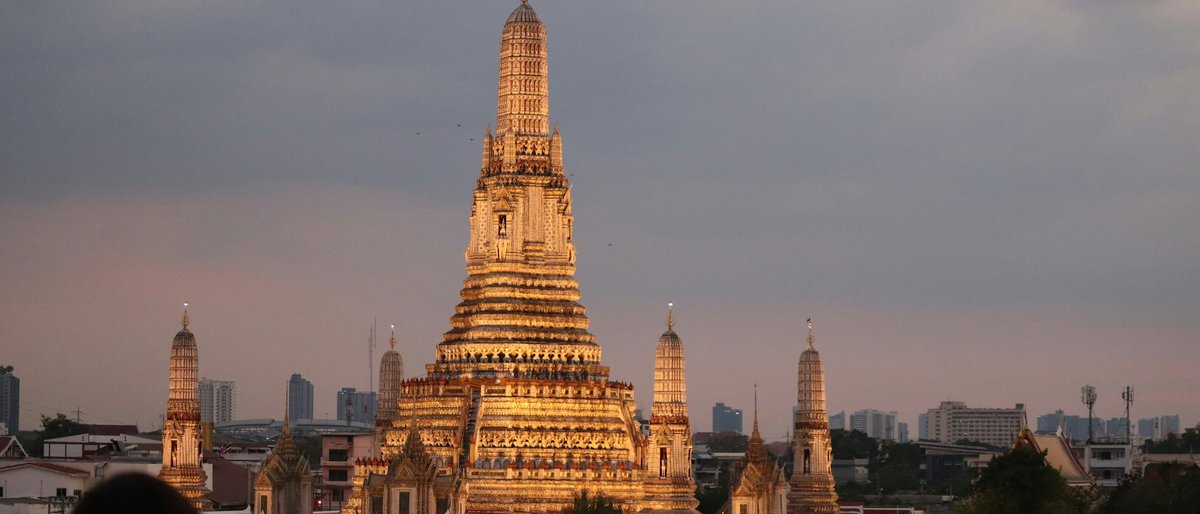
templeThe temple on the Thonburi bank of the Chao Phraya is striking at any time of year, but July mornings offer some of the best photographic light, when the porcelain-inlaid prangs catch low sun before clouds build. Fewer visitors mean you can climb the steep central tower without queuing on the narrow steps.
ThonburiAri neighborhood
neighborhoodA residential area north of Phaya Thai that has become Bangkok's cafe and independent-restaurant concentration. The tree-lined sois are walkable even in light rain, and covered shopfront cafes make it a natural rainy-afternoon destination. BTS Ari station provides direct access from central Bangkok.
Phaya ThaiSanam Luang
landmarkThe ceremonial field opposite the Grand Palace takes on added significance around the King's Birthday on July 28, when it becomes a gathering point for public ceremonies and merit-making. The surrounding area includes the national museum and the Thammasat University campus.
Phra NakhonDusit Palace district
historic districtThe Dusit Palace compound, built starting in 1899, includes the Ananta Samakhom Throne Hall, one of Bangkok's finest examples of Italian Renaissance-influenced architecture. The surrounding Dusit neighborhood is quieter than the old-city temple zone and makes for a pleasant morning walk when the canopy of old rain trees provides both shade and shelter.
Dusit
Your packing checklist
Tick items off as you pack. Your progress saves in this browser.
All packed — have a great trip.
Insider tips
The BTS Skytrain and MRT subway are your real lifeline in July. Air-conditioned, dry, and connected to most areas worth visiting. The walk between Phaya Thai and Ratchathewi BTS stations is 5 minutes on a dry day but feels twice that in monsoon moisture. Take the train for even short hops.
Monsoon-season fruit prices drop sharply when supply peaks. Mangosteen that vendors charge 80-100 THB per kilo during the shoulder months might run 40-50 THB at markets away from tourist zones, particularly at Or Tor Kor near Mo Chit BTS.
The canal boats along Khlong Saen Saep are covered and cost under 20 THB per ride. They connect Rattanakosin's temple district to the Sukhumvit corridor in about 30 minutes and are completely unaffected by rain. Board at Phanfa Lilat pier if you are coming from the old city.
Check the lunar calendar before you book dinner out. Asanha Bucha and Khao Phansa both carry nationwide 24-hour alcohol-sale bans. Hotels and some upscale restaurants quietly serve regardless, but street-level bars, convenience stores, and supermarkets will not sell. The back-to-back holy days mean 48 consecutive hours without legal alcohol retail.
Avoid these mistakes
- Scheduling outdoor temple tours or river cruises between 2pm and 5pm. This is peak storm time in July, when rain is heavy enough to halt open-air Chao Phraya boat services and make exposed walkways miserable. Shift outdoor plans to the morning window before 11am.
- Packing only cotton clothing. Cotton absorbs humidity and rain, stays wet for hours, and starts to smell by afternoon. Travelers who bring cotton t-shirts and jeans often end up buying synthetic replacements from MBK Center or Terminal 21 by day 3.
- Retreating to the hotel when rain starts and writing off the afternoon. The July pattern is intense but short. A storm that looks apocalyptic at 3pm is typically over by 4:30pm. Ducking into a mall, museum, or massage shop for 90 minutes turns the rain into a rest stop, and the cooled-down evenings that follow are some of the best hours to explore.
Practical tips for July
Alcohol sales are banned nationwide for 24 hours on both Asanha Bucha and Khao Phansa, creating a consecutive 48-hour dry window. Check the Thai lunar calendar for the exact dates, which shift each year. The BTS and MRT run normal schedules throughout July, but the Chao Phraya Express Boat may reduce evening services during heavy storms. Hotels near BTS or MRT stations offer a significant convenience advantage in monsoon season, since covered station walkways keep you dry until the last step. The Silom Soi 4 area stays lively year-round regardless of season. Family friendliness rates 6.5/10 (see the TTDI Family-Friendliness Index), and rainy-day activities like cooking classes, the Bangkok National Museum, and the SEA LIFE aquarium at Siam Paragon work well with children. For currency, 1 USD currently converts to about 32.67 THB. Grab, the regional ride-hailing app, is essential during storms, when taxis become scarce and tuk-tuks are impractical. Download it before you arrive.
FAQ
Is July a good time to visit Bangkok?
It depends on your priorities. July is the second-wettest month and outdoor exploration becomes uncomfortable by late morning. That said, tourist numbers are at annual lows, hotel rates drop significantly from peak, and the start of Buddhist Lent offers cultural experiences most visitors never see. If you can plan around afternoon storms and prioritize mornings for sightseeing, July is a functional and affordable time to visit. It is not a good month if you want guaranteed dry days.
Does it rain all day in Bangkok in July?
Rarely. The typical pattern is clear mornings, cloud buildup around noon, and heavy storms between 2pm and 5pm lasting 1-2 hours. By evening the rain usually stops and the air cools noticeably. Rain falls on most days of the month, but genuine all-day washouts are uncommon. The morning window from about 7am to 11am is usually dry and the best time for outdoor activity.
Is Bangkok crowded in July?
No. July falls deep into the low tourist season. Attractions like the Grand Palace and Chatuchak Weekend Market are noticeably less packed than during the November-February peak. Restaurants that normally require reservations often have walk-in tables. The city still runs at full speed and locals are everywhere, but international tourist density drops substantially.
What should I wear in Bangkok in July?
Lightweight, breathable fabrics that dry quickly. Synthetic moisture-wicking shirts, loose-fitting trousers or shorts, and waterproof sandals with grip. Avoid cotton, which absorbs rain and takes hours to dry. Carry a light scarf for temple visits, which require covered shoulders and knees. A compact umbrella is more practical than a rain jacket, which traps body heat in the tropical moisture.
Can I visit Thai islands from Bangkok in July?
Gulf-coast islands like Koh Samui and Koh Phangan are reachable but weather-dependent. Seas can be rough and ferry cancellations happen. Andaman-coast islands including Phuket, Krabi, and Koh Lanta are in their monsoon off-season and many dive operators close for the month. If island time is important to your trip, consider Koh Chang on the eastern seaboard, which tends to handle July weather better than the southern islands, though afternoon rain remains likely there as well.
Things to Do in Bangkok in July

Bangkok Private Highlights Tour with Local Guide
City tour: 8 hours.
via Viator Free cancellation
 Half-Day Floating Market and Railway Market Tour from Bangkok
Day trip: free cancellation.
via Viator Free cancellation
 Bangkok: Floating Market and Train Market Experience
Day trip: 8.5 hours, free cancellation.
via Viator Free cancellation
 Experience Real Bangkok by Bike
City tour: 3 hours, free cancellation.
via Viator Free cancellation
 Hidden Bangkok Longtail Boat Tour to Big Buddha&Canal Life 2hrs
Cruise: 2 hours, free cancellation.
via Viator Free cancellation
 UNESCO's Ayutthaya Historical Park: Full-Day Tour from Bangkok
Day trip: 11.5 hours, free cancellation.
via ViatorFind a flight to Bangkok
Live fares to Bangkok appear here once cookies are accepted.
Last verified by automated review (v1.7.2) on . What is automated review?