Stay in Bangkok in May
78 hotels in the Trip.com pool for Bangkok, from US$8 a night.
Opens Trip.com on Fri 7 May to Sun 9 May 2027; change the dates there.
May in Bangkok is when the rain arrives. That's the single most important thing to understand about this month: after weeks of relentless April heat, the sky finally cracks open and the wet season begins in earnest. Expect daytime temperatures around 33°C (92°F) that still feel closer to 40°C with 78% humidity pressing down on everything. The rain itself tends to come in sharp afternoon bursts, the kind that flood Sukhumvit sois within twenty minutes and then clear out as if nothing happened. You might get a full morning of hazy sunshine, then a downpour at 3pm that turns the city into a temporary river system. By evening, the streets are steaming dry again. It's dramatic, honestly.
To be fair, May is not Bangkok's worst month: that distinction likely belongs to September, when the rain barely lets up. But May sits in an awkward transition zone: the oppressive heat of March and April hasn't fully broken, and the monsoon is still ramping up with roughly 199mm of rainfall spread across 22 days. The city feels heavy, damp, a bit sluggish. Locals who fled for Songkran in April are back at work, and the tourist crowds thin out considerably. That said, if you don't mind sweating through your shirt by 10am and carrying an umbrella everywhere, there are genuine advantages: hotel rates drop sharply, you can walk into temples without queuing, and the fruit markets are at their absolute peak. Durian and mangosteen stalls appear on practically every corner. May rewards patience and flexibility, but it asks a lot of both.
Why visit in May
- Hotel rates drop 30-50% from peak season: four-star properties along the river that cost 5,000 baht in January go for 2,500 or less
- Durian and mangosteen season hits full stride, with fruit vendors stacking carts along Yaowarat and Charoen Krung at prices you won't see the rest of the year
- Temple complexes like Wat Pho and Wat Arun have noticeably fewer visitors, making it possible to photograph or simply sit in the courtyards without being jostled
- The first rains wash away some of the April haze and dust, and the city feels temporarily cleaner and greener after each downpour
- Thai cooking class operators run low-season promotions and smaller group sizes, so you get hands-on instruction rather than watching from the back row
Worth knowing
- Humidity at 78% combined with 33°C heat creates a sticky, draining combination: walking between sites for more than an hour requires real stamina and frequent hydration stops
- Rain hits on roughly 22 of 31 days, and while showers are usually short, they can strand you under a 7-Eleven awning for 45 minutes with no warning
- Flooding on lower-lying streets (around Sukhumvit Soi 1-23 and parts of Silom) can make walking unpleasant and taxi rides excruciatingly slow
- Some outdoor markets and floating markets reduce hours or close stalls on heavy rain days, so plans need backup options
Best for
Think twice if
May marks the official start of the southwest monsoon. Mornings typically begin warm and overcast, with temperatures climbing quickly past 30°C by mid-morning. Afternoon downpours arrive most days, usually between 2pm and 5pm: sometimes just a quick thirty-minute burst, sometimes a sustained hour of heavy rain that floods low-lying streets. Nights stay warm and sticky, rarely dropping below 26°C. The humidity is the real challenge: at 78%, the air feels thick enough to chew. You'll notice that even Thais slow down in May, spending more time in air-conditioned spaces and timing their outdoor activities for early morning. Worth noting that the rain does bring brief relief: temperatures can drop 4-5 degrees during a heavy shower, and the twenty minutes after a storm are pleasant, with wet pavement hissing and the smell of rain on hot concrete filling the streets.
Seasonal caution
- Afternoon storms can produce localized flash flooding in low-lying areas of Sukhumvit, Silom, and Sathorn: avoid walking through floodwater, which often contains sewage overflow
- Heat index frequently exceeds 40°C (104°F) despite air temperatures of 33°C: heat exhaustion risk is real for visitors not acclimatized to tropical humidity
- Lightning is common during May storms: avoid exposed rooftop bars and open spaces when you see dark clouds building
Year-round climate
Averages from the last 5 years.
| Month | Avg high (°C) | Avg low (°C) | Rainfall (mm) |
|---|---|---|---|
| Jan | 32 | 22 | 12 |
| Feb | 33 | 24 | 54 |
| Mar | 34 | 26 | 59 |
| Apr | 34 | 27 | 88 |
| May | 33 | 26 | 199 |
| Jun | 33 | 26 | 163 |
| Jul | 31 | 26 | 255 |
| Aug | 32 | 25 | 222 |
| Sep | 31 | 25 | 339 |
| Oct | 31 | 24 | 233 |
| Nov | 31 | 24 | 108 |
| Dec | 32 | 23 | 14 |
Holidays and festivals in May
Public holidays
- National Labour Day(วันแรงงานแห่งชาติ)1 May 2027
- Coronation Day(วันฉัตรมงคล)4 May 2027
- Visakha Bucha Day(วันวิสาขบูชา)20 May 2027
Best things to do in May
Early morning temple visits
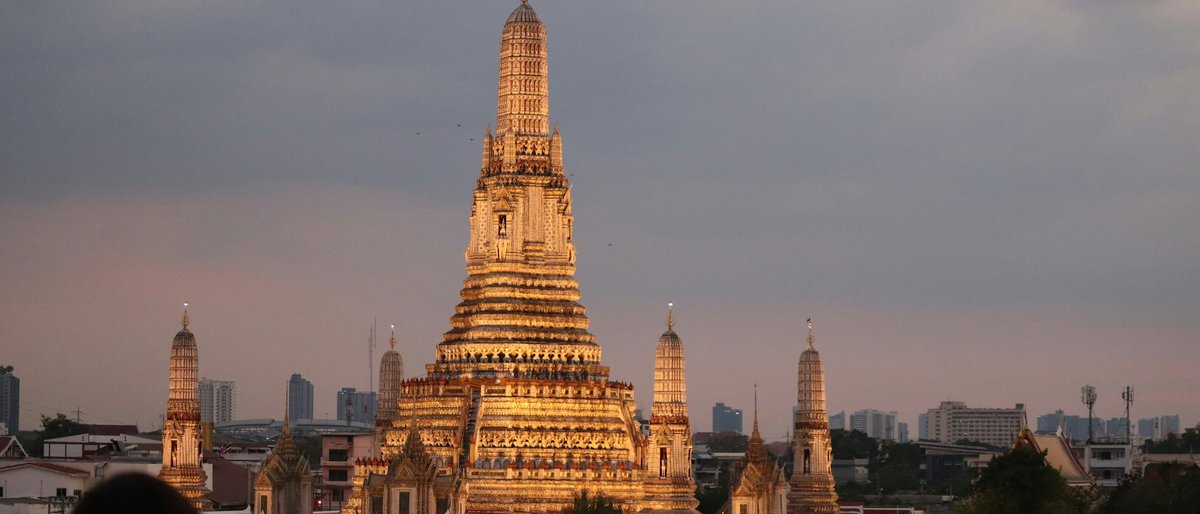
sightseeingWith tourist numbers at a fraction of peak season, you can visit Wat Pho, Wat Arun, and even the Grand Palace grounds without the usual crush. Get there by 8am before the heat builds. The rain-washed temple grounds look striking in the soft morning light, with the golden spires reflecting off wet tiles. You might find yourself nearly alone in spaces that accommodate hundreds in December.
Low crowds make the experience completely different from high season: you can hear the monks chanting at Wat Pho instead of tour guide megaphonesBooking tipGrand Palace still requires advance booking on weekends even in low season: book online 2-3 days ahead
Thai cooking classes
foodRainy season is good for spending a morning in a cooking school kitchen. Many operators in the Old Town and Silom areas offer half-day classes covering pad thai, green curry, and som tam. With fewer tourists booking, class sizes shrink from twelve down to four or five, which means more personal instruction and more time at the wok. The wet markets where classes start with ingredient shopping are less crowded too.
Operators run low-season promotions with 20-30% discounts, and smaller group sizes mean hands-on instructionBooking tipBook 2-3 days ahead for morning classes, which tend to fill before afternoon ones
Fruit market crawling
foodMay is peak fruit season in Thailand, and Bangkok's markets overflow with durian, mangosteen, rambutan, lychee, and rose apple. Or Tor Kor Market near Chatuchak is the premium option: cleaner, well-organized, with tasting before buying. Khlong Toei Market is grittier but cheaper and more atmospheric, with vendors who will slice a durian open for you on the spot. The smell of ripe tropical fruit mixes with the humidity in a way that's either intoxicating or overwhelming, depending on your tolerance.
Durian, mangosteen, and rambutan all hit peak season simultaneously: this convergence of tropical fruit only happens for a few weeks each yearBooking tipGo before 9am for the best selection, for premium durian varieties
Traditional Thai massage marathon
wellnessWhen the afternoon rains hit, duck into a massage shop for a two-hour Thai massage or herbal compress treatment. Wat Pho's massage school is the most famous, but the Thonglor and Ari neighborhoods have excellent independent practitioners at half the price. The contrast between the humid street and the cool, dim massage room is itself a sensory experience. May prices for spa packages at hotel properties are typically 20-40% below high season.
Afternoon rain makes this the natural activity for the 2-5pm window when you'd otherwise be stranded, and low-season pricing makes premium spa experiences accessibleChatuchak Weekend Market: indoor sections
shoppingThe famous weekend market has both open-air and covered sections. In May, the covered zones (Sections 2-4 (clothing), 17-19 (home goods), and 25-27 (art)) become the focus. With fewer tourists, bargaining works better and the aisles are navigable. Get there when it opens at 9am, shop the indoor sections, break for air-conditioned lunch at one of the surrounding malls when the rain hits, then return if it clears.
Fewer tourists mean better bargaining use and walkable aisles: vendors are more willing to negotiate when foot traffic is downBooking tipSaturday tends to be less crowded than Sunday in low season
Rooftop bars at sunset (before the storms)
nightlifeBangkok's famous rooftop bar scene (Vertigo at Banyan Tree, Sky Bar at Lebua, Octave at Marriott Sukhumvit) takes on a different character in May. The pre-storm light between 5-6pm can be extraordinary: bruised purple clouds building over the Chao Phraya, the golden hour lasting longer because of the atmospheric moisture. You might get twenty minutes of genuine drama before the lightning starts and staff move everyone inside. It feels rawer and more real than the polished dry-season version.
Pre-monsoon skies produce dramatic cloud formations and sunset colors you simply don't see in the dry months, and there's no queue for tablesBooking tipMost rooftop bars don't take reservations in low season, just show up around 5pm
Jim Thompson House and Museum
cultureThis teak house complex along Khlong Saen Saep is a cool retreat from the humidity, set among tropical gardens. The guided tours explain Thompson's life and his Thai silk legacy, and the air-conditioned galleries display his Southeast Asian art collection. The surrounding garden, freshened by May rains, is green and lush. With low crowds, guides have time for questions and extended conversation.
Indoor attraction that thrives in rainy weather: gardens are lush from early monsoon rain, and low tourist numbers mean unhurried guided toursKhlong boat rides in the morning
sightseeingThe canal boats along Khlong Saen Saep are a working commuter route, not a tourist attraction, which makes them more interesting. In May mornings before the rain, the khlongs are calm and the wooden houses along the banks look their best with fresh green vegetation. Take the boat from Pratunam to Phan Fa Lilat bridge and walk to the Old Town. The breeze off the water is one of the few natural cooling mechanisms in Bangkok.
Morning calm before afternoon storms makes the canals navigable and pleasant: the green vegetation from early rains lines the banksWhat to eat in May
In season: fruit
Durian
May is the heart of durian season. Vendors along Yaowarat Road and at Or Tor Kor Market pile up varieties like Mon Thong and Chanee. The smell hits you from half a block away: sweet, sulfurous, impossible to ignore. Prices drop to their yearly low because supply peaks. If you've never tried durian, May in Bangkok is the place to decide whether you love it or never want to encounter it again.
Mangosteen
The queen of fruits arrives alongside durian in May. Crack open the thick purple rind and the white segments inside are cool, sweet, slightly tart: a welcome contrast to the heat. Street vendors sell bags of six or eight for almost nothing. The best ones feel heavy for their size, with a slight give when you press the shell.
Rambutan
Hairy, red-shelled rambutan floods the markets in May. Peel off the spiny skin to find translucent, grape-like flesh that's mildly sweet with a floral note. You'll find mountains of them at Khlong Toei Market for a fraction of supermarket prices back home.
Lychee
Northern Thai lychee arrives in Bangkok markets through May, with the best specimens coming from Chiang Rai province. The season is short (maybe six weeks) and May catches the tail end when prices are lowest. Sweet, perfumed, slightly acidic. Eat them cold from the fridge on a hot afternoon.
On menus now
Tom Yum Goong
Not strictly seasonal, but the fresh galangal and kaffir lime that go into proper tom yum are at their most aromatic in the early wet season. The rain-fed herbs have a sharper bite. Worth seeking out at a shophouse restaurant rather than a tourist-oriented place: the broth should be sour enough to make you wince slightly before the chili heat registers.
Street food peaks
Mango sticky rice (Khao Niao Mamuang)
Thai Nam Dok Mai mangoes reach peak sweetness in May, and sticky rice vendors know it. This is the month when the mango-to-rice ratio improves noticeably: the mangoes are larger, juicier, and cheaper. Look for the stalls along Thanon Tanao near Khao San, or at any night market.
Regular events in May
Visakha Bucha DayFree
The most sacred day in the Thai Buddhist calendar, marking the birth, enlightenment, and death of Buddha. Temples across Bangkok hold candlelit processions (Wien Thien) in the evening, with devotees walking three times around the main chapel carrying candles, incense, and lotus flowers. Wat Saket and Wat Benchamabophit are atmospheric. It's a national holiday, so banks and government offices close, and alcohol sales are banned for 24 hours.
Full moon day in May (date varies by lunar calendar)Royal Ploughing Ceremony (Raek Na Khwan)Free
An ancient Brahmin ritual held at Sanam Luang near the Grand Palace, where sacred oxen are presented with trays of food to predict the coming harvest. The King or his representative presides. Locals scramble to collect the blessed rice seeds scattered after the ceremony, believing they bring good fortune. It's short (maybe an hour) but the pageantry of the ceremonial dress and the crowd energy make it worth catching if you happen to be in town.
Early to mid-May (date set by royal astrologers)Bangkok Art Biennale overflow exhibitionsFree
While the main Biennale runs October through February, several participating galleries in the Charoenkrung and Sathorn areas maintain extended exhibitions through May. Check Bangkok Art Map for current shows: the warehouse galleries along Soi Charoen Krung 36 and the artist-run spaces in Talat Noi tend to keep programming running through low season.
Ongoing through MayBest places this May
Or Tor Kor Market
marketThailand's highest-rated fresh market, right next to Chatuchak. In May, the fruit section is overwhelming in the best way: towers of golden durian, pyramids of purple mangosteen, bags of hairy rambutan. The prepared food stalls in the back serve some of the best som tam and grilled seafood in Bangkok. Air-conditioned sections provide relief when the heat peaks. Come hungry and early.
ChatuchakLumpini Park at dawn
parkThe city's central park comes alive before 6am with joggers, tai chi practitioners, and monitor lizards the size of dogs lurking near the lake. In May, the rain keeps the grass green and the air smells of wet earth and frangipani. The humidity is tolerable at dawn: this is your window for outdoor activity before the heat clamps down. The park drains reasonably well after storms, unlike the surrounding streets.
Silom / SathornTalat Noi neighborhood
neighborhoodThis pocket of old Bangkok between Chinatown and the river has narrow lanes lined with Chinese shrines, street art, and converted warehouse cafes. May's low season means the cafes aren't packed with influencers, and you can wander the sois without competing for space. The neighborhood has a particular quality in the rain: water streaming off corrugated roofs, incense smoke curling out of shrine doorways, the sound of the river nearby.
Old TownWat Saket (Golden Mount)
templeThe 344-step climb to the golden chedi rewards you with a 360-degree view of Bangkok, and in May, you can make the climb without queuing behind tour groups. Go in the early morning when the metal stairs haven't absorbed the day's heat. The temple grounds below are shaded and quiet, with a small cemetery that most visitors miss. On Visakha Bucha day, the candlelit procession up the mount is one of Bangkok's most atmospheric scenes.
Old TownYaowarat Road (Chinatown)
neighborhoodBangkok's Chinatown is good year-round, but May's fruit season transforms the street. Durian vendors set up massive displays along the main road, and the side sois fill with mangosteen and rambutan sellers. The seafood restaurants along Yaowarat stay open regardless of weather, and the covered market alleys provide shelter during downpours. Come at dusk when the neon signs light up and the air fills with the smell of wok-fried noodles and charcoal-grilled shellfish.
ChinatownBangkok National Museum
museumThailand's largest museum, housed in a former palace complex near Sanam Luang. The collection of Sukhothai and Ayutthaya-period Buddha images is excellent, and the royal funeral chariots hall is impressive. Free guided tours in English run on Thursday mornings. In May, you might be one of six people on the tour instead of thirty. The building itself stays cool, making it a natural refuge from the afternoon heat and rain.
Old TownThonglor and Ekkamai
neighborhoodThese neighboring Sukhumvit sois are where young Bangkok goes out. In May, the rooftop and garden bars are quieter, the Japanese restaurants along Thonglor don't require reservations, and the boutique coffee shops have empty seats at peak hours. The area has excellent drainage infrastructure compared to lower Sukhumvit, so flooding is less of an issue. It's a good base neighborhood for experiencing Bangkok's contemporary side without the tourist overlay.
Sukhumvit
Your packing checklist
Tick items off as you pack. Your progress saves in this browser.
All packed — have a great trip.
Insider tips
The BTS Skytrain and MRT are essential. Taxis and tuk-tuks get trapped in flood-related traffic jams that can turn a 15-minute ride into 90 minutes. Plan your route along train lines and walk the last few blocks rather than relying on street-level transport when it's raining.
Visakha Bucha Day means no alcohol sales anywhere: restaurants, bars, convenience stores, all of them. If you want a drink that evening, buy your bottles the day before and enjoy them at your hotel. The temple processions that evening are worth staying sober for anyway.
The best durian in Bangkok is not at tourist markets. The vendors along Soi Ratchadaphisek 10 and around Huai Khwang MRT station sell direct from eastern province farms at wholesale-adjacent prices. Ask for Mon Thong grade A: the vendor will open one for you to smell before you commit.
Air-conditioned mega-malls like Siam Paragon, CentralWorld, and EmQuartier are May survival infrastructure. Locals plan their days around hopping between air-conditioned spaces, and you should too. The food courts in these malls serve legitimate Thai food at reasonable prices, not just chain restaurants.
If you're visiting temples, bring a spare pair of socks in a ziplock bag. You'll remove your shoes at every temple entrance, and stepping back into wet shoes with dry socks is far more comfortable than wet-on-wet. Small thing, but it changes the experience completely.
Avoid these mistakes
- Scheduling a full day of outdoor sightseeing without a midday break. The heat peaks between 11am and 3pm, and the afternoon rain often starts around 2-3pm. Plan outdoor activities for 7-11am, retreat to air conditioning through the afternoon, and resume in the evening. Fighting the weather just leaves you exhausted and miserable.
- Booking a floating market tour without checking weather cancellation policies. Damnoen Saduak and Amphawa trips get cancelled or severely diminished in heavy rain, and some operators are reluctant to refund. Confirm the cancellation policy before paying, or schedule it for a morning when the forecast looks clear.
- Wearing flip-flops on flooded streets. The floodwater in Bangkok is not clean: it carries sewage, street debris, and the occasional surprise drain hole. Proper waterproof sandals with ankle support and grip are worth the small investment. Locals who wade through floods wear rubber boots for a reason.
- Assuming the rain ruins everything. First-time visitors sometimes hole up in the hotel all day when it rains, missing the fact that Bangkok storms rarely last more than an hour. The city is designed around the monsoon: covered walkways, indoor markets, air-conditioned malls, sheltered food stalls. Check the radar app, wait thirty minutes, and carry on.
Practical tips for May
Book accommodation along the BTS or MRT lines: Sukhumvit, Silom, or Siam areas give you the most flexibility when rain disrupts street-level transport. Reserve temples and cooking classes for the morning, ideally before 11am, and keep afternoons unstructured so a sudden storm doesn't wreck your schedule. Download the Thai Meteorological Department app or Windy for real-time rain radar: you can often see a storm cell approaching thirty minutes before it hits, which is enough time to find shelter. Dress modestly for temples even in the heat: lightweight long pants and a top that covers your shoulders are required, and most temples now enforce this strictly. Carry small denomination bills (20 and 50 baht) for street food and canal boats. Pharmacies and 7-Eleven stores are everywhere and stock rain ponchos, electrolytes, and basic medications. Alcohol sales are restricted during Buddhist holidays: check the calendar for exact dates. ATMs charge 220 baht per withdrawal, so take out larger amounts or bring a card with no foreign transaction fees. Most restaurants, malls, and upscale venues accept credit cards, but street food and markets are still cash-only. Consider a Thai SIM card from AIS or TrueMove at the airport for mobile data: essential for ride-hailing apps and rain radar.
FAQ
Is May a good time to visit Bangkok?
It depends on what you value. May is the start of the wet season, so you'll face daily rain, high humidity, and temperatures around 33°C (92°F). It's not the best month for outdoor sightseeing or first-time visitors who want comfortable weather. That said, hotel prices drop 30-50% from peak season, tourist crowds thin significantly, and the fruit markets are at their annual peak. If you're a repeat visitor comfortable with tropical weather, or a budget traveler who can be flexible with daily plans, May offers real value. If you only have one shot at Bangkok and want the postcard version, aim for December or January instead.
What is the weather like in Bangkok in May?
Hot, humid, and rainy, but not constantly rainy. Expect average highs of 33°C (92°F) and lows of 26°C (79°F), with humidity hovering around 78%. Rain falls on roughly 22 of 31 days, totaling about 199mm for the month. The pattern is fairly predictable: mornings tend to be warm and overcast, with short but heavy downpours arriving most afternoons between 2-5pm. Storms rarely last more than an hour. The heat index regularly exceeds 40°C (104°F) when you factor in humidity, so the air temperature alone is misleading: it feels significantly hotter than 33°C on your skin.
Does it rain all day in Bangkok in May?
No, and this is the most common misconception about Bangkok's rainy season. The rain typically arrives in intense afternoon bursts lasting 30-60 minutes, then clears. Mornings are usually dry, and evenings often clear up entirely. You can have a well productive day by scheduling outdoor activities before noon and keeping a flexible plan for the afternoon. The key is carrying an umbrella everywhere and not panicking when the sky turns dark: it will pass. That said, there are occasional full-day rain events, maybe two or three per month, where the drizzle never quite stops.
Is Bangkok crowded in May?
No, May is one of the quieter months. The combination of wet-season weather and the gap between Songkran (April) and summer holidays (July-August) means tourist numbers drop noticeably. Major temples like Wat Pho and the Grand Palace are manageable even on weekends. Hotels have availability and room to negotiate. Restaurants that require reservations in December will seat you immediately. The main exception is Thai domestic holidays: Visakha Bucha day and the Royal Ploughing Ceremony draw local crowds to specific areas, but these are single-day events.
What should I wear in Bangkok in May?
Lightweight, breathable fabrics that dry quickly. The humidity makes cotton uncomfortable: it soaks through and stays damp for hours. Linen and synthetic blends work better. You'll want waterproof sandals for daily wear since streets flood regularly, and a light rain jacket for the temperature shock of moving between humid streets and aggressively air-conditioned interiors. For temples, you'll need clothing that covers shoulders and knees: lightweight long pants and a loose short-sleeve shirt work. Bring more tops than you think you'll need. Changing shirts midday becomes routine when you're sweating through fabric before lunch.
Things to Do in Bangkok in May

Bangkok Private Highlights Tour with Local Guide
City tour: 8 hours.
via Viator Free cancellation
 Half-Day Floating Market and Railway Market Tour from Bangkok
Day trip: free cancellation.
via Viator Free cancellation
 Bangkok: Floating Market and Train Market Experience
Day trip: 8.5 hours, free cancellation.
via Viator Free cancellation
 Experience Real Bangkok by Bike
City tour: 3 hours, free cancellation.
via Viator Free cancellation
 Hidden Bangkok Longtail Boat Tour to Big Buddha&Canal Life 2hrs
Cruise: 2 hours, free cancellation.
via Viator Free cancellation
 UNESCO's Ayutthaya Historical Park: Full-Day Tour from Bangkok
Day trip: 11.5 hours, free cancellation.
via ViatorFind a flight to Bangkok
Live fares to Bangkok appear here once cookies are accepted.
Last verified by automated review (v1.7.1) on . What is automated review?