Compare every Italy city in April →
Stay in Rome in April
80 hotels in the Trip.com pool for Rome, from US$31 a night.
Opens Trip.com on Fri 2 Apr to Sun 4 Apr 2027; change the dates there.
April in Rome is, quite simply, one of the best times to be there. The single most important thing to know: Easter typically falls in April, and when it does, the city transforms. St. Peter's Square fills with tens of thousands for the Pope's Easter Mass, processions wind through the historic center, and restaurants roll out special holiday menus. Even in years when Easter lands in March, April still carries that post-winter energy: Romans are back outdoors, cafe tables spill onto piazzas, and the city finally feels warm enough to linger without a heavy coat. Expect daytime temperatures around 19°C (67°F) with nights still dropping to about 9°C (48°F), so layers matter.
That said, April is no secret. You're sharing Rome with a lot of other people who had the same idea. The Colosseum queue gets long. The Sistine Chapel feels airless by midday. Hotel rates climb. This is shoulder-to-high season, trending sharply toward high as Easter approaches. Worth noting: rain is still a real possibility (around 64mm spread over 10 days) though these tend to be passing showers rather than all-day washouts. You might get three perfect days in a row, then a grey morning that clears by lunch.
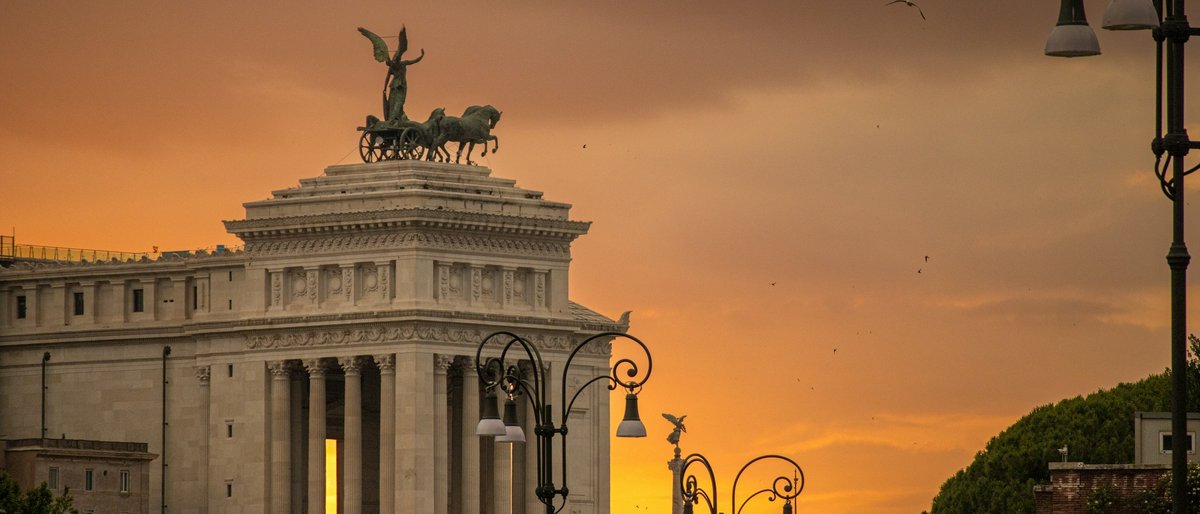
The trade-off is fair, though. Rome's light in April has this quality (soft, golden in the late afternoon) that makes even a random side street in Trastevere look like a painting. Wisteria starts draping over old walls. Orange trees are still heavy with fruit in courtyards you'll stumble into by accident. The city smells like jasmine and espresso and wet cobblestones after rain. If you can handle the crowds and book ahead, April rewards you.
Why visit in April
- Spring wildflowers cover the Palatine Hill and Roman Forum grounds: the ruins look different than any other season
- Comfortable walking temperatures around 19°C (67°F) mean full-day sightseeing without heat exhaustion or winter chill
- Easter celebrations at the Vatican are a once-in-a-lifetime spectacle, with the Pope's Urbi et Orbi blessing drawing massive international crowds
- Outdoor dining season kicks off properly: terraces along Piazza Navona and Campo de' Fiori are open and pleasant without summer's sweltering heat
- Day length stretches past 7:30pm, giving you golden-hour light for photography at the Spanish Steps and Pincian Hill
Worth knowing
- Hotel prices run 30-50% above annual average, and Easter week specifically can push rates even higher
- The Vatican Museums and Colosseum see some of their highest visitor counts of the year: expect 45-60 minute waits without pre-booked timed entry
- Rain remains unpredictable: roughly 10 days see some rainfall, and you might lose half a day to a heavier shower
- Several key sites operate on reduced holiday schedules around Easter weekend, with some museums closing entirely on Easter Sunday and the Monday after
Best for
Think twice if
April in Rome tends to feel like the city finally exhaling after winter. Daytime highs hover around 19.3°C (67°F), which sounds modest on paper but feels warmer in direct sun against those stone walls that soak up heat. Mornings can still catch you off guard: lows around 8.8°C (48°F) mean early risers at the Colosseum will want a jacket. Humidity sits around 71%, not oppressive but noticeable. Rain arrives on roughly 10 days through the month, totaling about 64mm. These are typically afternoon affairs: a quick burst, sometimes with distant thunder rolling across the seven hills, then clearing skies. The odd all-day drizzle happens too. You'll get stretches of three or four perfect days, then a moody grey one. That's April.
Year-round climate
Averages from the last 5 years.
| Month | Avg high (°C) | Avg low (°C) | Rainfall (mm) |
|---|---|---|---|
| Jan | 13 | 5 | 76 |
| Feb | 15 | 5 | 67 |
| Mar | 17 | 7 | 98 |
| Apr | 19 | 9 | 64 |
| May | 24 | 13 | 83 |
| Jun | 31 | 19 | 38 |
| Jul | 34 | 22 | 18 |
| Aug | 33 | 21 | 45 |
| Sep | 28 | 18 | 104 |
| Oct | 23 | 14 | 79 |
| Nov | 18 | 9 | 151 |
| Dec | 14 | 6 | 104 |
Holidays and festivals in April
Public holidays
- Liberation Day(Festa della Liberazione)25 April 2027
Headline events
Easter at the Vatican (Settimana Santa)
Varies yearly (Easter falls between late March and late April)
The holiest week in Roman Catholicism centers on Rome. Palm Sunday procession, the Way of the Cross at the Colosseum on Good Friday (led by the Pope with torchlight: moving even for non-believers), Easter Vigil Mass at St. Peter's Basilica, and the Easter Sunday Mass followed by the Urbi et Orbi papal blessing from the balcony of St. Peter's. Hundreds of thousands gather in the square. The atmosphere is electric regardless of your faith.
Rome's Birthday (Natale di Roma)
April 21
Rome celebrates its legendary founding on April 21, 753 BC. The city throws a proper party: historical reenactments with gladiators and legionnaires along the Via dei Fori Imperiali, fireworks over Circus Maximus, free entry to several civic museums, and costumed parades. It's a local holiday with real civic pride: Romans turn out for this. The gladiator reenactments at Circus Maximus tend to draw big crowds and are surprisingly well-produced.
Best things to do in April
Walk the Via dei Fori Imperiali with spring wildflowers
sightseeingThe ancient forums and Palatine Hill become beautiful in April as wildflowers (poppies, chamomile, wild roses) grow among the 2,000-year-old ruins. It's an oddly moving sight, nature reclaiming empire. The grass is green instead of summer's scorched brown, and the mild temperatures mean you can spend hours exploring without wilting.
Spring wildflowers transform the ruins into something you simply do not see in summer or winter: the contrast of red poppies against travertine columns is peak RomeBooking tipBook Colosseum and Forum combo tickets online at least a week ahead: the timed-entry system means walkups often face hour-long waits in April
Evening passeggiata through Trastevere
culturalThe post-dinner walk is a Roman institution, but in April the temperature is finally right for it. Around 8pm, Trastevere's narrow streets fill with locals and visitors drifting between gelaterias and wine bars. The wisteria draped over buildings on Via della Lungaretta is in full bloom. The air smells like night jasmine and pizza. Stop at a bar on Piazza di Santa Maria for a glass of something cold and watch the piazza come alive.
April evenings sit right in the sweet spot: warm enough to linger outside past dark but without summer's sticky heat that makes walking feel like workEaster Way of the Cross at the Colosseum
culturalOn Good Friday evening, the Pope leads the Via Crucis procession at the Colosseum by torchlight. The ancient amphitheater is lit with flames, the stations of the cross are read in multiple languages, and the crowd fills the surrounding streets. Whether or not you're religious, the atmosphere (thousands of flickering lights against the Colosseum's arches at night) is powerful. Arrive early, at least two hours before, or you'll be watching on screens from Via dei Fori Imperiali.
This only happens on Good Friday, and when Easter falls in April, this is the single most atmospheric event Rome hosts all yearBooking tipFree and open to the public but space fills fast: arrive by 7pm for a spot with a direct sightline. Bring something to sit on.
Day trip to the Castelli Romani hill towns
day tripThe volcanic hills southeast of Rome (Frascati, Castel Gandolfo, Nemi) are gorgeous in April. Vineyards are green, the lake at Nemi is rimmed with wildflowers, and the local trattorias serve porchetta and fresh wine in outdoor gardens. The temperature up in the hills is a degree or two cooler, and you'll share these towns with Romans on weekend escapes rather than tour bus crowds.
Spring is when the Castelli Romani landscape is at its greenest and most photogenic, and the fragole di Nemi (Nemi strawberries) are in season: the town holds its strawberry festival in late April or early MayBooking tipTake the regional train from Roma Termini to Frascati (30 minutes, a few euros). No advance booking needed.
Explore the Appian Way by bicycle
outdoorThe ancient Appian Way stretches south from the city through umbrella pines, past crumbling tombs and catacombs. On Sundays, part of the road is closed to car traffic, and you can cycle the original Roman basalt stones: bumpy but atmospheric. In April, the grass along the road is thick and green, lined with wildflowers. The catacombs of San Callisto and San Sebastiano are along the route and worth a stop.
Sunday car closures plus spring weather make April the ideal cycling month: summer is too hot for midday riding, and winter Sundays are too cold and greyBooking tipRent bikes from shops near the Baths of Caracalla or at the start of the Appia Antica park. Sunday mornings are less crowded than afternoons.
Visit the Keats-Shelley House and Protestant Cemetery
culturalRome's literary corners feel right in spring. The Keats-Shelley House at the foot of the Spanish Steps is a small museum dedicated to the Romantic poets, and the nearby Protestant Cemetery (Cimitero Acattolico) in Testaccio where Keats and Shelley are buried is one of Rome's most peaceful spots. In April, the cemetery is full of roses, wisteria, and resident cats sleeping on warm tombstones.
The cemetery's rose garden and wisteria peak in April, turning a reflective visit into something lovely: plus the temperatures are good for lingering on the benchesSunset from the Pincian Hill (Terrazza del Pincio)
sightseeingThe terrace above Piazza del Popolo gives you a panoramic view across Rome's rooftops to St. Peter's dome. In April, sunset falls around 7:45pm; late enough that you can have an early dinner and still catch it. The light goes golden and pink across the domes and terracotta. Street musicians often set up here in spring. It's free and it's one of the best views in the city.
April's later sunsets and clear spring skies give you the best combination of golden light and comfortable standing-around temperature: summer sunsets are later but the terrace gets oppressively hotWhat to eat in April
In season: fruit
Fragole (strawberries)
Italian strawberries hit their stride in April. The small, intensely flavored varieties from the Castelli Romani hills south of Rome start appearing at Campo de' Fiori market. Nothing like supermarket strawberries: these smell like actual strawberry, sweet and slightly tart. Eaten plain or with a little sugar and lemon juice, or over panna cotta in restaurants.
On menus now
Carciofi alla romana and carciofi alla giudia
April is peak artichoke season in Rome, and the two signature preparations could not be more different. Alla romana: braised whole with mint and garlic until tender enough to eat with a spoon. Alla giudia (Jewish-style): deep-fried until the outer leaves shatter like chips while the heart stays creamy. The Roman artichoke variety (the cimarolo) is only at its best right now. Every trattoria in the Jewish Ghetto neighborhood will have them, and you should probably eat both versions on the same day.
Vignarola
A spring vegetable stew that only appears when fresh fava beans, peas, artichokes, and young lettuce overlap at the market, which is now. It's a gentle, almost delicate dish, the kind of thing that tastes like the season itself. Each cook does it slightly differently. Some add guanciale for richness. Look for it at traditional trattorias in Testaccio.
Fave e pecorino
Fresh raw fava beans served alongside wedges of young pecorino romano. This is a Roman spring ritual: you shell the favas yourself, dip them in salt, eat them with the cheese and bread. It appears at every outdoor table in April, around May Day but starting weeks earlier. The combination of the grassy, slightly bitter bean with the sharp sheep's milk cheese is one of those pairings that just works.
In markets
Agretti (barba di frate)
A strange, grass-like green vegetable that shows up at Roman markets for maybe six weeks in spring, and April is the sweet spot. Sautéed simply with olive oil, garlic, and a squeeze of lemon. The texture is somewhere between samphire and chives. If you see it on a menu, order it: it'll be gone by May.
Regular events in April
Settimana della Cultura (Culture Week)Free
Italy's Ministry of Culture occasionally designates a week in April when state museums and archaeological sites offer free or reduced admission. Dates shift year to year and aren't always confirmed far in advance, so check closer to your trip. When it happens, it's a genuine windfall: free entry to the Borghese Gallery alone is worth rearranging a day.
Varies, usually mid-AprilRome Marathon (Maratona di Roma)Free
The marathon route passes the Colosseum, St. Peter's, Piazza Navona, and the Circus Maximus: it doubles as a sightseeing tour for runners and a spectator event for everyone else. Note that road closures on race day can disrupt transit and taxi routes in the centro storico, so plan accordingly if you're not watching the race.
Usually a Sunday in mid-AprilFesta della LiberazioneFree
April 25 is Liberation Day, a national holiday marking the end of the Nazi occupation. Government buildings fly flags, there are ceremonies at the Ardeatine Caves memorial (site of a 1944 massacre), and many shops and some restaurants close. It's a solemn holiday, not a party, but the long weekend often means Romans head out of town, which can thin city crowds slightly.
April 25Mostra delle Azalee (Azalea Show) at the Spanish StepsFree
The city places hundreds of potted azalea plants along the Spanish Steps in mid to late April, turning the entire staircase pink, white, and fuchsia. It's fleeting (usually just two to three weeks) and it makes the already photogenic steps striking. No entrance fee, just walk up.
Mid-April through early MayBest places this April
Villa Borghese gardens
parkRome's most beautiful park is at its spring peak in April. The formal gardens near the Galleria Borghese are in bloom, the lake has rowboats for rent, and the shaded paths through umbrella pines are good for afternoon walks when the archaeological sites feel too crowded. The view from the Pincian terrace at the park's southern edge reaches across the entire city center.
PincianoThe Jewish Ghetto (Portico d'Ottavia area)
neighborhoodBeyond the obvious draw of carciofi alla giudia, the ghetto neighborhood in April has a lived-in warmth: locals sitting outside bakeries on Via del Portico d'Ottavia, the ruins of the Teatro di Marcello right next door, and a pace that feels more like a neighborhood than a tourist zone. The morning light on the old facades here is good for photography.
Sant'AngeloOrange Garden (Giardino degli Aranci) on the Aventine Hill
parkA small hilltop garden with orange trees still bearing late-season fruit in April and a terrace view that takes in the Tiber, Trastevere rooftops, and St. Peter's dome. Arrive before 10am to have it mostly to yourself. Just down the lane, the Knights of Malta keyhole gives you that famous well-framed dome view.
AventinoTrastevere
neighborhoodThe neighborhood across the Tiber feels most like itself in spring: narrow lanes draped in wisteria and jasmine, trattorias setting tables in tiny piazzas, laundry hanging from upper windows. In April, it's warm enough to wander aimlessly after dinner but not so hot that the streets empty out by 2pm the way they do in July. The church of Santa Maria in Trastevere has some of the finest mosaics in Rome and rarely has a wait.
TrasteverePalatine Hill
archaeological siteOften overshadowed by its neighbor the Colosseum, the Palatine is where Rome's emperors built their palaces. In April, the ruins sit among gardens that are properly green and flowering: umbrella pines provide shade, wildflowers grow between ancient brick walls. It's quieter than the Forum below and rewards a slow, exploratory visit. The views down into the Forum and across to the Aventine are worth the climb.
CelioCampo de' Fiori morning market
marketThe daily market in this piazza has operated for centuries. In April, the stalls are loaded with spring produce: artichokes, fava beans, strawberries, fresh herbs. It's a working market where locals shop, though tourists are welcome. Go before 10am for the best selection and fewer crowds. The surrounding streets have good coffee bars for a post-market espresso.
RegolaOstia Antica
archaeological siteRome's ancient port city, a 30-minute train ride from Ostiense station, is a large archaeological site that rivals Pompeii in scale but sees a fraction of the visitors. In April, the site is green and atmospheric, with wildflowers growing through mosaic floors. The mild weather makes exploring its streets, baths, and theater pleasant: by June it becomes an exposed, shadeless furnace.
Ostia (outside Rome)
Your packing checklist
Tick items off as you pack. Your progress saves in this browser.
All packed — have a great trip.
Insider tips
The Vatican Museums are closed on Sundays except the last Sunday of the month, when entry is free, but the queue wraps around the walls and can take 2-3 hours. If April's last Sunday falls during your trip, go to the Borghese Gallery instead and save the Vatican for a weekday with a timed-entry ticket.
For artichokes, skip the tourist-facing restaurants on the main drag of the Jewish Ghetto and walk one street back: the quality is the same but prices drop noticeably. Locals eat at the places with paper tablecloths, not the ones with English menus displayed outside.
The 116 electric minibus winds through the historic center streets that are too narrow for regular buses: it connects Piazza Venezia to the Borghese area and passes spots most visitors walk past. It costs the same as any public transit ticket and is a cheap, slow sightseeing ride.
If you're visiting during Easter week and want to attend a papal audience or Mass at St. Peter's, free tickets are available through the Prefecture of the Papal Household, but you need to request them well in advance, sometimes months ahead. Don't pay a tour operator for what is a free ticket.
The best gelato in Rome is rarely found within sight of a major monument. Cross the river to Trastevere or head to the Prati neighborhood near the Vatican for places where locals queue. If a gelateria has mountains of brightly colored gelato piled high above the rim of the tray, walk past: the good stuff is stored flat in covered metal tins.
Avoid these mistakes
- Showing up to the Vatican Museums, Colosseum, or Borghese Gallery without pre-booked timed-entry tickets: April crowds mean walkup lines can waste half your day, and the Borghese Gallery does not admit visitors without reservations
- Packing only light summer clothing because it's 'spring': April mornings in Rome can feel properly cold at 9°C (48°F), and an evening rain shower on a breeze will have you miserable in just a t-shirt and shorts
- Planning a full itinerary around Easter weekend without checking holiday closures: many restaurants, shops, and some museums close on Easter Sunday and the Monday after (Pasquetta), and public transit runs on reduced holiday schedules
- Sitting down at a restaurant in a major piazza (Piazza Navona, Campo de' Fiori) without checking prices first: the coperto (cover charge) plus marked-up tourist pricing at these locations can easily double what you'd pay two streets away for identical food
Practical tips for April
Book the Colosseum, Vatican Museums, and Borghese Gallery online at least two weeks before your trip: these three sell out their timed-entry slots in April. The Roma Pass (48 or 72 hour) covers public transit and includes one or two free museum entries plus discounts, which adds up fast at April prices. Churches are free but enforce dress codes strictly: covered shoulders and knees at the Vatican, St. Peter's, and most major basilicas: they will turn you away. The Metro runs until 11:30pm (Sunday until 12:30am) and covers the two main tourist lines, but for the historic center you'll mostly walk or take buses. April 25 (Liberation Day) is a national holiday: banks close, public transit runs on a Sunday schedule, and some restaurants take the day off. If Easter falls in April, expect similar disruptions from Good Friday through Easter Monday. Tipping is not expected at restaurants (the coperto covers service) but rounding up a euro or two is appreciated. Water from Rome's public fountains (nasoni) is safe and cold: refill a bottle instead of buying plastic.
FAQ
Is April a good time to visit Rome?
April is one of the best months to visit Rome, honestly. The weather is mild (around 19°C (67°F) during the day) the city is green and flowering, and the major sites are all open. The main downside is that everyone else knows this too, so expect high-season crowds and prices. If Easter falls in April, the Vatican celebrations alone justify the trip for many travelers. It's not a hidden-gem month, but it earns its popularity.
What is the weather like in Rome in April?
Expect average highs around 19°C (67°F) and lows near 9°C (48°F). Rain falls on about 10 days through the month, totaling roughly 64mm: usually as afternoon showers that pass within an hour. Humidity hovers around 71%. You'll likely get stretches of clear, sunny days broken up by the occasional grey morning. It's comfortable for walking but variable enough that layers and a small umbrella are non-negotiable.
Is Rome crowded in April?
Yes. April is one of Rome's busier months, if Easter falls within it. The Colosseum, Vatican Museums, and Trevi Fountain area see heavy foot traffic throughout the month. Pre-booked timed-entry tickets are close to mandatory for major sites. That said, crowds thin significantly if you visit ruins early in the morning or explore neighborhoods like Testaccio, Prati, or the Aventine Hill that sit just outside the main tourist circuit.
How much should I budget for a trip to Rome in April?
April rates run 30-50% above Rome's annual average for accommodation. A mid-range hotel in the centro storico might run EUR 150-250 per night, while budget options in neighborhoods like San Lorenzo or Trastevere start around EUR 80-120. Meals range from EUR 12-15 for a solid trattoria lunch to EUR 40-60 for dinner at a more upscale spot. Museum entries add up: the Colosseum plus Vatican Museums alone will run about EUR 35-40 in combined tickets. Budget roughly EUR 150-200 per person per day for a comfortable mid-range trip including accommodation.
What should I wear in Rome in April?
Dress in layers. Mornings and evenings are cool enough for a light jacket or sweater, while midday in sunshine can feel warm in just a shirt. Bring at least one outfit that covers your shoulders and knees for church visits: the Vatican and major basilicas enforce this strictly. Comfortable walking shoes with good grip are essential: the cobblestones are uneven and slippery when wet. Leave the heels at home unless you enjoy the challenge of navigating ancient stone streets.
Things to Do in Rome in April
 Free cancellation
 Rome 3 in 1 Cooking Class: Fettuccine, Ravioli & Tiramisu
Cooking class: 3 hours, free cancellation.
via Viator Free cancellation
 Pompeii, Amalfi Coast and Positano Day Trip from Rome
Day trip: 13 hours, free cancellation.
via Viator Free cancellation
 Pompeii from Rome with Optional Mt. Vesuvius & Pizza Lunch
Day trip: 12 hours, free cancellation.
via Viator Free cancellation
 Rome Pasta and Tiramisu Class: Ravioli, Fettuccine & Fine Wine 5*
Cooking class: 3 hours, free cancellation.
via Viator Free cancellation
 Learn to Make Pasta & Tiramisu with Wine and Limoncello Included
Cooking class: 2 hours, free cancellation.
via Viator Free cancellation
 Rome on a Golf Cart Semi-Private Tour Max 6 with Private Option
City tour: 3 hours, free cancellation.
via ViatorFind a flight to Rome
Live fares to Rome appear here once cookies are accepted.
Last verified by automated review (v1.7.1) on . What is automated review?