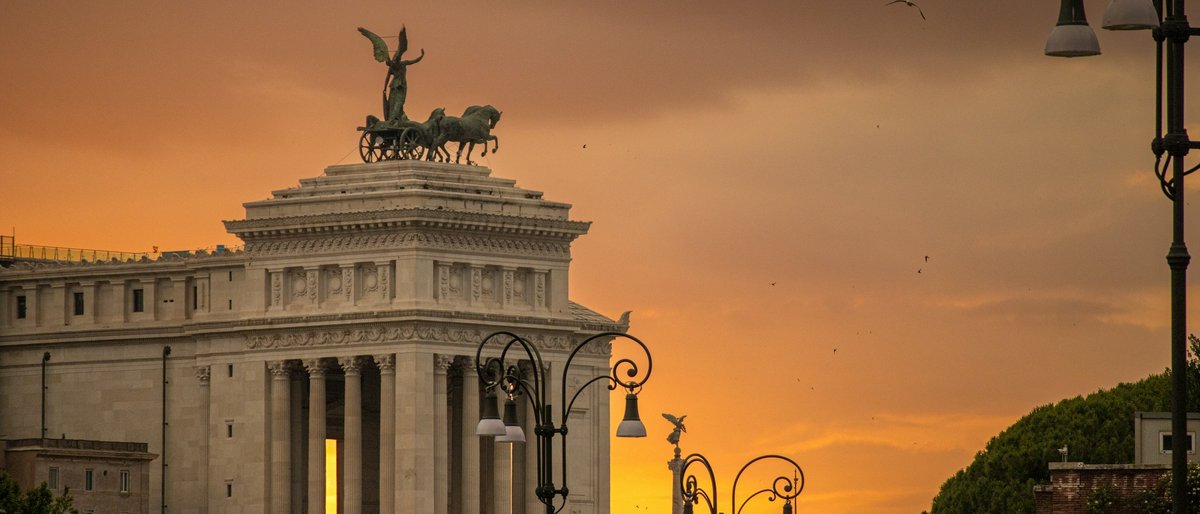
Rome tends to catch people off guard as an outdoor city. You arrive expecting marble and museums, and then you notice the umbrella pines casting long shadows across entire hilltops, the hawks circling above the Forum, the wild fennel growing between cracks in two-thousand-year-old aqueducts. The city sits in a wide basin along the Tiber, flanked by low volcanic hills to the south and rolling countryside in every other direction. The coast is about thirty kilometers west: close enough for a morning swim before lunch back in Trastevere. The Alban Hills, remnants of an old volcano, rise to the southeast with crater lakes still cool enough to shock you in June. Rome's climate is Mediterranean, which means dry, hot summers and mild winters with just enough rain to keep things green through March. The best outdoor months are probably April through mid-June and then September into October, when the heat loosens its grip and the light turns golden around four in the afternoon. July and August are brutal: the kind of heat that settles into the cobblestones and radiates upward at you. Locals flee to the coast or the hills, and honestly, you should consider doing the same. That said, early mornings in summer can still be gorgeous if you're willing to set an alarm. The outdoor infrastructure here is patchy compared to, say, Austria or Switzerland. Trail markings exist but can be inconsistent. Water fountains (the nasoni, those cast-iron spigots) are everywhere in the city center and they are a lifeline. Fill your bottle constantly. Outside the city, bring your own supply and don't assume you'll find services.
Outdoor activities
-
Cycling the Via Appia Antica
The old Appian Way runs south from the city center through the Parco Regionale dell'Appia Antica, and on Sundays a long stretch of it is closed to cars. The surface is original basalt in places: bumpy, uneven, beautiful. You'll ride past tombs, crumbling walls draped in ivy, and the occasional flock of sheep. Rent a bike from one of the shops near the Baths of Caracalla or at the Appia Antica visitor center. A hybrid or gravel bike works best; skinny road tires will punish you on the cobbles. The flat section from Porta San Sebastiano to the Mausoleo di Cecilia Metella is about five kilometers and manageable for anyone. Push farther out toward Frattocchie and the route gets quieter and more rural.
- Difficulty
- Easy to moderate depending on distance
- Duration
- 2-4 hours
- Best season
- March through June, September through November
-
Road cycling in the Castelli Romani
South of Rome, the Castelli Romani hill towns (Frascati, Grottaferrata, Rocca di Papa, Nemi) sit on the slopes of an ancient volcanic caldera. The climbing is real but not savage, with roads winding through chestnut forests and vineyards. You'll gain maybe 400-600 meters of elevation depending on your route, with some steep pitches near Rocca di Papa. The reward is porchetta sandwiches and local white wine from Frascati, though maybe save the wine for after the ride. Traffic can be heavy on the main roads, so stick to the secondary routes where possible. The views back toward Rome from the ridge are worth the effort.
- Difficulty
- Moderate to challenging
- Duration
- 3-5 hours
- Best season
- April through June, September and October
-
Running the Lungotevere
The paths along the Tiber aren't glamorous: they're below street level, sometimes a bit gritty, occasionally tagged with graffiti, but they're flat, mostly car-free, and long enough for a proper run. You can go from the Ponte Milvio area south past Trastevere and beyond, roughly ten kilometers one way if you want it. The surface is paved. Early morning is best; by midday in summer the reflected heat off the retaining walls is oppressive. You'll share the path with other runners, cyclists, and the occasional person walking a very small dog.
- Difficulty
- Easy
- Duration
- 30 minutes to 2 hours
- Best season
- Year-round, but mornings only in summer
-
Rock climbing at the Muro del Pianto near Sperlonga
This is a day trip (Sperlonga is about 120 kilometers southeast of Rome along the coast) but it's the closest quality sport climbing to the city. Limestone cliffs overlooking the Tyrrhenian Sea, with routes ranging from 5a to 7c on the French scale. The setting is striking: blue water below, warm rock under your hands. Bring your own gear or connect with one of the climbing groups in Rome like Roma Climbing for partners and beta. There are closer crags in the Lepini mountains too, but Sperlonga is the one people talk about.
- Difficulty
- Varies by route, 5a to 7c French
- Duration
- Full day trip
- Best season
- October through May: summer is too hot on south-facing rock
-
Horseback riding in the Roman Campagna
The countryside around Rome is still surprisingly rural in places, and several stables offer rides through the open grassland and along old farm tracks. The area around the Via Appia Antica and the Caffarella valley has a few operations, and farther out near Bracciano you'll find longer trail rides. The terrain is gentle, rolling grassland with patches of Mediterranean scrub. It feels anachronistic in the best way: cantering past aqueduct ruins with the city skyline in the background.
- Difficulty
- Easy to moderate depending on experience
- Duration
- 1-3 hours
- Best season
- March through June, September through November
-
Stand-up paddleboarding on Lago di Bracciano
Bracciano is a volcanic lake about 40 kilometers northwest of Rome, and it's become a popular spot for SUP in recent years. The water is clean and usually calm in the morning before the afternoon breeze picks up. You can rent boards at a few spots along the southern shore near the town of Bracciano or at Anguillara Sabazia. The castle looming over the town makes for a dramatic backdrop while you're trying to keep your balance. The lake is deep and stays cool even in summer.
- Difficulty
- Easy
- Duration
- 1-2 hours
- Best season
- May through September
Day hikes
-
Monte Cavo from Rocca di Papa
Monte Cavo is the highest point in the Alban Hills at about 949 meters, and the hike up from Rocca di Papa follows an old Roman road (the Via Sacra) through dense chestnut and beech forest. The gradient is steady but not punishing. At the top, there's a former observatory and telecommunications facility that's a bit of an eyesore, but the views across the Roman Campagna to the sea are expansive on clear days. The forest itself is the real draw: tall, old trees, dappled light, the sound of woodpeckers. You can loop back down via different paths to extend the walk. Reach Rocca di Papa by COTRAL bus from Anagnina metro station.
- Difficulty
- Moderate: steady uphill, about 350 meters elevation gain
- Duration
- 3-4 hours round trip
- Best season
- April through June, September through November
-
Lago di Nemi circuit
Nemi is a tiny crater lake in the Alban Hills, dark and still, surrounded by steep wooded slopes. A trail circles the lake, dropping down from the town of Nemi through forest and along the shore before climbing back up. The path is narrow in places and can be muddy after rain. The town itself is famous for wild strawberries in June (fragoline di bosco) and the lakeside has a slightly mysterious quality, probably because it was sacred to the goddess Diana in antiquity. The whole circuit is relatively short but the elevation changes add up. COTRAL bus from Anagnina.
- Difficulty
- Moderate: steep descents and ascents, uneven footing
- Duration
- 2-3 hours
- Best season
- April through June, September and October
-
Sentiero degli Elci in the Tolfa Mountains
The Tolfa Mountains northwest of Rome are low, wild, and mostly empty of tourists. This loop trail near the town of Tolfa passes through holm oak forest (elci in Italian) and open scrubland with views toward the Tyrrhenian coast. The terrain is rolling rather than steep, and the landscape has a rough, windswept character that feels nothing like the manicured hills south of Rome. You'll likely see more cows than people. Getting there requires a car or a long bus ride, but the solitude is the point. Bring a good map or download the GPX track beforehand: signage is inconsistent.
- Difficulty
- Moderate: undulating terrain, navigation skills helpful
- Duration
- 4-5 hours
- Best season
- March through May, October and November
-
Via Francigena: La Storta to Rome
The Via Francigena is the medieval pilgrimage route from Canterbury to Rome, and walking its final stage into the city is a surprisingly moving experience, even if you're not religious. The section from La Storta, a suburb north of Rome, follows the old route through parkland and along the Via Cassia before entering the city through Monte Mario and ending at St. Peter's Square. It's mostly flat to gently rolling, well-marked with the red and white Francigena blazes, and entirely doable as a day walk. You pass through the Insugherata nature reserve, which is a pocket of genuine wilderness inside the city limits.
- Difficulty
- Easy to moderate: mostly flat, long distance
- Duration
- 5-6 hours one way
- Best season
- March through May, October and November
-
Monti Lucretili: Sentiero natura from Licenza
About 50 kilometers northeast of Rome, the Monti Lucretili regional park is where the Apennines start to assert themselves. The nature trail from Licenza (a village in the Aniene valley where the poet Horace had his country villa) winds through Mediterranean maquis and open karst landscapes. The vegetation shifts noticeably as you gain elevation: olive groves give way to oak, then to open grassland on the ridges. It's quiet up here. You'll need a car to reach Licenza efficiently, though COTRAL buses run infrequently from Tivoli.
- Difficulty
- Moderate to challenging: rocky terrain, some steep sections
- Duration
- 4-6 hours depending on route
- Best season
- April through June, September and October
Water activities
-
Swimming at Lago di Bracciano
Bracciano is the lake Romans escape to in summer. The water is volcanic, deep, and clean: it is a backup drinking water reservoir for the city, which tells you something. The beaches at Anguillara Sabazia on the southern shore are the most accessible, a mix of free lakefront spots and small lidos with loungers and umbrellas. The water stays cool enough to be refreshing even in August. Getting there takes about an hour by the regional Roma-Viterbo train line, which drops you right in Anguillara. Weekdays are calmer; weekends the shoreline fills up fast.
- Difficulty
- Easy
- Duration
- Half day to full day
- Best season
- June through September
-
Kayaking on the Tiber
Yes, people kayak the Tiber. Several clubs and outfitters in Rome organize paddles on the river, typically on calmer stretches north of the city center or right through it. The Roma Canoe Club and similar organizations offer rentals and group outings. To be fair, the Tiber is not crystal-clear water (it's murky and urban in character) but paddling under the ancient bridges with the city rising on both banks is an experience you won't get anywhere else. The current is gentle in summer, stronger after autumn rains. Avoid it after heavy rainfall when debris and flow increase significantly.
- Difficulty
- Easy to moderate depending on water level
- Duration
- 2-3 hours
- Best season
- May through October
-
Beach day at Santa Marinella
If Ostia feels too urban for you (and it often does, with its concrete promenades and packed lidos) take the train another 30 minutes up the coast to Santa Marinella. The beach here is cleaner, the water noticeably clearer, and the town has a sleepy, off-duty feel that Ostia lacks. There's a mix of free beaches and stabilimenti where you can rent an umbrella and a chair for the day. The regional train from Roma Termini or Trastevere gets you there in about an hour, and the station is a short walk from the waterfront. Pack a picnic from the alimentari near the station.
- Difficulty
- Easy
- Duration
- Half day to full day
- Best season
- June through September
-
Swimming at Lago Albano
This deep crater lake below Castel Gandolfo (the Pope's summer residence) has a public beach on its northern shore that gets packed in July and August but is enjoyable in shoulder season. The water is very deep and very blue, and the steep forested crater walls give the whole place an enclosed, almost amphitheater quality. You can rent pedalos and small boats. The walk down from Castel Gandolfo to the lake is steep and the walk back up in the afternoon heat is character-building. COTRAL buses run from Anagnina metro. There are a couple of lakeside restaurants serving decent fish.
- Difficulty
- Easy
- Duration
- Half day to full day
- Best season
- May through September
-
Sailing on Lago di Bracciano
Bracciano's size and relatively consistent afternoon winds make it a popular spot for small-boat sailing and windsurfing. A few sailing schools on the lake offer lessons and rentals, around Trevignano Romano on the northern shore. The thermal winds tend to pick up after midday, which is when conditions get interesting. Mornings are calm: good for SUP or swimming, less so for sailing. The lake is large enough that you can get a real sense of open water, with the medieval Orsini-Odescalchi castle dominating the western skyline.
- Difficulty
- Moderate: requires basic sailing knowledge or a lesson
- Duration
- 2-4 hours
- Best season
- May through September
Parks & gardens
-
Villa Doria Pamphilj
FreeThis is Rome's largest park and it feels like it: you can walk for an hour without retracing your steps. It sprawls across the Monteverde neighborhood with long alleys of umbrella pines, open meadows, a seventeenth-century villa, and enough space that it never feels crowded even on weekends. Romans come here to run, picnic, walk their dogs, and generally decompress. The eastern entrance off Via di San Pancrazio puts you right at the villa, while the western side feels more wild and wooded. There's a small lake with turtles. The whole place smells like pine resin and cut grass.
Highlights: Umbrella pine alleys, seventeenth-century villa and formal gardens, open meadows for picnicking, running paths
-
Parco degli Acquedotti
FreePart of the larger Appia Antica park system, this is where ancient Roman aqueducts march across open grassland in long arcaded lines. The scale is hard to process at first: these structures are enormous, and they just stand there in the middle of what looks like a pastoral painting. People jog beneath them, kids play football, and the light at sunset turns the tufa stone warm orange. It's a bit out of the center, in the Tuscolano area, but reachable by Metro Line A to Giulio Agricola. Mind you, there's almost no shade, so summer visits require either early morning timing or serious sun protection.
Highlights: Ancient Roman aqueducts spanning open fields, golden hour photography, flat terrain for jogging and cycling
-
Villa Borghese
FreeThe most central and most visited of Rome's parks, and still worth your time if you pick the right hours. Early morning on a weekday, it's mostly locals: people rowing on the small lake, joggers on the gravel paths, the occasional art student sketching near the temple. The Pincio terrace has a long view over Piazza del Popolo toward St. Peter's that improves as the sun gets low. The gardens themselves are a mix of formal and wild, with some areas groomed within an inch of their lives and others left shaggy and overgrown. You can rent rowboats on the lake, which is a bit touristy but pleasant.
Highlights: Pincio terrace views, rowboats on the lake, proximity to museums, shaded walking paths through the upper gardens
-
Orto Botanico di Roma
Tucked into the slope below the Janiculum Hill in Trastevere, Rome's botanical garden is small but dense with interest. There's a Japanese garden, a rose garden, a greenhouse with tropical plants, and groves of monumental trees that provide real shade: rare in Rome. It feels forgotten in the best sense. On a Tuesday afternoon in April, you might have entire sections to yourself. The bamboo grove is unexpectedly atmospheric, the kind of place where sound drops away.
Highlights: Japanese garden, monumental old-growth trees providing deep shade, bamboo grove, rose collection
-
Giardino degli Aranci (Parco Savello)
FreeTiny (you can cross it in five minutes) but the view from the terrace on the Aventine Hill is one of the best in Rome. The orange trees are real and fragrant when they bloom in spring. The trick is to come at opening time or near sunset; midday is packed. Worth noting: just down the lane is the famous keyhole at the Priory of the Knights of Malta, which frames St. Peter's dome well. Combine the two and you've got a twenty-minute detour that justifies the walk up the hill.
Highlights: Panoramic view of Rome from the Aventine, fragrant orange trees, proximity to the Knights of Malta keyhole
-
Parco Regionale dell'Appia Antica
FreeLess a traditional park and more a protected green corridor stretching south from the Aurelian Walls. It includes the ancient Appian Way, the Caffarella valley, the aqueduct park, and a series of archaeological sites stitched together by paths and farm roads. You could spend a whole day here moving between ruins, pastures where sheep still graze, and patches of Mediterranean woodland. The Caffarella valley in particular feels remarkably rural for being inside Rome's ring road: a stream runs through it, there are old farmhouses, and the birdsong is loud.
Highlights: Ancient Appian Way, Caffarella valley with its stream and farmland, Roman tombs, aqueduct ruins, grazing sheep
Practical tips
- Sun Protection
- Roman sun from June through September is relentless, and the city's stone and marble reflect heat upward. Wear a hat with a brim, not just a cap. Apply sunscreen before you leave: SPF 50 is not overkill here. Parks like Parco degli Acquedotti and the open sections of the Appia Antica have almost zero shade. If you're hiking in the Alban Hills, the forest provides cover, but the exposed ridges will cook you. Carry more sunscreen than you think you need.
- Water and Hydration
- Rome's nasoni (the small cast-iron drinking fountains) are everywhere in the city center and the water is cold, clean, and free. Carry a reusable bottle and refill constantly. Outside the city, nasoni thin out fast. For day hikes in the Alban Hills, Tolfa, or Lucretili, bring at least two liters per person. Dehydration creeps up on you when the air is dry and warm, and there are no reliable water sources on most trails. Bars and cafes in hill towns will refill your bottle if you ask nicely, and buy an espresso.
- Footwear and Gear
- For city parks and the Via Appia Antica, trail runners or sturdy walking shoes with some grip will do: the cobblestones are uneven and can be slippery when wet. For the Alban Hills and Tolfa, proper hiking boots with ankle support are worth it, if the trails are muddy. Rome's outdoor gear shopping is decent; there are Decathlon stores in the suburbs if you forgot something, and a few independent gear shops in the center. Trekking poles are useful for the steeper descents around Nemi and Lucretili.
- Transportation to Trailheads
- Rome's public transit extends surprisingly far via COTRAL regional buses and the Roma-Lido and Roma-Viterbo train lines. Anagnina metro station is the way into the Alban Hills. The Roma-Viterbo line reaches Bracciano. Santa Marinella and the coast are on the main Trenitalia regional line. That said, schedules can be irregular, on weekends and in summer. Check return times before you start hiking: getting stranded in a hill town is romantic in theory but frustrating in practice. A rental car opens up the Tolfa Mountains and Lucretili, which are poorly served by buses.
- Trail Conditions and Navigation
- Italian trail marking varies wildly. The CAI (Club Alpino Italiano) maintains trails with red and white blazes, but in Lazio these are less consistently maintained than in the Alps or Dolomites. Bring a downloaded GPX track on your phone and don't rely solely on painted markers. Trails can be overgrown in late summer and muddy in winter and spring. The Appia Antica park has decent signage within its boundaries. For the Tolfa and Lucretili, treat navigation as your own responsibility. Komoot and Wikiloc have user-uploaded tracks that are generally reliable for these areas.
- Best Seasonal Windows
- The sweet spots are mid-April through mid-June and mid-September through October. Spring brings wildflowers to the Campagna and comfortable temperatures for hiking. Autumn has softer light, warm swimming still possible into early October, and thinner crowds. July and August work for early-morning city runs and lake or beach days, but serious hiking is miserable in the heat. Winter is mild enough for walking (rarely below freezing in the city) but shorter days limit your window. Rain is most likely November through February, and it can turn trails to mud quickly.
FAQ
Is Rome a good city for outdoor activities beyond sightseeing?
It is, though it flies under the radar compared to cities in the Alps or along the Amalfi Coast. Between the Appia Antica park system, the Alban Hills for hiking, multiple lakes within an hour, and the coast at your doorstep, there's enough to fill a week of active days. The infrastructure isn't as polished as what you'd find in northern Europe, but the variety of terrain and the mild climate compensate.
Can you swim in the lakes near Rome, and is the water clean?
Lago di Bracciano and Lago Albano both have designated swimming areas and the water quality is monitored. Bracciano in particular is very clean: it's a backup water supply for the city. The beaches get busy on summer weekends but are manageable on weekdays. Lake Nemi is smaller and swimming access is more limited. Always check locally for any temporary advisories, but in general these volcanic lakes are some of the cleanest water near any major European capital.
What is the best way to reach hiking trailheads from central Rome without a car?
COTRAL regional buses from Anagnina metro station serve the Alban Hills towns: Rocca di Papa, Nemi, Frascati. The Roma-Viterbo train line reaches Bracciano and Anguillara. For the coast, Trenitalia regional trains go to Ostia, Santa Marinella, and Sperlonga (with a transfer). The Tolfa Mountains and Monti Lucretili are harder to reach by public transit and are much more practical with a car. Always confirm return schedules before you hike: weekend service is reduced.
How hot does Rome get in summer, and can you still do outdoor activities?
July and August regularly hit 35-38 degrees Celsius, sometimes higher. The city holds heat because of all the stone and asphalt. You can still be active, but you need to shift your schedule: start early, ideally by seven in the morning, and be done by noon. Lake and beach days work well in full summer. Evening runs along the Tiber are feasible once the sun drops. Serious hiking in exposed terrain is unpleasant and potentially dangerous in midsummer heat.
Are the trails around Rome well-marked and safe for solo hikers?
Safety for wildlife or crime is not a real concern: the biggest risks are dehydration, getting lost, and twisted ankles on uneven terrain. Trail marking is inconsistent in Lazio compared to northern Italy. The Appia Antica park is well-signed. The Alban Hills trails are mostly followable but have some confusing junctions. The Tolfa and Lucretili require navigation skills. Bring a downloaded GPS track, tell someone your plans, and carry enough water. Cell coverage is generally decent even in the hills, though you'll find dead zones in valleys.
Do I need any permits or reservations for outdoor activities near Rome?
For hiking and most lake swimming, no permits are needed. Some organized lidos at the lakes and coast charge a small fee for umbrella and chair access, but free beach areas exist at all the major spots. The Orto Botanico charges a modest entrance fee. Sailing and kayak rentals are straightforward bookings with local operators. The Appia Antica park is free and open. There's no trail fee system like you'd find in some US national parks. Just show up and go.
Outdoor experiences in Rome
 Free cancellation
 Rome Sights by Segway Tour
Outdoor experience: 2.5 hours, free cancellation.
via Viator Free cancellation
 Appian Way Aqueducts Bike Tour (Catacombs & Lunch Option)
Outdoor experience: free cancellation.
via Viator Free cancellation
 Castel Gandolfo Lake Kayak and Swim Tour
Outdoor experience: 3 hours, free cancellation.
via Viator Free cancellation
 Vespa Sidecar Tour In Rome with Pickup, Drop-off, Gelato included
Outdoor experience: 3 hours, free cancellation.
via Viator Free cancellation
 Appian Way & Aqueducts small group e-bike tour(catacombs & food)
Outdoor experience: 5 hours, free cancellation.
via Viator Free cancellation
 Rome: Appian Way E-bike Tour, Catacombs, Aqueducts & Transfer
Outdoor experience: 4.5 hours, free cancellation.
via Viator Free cancellation
 Rome Tour on Quality E-bikes, Small Groups and Local Guide!
Outdoor experience: 3 hours, free cancellation.
via Viator Free cancellation
 Rome at Night Segway Small Group Tour
Outdoor experience: 2.5 hours, free cancellation.
via Viator Free cancellation
 From Rome: Best of Pompeii Guided Tour and Sorrento Day Trip
Outdoor experience: 13 hours, free cancellation.
via Viator Free cancellation
 Rome: Appian Way, Aqueducts & Catacombs (Small Group or Private)
Outdoor experience: 3.5 hours, free cancellation.
via Viator Free cancellation
 Rome on Wheels: Experience the City with a Vespa Tour
Outdoor experience: free cancellation.
via Viator Free cancellation
 Explore Rome on a Vespa: Uncover the City's Hidden Gems
Outdoor experience: 1.5 hours, free cancellation.
via ViatorLast verified by automated review (v1.7.1) on . What is automated review?