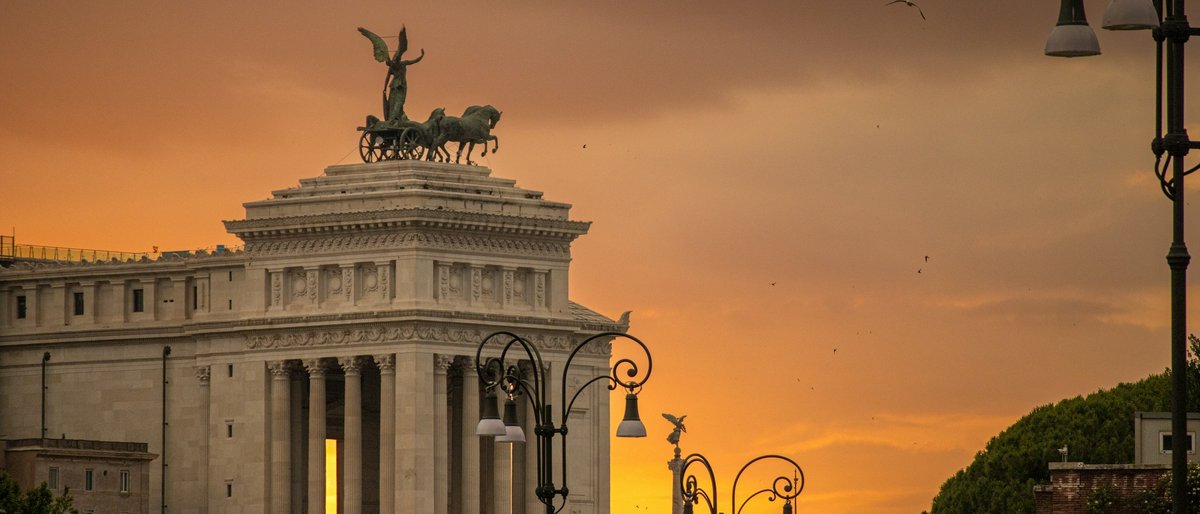
Rome doesn't organize itself the way most European capitals do. There's no neat grid, no obvious ring road separating old from new. Instead, the city sprawls outward from a bend in the Tiber, layered over twenty-seven centuries of building, tearing down, and building again on top of the rubble. The historic center (what locals call the centro storico) sits in a rough loop of the river, and most of the neighborhoods tourists care about cluster within walking distance of each other. That said, walking distance in Rome is deceptive. The cobblestones slow you down, the hills are real (seven of them, famously), and you'll lose twenty minutes to every gelato stop and unexpected ruin. The river splits the city roughly in two. East of the Tiber you get the bulk of ancient Rome, the main shopping streets, the government buildings, and the train station. West of it, you'll find Trastevere and the Vatican area: different worlds from each other, mind you, despite being on the same bank. North of the center, neighborhoods like Flaminio and Parioli feel almost suburban. South, places like Testaccio and Ostiense have a grittier, more local character that's been pulling in younger Romans for years now. The key thing to understand: Rome rewards staying somewhere specific rather than somewhere central. A hotel near Termini station puts you close to everything on paper, but the area around the station can feel rough and anonymous. You're better off picking a neighborhood with its own personality and using your feet (or the occasionally reliable Metro) to reach the big sights.
Neighborhoods
-
Centro Storico
This is the postcard. Narrow lanes open suddenly onto baroque piazzas with fountains you've seen in films. The buildings are ochre and terracotta, shutters half-closed against the afternoon heat, laundry strung between windows three stories up. It's dense, loud in the mornings when delivery trucks try to navigate streets designed for horse carts, and quieter than you'd expect after midnight. The Pantheon sits in a regular piazza where people eat overpriced pasta at tables pushed right up to the ancient walls. Piazza Navona has its Bernini fountains and its portrait artists. The whole area smells like espresso and old stone. Worth noting: this is also where Romans come to do their evening passeggiata, so the streets around Via dei Coronari fill up around seven with people just walking, looking, being seen.
- Best for
- First-time visitors who want to be in the thick of it, couples, anyone who doesn't mind paying a premium for location
- Key streets
- Via dei Coronari for antique shops and a quieter stroll, Via del Governo Vecchio for small boutiques and wine bars, Piazza della Rotonda in front of the Pantheon, Campo de' Fiori for the morning market (touristy but still functioning), Via dei Giubbonari leading south toward the Jewish Ghetto
-
Trastevere
Trastevere translates roughly to 'across the Tiber,' and the neighborhood still carries a sense of separateness from the rest of Rome. The streets are tighter here, ivy crawling up medieval walls, cats sleeping on parked Vespas. By day it's residential and drowsy: old women leaning out of windows, the clatter of plates from unseen kitchens. By night, around Piazza di Santa Maria in Trastevere, it turns into one of Rome's main going-out zones. The basilica there is one of the oldest churches in the city, its golden mosaics glowing under floodlights while people drink Peroni on the fountain steps below. To be fair, the main drag has gotten increasingly tourist-heavy. The area around Via del Moro and Piazza Trilussa can feel like a college bar district on weekend nights. But push deeper (toward Via della Lungara or up the hill toward the Gianicolo) and you'll find the older Trastevere that earned its reputation.
- Best for
- People in their twenties and thirties, anyone who wants nightlife within stumbling distance, travelers who prioritize atmosphere over proximity to the Colosseum
- Key streets
- Piazza di Santa Maria in Trastevere as the anchor, Via della Scala heading northwest, Vicolo del Cinque for bars and late-night pizza, Via della Lungara for a quieter residential feel, and the climb up to the Gianicolo hill for sunset views that might be the best in the city
-
Monti
Monti is Rome's oldest rione (neighborhood, in local terms) and it has been through more reinventions than most cities manage entirely. It was the ancient red-light district, then a working-class quarter, then semi-abandoned, and now it's settled into something like Rome's answer to Brooklyn circa 2012. The streets slope downhill from Via Nazionale toward the Colosseum, lined with vintage shops, independent bookstores, natural wine bars, and small galleries. The architecture is a jumble: medieval towers next to Renaissance palazzi next to 1960s apartment blocks. Cobblestones everywhere, of course. The pace is slower than the centro storico: people live here and seem mildly annoyed when tourists block the sidewalk. The food scene leans toward the new Roman cooking: seasonal menus, interesting pasta shapes, orange wines.
- Best for
- Design-conscious travelers, foodies, couples who want walkability to major sights without staying in the tourist core, solo travelers who like a neighborhood with cafes to settle into
- Key streets
- Via del Boschetto is the main artery for shops and restaurants, Via Panisperna runs parallel and has a more local feel, Piazza della Madonna dei Monti is the neighborhood living room where everyone gathers on the steps with wine in the evening, Via dei Serpenti connects down toward the forums
-
Testaccio
This is where Romans eat. Full stop. Testaccio was the slaughterhouse district: the old mattatoio complex still stands, converted now into a contemporary art space and weekend market, and the neighborhood's food identity grew directly out of that history. The quinto quarto tradition, offal cooking, started here because slaughterhouse workers were paid partly in the cuts nobody else wanted. Coda alla vaccinara, trippa alla romana, rigatoni con la pajata: these dishes belong to Testaccio. The neighborhood itself is flat, gridded, quieter than the center. Residential blocks from the early 1900s line wide streets. There's a proper neighborhood market, the Mercato di Testaccio, in a modern building that replaced the old outdoor stalls. Monte Testaccio, the hill made entirely of ancient Roman pottery shards, has clubs built into its base that still draw crowds on weekends. The whole area smells like frying and bread.
- Best for
- Serious food travelers, people who want to eat where Romans eat, anyone who prefers a residential neighborhood feel over tourist infrastructure, nightlife seekers who want clubs rather than wine bars
- Key streets
- Via Marmorata as the main commercial street, Via Galvani around the market area, Via di Monte Testaccio for nightlife and restaurants, Piazza Testaccio for morning coffee and people-watching among actual residents
-
Prati
Prati is the Vatican's neighbor, and the contrast is almost funny. On one side, St. Peter's dome and centuries of papal authority. On the other, a late-nineteenth-century grid of broad avenues lined with liberty-style apartment buildings, law offices, and shops that cater to Romans who need to buy things: hardware stores, pharmacies, a proper supermarket. Prati feels like a real city neighborhood that happens to be next to one of the world's most visited sites. The streets are wider and more orderly than the centro storico, the buildings taller and more uniform. Via Cola di Rienzo is the main shopping street and it's useful rather than fashionable: think Zara and kitchen supply stores rather than Gucci. The area is quieter at night than Trastevere or Monti, which some people want.
- Best for
- Families with children, travelers who want comfort and quiet over nightlife, Vatican visitors who want to roll out of bed and into the museums, anyone who values having a proper neighborhood supermarket
- Key streets
- Via Cola di Rienzo for shopping and daily needs, Via Ottaviano leading directly to the Vatican Museums entrance, Piazza Cavour for its courthouse and morning bar culture, Via Crescenzio for a mix of restaurants that range from tourist traps to good Roman cooking
-
San Lorenzo
San Lorenzo sits just east of Termini station, behind the ancient Aurelian walls, and it runs on university energy. La Sapienza, one of Europe's largest universities, is right there, and the neighborhood has the cheap-eats, late-night, slightly scruffy feel that comes with sixty thousand students. The buildings took heavy Allied bombing in 1943 (San Lorenzo was one of the few Roman neighborhoods seriously damaged in the war) and the reconstruction shows. It's not pretty in the conventional sense. Concrete apartment blocks, graffiti on most surfaces, shuttered industrial spaces turning into artist studios. But the energy is real. This is where young Romans go when Trastevere feels too polished. The craft beer scene here is probably the strongest in the city.
- Best for
- Budget travelers, younger visitors who prioritize nightlife and food over aesthetics, anyone who wants to see a side of Rome that doesn't appear on postcards
- Key streets
- Via dei Volsci is the main bar and restaurant strip, Via Tiburtina along the northern edge, Piazza dell'Immacolata as the central gathering point, Via degli Ausoni for smaller bars and live music venues
-
Aventino
The Aventine Hill is one of Rome's original seven, and it still feels slightly removed from everything below. The streets up here are lined with umbrella pines, the traffic noise drops away, and the buildings are mostly convents, embassies, and early-twentieth-century villas behind high walls. It's the kind of neighborhood where you hear birdsong at midday. The famous keyhole at the Knights of Malta priory: where you peer through and see St. Peter's dome well framed by a hedge: is up here, and it's the main reason tourists make the climb. But once they've taken the photo, most leave. Stay longer. The Giardino degli Aranci, the Orange Garden, looks out over Rome from Trastevere to St. Peter's, and in spring the scent of orange blossom is thick enough to taste.
- Best for
- Couples looking for quiet romance, travelers who've done Rome before and want somewhere peaceful, anyone who needs a break from sensory overload but doesn't want to leave the center
- Key streets
- Via di Santa Sabina along the ridge, Piazza dei Cavalieri di Malta for the keyhole view, Clivo di Rocca Savella leading down toward the Tiber, Via Marmorata at the base connecting to Testaccio
-
Esquilino
Esquilino wraps around Termini station and gets a bad reputation that's only partly deserved. Yes, the blocks immediately outside the station are gritty: hawkers, fast food, a general sense of transit-zone anonymity. But push two or three streets in any direction and you find something more interesting. This is Rome's most international neighborhood. The streets around Via Principe Amedeo and Piazza Vittorio Emanuele II are filled with Chinese restaurants, Indian grocery stores, Bengali phone shops, and Ethiopian cafes. The Mercato Esquilino is Rome's best place to buy spices, tropical fruit, and ingredients you won't find anywhere else in the city. The architecture is grand but faded: big Piedmontese-style buildings from when this area was developed after Italian unification, many of them needing repair.
- Best for
- Budget-conscious travelers, anyone who wants easy train and Metro access, travelers who appreciate varied food scenes, people who don't need their neighborhood to be scenic
- Key streets
- Piazza Vittorio Emanuele II as the anchor, Via Principe Amedeo and Via Gioberti for hotels and international food, Via Merulana heading south toward San Giovanni with better restaurants as you go, Via Conte Verde for the Mercato Esquilino
FAQ
What is the best neighborhood to stay in Rome for a first visit?
The Centro Storico or Monti tend to work best for first-timers. Centro Storico puts you within walking distance of the Pantheon, Piazza Navona, and the Trevi Fountain, though you'll pay more and the streets get loud with tour groups by mid-morning. Monti is slightly off the main tourist axis but still close to the Colosseum and Roman Forum, and it has better restaurants at lower prices. If the Vatican is your main priority, Prati is a sensible base: you can walk to St. Peter's in minutes and take the Metro into the historic center.
Is the area around Termini station safe to stay in Rome?
Termini itself is fine during the day: it's a functioning train station with police presence and normal commuter traffic. The blocks immediately surrounding it, to the south and east, can feel sketchy after dark: poorly lit streets, some drug activity, aggressive panhandling. That said, many well decent hotels sit in Esquilino, and if you're two or three streets away from the station you're generally fine. Use normal city awareness. The bigger issue might be atmosphere: the area lacks the neighborhood character you'd get in Monti or Trastevere for similar prices.
Can you walk between most Rome neighborhoods or do you need transit?
Most of the neighborhoods visitors care about are within thirty to forty-five minutes of each other on foot, though the cobblestones and summer heat make it feel longer. From Trastevere to the Colosseum is about a thirty-minute walk. Centro Storico to Monti is fifteen minutes. Prati to the centro is twenty minutes across the river. The Metro has two main lines that are useful for longer jumps: like getting from Termini to the Vatican or from Testaccio to Piazza di Spagna. Buses exist but their schedules tend to be more aspirational than actual.
Which Rome neighborhoods have the best food scene?
Testaccio is the consensus answer among Romans, and it's hard to argue. The neighborhood's slaughterhouse history created a distinct culinary tradition, and the Mercato di Testaccio concentrates excellent street food in one spot. Monti has the strongest collection of newer restaurants doing updated Roman cooking. Trastevere has quantity but quality varies wildly: avoid anywhere with a person standing outside trying to seat you. San Lorenzo and Pigneto are where you'll find the best value, for pizza and craft beer. For international food, Esquilino is in a class of its own.
How much should I budget for accommodation in different Rome neighborhoods?
As of recently, a decent double room in Centro Storico runs roughly 150 to 250 euros per night for a mid-range hotel or upscale B&B. Monti and Trastevere are slightly cheaper, maybe 120 to 200. Prati tends to offer better value because it's seen as less glamorous: expect 100 to 170 for comparable quality. Esquilino near Termini has budget options starting around 70 to 90. San Lorenzo can go even lower. Apartments on short-term rental platforms often beat hotel prices, for stays over three nights, but Rome has been tightening regulations on those so availability shifts. These numbers fluctuate with season: Easter week and October are peak pricing.
Which neighborhoods should I avoid in Rome?
Rome doesn't really have neighborhoods that are dangerous in the way some other large cities do. The areas to be cautious about are more boring than threatening. Tor Bella Monaca and Corviale, far out in the eastern and western suburbs, have reputations for petty crime but you'd have no reason to visit them. Around Termini station late at night warrants street awareness. EUR, the Mussolini-era development south of the center, is architecturally interesting but feels empty and corporate, not somewhere you'd want to base yourself unless you had specific business there. Generally, anywhere within the Aurelian walls is fine at any hour with normal urban caution.
Last verified by automated review (v1.7.1) on . What is automated review?