When's the best time to visit Rome in 2026?
October is the best month for a first trip to Rome, with May a close second: October afternoons stay warm, the summer crowds have thinned, and porcini season reaches the stalls at Campo de' Fiori. Skip July and August. The Roman Forum bakes without shade, and many family trattorias close for the August holidays.
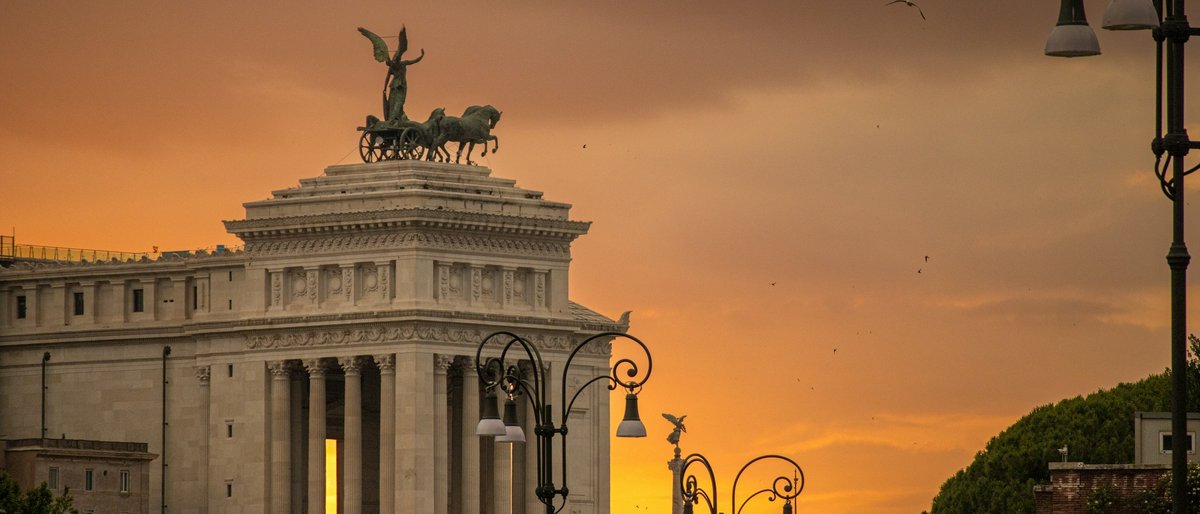
Book Rome for the first three weeks of October. At 7pm on 15 October 2026 the city stood at 21.3°C under clear skies with 68% humidity, and that reading reflects the month's usual pattern: afternoons on the Gianicolo terrace are warm, and in Trastevere you'll want a light layer by 10pm. Chestnut carts start setting up near Piazza Navona and along Via del Corso, and the smell of charred shells drifts across the square. Rain is the trade-off. Autumn storms in Rome tend to be short and hard, usually in the afternoon, and they turn the sampietrini cobbles as slick as soap, so pack a light rain jacket and shoes with real grip. If a storm catches you near Piazza della Rotonda, go into the Pantheon and watch the rain fall through the oculus onto the cold marble floor.
May is the runner-up, and some people would pick it first. Wisteria hangs over the walls of Trastevere, and early in the month the Giardino degli Aranci on the Aventine smells of orange blossom. The cost is people: school groups from across Europe arrive in April and May, and without a timed ticket the queue for the Vatican Museums on Viale Vaticano can run past an hour by 9am. Avoid Holy Week if you can, because Easter services fill St. Peter's Square with tens of thousands of pilgrims and hotel rates in Prati climb with them. Spring has one strong food reason to come. Roman artichokes peak between February and April, and carciofi alla giudia, fried whole until the leaves crackle like crisps, are at their best at Nonna Betta on Via del Portico d'Ottavia in the Jewish Ghetto.
July and August are the months to skip. The walk from the Arch of Titus to the Capitoline Hill has almost no shade, and by noon the dust and heat rising off the stone make it feel twice as long. Around Ferragosto in mid-August, Romans leave for the coast at Ostia and Sperlonga, and family trattorias in Testaccio and Monti tape handwritten 'chiuso per ferie' signs to their doors for two or three weeks. If summer is when you have to go, be at the Colosseum when it opens, rest indoors from 1pm to 4pm, and eat dinner after 9pm as Romans do. June is the better compromise, though on 29 June the feast of Saints Peter and Paul is a city holiday, so expect some shops to close.
Winter works well for a first visit on a tight budget. Before 8am the Trevi Fountain is close to empty, and puntarelle with anchovy dressing is on menus across the city, though the light goes by around 5pm in December, so sightseeing days are shorter. Two calendar traps apply all year: state sites, the Colosseum included, are free on the first Sunday of each month, and the Vatican Museums are free on the last Sunday. Both days bring the longest queues of the month, so pay and go on another day. The Vatican Museums are also closed on other Sundays. At mid-October rates 1 US dollar buys about €0.89, so a €200 double room in Monti costs close to $224. Whatever month you pick, book timed slots for the Colosseum and the Vatican before you fly, and keep day one light enough to absorb jet lag.
Month-by-month outlook
- Jan Shoulder
- Feb Shoulder
- Mar Shoulder
- Apr Shoulder
- May Ideal
- Jun Shoulder
- Jul Avoid
- Aug Avoid
- Sep Shoulder
- Oct Ideal
- Nov Shoulder
- Dec Shoulder
Year-round climate
Averages from the last 5 years.
| Month | Avg high (°C) | Avg low (°C) | Rainfall (mm) |
|---|---|---|---|
| Jan | 13 | 5 | 76 |
| Feb | 15 | 5 | 67 |
| Mar | 17 | 7 | 98 |
| Apr | 19 | 9 | 64 |
| May | 24 | 13 | 83 |
| Jun | 31 | 19 | 38 |
| Jul | 34 | 22 | 18 |
| Aug | 33 | 21 | 45 |
| Sep | 28 | 18 | 104 |
| Oct | 23 | 14 | 79 |
| Nov | 18 | 9 | 151 |
| Dec | 14 | 6 | 104 |
Highs reach about 23°C in May and 22°C in October, while July and August average 31 to 32°C. October and November are the wettest months, with roughly 100 mm of rain each. Winter highs sit at 12 to 14°C.
Go deeper into Rome
Last verified by automated review (v1.7.2) on . What is automated review?