Compare every Italy city in October →
Stay in Rome in October
80 hotels in the Trip.com pool for Rome, from US$31 a night.
Opens Trip.com on Fri 1 Oct to Sun 3 Oct 2027; change the dates there.
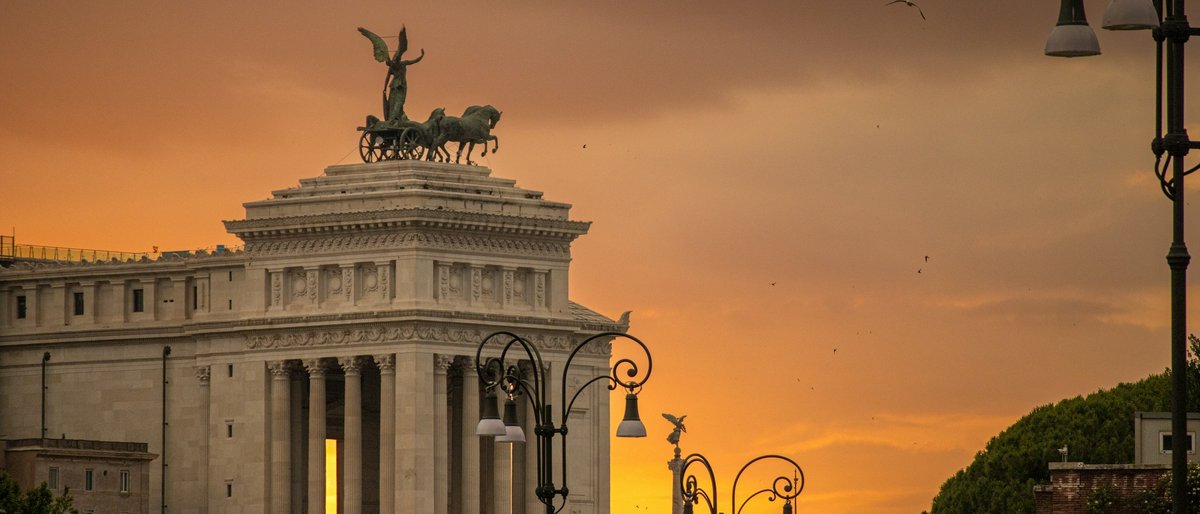
October might be the single best month to visit Rome. That's not hyperbole: the brutal summer heat has finally broken, the worst of the tourist crush has thinned out, and the city settles into something that feels more like itself. Daytime temperatures hover around 23°C (74°F), cooling to a pleasant 13-14°C (57°F) at night. You can stand in the Forum at midday without feeling like you're being slow-roasted. The light turns golden and soft in a way that makes the travertine glow, and Romans themselves seem to re-emerge from wherever they disappeared to in August.
That said, October is when the rain starts making its return. You'll get roughly 79mm across about 10 rainy days, which tends to come in bursts: a grey morning or a sudden afternoon downpour rather than all-day drizzle. It's nothing like November's deluge (which dumps nearly double that), but you'll want a jacket with you. The shift happens gradually through the month: early October still feels like a warm late summer, while the last week can carry a proper autumn chill, after dark.
Pricing sits in that sweet spot between summer's peak and the quieter winter months. You're still paying more than you would in January or February, but hotel rates have come down noticeably from the July-August highs. It's shoulder season in the best sense: enough visitors to keep everything open and lively, few enough that you won't spend half your day standing in lines. The combination of walkable weather, reasonable prices, and that particular Roman autumn light makes October a month that's hard to beat.
Why visit in October
- Temperatures drop to a comfortable 23°C (74°F) after summer's punishing 33-34°C heat: you can explore ruins and walk cobblestone streets all day without overheating
- Tourist crowds thin significantly from the July-August peak, meaning shorter queues at the Colosseum, Vatican Museums, and Borghese Gallery
- The autumn light in Rome is special: low-angle golden sun against ochre and terracotta buildings creates the kind of photography conditions you can't replicate in summer's harsh midday glare
- Grape harvest season means fresh wine (vino novello) starts appearing at trattorias and enotecas, and the surrounding Lazio countryside is at its most scenic
- Outdoor dining remains comfortable through most of the month: those sidewalk tables along Via della Pace or in Trastevere's piazzas are usable without either sweating or freezing
Worth knowing
- Rainfall picks up to around 79mm across 10 days, not catastrophic, but enough that you'll likely lose at least a couple of afternoons to rain and need to shuffle outdoor plans
- Daylight hours shorten noticeably through the month, with sunset moving from around 6:45pm in early October to 5:00pm by month's end after the clocks change
- Some outdoor attractions and rooftop bars begin scaling back hours or closing for the season in late October, garden tours and open-air cinema events
- While cheaper than summer, October is still not budget season: you're paying shoulder-season rates that sit well above winter's lows
Best for
Think twice if
October in Rome feels like the city exhaling after summer. Early in the month you might still get days pushing 26-27°C that feel like a warm September holdover, but by the final week, you'll notice the shift: mornings carry a crispness, and evenings want a layer. The humidity sits around 76%, which sounds high but feels nothing like summer's sticky oppression because the temperatures have dropped. Rain comes in episodes rather than sustained grey stretches: you might wake to blue skies, get caught in a sharp shower at 3pm, and be sitting outside for dinner by 7pm. The cobblestones get slippery when wet, mind you: those smooth sampietrini stones become treacherous in the rain, on slopes near the Spanish Steps or around Trastevere.
Year-round climate
Averages from the last 5 years.
| Month | Avg high (°C) | Avg low (°C) | Rainfall (mm) |
|---|---|---|---|
| Jan | 13 | 5 | 76 |
| Feb | 15 | 5 | 67 |
| Mar | 17 | 7 | 98 |
| Apr | 19 | 9 | 64 |
| May | 24 | 13 | 83 |
| Jun | 31 | 19 | 38 |
| Jul | 34 | 22 | 18 |
| Aug | 33 | 21 | 45 |
| Sep | 28 | 18 | 104 |
| Oct | 23 | 14 | 79 |
| Nov | 18 | 9 | 151 |
| Dec | 14 | 6 | 104 |
Holidays and festivals in October
Public holidays
- St. Francis of Assisi's Day(San Francesco d'Assisi)4 October 2026
Best things to do in October
Walk the Appian Way without the summer heat
outdoorThe Via Appia Antica stretches southeast from the city through umbrella pines, crumbling tombs, and open countryside. In summer, the exposed sections are brutal, no shade, full sun, 34°C. October's cooler temperatures make this an entirely different experience. You can walk for hours along the ancient basalt stones, ducking into catacombs (San Callisto, San Sebastiano) and watching the light filter through the pines. The further you go, the fewer people you'll encounter.
Summer heat makes the shadeless stretches of the Appian Way dangerous for extended walking: October's 23°C average makes it comfortable all dayBooking tipThe Catacombs of San Callisto close on Wednesdays. Arrive before 10am to avoid tour group backups.
Explore Villa Borghese gardens in autumn color
outdoorRome's most beloved park takes on warm amber and russet tones through October. The lake reflects changing foliage, the paths are quieter than in summer, and the temperature is right for hours of wandering. Rent a rowboat on the lake, cycle the paths, or just sit with a coffee near the Pincio terrace and watch the city spread out below you in that soft autumn light.
The gardens begin their autumn color transition in October, and the cooler weather makes extended walking through the park pleasant rather than a sweaty slogBooking tipIf you're visiting the Borghese Gallery inside the park, book tickets at least two weeks ahead: they still limit entry to 360 people per two-hour slot and October fills up.
Day trip to Castelli Romani for the grape harvest
food_and_drinkThe hilltown region southeast of Rome (Frascati, Castel Gandolfo, Ariccia, Nemi) comes alive in October during the grape harvest. Frascati's wine festival (Sagra dell'Uva) typically falls in early October, with free-flowing local white wine and porchetta. Even outside festival dates, the cantinas are pouring fresh vintages and the air smells of crushed grapes and woodsmoke. The train from Termini takes about 30 minutes.
October is grape harvest season in the Castelli Romani hills, with wine festivals, fresh vintages, and harvest activity you won't see any other time of yearBooking tipTake the regional train from Roma Termini to Frascati: it runs frequently and costs a few euros. No reservation needed.
Evening passeggiata through Trastevere and the Jewish Ghetto
culturalThe Italian tradition of the evening stroll hits differently in October. Summer's passeggiata often felt too hot and too crowded. Now, the air is cool enough to enjoy walking, the streets have thinned out, and the restaurants spilling onto the cobblestones feel inviting rather than overwhelming. Cross from Trastevere over Ponte Sisto, wind through the Ghetto's narrow lanes, and end up at a wine bar near Campo de' Fiori.
The temperature drop from summer's 33°C to October's comfortable evenings around 14-18°C makes prolonged outdoor walking enjoyable again, and the thinner crowds return a more local feel to these neighborhoodsVatican Museums on a weekday morning
culturalOctober's reduced tourist numbers make this the month where you can experience the Vatican Museums as a series of rooms rather than a shuffling crowd. The Sistine Chapel still gets busy, but the Raphael Rooms, the Map Gallery, and the Etruscan collection are comparatively spacious. You might even get a moment standing in the Chapel with enough breathing room to look up properly.
Summer packs 25,000+ visitors per day into the Vatican Museums: October weekday mornings drop that figure significantly, making it possible to engage with the art rather than the backs of other tourists' headsBooking tipBook skip-the-line tickets on the Vatican Museums website for a Tuesday or Thursday morning. Friday afternoons tend to be the quietest if you can manage it.
Explore Testaccio market and Monte Testaccio
food_and_drinkTestaccio remains Rome's most local food market: the stalls here sell to the neighborhood, not to tourists. October brings fresh porcini, persimmons, late-season figs, and the first winter greens. After the market, walk over to Monte Testaccio itself (the ancient Roman hill made entirely of broken amphorae) and poke into the restaurants and clubs built into its base. The area has a rougher, more honest energy than the centro storico.
October's autumn produce (porcini, persimmons, chestnuts, new-season olive oil) fills the market stalls, and the cooler weather makes browsing the outdoor sections comfortable rather than wiltingSunset from Pincian Hill or Gianicolo
outdoorRome's western-facing viewpoints become rewarding in October. The sun sets earlier and lower, throwing long golden light across the dome of St. Peter's and the jumbled rooftops. Pincian Hill (above Piazza del Popolo) and the Gianicolo (above Trastevere) both offer wide-open westward views. The air tends to be clearer than in summer's haze, so you'll see further: on a good day, all the way to the Alban Hills.
Clearer autumn air and lower sun angle create dramatically better sunset conditions than summer's hazy, high-sun evenings: plus the earlier sunset means you're not waiting until 9pmWine tasting at enotecas in Monti
food_and_drinkThe Monti neighborhood (Rome's oldest rione, tucked between the Colosseum and Termini) has a concentration of small wine bars that come into their own in autumn. October brings vino novello tastings, and the enotecas start featuring heartier reds from southern Lazio and nearby Abruzzo. The narrow streets and low-ceilinged bars feel atmospheric on cool evenings. Pull up a stool, let the owner pour what's good, and don't rush.
Vino novello releases in late October, autumn wine events run through the month, and the cooler evenings make sitting in a warm enoteca with a glass of red feel exactly rightWhat to eat in October
In season: fruit
Persimmons
Called cachi in Italian, these bright orange fruits hit peak ripeness in October. Romans eat them dead ripe (almost pudding-soft) scooped straight from the skin with a spoon. You'll spot them at Campo de' Fiori market and at fruit stalls across the city. The flavor is honey-sweet with a faint tannin edge. Grab one when the skin looks almost translucent. That's when they're ready.
On menus now
Carciofi alla giudia
The Roman-Jewish style of deep-frying whole artichokes until they open like a flower and turn impossibly crispy. October marks the start of the local artichoke season (earlier than you might expect) and the restaurants in the Ghetto neighborhood serve them at their freshest. The crunch of the outer leaves gives way to a tender, almost creamy heart. Worth noting that the best versions use the local romanesco variety.
Street food peaks
Roasted chestnuts
Street vendors with their charcoal braziers start appearing on corners around the city as October cools down. The smell (smoky, sweet, slightly burnt) is one of those autumn-in-Rome sensory markers. You'll find them near tourist areas but also along Via Cola di Rienzo and in residential neighborhoods. They come in paper cones, hot enough to warm your hands through the paper.
What to drink
Vino novello
Italy's answer to Beaujolais nouveau, released in late October. It's a young, fruity, slightly fizzy red wine that Romans drink with roasted chestnuts. To be fair, it's not a serious wine: more of a seasonal ritual. You'll see it at enotecas and wine bars around the city, usually poured generously and priced modestly. The pairing with warm chestnuts on a cool evening is lovely.
In markets
Porcini mushrooms
Fresh porcini start appearing on menus across Rome in October, foraged from the hills of Lazio and Umbria. You'll find them sliced raw over salads, grilled with garlic and nepitella (wild mint), stirred into risotto, or tossed with fresh pappardelle. The earthy, almost nutty smell drifts out of trattoria kitchens: if you catch that scent walking past, it's a good sign.
Zucca (winter squash)
Pumpkin and squash dishes arrive on Roman menus in October: you'll see zucca in ravioli fillings, roasted as a side dish with rosemary, or blended into velvety soups. The Testaccio market vendors start stacking up the ribbed, dark-green Roman variety alongside the brighter orange types. It tends to be sweeter and denser than what you might find in northern Europe or North America.
Regular events in October
Romaeuropa Festival
Rome's premier contemporary performing arts festival runs through October with dance, theater, music, and multimedia installations at venues across the city, from the MACRO museum to the Mattatoio in Testaccio. The programming leans adventurous and international: this is not tourist entertainment but interesting work that draws a local arts crowd.
September through November, with heavy October programmingSagra dell'Uva di MarinoFree
The nearby hilltown of Marino hosts one of Italy's oldest grape festivals, dating back decades. The town's central fountain traditionally flows with wine instead of water. There's live music, food stalls loaded with porchetta and local cheese, and a general atmosphere of harvest celebration. It's a 30-minute train ride from Rome.
First weekend of OctoberInternational Rome Film Festival
Held at the Auditorium Parco della Musica in the Flaminio district, this film festival has grown steadily since its founding. It draws international directors and actors, screens both mainstream and independent work, and includes free outdoor screenings and public events alongside the ticketed premieres. The red carpet draws crowds, but the real draw is the accessible programming.
Mid to late OctoberOpen House RomaFree
Part of the global Open House network, this weekend event opens dozens of normally closed architectural sites across the city: private palazzi, government buildings, modern studios, historic workshops. It's free, no reservation needed for most sites, and gives you access to spaces you cannot enter the rest of the year. Lines can be long at popular sites, but the obscure ones are often empty and more interesting.
One weekend in October (varies)Festa dei NonniFree
Italy's Grandparents' Day on October 2nd is a gentle, family-centered occasion. You won't see parades, but parks fill up with multi-generational families, bakeries feature special pastries, and there's a warmth to the city that day. It gives you a glimpse of Roman family culture that tourists rarely see.
October 2Best places this October
Villa Doria Pamphilj
parkRome's largest park is overlooked by most visitors who stop at Villa Borghese. In October, the umbrella pines cast long shadows across the lawns, the formal gardens carry early autumn color, and the paths are populated mostly by joggers and dog-walkers from the Monteverde neighborhood. It's the kind of place where you can walk for an hour and forget you're in a capital city. The villa itself currently houses the Italian government's representative office, but the grounds are fully public.
MonteverdeProtestant Cemetery (Cimitero Acattolico)
historic_siteTucked behind the Pyramid of Cestius in Testaccio, this small cemetery holds the graves of Keats and Shelley among centuries of expats. In October, the cypresses and Mediterranean pines frame the headstones against blue autumn skies. It's one of the most peaceful spots in Rome: the kind of place where you find yourself reading inscriptions and losing track of time. The resident cats add a characteristically Roman touch.
TestaccioOrto Botanico (Botanical Garden)
gardenRome's botanical garden in Trastevere occupies the slopes below the Gianicolo hill. October brings autumn color to the Japanese garden section and the deciduous trees along the upper paths, while the Mediterranean species remain green. It's far less visited than the major parks and has the feel of a slightly overgrown secret. The bamboo grove and the sensory garden for the blind are both worth seeking out.
TrastevereVia Margutta
neighborhoodThis narrow street between Via del Babullo and the Pincian Hill (where Audrey Hepburn's character lived in Roman Holiday) hosts an autumn art show in October. Painters display work along the street, and the galleries open their doors wider than usual. Even without the art show, it's one of Rome's most photogenic streets: ivy-covered facades, quiet despite being steps from the Spanish Steps.
Centro StoricoAventine Hill and the Orange Garden
viewpointThe Giardino degli Aranci (Orange Garden) on the Aventine offers one of Rome's best views: St. Peter's dome framed well across the river. In October, the orange trees still carry fruit, the benches are less fought-over than in summer, and you can time a visit for sunset without competing with enormous crowds. While you're up there, peek through the keyhole of the Priory of the Knights of Malta for the famous framed view of St. Peter's dome.
AventineCampo de' Fiori morning market
marketThis daily market transforms the piazza into a spread of seasonal produce, flowers, spices, and dried goods. October mornings bring porcini, persimmons, pomegranates, and the season's first clementines. The vendors are loud, the displays are chaotic and colorful, and the espresso from the surrounding bars is strong. Go before 10am: by noon it's winding down and the piazza transitions to its restaurant-and-bar evening identity.
Centro StoricoQuartiere Coppedè
neighborhoodThis tiny Art Nouveau neighborhood near Piazza Buenos Aires looks like someone transplanted a Gaudí fever dream into Rome. Fairy-tale turrets, frescoed facades, wrought-iron spiders, and an ornamental arch over the entry street. Almost no tourists find it. October's soft light and quiet streets make it feel even more surreal. It takes about 20 minutes to explore, and you'll wonder why it's not in every guidebook.
Trieste
Your packing checklist
Tick items off as you pack. Your progress saves in this browser.
All packed — have a great trip.
Insider tips
The Vatican Museums are free on the last Sunday of each month, but so does everyone else know this. The line starts forming before 7am and wraps around the walls. If you want to go, arrive by 6:30am. Otherwise, a regular weekday ticket at 8am is a vastly more pleasant experience for the price of admission.
Skip the sit-down restaurants directly facing major monuments: the ones ringing the Pantheon, lining Piazza Navona, or facing the Trevi Fountain charge double for half the quality. Walk two blocks in any direction and the food improves dramatically. Romans themselves eat in Testaccio, Trastevere's back streets, Pigneto, and Centocelle.
For espresso, stand at the bar. Sitting at a table can double or triple the price at many Roman cafés: it's not a scam, it's the coperto (table charge) system. The same espresso is the same espresso whether you drink it standing in 30 seconds or sitting for 20 minutes, but the bill looks very different.
The Roma Pass (48 or 72 hours) includes free public transit and skip-the-line entry to your first one or two museums. In October, when lines are shorter than summer but still present, the skip-the-line benefit at the Colosseum alone can save you 45 minutes. Do the math based on your itinerary: it's not always worth it, but often is.
If you want to see the Sistine Chapel with fewer people, enter the Vatican Museums in the last entry slot of the afternoon. Most tour groups come in the morning. By 3-4pm, the crowds thin noticeably, and you might get a few minutes in the Chapel without being shoulder-to-shoulder.
Avoid these mistakes
- Packing only summer clothes because Rome is 'southern Europe': the evening temperature drop to 13-14°C catches people off guard, those coming from a northern summer. You'll see shivering tourists in shorts at outdoor restaurants every October evening. Bring a proper layer for after dark.
- Not reserving Colosseum tickets in advance, even in shoulder season, the Colosseum sells out or has multi-hour queues on most days. Timed-entry tickets are available online and should be booked at least a few days ahead. Walking up without a ticket and hoping for the best wastes a significant chunk of your day.
- Planning entirely outdoor itineraries without rain backup: with 10 rainy days on average, odds are good that at least one or two of your days will be affected. Have a museum, a cooking class, or a wine-tasting backup ready to swap in. The Capitoline Museums, Palazzo Doria Pamphilj, and the National Roman Museum at Palazzo Massimo are all undervisited alternatives when it rains.
- Underestimating Roman distances because 'everything looks close on the map': the historic center is walkable, but sites like the Vatican, Trastevere, the Catacombs, and the Appian Way are far from each other. October's comfortable weather tempts people into marathon walking days that leave them hobbling by day three. Use the Metro and trams to bridge the gaps and save your feet for the actual exploring.
Practical tips for October
October sits in the transition between summer and winter operating hours for many attractions. Check opening times before you go: the Colosseum, Forum, and Palatine Hill shift to shorter hours partway through the month as daylight decreases. Sunday closures affect many smaller museums and shops. Monday is the traditional closing day for national museums (Borghese Gallery is a notable exception: it closes on Mondays too, but many others follow the same pattern, so check each one). Book restaurant reservations for weekend dinners in Trastevere and Testaccio: locals reclaim their favorite spots once the tourist tide recedes, and a table at popular trattorias requires a call ahead. The clocks fall back one hour on the last Sunday of October, which means earlier darkness but also a surprise extra hour of sleep. Public transit runs on a regular schedule, but buses in the centro storico can be unreliable: the Metro (Lines A and B) and trams are more dependable. Validate your transit ticket before boarding or face a fine. Dress modestly for church visits: covered shoulders and knees at minimum. This applies year-round but matters in October because you might not be carrying a cover-up in your summer mindset.
FAQ
Is October a good time to visit Rome?
October is arguably the best time to visit Rome, or very close to it. The summer heat has broken (you're looking at 23°C (74°F) days instead of July's 34°C (93°F)) and the overwhelming tourist crowds have thinned considerably. You get comfortable walking weather, shorter museum lines, and autumn light that makes the city look its absolute best. The trade-off is some rain (about 79mm across 10 days), but it tends to come in quick bursts rather than day-long downpours. If you can handle carrying a rain jacket, October delivers an experience that's hard to match in any other month.
What is the weather like in Rome in October?
Expect daytime highs around 23°C (74°F) and nighttime lows near 14°C (57°F). Humidity sits at about 76%, but it doesn't feel oppressive the way summer's humidity does. You'll likely see rain on roughly 10 of the 31 days, totaling about 79mm for the month: think afternoon showers rather than all-day grey skies. Early October still has a summery feel, while late October can turn properly autumnal, after the clocks change on the last Sunday. Bring layers and rain protection, but also sunglasses: the lower autumn sun can be blinding along certain streets.
Is Rome crowded in October?
Compared to the June-August peak, October feels notably calmer. You'll still encounter crowds at the major sites (the Colosseum, Vatican Museums, and Trevi Fountain never empty out) but the difference is real. Wait times drop, sidewalks in the centro storico become navigable again, and you can get restaurant tables that would have been impossible in July. That said, October has become increasingly popular as travelers catch on to its ideal conditions, so it's not exactly quiet either. Weekdays are markedly less crowded than weekends.
Do I need to book attractions in advance for October?
Yes, for the big ones. The Colosseum and Vatican Museums should be booked online ahead of time: timed-entry tickets save you from queues that still run 60-90 minutes even in shoulder season. The Borghese Gallery always requires advance booking (they cap visitors strictly). For smaller museums, restaurants, and day trips, you generally have more flexibility in October than in summer, but weekend dinner reservations at popular trattorias in Trastevere or Testaccio are still wise to make a day or two ahead.
What should I wear in Rome in October?
Layers. This is the key word. A typical October day might start at 15°C with a jacket, warm to 23°C by early afternoon in just a t-shirt, and drop back down by evening. Comfortable walking shoes with good grip are non-negotiable: Rome's cobblestones get slippery when wet, and you'll be walking a lot. For church visits, you need covered shoulders and knees (the Vatican and major basilicas enforce this). A scarf works well as a multipurpose item: warmth, church modesty cover, and general layering piece. Leave the heavy winter coat at home; a light jacket and a sweater handle everything October throws at you.
Things to Do in Rome in October
 Free cancellation
 Rome 3 in 1 Cooking Class: Fettuccine, Ravioli & Tiramisu
Cooking class: 3 hours, free cancellation.
via Viator Free cancellation
 Pompeii, Amalfi Coast and Positano Day Trip from Rome
Day trip: 13 hours, free cancellation.
via Viator Free cancellation
 Pompeii from Rome with Optional Mt. Vesuvius & Pizza Lunch
Day trip: 12 hours, free cancellation.
via Viator Free cancellation
 Rome Pasta and Tiramisu Class: Ravioli, Fettuccine & Fine Wine 5*
Cooking class: 3 hours, free cancellation.
via Viator Free cancellation
 Learn to Make Pasta & Tiramisu with Wine and Limoncello Included
Cooking class: 2 hours, free cancellation.
via Viator Free cancellation
 Rome on a Golf Cart Semi-Private Tour Max 6 with Private Option
City tour: 3 hours, free cancellation.
via ViatorFind a flight to Rome
Live fares to Rome appear here once cookies are accepted.
Last verified by automated review (v1.7.2) on . What is automated review?