Compare every Italy city in August →
Stay in Rome in August
80 hotels in the Trip.com pool for Rome, from US$31 a night.
Opens Trip.com on Fri 6 Aug to Sun 8 Aug 2027; change the dates there.
Here is the single most important thing about Rome in August: half the city leaves. Ferragosto, the national holiday on August 15, is not just a day off: it is the culmination of an exodus that starts in late July and stretches through the month. Romans head for the coast, the mountains, anywhere that is not Rome. Your favorite trattoria in Trastevere? Shuttered, with a handwritten sign taped to the door reading 'Chiuso per ferie': closed for holidays. That wine bar in Testaccio someone recommended? Same. The heat sits at around 33°C (91°F) during the day, and while that does not sound catastrophic on paper, the city is a stone oven. All that travertine and cobblestone absorbs heat and radiates it back at you well into the evening. The lows hover around 21°C (71°F), so nights bring some relief, but not as much as you might hope.
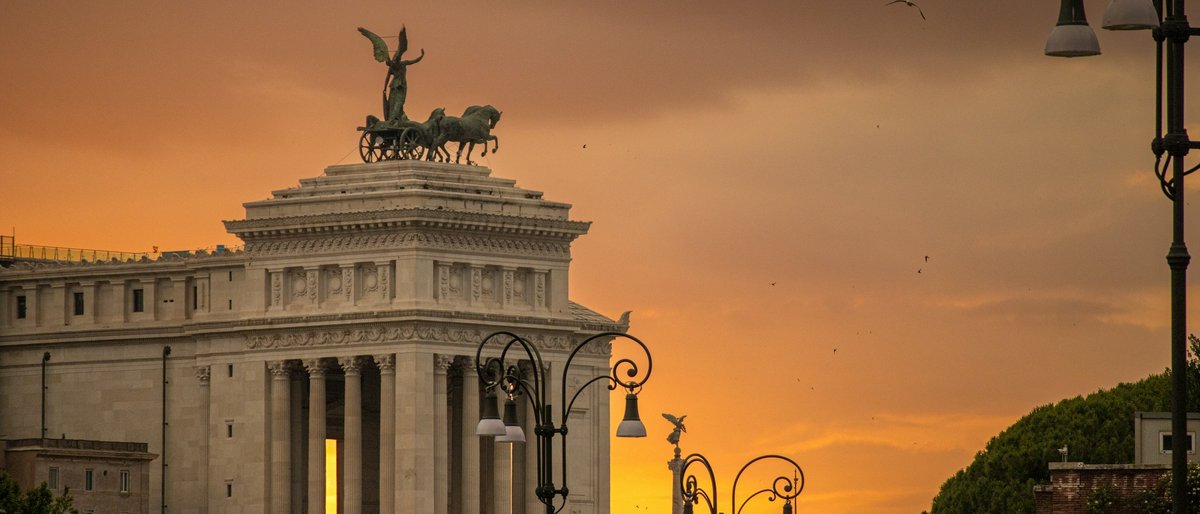
That said, August Rome has a strange, almost post-apocalyptic charm that some travelers love. The city feels emptier than it does at any other time of year, not of tourists, mind you, but of Romans. You get this odd sensation of having a world-famous city largely to yourself and a few million other visitors, minus the locals who give it its pulse. Piazzas that are shoulder-to-shoulder in May have breathing room. Lines at the Vatican are still long, but the rhythm of the city slows. If you can handle the heat, there is something appealing about Rome in this stripped-down, slightly drowsy state. The light in the late afternoon turns everything golden, the gelato tastes better when you need it, and the city reveals a quieter side that the spring and autumn crowds never see.
But let me be direct: if you have flexibility on when to visit, October, April, or May will give you a far better experience. August is survivable. It can even be enjoyable if you plan around the heat and the closures. But it is not Rome at its best.
Why visit in August
- Many local restaurants and businesses close, but those that stay open are often less crowded: you can walk into places that normally require reservations weeks ahead
- Extended daylight with sunset around 8:15 PM gives you long evenings for passeggiata along the Tiber and outdoor dining in relative comfort once the sun drops
- Cultural programming picks up to fill the gap left by regular venues: outdoor cinema, concerts in ancient ruins, and opera at the Baths of Caracalla
- Hotel rates, while still high, tend to dip slightly compared to June peak as savvy travelers avoid the heat: you might find deals at properties that are fully booked in spring
Worth knowing
- Daytime heat around 33°C (91°F) makes midday sightseeing at exposed sites like the Forum and Colosseum uncomfortable, and potentially risky for anyone sensitive to heat
- Ferragosto closures mean a significant number of independent restaurants, shops, and services shut down for one to three weeks: the city loses some of its character
- Air quality can deteriorate during heat waves, with occasional smog settling over the city when there is no wind to clear it
- The tourists who remain tend to concentrate at the same major sites, so while the city overall feels quieter, the Vatican, Trevi Fountain, and Colosseum are still packed
Best for
Think twice if
August in Rome is the second-hottest month, just behind July. Expect daytime highs around 32.9°C (91°F) that feel hotter thanks to the urban heat island effect: all that stone and asphalt pushes the perceived temperature up a few degrees. Nights cool to about 21.4°C (71°F), which is warm enough that you will want air conditioning for sleeping. Rainfall is light at 45mm across roughly 7 rainy days, typically arriving as brief late-afternoon thunderstorms that clear the air for an hour before the humidity creeps back. The humidity sits around 61%, which is moderate but noticeable when combined with the heat. The sky tends to be relentlessly clear most days: good for photos, less good for your skin.
Seasonal caution
- Sustained heat above 33°C (91°F) is common, with heat waves occasionally pushing temperatures to 38-40°C (100-104°F): the Italian Health Ministry issues heat advisories for Rome most Augusts
- The urban heat island effect in central Rome can add 3-5°C to the felt temperature compared to surrounding areas, in narrow streets with limited airflow
- Brief but intense thunderstorms can hit in the late afternoon with little warning, while they pass quickly, localized flooding on poorly drained streets is possible
Year-round climate
Averages from the last 5 years.
| Month | Avg high (°C) | Avg low (°C) | Rainfall (mm) |
|---|---|---|---|
| Jan | 13 | 5 | 76 |
| Feb | 15 | 5 | 67 |
| Mar | 17 | 7 | 98 |
| Apr | 19 | 9 | 64 |
| May | 24 | 13 | 83 |
| Jun | 31 | 19 | 38 |
| Jul | 34 | 22 | 18 |
| Aug | 33 | 21 | 45 |
| Sep | 28 | 18 | 104 |
| Oct | 23 | 14 | 79 |
| Nov | 18 | 9 | 151 |
| Dec | 14 | 6 | 104 |
Holidays and festivals in August
Public holidays
- Assumption Day(Ferragosto o Assunzione)15 August 2027
Headline events
Ferragosto
August 15 (closures typically August 10-25)
Italy's midsummer national holiday on August 15, rooted in the ancient Roman Feriae Augusti. The city empties of locals heading to the coast, many businesses close for days or weeks surrounding the date, and those Romans who remain gather for outdoor feasts and fireworks. It is less an event to attend and more a phenomenon that reshapes the entire city for the month: understanding Ferragosto is essential to understanding August in Rome.
Best things to do in August
Opera at the Baths of Caracalla
cultureThe Teatro dell'Opera di Roma stages its summer season in the ruins of the 3rd-century Baths of Caracalla. Watching Aida or Tosca performed against the backdrop of ancient brick walls under a warm night sky is one of Rome's great cultural experiences. Performances start at 9 PM when the temperature has finally dropped to something bearable.
The summer opera season runs July through early August: this is one of the last chances to catch a performance before the season closesBooking tipBook tickets at least 2-3 weeks in advance through the Teatro dell'Opera website. Mid-range seats offer the best balance of acoustics and atmosphere: the cheapest seats are far but the setting compensates.
Evening passeggiata and outdoor dining in Trastevere
diningAfter the sun drops below the rooftops around 8 PM, Trastevere transforms into an outdoor living room. The narrow streets retain some of the day's warmth but catch breezes off the Tiber. Restaurants spill tables onto the cobblestones, and the evening walk (the passeggiata) takes on a languid, unhurried quality that feels distinctly Roman.
August's late sunsets and warm evenings extend outdoor dining season to its peak, and the reduced local population means you can get a table at popular spotsBooking tipCheck that your target restaurant has not closed for Ferragosto. A quick search or phone call saves a wasted trip across the city.
Dawn visits to the Colosseum and Forum
sightseeingThe Roman Forum and Colosseum open at 9 AM, and the first hour is dramatically different from midday. The light is soft and angled, the stone is still cool from the night, and you can stand in the Forum without feeling like you are being slowly cooked. By 11 AM, the shade disappears and the experience changes entirely.
August heat makes midday visits to these exposed sites unpleasant: early morning is practically necessary for comfort and safetyBooking tipBook the first entry slot online. The Colosseum uses timed tickets, so reserve the earliest available.
Isola del Cinema on Tiber Island
cultureAn outdoor film festival that takes over Isola Tiberina, the small island in the Tiber River. Screenings happen on a temporary open-air screen with the river flowing past on both sides. The programming mixes Italian cinema, international films, and documentaries, with screenings starting after dark around 9:30 PM.
The festival runs from mid-June through September, but August is its peak month with the most screenings and eventsBooking tipMost screenings are free or very low cost. Arrive 30-45 minutes early for the better spots.
Day trip to Ostia Antica
day tripRome's ancient port city is a 30-minute train ride from Piramide station and is arguably more atmospheric than Pompeii: with far fewer crowds. The ruins include a remarkably intact theater, bakeries with millstones still in place, and elaborate mosaic floors in the old bathhouses. Tall umbrella pines provide intermittent shade.
While Ostia Antica is good year-round, the proximity of nearby Ostia beach means you can combine ancient ruins in the morning with a swim in the Tyrrhenian Sea in the afternoon: a combination that only makes sense in summer heatBooking tipTake the Roma-Lido train from Piramide station: regular metro tickets work. Go early and bring water, as there is limited shade at the site.
Swimming at public and private pools
leisureRome has several outdoor swimming pools that open for summer. Piscina delle Rose in EUR is the largest, with an Olympic-size pool surrounded by grass for sunbathing. Hotel pools sometimes sell day passes: a few hotels near Via Veneto and in the Parioli neighborhood offer this.
August is the hottest month to experience, and having a pool break in the afternoon can be the difference between enjoying your trip and lasting itBooking tipPiscina delle Rose gets crowded on weekends: weekday mornings are the sweet spot.
Nighttime walking tour of Baroque Rome
sightseeingThe fountains and piazzas of Baroque Rome (Piazza Navona, the Trevi Fountain, the Pantheon) take on a different character after dark. The stones release the day's heat, fountains sound louder in the relative quiet, and the dramatic lighting on Bernini's sculptures creates shadows that daytime visits miss entirely.
August's heat makes daytime walking tours a slog, but nighttime temperatures around 24-26°C are comfortable, and the major piazzas stay lively until midnightWhat to eat in August
In season: fruit
Fichi freschi (fresh figs)
Late August brings the second fig harvest: the fioroni from June are good, but the late-summer figs are smaller, sweeter, and more concentrated in flavor. You will find them at Campo de' Fiori market, often served with prosciutto crudo at restaurants that remain open.
Cocomero (watermelon)
Romans take their watermelon seriously in August. Street vendors slice enormous melons at outdoor markets, and the fruit stands along Via Ottaviano stay busy all day. Cold, dripping, and refreshing: this is the city's unofficial August fruit.
Pesche (peaches)
August peaches from Lazio and Campania hit the markets in full force: white peaches, with that floral perfume you can smell from a meter away. Romans slice them into chilled white wine for a simple summer drink.
On menus now
Panzanella
A cold bread salad with tomatoes, cucumber, red onion, and basil, soaked in good olive oil and vinegar. It appears on menus citywide when the heat makes hot pasta feel like a punishment. The tomatoes in August are at their absolute peak: sun-warm, sweet, and red.
Street food peaks
Grattachecca
Rome's answer to the snow cone, but better. Shaved ice from a large block, drenched in fresh fruit syrups or topped with chunks of real fruit and coconut. The stands along the Tiber (near Ponte Cestio on Lungotevere) have been serving these since the 1900s. This is peak grattachecca season.
Supplì al telefono
Available year-round, but somehow more satisfying when you grab one from a friggitoria in the late afternoon heat. These fried rice balls with molten mozzarella inside (the cheese stretches like a telephone cord, so the name) are a classic Roman street snack that pairs well with a cold beer on a hot August evening.
Regular events in August
Estate Romana (Roman Summer Festival)Free
The city's umbrella summer arts program, running since the late 1970s, brings hundreds of concerts, theater performances, dance shows, and art installations to parks, piazzas, and archaeological sites across the city. Many events are free or very low cost.
Throughout August (runs June-September)Lungo il Tevere RomaFree
The banks of the Tiber between Ponte Sisto and Ponte Mazzini transform into a kilometer-long stretch of outdoor stalls, restaurants, and small performance stages. It is touristy and the food is not Rome's best, but the atmosphere on a warm August evening (fairy lights reflected in the river, live music drifting from multiple stages) has its own appeal.
Nightly through August (runs mid-June to early September)Festa della Madonna della NeveFree
On August 5, the Basilica di Santa Maria Maggiore commemorates a 4th-century legend of miraculous summer snowfall with a ceremony that includes white flower petals or artificial snow falling from the ceiling of the basilica. It is a brief, slightly surreal event in a gorgeous church.
August 5Ferragosto fireworks and beach partiesFree
On the night of August 14-15, fireworks displays happen at Ostia beach and various locations around Rome. Fiumicino's waterfront typically hosts a large display. Romans who have not yet left for vacation gather for outdoor dinners and celebrations.
August 14-15Best places this August
Villa Borghese gardens
parkRome's central park becomes essential rather than optional in August. The shade of its umbrella pines drops the temperature noticeably, the small lake offers pedal boat rentals, and the Galleria Borghese inside is air-conditioned. Entering the park from the Pincio terrace side gives you a sweeping view over Piazza del Popolo while still under tree cover.
PincianoAventine Hill and the Orange Garden
viewpointThe Giardino degli Aranci on the Aventine is one of the few elevated spots in central Rome that catches a breeze. The view over the Tiber toward St. Peter's is exceptional at sunset, and the hilltop is noticeably cooler than the streets below. While here, peek through the keyhole at the Priory of the Knights of Malta for the well framed dome view.
AventinoQuartiere Coppedè
neighborhoodA small cluster of Art Nouveau and fantasy-style buildings near Piazza Buenos Aires that most tourists never find. The architecture looks like it belongs in a fairy tale: arches, turrets, frescoed facades. It is fully shaded by mature trees and takes about 20 minutes to explore, making it a good mid-morning stop before the heat peaks.
TriesteSan Lorenzo neighborhood
neighborhoodThe university district stays more active during August than many central neighborhoods because its younger population is less likely to flee for family beach houses. The street art is some of Rome's best, the aperitivo scene is lively, and the restaurants here tend to be cheaper and stay open through Ferragosto.
San LorenzoAppian Way (Via Appia Antica)
historic siteThe ancient road heading south from the city is lined with umbrella pines, crumbling tombs, and sections of original Roman paving stones. Rent a bike from one of the rental shops near the Quo Vadis church and ride out past the catacombs. On Sundays, the road is closed to cars and the experience is almost meditative, just you, the pines, and two thousand years of history.
Appio-LatinoTestaccio Market and Monte Testaccio
marketThe covered Testaccio market stays open through August and offers some of the city's best street food: trapizzino, supplì, porchetta sandwiches. The artificial hill of Monte Testaccio, made entirely of ancient Roman pottery shards, has bars and clubs built into its base that come alive on summer nights.
TestaccioLago di Bracciano
day tripA volcanic lake about an hour north of Rome by train. The water is clean enough to swim in, the lakeside town of Anguillara Sabazia has good fish restaurants, and the Orsini-Odescalchi Castle looms over the waterfront. It is where Romans go when they want a beach day without the drive to the coast.
Your packing checklist
Tick items off as you pack. Your progress saves in this browser.
All packed — have a great trip.
Insider tips
The big museums (Vatican, Borghese, Capitoline) are air-conditioned and become survival tools in August, not just cultural stops. Plan your hottest afternoon hours inside them rather than outside at ruins. Locals call this strategy 'museum hopping for AC' and they are only half joking.
Restaurants in Trastevere, Testaccio, and San Lorenzo that stay open through Ferragosto are doing so specifically to serve tourists: some take the opportunity to raise prices or coast on lower standards. Ask at your hotel which neighborhood spots are good versus which are just open. The ones with Italian-only menus are generally a safer bet.
The tabacchi shops that sell bus and metro tickets close for Ferragosto too. Buy a multi-day transit pass before August 13 or use the app. Getting stranded without a valid ticket and facing a fine is a surprisingly common August tourist experience.
Rome's tap water comes from ancient aqueducts and is excellent. Buying bottled water is unnecessary and expensive: look for the nasoni fountains marked with an 'S.P.Q.R.' stamp. Block the top spout with your finger and water arcs up from a small hole for easy drinking.
If you are visiting during Ferragosto week, the Pigneto and San Lorenzo neighborhoods maintain more of a local feel than the centro storico. The bars and restaurants there cater to the Romans who stayed behind, and the vibe is more authentic than anywhere inside the Aurelian Walls.
Avoid these mistakes
- Scheduling midday outdoor sightseeing at the Forum or Palatine Hill: there is essentially zero shade, the ground radiates heat, and people regularly need medical attention for heat exhaustion. Visit before 10 AM or after 5 PM, period.
- Assuming all restaurants are open and not checking ahead. Arriving in a neighborhood at 8 PM to find every place shuttered for Ferragosto turns a promising evening into a panicked search on your phone. Call ahead or check Google Maps for current hours during the August 10-25 window.
- Not booking Vatican tickets in advance because you assume August is quiet: it is not quiet at the Vatican. International tourist numbers stay high even as Romans leave. Without pre-booked timed entry, you face a 2-3 hour line in direct sun with no shade.
- Wearing new sandals or shoes on Rome's cobblestones. The sampietrini are worn smooth and slippery, and the uneven surface catches feet constantly. Break in your walking shoes before the trip, or you will spend August limping.
Practical tips for August
Book all major site tickets (Colosseum, Vatican Museums, Galleria Borghese) online at least a week ahead. The Borghese requires advance reservation year-round and sells out faster in summer. Confirm restaurant reservations by phone within 48 hours of your booking during August, as some places decide to close on shorter notice than they post online.
Rome's metro runs until 11:30 PM on weeknights and 1:30 AM on Fridays and Saturdays. Night buses (marked with 'n' before the number) cover major routes after the metro closes. Taxis are metered from official stands: do not accept rides from drivers approaching you at Termini or Fiumicino.
Dress code enforcement at churches is real and consistent in August because tourists test it. Shoulders and knees covered: St. Peter's, Santa Maria Maggiore, and San Giovanni in Laterano all turn people away. The scarf-in-your-bag strategy works well.
Pharmacies operate on a rotation system during Ferragosto, with a posted schedule showing which ones remain open. If you need medication, check the posted notice on any pharmacy door for the nearest open location. Most close for at least a few days.
Siesta culture is not a myth. Many smaller shops close from roughly 1 PM to 4 PM, and this is even more pronounced in August. Plan shopping and errands for morning or early evening.
FAQ
Is August a good time to visit Rome?
Honestly, it is one of the weaker months. The heat averages 33°C (91°F) and many local businesses close for Ferragosto holidays. You can still have a good trip if you plan around the heat: early mornings and late evenings for outdoor sightseeing, air-conditioned museums during midday, but April, May, October, and even September will give you a significantly better experience. August ranks around 11th out of 12 months for visiting Rome.
What is Ferragosto and how does it affect tourists?
Ferragosto is Italy's national summer holiday on August 15, but its effects stretch from roughly August 10 through August 25. Many Romans leave the city entirely, and independent restaurants, shops, and services close for anywhere from a few days to three weeks. Major tourist sites and chain businesses stay open, but the city loses much of its local character. Check ahead for any specific restaurant or shop you want to visit.
What is the weather like in Rome in August?
Hot and mostly dry. Average highs hit 32.9°C (91°F) with lows around 21.4°C (71°F). Humidity sits at about 61%, and rainfall is light at 45mm: typically arriving as brief afternoon thunderstorms on roughly 7 days during the month. Heat waves can push temperatures to 38-40°C (100-104°F). The urban heat island effect means central Rome feels several degrees warmer than the suburbs.
Is Rome crowded in August?
It depends on what you mean by crowded. The major tourist sites (Vatican, Colosseum, Trevi Fountain) remain busy because international visitors keep coming. But the city overall feels emptier because Romans themselves leave for the coast. Residential neighborhoods like Prati and Monteverde can feel almost deserted. The result is a strange mix: packed attractions surrounded by quiet streets.
What should I do during the hottest part of the day in Rome in August?
Get inside. The Vatican Museums, Galleria Borghese, Palazzo Doria Pamphilj, and Capitoline Museums are all air-conditioned and can easily fill 2-3 hours each. Alternatively, visit one of Rome's ancient churches: they stay remarkably cool due to their thick stone walls. Shopping in the covered Testaccio market or grabbing a long lunch at a restaurant with AC also works. Save outdoor activities for before 10 AM and after 5 PM.
Things to Do in Rome in August
 Free cancellation
 Rome 3 in 1 Cooking Class: Fettuccine, Ravioli & Tiramisu
Cooking class: 3 hours, free cancellation.
via Viator Free cancellation
 Pompeii, Amalfi Coast and Positano Day Trip from Rome
Day trip: 13 hours, free cancellation.
via Viator Free cancellation
 Pompeii from Rome with Optional Mt. Vesuvius & Pizza Lunch
Day trip: 12 hours, free cancellation.
via Viator Free cancellation
 Rome Pasta and Tiramisu Class: Ravioli, Fettuccine & Fine Wine 5*
Cooking class: 3 hours, free cancellation.
via Viator Free cancellation
 Learn to Make Pasta & Tiramisu with Wine and Limoncello Included
Cooking class: 2 hours, free cancellation.
via Viator Free cancellation
 Rome on a Golf Cart Semi-Private Tour Max 6 with Private Option
City tour: 3 hours, free cancellation.
via ViatorFind a flight to Rome
Live fares to Rome appear here once cookies are accepted.
Last verified by automated review (v1.7.2) on . What is automated review?