Compare every Italy city in July →
Stay in Rome in July
80 hotels in the Trip.com pool for Rome, from US$31 a night.
Opens Trip.com on Fri 2 Jul to Sun 4 Jul 2027; change the dates there.
July in Rome is hot. Not pleasantly warm, not sun-kissed: , relentlessly hot. Daytime temperatures regularly push past 34°C (93°F), and the old stone streets and piazzas seem to store that heat and radiate it back at you well into the evening. The humidity sits around 57%, which is lower than you might expect, but when the air temperature is that high, the dry heat still drains you. This is peak tourist season, and the city feels it: long queues snake around the Colosseum and Vatican by mid-morning, and you'll be standing in that heat with thousands of others. Worth knowing: many Romans have already started their summer exodus. Shops in residential neighborhoods close for ferie estive, and you might find your favorite trattoria shuttered with a handwritten sign saying they'll return in September.
That said, July has its rewards if you adjust your rhythm. The city stays light until nearly 9pm, giving you long golden evenings when the temperature finally drops to something bearable around 22°C (71°F). Rain is almost nonexistent: maybe 18mm across the whole month, spread over three brief showers at most. The outdoor opera season at the Baths of Caracalla is in full swing, and there's a particular magic to hearing Verdi echo off ancient Roman walls on a warm night. Gelato tastes better when you need it, and the rooftop terraces across Trastevere and Monti come into their own.
But let's be direct: if you have flexibility in your schedule, April, May, or October would serve you far better. July is for people whose calendar gives them no choice, or those who specifically want the long-daylight, outdoor-dining, late-night version of Rome and are willing to pay the price: both and in sweat.
Why visit in July
- Almost zero rainfall: July averages just 18mm for the entire month, so outdoor plans are rarely disrupted and you can confidently book open-air dining, walking tours, and rooftop evenings
- Daylight stretches past 8:45pm, giving you long evenings to wander neighborhoods like Trastevere and Testaccio when the temperature finally becomes pleasant
- The outdoor cultural calendar is at its peak: Estate Romana programming fills parks and piazzas with film screenings, concerts, and theater performances most nights
- Seasonal produce is at its best: Roman markets overflow with figs, peaches, and zucchini flowers, and the street grattachecca stands are a Roman summer experience you won't find in cooler months
Worth knowing
- Daytime heat regularly exceeds 34°C (93°F), making midday sightseeing at exposed sites like the Forum and Palatine Hill physically exhausting and potentially dangerous for older visitors or young children
- Peak tourist season means the longest queues of the year at major sites: the Vatican Museums and Colosseum can hit 2-3 hour waits without pre-booked timed entry
- Hotel rates run 50-70% above the annual average, and you're competing with every other summer traveler in Europe for availability
- Many neighborhood restaurants, artisan shops, and smaller businesses close for summer holidays, in the second half of July: the Rome you're paying peak prices for is operating at reduced capacity
Best for
Think twice if
July is Rome's hottest and driest month. The average high sits at 33.9°C (93°F), though individual days can spike above 37°C (99°F) during heat waves that tend to roll in from North Africa. Nights cool to around 21.7°C (71°F), which sounds manageable until you realize many older Roman buildings lack air conditioning: check your accommodation carefully. Rainfall is negligible at 18mm across roughly three days, usually as brief late-afternoon thunderstorms that clear within 30 minutes and provide welcome relief. Humidity averages 57%, lower than coastal cities, but the radiant heat off stone and asphalt adds a baked quality to the air that numbers alone don't capture. The sun is strong (UV index regularly hits 9 or 10) and there's precious little cloud cover to soften it.
Seasonal caution
- Heat waves from North Africa can push temperatures above 38°C (100°F) for consecutive days, typically 2-3 episodes per summer: the city occasionally issues bollino rosso (red dot) heat alerts advising people to stay indoors between 11am and 4pm
- UV index frequently reaches 9-10; sunburn can happen in under 20 minutes of unprotected exposure at midday, at open archaeological sites like the Forum where there is almost no shade
Year-round climate
Averages from the last 5 years.
| Month | Avg high (°C) | Avg low (°C) | Rainfall (mm) |
|---|---|---|---|
| Jan | 13 | 5 | 76 |
| Feb | 15 | 5 | 67 |
| Mar | 17 | 7 | 98 |
| Apr | 19 | 9 | 64 |
| May | 24 | 13 | 83 |
| Jun | 31 | 19 | 38 |
| Jul | 34 | 22 | 18 |
| Aug | 33 | 21 | 45 |
| Sep | 28 | 18 | 104 |
| Oct | 23 | 14 | 79 |
| Nov | 18 | 9 | 151 |
| Dec | 14 | 6 | 104 |
Headline events
Opera at the Baths of Caracalla
Late June through early August, with performances 3-4 nights per week
The Teatro dell'Opera di Roma stages full productions (Aida, Tosca, Carmen, and ballet) in the open-air ruins of the 3rd-century Baths of Caracalla. The scale is staggering: ancient brick walls tower behind the stage, the acoustics are surprisingly good, and watching opera under the stars in a space that has hosted performances for nearly 2,000 years feels like a singular experience. Productions tend toward the spectacular, with elaborate sets that play off the ruins themselves.
Best things to do in July
Evening passeggiata through Centro Storico
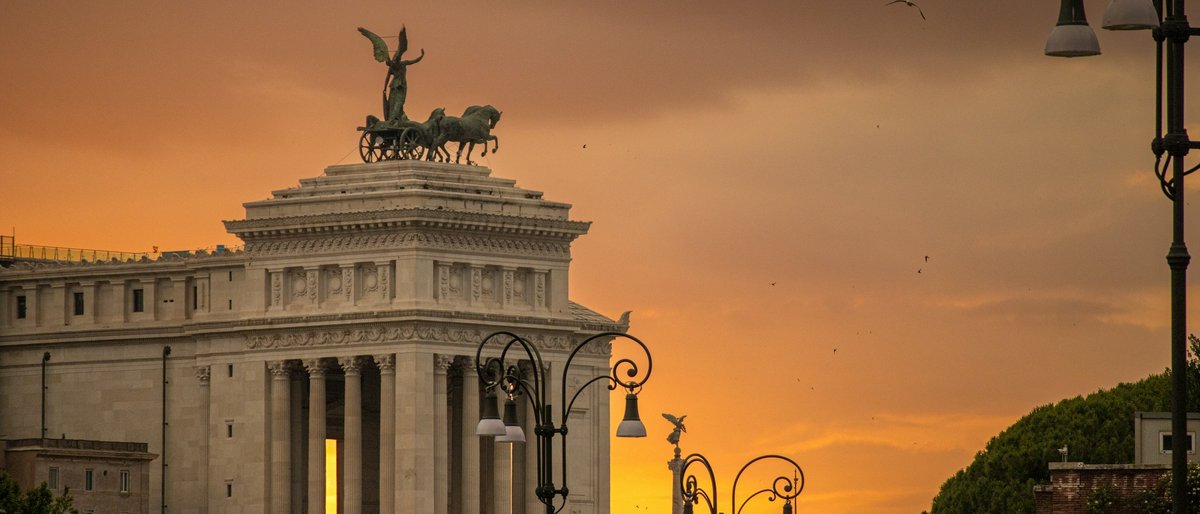
culturalThe traditional evening stroll takes on new importance in July because the daytime heat makes it unpleasant to walk before 7pm. From about 8pm onward, the historic center transforms: families, couples, and groups of friends fill the streets between Piazza Navona and the Trevi Fountain, gelato in hand. The light at sunset turns the travertine buildings golden, and the temperature finally drops to something pleasant.
July's extreme daytime heat makes the cool evening hours the only comfortable window for walking, and the late sunset past 8:45pm gives you extended golden-hour light that disappears by OctoberOpera at the Baths of Caracalla
culturalFull-scale opera and ballet productions performed in the open-air ruins of a 3rd-century Roman bathhouse. The Teatro dell'Opera's summer season runs through July with major productions. Sitting in the warm evening air watching Aida performed against ancient Roman walls is an experience that doesn't really have an equivalent elsewhere.
The summer season runs June through early August, and July offers the most reliable dry weather: there's virtually no chance of a rained-out performanceBooking tipBook at least 3-4 weeks ahead for weekend performances. Central sections sell out first: side sections still have good sightlines and cost significantly less.
Early morning Vatican Museums visit
sightseeingGetting to the Vatican by 7:30am for the earliest entry slot is a different experience from the midday crush. The galleries are quiet enough that you can stand in front of the Raphael Rooms and look at them. By 10am, the Sistine Chapel is shoulder-to-shoulder. The early start also means you're done before the worst heat of the day.
July's peak crowds make timed early-morning entry essential rather than optional: by midday the queue wraps around the walls and the interior becomes uncomfortably warm with thousands of bodies generating heat in enclosed galleriesBooking tipBook timed entry tickets through the official Vatican website at least 2 weeks in advance. Third-party resellers charge 2-3x markup for the same slots.
Day trip to Ostia Antica
day tripRome's ancient port city is a 30-minute train ride from Piramide station and receives a fraction of the visitors that Pompeii gets, despite being comparable in scale and preservation. In July, the ruins are surrounded by umbrella pines that provide actual shade: something the Forum and Palatine Hill lack entirely. It's an archaeological site where you can wander for hours without the claustrophobic crowds of central Rome.
The mature pine trees provide shade that makes this the most comfortable major archaeological site in the Rome area during extreme summer heat: a stark contrast to the shadeless ForumBooking tipTake the Roma-Lido train from Porta San Paolo station, adjacent to Piramide metro. Go early: arriving by 9am gives you 2-3 comfortable hours before peak heat.
Trastevere evening food walk
food and drinkTrastevere's narrow medieval streets trap cool air better than the wide boulevards of central Rome, and the neighborhood comes alive after dark in July. Wander from supplì shops to outdoor trattorias to gelaterias, stopping at the Piazza di Santa Maria to sit by the fountain. The restaurants here set tables outside, and eating dinner at 9:30pm in a candlelit alley feels like the Rome of the imagination.
Summer is when Trastevere's outdoor dining scene fully develops: restaurants extend deep into the narrow streets with tables, and the warm evenings mean you can comfortably eat outside until midnightBooking tipFor sit-down restaurants on weekend evenings, reserve a day or two ahead. Walk-in supplì and pizza al taglio spots don't take reservations.
Swimming at Lago di Bracciano
day tripThis volcanic lake about an hour north of Rome is where Romans escape the city heat. The water is clean enough to swim in, the surrounding town of Anguillara Sabazia has a medieval lakefront, and the whole scene feels worlds away from the tourist crush. Pack a picnic and spend a full day.
Water temperatures reach their warmest in July, and the 34°C city heat makes a lake day feel like a necessity rather than a luxury: this is what Romans themselves do on July weekendsBooking tipTake the regional train from Roma Ostiense. Go on a weekday if possible: Roman families pack the lakefront on weekends.
Outdoor cinema at Isola del Cinema
culturalEvery summer, Tiber Island hosts an outdoor film festival that screens international and Italian films on the riverbank. The setting is charming: you're sitting on a small island in the middle of the Tiber with ancient bridges on either side. Screenings start after dark, around 9:15pm, when the temperature has dropped enough to sit comfortably outside.
The festival runs through the summer months and July is its core season, with the fullest programming and longest dry stretch ensuring almost no weather cancellationsBooking tipTickets are inexpensive and available at the door, but popular screenings fill up: arrive 30-45 minutes early for good seats.
Sunset from Pincio Terrace above Piazza del Popolo
sightseeingThe terrace in Villa Borghese gardens overlooking Piazza del Popolo faces west directly into the sunset. In July, the sun sets around 8:40pm and the sky turns extraordinary colors over the dome of St. Peter's in the distance. Romans gather here with wine and snacks. It costs nothing and it might be the best free show in the city.
July's late sunset after 8:30pm extends the golden hour dramatically, and the clear skies that come with near-zero rainfall mean you get unobstructed views almost every eveningWhat to eat in July
In season: fruit
Fichi freschi
Fresh figs hit Roman markets in early July, both the green and purple varieties. Eaten on their own, paired with prosciutto crudo, or sliced into salads. The ones from the Castelli Romani towns south of the city tend to be good: look for them at the Mercato di Testaccio.
Pesche and albicocche
Roman peaches and apricots peak in July. The white peaches from Lazio are fragrant and sweet in a way that supermarket fruit rarely matches. You'll find them piled at every outdoor market, and the good gelaterias switch to fresh peach flavors that bear no resemblance to the artificial version.
On menus now
Pasta alla checca
A summer-only Roman pasta: raw cherry tomatoes, fresh mozzarella, basil, and good olive oil tossed with hot pasta so the cheese just barely starts to melt. It's the dish Romans eat when it's too hot to cook properly: light, quick, and entirely dependent on July's ripe tomatoes being at their best.
Street food peaks
Fior di zucca fritti
Fried zucchini flowers stuffed with mozzarella and anchovy, at their absolute peak in July when the blossoms are abundant and cheap at Campo de' Fiori market. The batter should be light, almost tempura-like. These are seasonal: by October they're gone.
What to drink
Grattachecca
Rome's answer to shaved ice, and entirely distinct from granita. A block of ice is hand-scraped into a cup and doused with fresh fruit syrups and chunks of real fruit. The historic stands along Lungotevere (near Ponte Cestio) have been doing this since the 1900s. It's a Roman summer ritual, not a tourist attraction, though tourists are welcome.
Regular events in July
Estate RomanaFree
The city government's umbrella summer cultural program fills parks, piazzas, and courtyards across Rome with free and ticketed events: outdoor concerts, theater, dance, film screenings, and art installations. Programming is scattered across dozens of venues, and the quality varies, but the best events are good and the settings are often spectacular.
June through September, with peak programming in JulyFesta de' NoantriFree
Trastevere's annual neighborhood festival honoring the Madonna Fiumarola. A religious procession carries a statue of the Madonna through the streets, followed by a week-plus of street food stalls, live music, and fireworks over the Tiber. It feels distinctly local rather than tourist-oriented: Trastevere residents take it seriously.
Begins the Saturday after July 16, runs approximately 10 daysLungo il Tevere RomaFree
The banks of the Tiber between Ponte Sisto and Ponte Mazzini transform into a seasonal market and entertainment strip with food stalls, bars, craft vendors, and small performance stages. The quality is mixed (some stalls are tourist-grade) but it's a pleasant place to spend an evening walking along the river.
Mid-June through late August, nightly from around 7pmRock in Roma
Rome's summer concert series brings international and Italian acts to the Ippodromo delle Capannelle and other outdoor venues. Past line-ups have included major touring acts alongside Italian headliners. The outdoor setting works well in July's dry weather.
June through August, with shows several nights per weekBest places this July
Villa Borghese gardens
parkRome's central park becomes essential in July: the tree cover provides actual shade, the temperature under the canopy drops noticeably, and you can rent rowboats on the small lake. The Galleria Borghese inside the park is one of the city's best museums and is air-conditioned, making it a perfect midday refuge.
PincianoMercato di Testaccio
marketRome's best food market is a covered, modern structure that stays cooler than outdoor markets. July is when the stone fruit and fig vendors are at their peak. Grab supplì and porchetta sandwiches from the prepared food stalls: this is where Romans shop, not a tourist attraction with tourist prices.
TestaccioAventine Hill and the Orange Garden
viewpointThe Giardino degli Aranci offers shade from its orange trees, a breeze from the elevated position, and one of the best views of St. Peter's dome across the river. In July, arrive around 7:30pm and watch the sunset from here; it's less crowded than Pincio and feels more intimate. Don't miss the famous keyhole view at the Knights of Malta priory next door.
AventinoSan Lorenzo neighborhood
neighborhoodThis university district east of Termini station is where younger Romans go out in summer. The bars and restaurants are cheaper than Trastevere, the street art is worth a walk, and on warm July nights the outdoor tables on Via dei Volsci and Via dei Sabelli are packed with locals, not tour groups.
San LorenzoTiber Island
landmarkThe small island in the Tiber has a microclimate that feels a few degrees cooler than the surrounding streets, and it hosts the Isola del Cinema festival throughout July. Walk across the ancient Ponte Fabricio (the oldest intact bridge in Rome) and sit at one of the riverside restaurants. At night, with the bridges lit up, it's one of the most atmospheric spots in the city.
TrastevereQuartiere Coppedè
neighborhoodA tiny, surreal neighborhood of Art Nouveau and Gothic fantasy architecture tucked away near Piazza Buenos Aires. Almost no one visits in any season, and in July's heat it has a bizarre, shaded walking tour of about 20 minutes through buildings that look like they belong in a fairy tale. The central fountain in Piazza Mincio is the centerpiece.
TriesteBasilica di Santa Maria Maggiore
churchOn August 5, this basilica commemorates a legendary summer snowfall with a shower of white petals from the ceiling, but in July, the church is simply one of Rome's most beautiful and reliably cool interiors. The 5th-century mosaics are extraordinary and the nave is vast enough to feel refreshing after the street heat.
Esquilino
Your packing checklist
Tick items off as you pack. Your progress saves in this browser.
All packed — have a great trip.
Insider tips
The nasoni drinking fountains have a small hole on top of the spout: block the main opening with your finger and water shoots up like a drinking fountain. Most tourists don't notice this and awkwardly try to drink from the stream. Romans will smile if they catch you doing it the right way.
Many churches offer cool interiors that function as free air-conditioned rest stops. San Luigi dei Francesi has three Caravaggio paintings and is wonderfully cool inside. Sant'Ignazio has a trompe-l'oeil ceiling that's worth the visit on its own. Neither typically has long queues, even in July.
The Colosseum underground and third ring tours are ticketed separately from general admission and have much smaller groups. They also tend to run in the earlier morning slots when it's cooler. The underground passages are naturally cool: it's one of the few sites that's more comfortable below ground.
Roman restaurants that close for ferie post their return dates on the door. If you're staying in a residential neighborhood like Testaccio or Prati, scout your dinner options early in the day so you're not wandering hungry past shuttered restaurants at 9pm. The closer to August you get, the more closures you'll find.
Skip the gelato shops near major tourist sites: around the Trevi Fountain and Pantheon. The good gelaterias are a 5-minute walk away in any direction. Look for metal lids covering the gelato rather than tall swirled mounds, natural rather than neon colors, and a banana flavor that's grey-white rather than bright yellow.
Avoid these mistakes
- Scheduling major outdoor sightseeing between noon and 4pm: the Forum, Palatine Hill, and Colosseum exterior have almost no shade, and at 34°C this is dangerous, not just uncomfortable. Plan indoor activities like the Vatican Museums or Galleria Borghese for midday and save outdoor sites for early morning.
- Not pre-booking timed entry for the Vatican Museums and Colosseum: in July, the walk-up queue at the Vatican can exceed three hours in full sun. Pre-booked timed entry costs a few euros more and saves you from a miserable, potentially heat-stroke-inducing wait.
- Packing only shorts and tank tops, while Rome is casual, major churches including St. Peter's Basilica strictly enforce covered shoulders and knees. Getting turned away after a sweaty walk across the city is a frustrating July experience that happens to tourists daily.
- Eating dinner at 7pm like you would at home: Roman restaurants in summer are often empty before 8:30pm because locals eat at 9 or 9:30. The atmosphere, the people-watching, and sometimes the kitchen are all better later. Eating early also means you miss the best part of Roman summer evenings.
Practical tips for July
Book accommodation with confirmed air conditioning (not just a fan, actual AC) and verify recent reviews mention it working. Many charming older buildings in Trastevere and Centro Storico have unreliable cooling systems that struggle when temperatures spike above 35°C. Book the Vatican Museums, Colosseum, and Galleria Borghese online at least two weeks ahead; the Borghese requires advance booking year-round and July slots fill fast. Consider the Roma Pass or similar multi-site pass not for savings but for skip-the-line access. Many restaurants in residential neighborhoods close for summer holidays starting mid-July, so don't assume your first-choice dinner spot will be open: check Google Maps or call ahead. The metro runs until 11:30pm on weekdays and 12:30am on weekends in July, and night buses cover most routes after that. Dress code enforcement at churches is real and consistent in July specifically because tourists arrive in summer clothing: keep a light layer in your bag. Pharmacies marked by a green cross sell everything from sunburn cream to electrolyte supplements, and they're on a rotation system so at least one is always open in each neighborhood, even on Sundays.
FAQ
Is July a good time to visit Rome?
Honestly, it's not ideal. July is one of the hottest and most crowded months of the year, with daytime temperatures averaging 34°C (93°F) and peak tourist numbers at every major site. Hotel prices are at their highest, and many local businesses close for summer holidays. That said, if July is your only option, Rome still delivers: you just need to plan around the heat by sightseeing early and late, book everything in advance, and embrace the late-night dining culture. The near-total absence of rain and long evening daylight are genuine perks. But if you can shift to October or April, you'll have a dramatically better experience for less money.
What is the weather like in Rome in July?
Hot and dry. Average highs reach 33.9°C (93°F) with lows around 21.7°C (71°F). Rainfall is negligible: about 18mm across roughly three days, usually as brief afternoon thunderstorms. Humidity averages 57%, which is moderate, but the radiant heat from stone streets and buildings makes it feel hotter than the numbers suggest. Heat waves from North Africa can push temperatures above 38°C (100°F) for several days running. The UV index regularly hits 9-10, so sun protection is essential, not optional.
Is Rome crowded in July?
Very. July is peak tourist season, and the major sites (Vatican Museums, Colosseum, Trevi Fountain, Pantheon) are at their most packed. Queue times without pre-booked tickets can exceed two hours. The streets around Piazza Navona and the Spanish Steps are shoulder-to-shoulder by late morning. However, Rome is a large city, and neighborhoods like Testaccio, San Lorenzo, Prati, and Monteverde remain relatively uncrowded. The key is mixing the headline sites with local neighborhoods, and front-loading sightseeing to the earliest possible morning hours.
What should I wear in Rome in July?
Light, breathable fabrics: linen and cotton are standard for Romans in summer. Light colors help reflect the sun. You'll want shorts or light pants, loose tops, and comfortable sandals with good soles for cobblestones. The critical thing to remember: major churches including St. Peter's Basilica enforce a dress code requiring covered shoulders and knees. Carry a light scarf or shawl in your bag so you can cover up at church entrances without overheating the rest of the day.
How do I avoid the heat while sightseeing in Rome in July?
Restructure your day around the sun. Wake early and hit outdoor sites (the Forum, Colosseum, Palatine Hill) by opening time, usually 8:30 or 9am. Retreat indoors between noon and 4pm for museums, churches, or a long lunch. Re-emerge for the passeggiata around 7pm when temperatures begin dropping. Stay hydrated using the free nasoni drinking fountains scattered across the city. Churches like San Luigi dei Francesi and Sant'Ignazio are cool inside and free to enter, doubling as both cultural stops and heat refuges.
Things to Do in Rome in July
 Free cancellation
 Rome 3 in 1 Cooking Class: Fettuccine, Ravioli & Tiramisu
Cooking class: 3 hours, free cancellation.
via Viator Free cancellation
 Pompeii, Amalfi Coast and Positano Day Trip from Rome
Day trip: 13 hours, free cancellation.
via Viator Free cancellation
 Pompeii from Rome with Optional Mt. Vesuvius & Pizza Lunch
Day trip: 12 hours, free cancellation.
via Viator Free cancellation
 Rome Pasta and Tiramisu Class: Ravioli, Fettuccine & Fine Wine 5*
Cooking class: 3 hours, free cancellation.
via Viator Free cancellation
 Learn to Make Pasta & Tiramisu with Wine and Limoncello Included
Cooking class: 2 hours, free cancellation.
via Viator Free cancellation
 Rome on a Golf Cart Semi-Private Tour Max 6 with Private Option
City tour: 3 hours, free cancellation.
via ViatorFind a flight to Rome
Live fares to Rome appear here once cookies are accepted.
Last verified by automated review (v1.7.2) on . What is automated review?