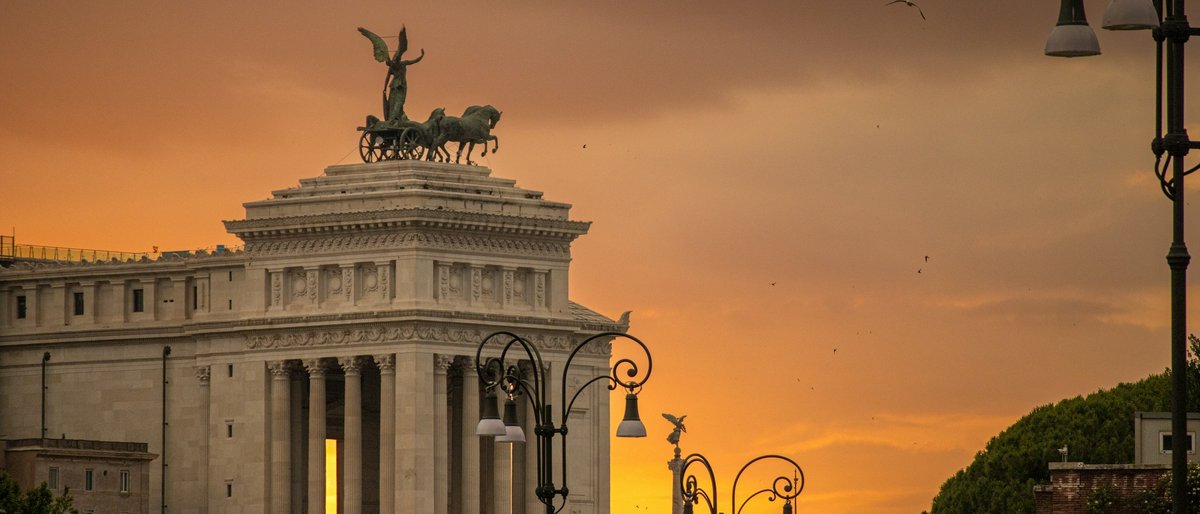
Rome doesn't rush into the night. That's the first thing you'll notice. Dinner rarely starts before 9 PM, and the idea of heading to a bar before 10:30 would get you a raised eyebrow from most Romans. The city's relationship with nightlife is built around the passeggiata: that slow evening walk through the centro storico, gelato in hand, cobblestones underfoot, and the aperitivo, which is less a drink and more a social ritual. You'll smell cigarette smoke and fresh basil drifting from open kitchen windows. You'll hear laughter bouncing off travertine walls in narrow vicoli. The night here develops in layers, and trying to force it into a schedule will only frustrate you.
Rome is not Berlin. It's not Barcelona. The club scene exists, but it's not really what the city is about. Romans are social drinkers, not binge drinkers. They linger. A spritz at a sidewalk table in Trastevere at sunset can stretch into a bottle of natural wine at midnight, and that's a well complete evening. The energy tends to gather in specific neighborhoods (Trastevere, Testaccio, San Lorenzo, Pigneto, Monti) each with its own crowd and tempo. Tourists cluster in the centro, locals spread out. If you want to understand how Rome goes out, follow the locals to the periphery. That said, even the touristy spots have their charm after dark, when the Pantheon is lit up and the piazzas thin out to just couples and street musicians.
One thing worth noting: Roman nightlife changes with the seasons more than most cities. Summer pushes everything outdoors and south toward the river, where pop-up bars and open-air events line the Lungotevere. Winter pulls it indoors, into basement wine bars and jazz clubs with low ceilings and warm light. The city feels different after dark depending on when you visit, and that's part of what keeps it interesting.
The Bar Scene: From Aperitivo to Last Call
The aperitivo is where Roman evenings begin. Between roughly 6:30 and 9 PM, bars across the city offer a drink (typically a Spritz Aperol, a Negroni, or a glass of prosecco) accompanied by a spread of snacks. Some places do this as a proper buffet with pasta, bruschetta, and cured meats. Others keep it minimal: olives, chips, maybe some focaccia. The price of the drink covers the food. It's one of the best deals in a city that isn't cheap. Rome's cocktail bar scene has grown considerably over the past decade. You'll find serious mixology bars tucked into side streets in Monti and near Piazza Navona, the kind of places with hand-chipped ice and house-made bitters. The bartenders tend to be knowledgeable without being pretentious, or at least, less pretentious than their counterparts in Milan. Expect to pay somewhere around 12 to 18 euros for a well-made cocktail, which stings a bit but is standard for a European capital. Wine bars (enoteche) are arguably more Roman than cocktail spots. The city sits in Lazio, surrounded by vineyards producing Frascati, Cesanese, and other regional wines that rarely make it outside Italy. A good enoteca will pour you a glass of something local for 5 to 8 euros and pair it with taglieri of pecorino and salumi. These places are often small, dim, and a little cramped, with wooden shelves lined with bottles. The air smells like aged cheese and red wine. That's the point. Dive bars exist too, around San Lorenzo and Pigneto, where the university crowd keeps things cheap and loose. Think plastic chairs on the sidewalk, 4-euro beers, and someone's dog asleep under the table. Not glamorous. Totally Rome. Rooftop bars are a thing, mostly in the centro storico attached to hotels. The views can be staggering (domes, bell towers, terracotta rooftops fading into the distance) but you'll pay a premium. A cocktail with a view of St. Peter's dome at sunset might run you 20 euros or more. Worth it once, maybe. Romans themselves rarely bother with these spots.
The Club Scene: Late Starts and Selective Doors
Clubbing in Rome requires patience. Nothing meaningful happens before midnight, and many places don't fill up until 1 or 2 AM. If you show up at 11 PM expecting a crowd, you'll be standing in a half-empty room wondering what went wrong. Romans eat late, drink late, and dance even later. Testaccio has historically been the heart of the club scene. The neighborhood's old slaughterhouse district (the ex-Mattatoio area) houses several clubs in converted industrial spaces. The sound tends toward house and techno, though you'll also find hip-hop nights and more commercial stuff depending on the venue and the evening. The concrete floors, exposed pipes, and cavernous rooms give these spots a raw, post-industrial feel that works well at 3 AM with bass rattling your chest. The EUR district, further south, hosts some of the bigger club nights, in summer when open-air events take over parking lots and green spaces. These lean more commercial and flashy: bottle service, VIP areas, that sort of thing. Not really where you'll find the underground scene, but they draw big crowds. Dress codes in Rome are... situational. Testaccio clubs tend to be relaxed: clean sneakers, a decent shirt, you're fine. The more upscale spots near Via Veneto or in EUR might turn you away in shorts and flip-flops, which seems obvious but still catches people off guard. Dark jeans and a collared shirt will get you into most places without trouble. Romans dress well by default, so you'll naturally stand out if you look like you just came from the beach. Cover charges vary wildly. Some clubs are free before a certain hour, then charge 10 to 20 euros with a drink included. Others charge more for special events or international DJs. Guest lists circulated on social media or through promoters can sometimes get you in free or at a discount: keep an eye on Instagram pages for the venues you're interested in. One cultural note: the bouncer dynamic in Rome can feel arbitrary. Lines move slowly, groups of men without women might wait longer, and sometimes the door policy seems to be based entirely on the mood of the person holding the rope. Don't argue. Just be patient, look presentable, and try not to arrive in a group of eight guys. Mixed groups have a much easier time.
Live Music: Jazz Cellars, Indie Stages, and Street Musicians
Rome has a deep live music tradition that often gets overlooked in favor of Milan's and Bologna's scenes. Jazz, in particular, has real roots here. The city has hosted a jazz festival since the 1970s, and you'll find basement clubs where the ceilings are low, the seats are close to the stage, and the musicians are skilled. Trastevere and Testaccio both have venues that program jazz several nights a week, typically starting around 10 PM. The sound of a tenor sax drifting up a stairwell from a subterranean club is one of those distinctly Roman experiences. The indie and alternative rock scene lives primarily in San Lorenzo and Pigneto, where centri sociali (self-managed social centers, often in occupied buildings) host concerts, DJ sets, and cultural events. These spaces have a political edge to them, rooted in Rome's leftist counterculture. The music ranges from Italian punk to experimental electronic to singer-songwriter nights. Cover charges, when they exist, are usually modest: a few euros, sometimes donation-based. The crowds tend to be young, local, and not interested in tourism. Italian cantautore music (the singer-songwriter tradition) still has a following in Rome, where artists like Fabrizio De André and Francesco De Gregori are cultural touchstones. You might stumble into a small venue in Monti or Trastevere where someone is performing original songs in Italian with just an acoustic guitar. These nights are quiet, intimate, and Roman in a way that's hard to find elsewhere. Street musicians are part of the fabric too. The area around Piazza di Spagna and Trastevere's Piazza di Santa Maria regularly hosts buskers: some talented, others less so. On warm evenings, you might hear an accordion player on the Ponte Sisto or a jazz trio set up near the Tiber. It's unstructured, unpredictable, and occasionally wonderful. For bigger acts and touring bands, Rome has several mid-size and large concert venues, though these tend to be outside the historic center. Summer brings open-air festival stages to parks and piazzas, which are worth checking local listings for. The Roma Summer Fest at the Auditorium Parco della Musica is probably the most well-known, pulling in international headliners alongside Italian artists.
Nightlife neighborhoods
-
Trastevere
Narrow cobblestone streets draped in ivy, warm light spilling from trattorias, and a constant low hum of conversation. Trastevere is the neighborhood tourists romanticize, and to be fair, the charm is real: it just gets very crowded. The piazzas fill up fast after sunset, and by 10 PM the whole neighborhood feels like one big outdoor party. Locals have mixed feelings. Some have moved on to quieter areas; others still swear by it.
- Best for
- Aperitivo, wine bars, pub crawls, people-watching on the piazza
-
Testaccio
Working-class roots, gritty edges, and Rome's most concentrated club district. The streets smell like wood-fired pizza from the old-school restaurants, and the ex-slaughterhouse area at the neighborhood's south end transforms after dark. It's less polished than Trastevere and more authentically Roman in some ways: this is where locals come to eat cacio e pepe and then dance until 4 AM. The Monte Testaccio area, a literal hill made of ancient broken pottery, is lined with bars and clubs built into its base.
- Best for
- Clubbing, late-night dining, house and techno nights
-
San Lorenzo
University district energy: cheap, loud, and a little rough around the edges. The streets near La Sapienza fill up with students drinking birra from plastic cups on the sidewalk. Graffiti covers almost every surface. The centri sociali host punk shows and film screenings. It has a reputation for being less safe than other neighborhoods, and while that's somewhat overstated, you should still pay attention to your surroundings late at night. The noise and the mess are part of the deal.
- Best for
- Cheap drinks, indie concerts, alternative culture, student nightlife
-
Pigneto
Rome's answer to Brooklyn or Kreuzberg, or at least that's what people say. Pigneto was a working-class neighborhood that started attracting artists, musicians, and young professionals about fifteen years ago. The main pedestrian street fills up on weekends with people bar-hopping between natural wine spots, craft beer pubs, and cocktail bars. It still has a grittier feel than Monti or Trastevere, and the gentrification conversation is ongoing. The vibe is creative and slightly self-conscious, but the drinks are good and the crowd is interesting.
- Best for
- Natural wine, craft cocktails, creative crowd, weekend bar-hopping
-
Monti
Rome's oldest rione, currently its most fashionable. The streets around Via del Boschetto and Via Panisperna are lined with vintage shops, small galleries, and intimate bars. Monti attracts a slightly older and better-dressed crowd than San Lorenzo or Pigneto. The energy is more cocktail-and-conversation than shots-and-dancing. On weekends, the small piazza at the neighborhood's heart hosts a market by day and fills with aperitivo drinkers by evening. You can smell espresso and old books. It's compact and walkable.
- Best for
- Cocktail bars, wine bars, date nights, intimate drinking spots
-
Ostiense
An industrial district south of Testaccio that's been slowly transforming. Old warehouses and factories are becoming galleries, brewpubs, and event spaces. It's not as established as Testaccio for nightlife, but it has a rawness that appeals to people tired of the more curated spots. The street art alone is worth the walk. Gas holders and rail yards loom in the background. The area around Via dei Magazzini Generali has several venues that host club nights and live events, on weekends.
- Best for
- Warehouse parties, street art crawls, emerging nightlife scene
-
Centro Storico (Piazza Navona / Campo de' Fiori)
Tourist central, no question about it. Campo de' Fiori after midnight is a circus of pub crawls, overpriced shots, and loud English-speaking crowds. Romans mostly avoid it. That said, if you wander even two blocks off the main piazzas, you'll find quieter wine bars and trattorias where the pace drops dramatically. The beauty of the architecture at night (fountains lit up, empty alleys, the Pantheon glowing) partially compensates for the tourist tax on everything.
- Best for
- Tourist pub crawls, scenic night walks, rooftop hotel bars
Safety after dark
Rome is generally a safe city after dark, but you should still exercise common sense. Pickpocketing is the main concern, in crowded tourist areas, on night buses, and around Termini station. Keep your phone in a front pocket and don't leave bags on the back of chairs at outdoor tables.
Getting home late at night is manageable but requires some planning. The Metro stops running around 11:30 PM on weekdays and 1:30 AM on weekends, which is frustratingly early given that nothing really starts until midnight. Night buses (the lines with an 'N' prefix) cover major routes but run infrequently, sometimes every 30 to 45 minutes. Taxis are reliable but not cheap; make sure the meter is running and that you're in an official white taxi with a number on the door. Ride-hailing apps work in Rome, though availability can be spotty at peak hours on weekends.
Drink spiking, while not widespread, has been reported at busier clubs and tourist-heavy bars. Standard precautions apply: watch your drink, don't accept drinks from strangers, and stick with your group. If something feels off, trust that feeling.
The area around Termini station can feel sketchy late at night: aggressive solicitation, some drug activity, and a general seediness that's worse than most of central Rome. It's not dangerous in the way that some cities' train station areas are, but it's not where you want to linger at 3 AM either. San Lorenzo, as mentioned, has a slightly rougher reputation too, mostly related to petty crime after the bars close.
One scam to watch for: unofficial 'promoters' near tourist areas who offer free entry to clubs or bars. Sometimes this is legitimate: promoters exist in every city. But occasionally it's a setup for an overpriced bottle service bill or a bar that charges hidden fees. If someone approaches you on the street with a flyer, check the venue's social media before committing.
Walking home through the centro storico late at night is one of the quiet pleasures of Rome. The streets empty out, the stone holds the warmth of the day, and you can hear your own footsteps echoing. Just keep your wits about you on the darker side streets.
Practical tips
- Aperitivo economics
- Most bars include snacks or a small buffet with the price of your aperitivo drink, which typically runs 8 to 12 euros. Some places near the universities offer generous buffets that can replace dinner if you're on a budget. The quality varies: some spots just put out chips and peanuts while others lay out pasta, rice salads, and bruschetta. Ask locals or check reviews to find the ones worth the walk.
- Tipping at bars
- Tipping culture in Rome is minimal compared to the US. At a bar, leaving small change or rounding up is appreciated but not expected. If you're sitting at a table and being served, a euro or two on top of the bill is a nice gesture. At cocktail bars, you might leave a bit more if the bartender went out of their way. Nobody will chase you down if you don't tip, and nobody will give you a dirty look either.
- Cover charges and drink tokens
- Many clubs include one drink with the cover charge, given to you as a physical token or a stamp on your hand. Don't lose the token: some venues charge you for it if you can't produce it at the end of the night. Cover charges tend to be higher for special events and guest DJs. Checking the venue's Instagram story the day of is often the best way to find out what the current entry situation looks like.
- When to go out
- Aperitivo starts around 6:30 to 7 PM. Dinner is typically 9 to 10:30 PM. Bars start filling up around 10:30 to 11 PM. Clubs don't get busy until 1 AM at the earliest. If you're used to American or Northern European timing, add about two hours to whatever feels normal. Showing up early to a club in Rome means standing around in a nearly empty room.
- Language at the door
- Most bartenders and club staff in central Rome speak at least basic English. In neighborhoods like Pigneto, San Lorenzo, or Testaccio, you might encounter more Italian-only situations. A few phrases go a long way: 'un Negroni, per favore' will always get you further than pointing at a menu. Romans generally appreciate even clumsy attempts at Italian.
- Summer vs. winter nightlife
- Summer transforms Roman nightlife. The Lungotevere (the road along the Tiber) becomes lined with temporary bars, food stalls, and event spaces. Open-air cinema, rooftop parties, and beach clubs south of the city all come alive. Winter pushes everything indoors, which means smaller venues, cozier atmospheres, and earlier nights. If you're visiting in July or August, know that many Romans leave the city entirely, and some neighborhood spots close for a few weeks. The tourist areas stay open, but the local scene thins out.
FAQ
What time do bars and clubs close in Rome?
Most bars wind down between 1 and 2 AM, though some stay open later, on weekends. Clubs typically run until 4 or 5 AM. There's no single, rigid closing time enforced across the city: it depends on the venue, the neighborhood, and how the night is going. San Lorenzo and Pigneto bars might still be serving at 2:30 AM on a Saturday, while a centro storico wine bar might close by midnight.
Is Rome's nightlife expensive compared to other European cities?
It's moderate. Cheaper than London, Paris, or Zurich, but more expensive than Lisbon, Prague, or most Eastern European capitals. A beer at a neighborhood bar runs 4 to 6 euros. A cocktail at a serious spot is 12 to 18 euros. Club cover is 10 to 20 euros with a drink included. You can have a solid night out for 30 to 50 euros if you're not doing bottle service or drinking at rooftop hotel bars. Aperitivo buffets help keep food costs down.
What do locals drink in Rome?
The Spritz (Aperol Spritz) dominates aperitivo hour. The Negroni is Roman in origin and still wildly popular. Wine by the glass, local whites like Frascati, is common at dinner and in enoteche. Beer has grown in popularity, with craft birra artigianale becoming more visible. Later at night, amaro is traditional: a bitter herbal digestif served after dinner. You'll see people sipping Averna, Montenegro, or Fernet-Branca as the evening winds down. Shots are mostly a tourist phenomenon.
Do I need to book tables or get on guest lists?
For most bars, no. Just walk in. For popular restaurants before a night out, reservations are a good idea, on weekends. For clubs, guest lists can make a real difference: they often mean free or reduced entry and shorter waits. Follow venues on Instagram or check their websites a few days before you plan to go. Some clubs also work with promoters who distribute guest list spots via WhatsApp or social media.
Is it safe to walk around Rome at night?
Generally, yes. The centro storico is well-lit and populated late into the night, and violent crime against tourists is rare. The main risks are pickpocketing in crowded areas and petty theft. Avoid lingering around Termini station late at night, stay aware in San Lorenzo after the bars close, and keep your valuables secure. Stick to well-lit streets, and you'll likely find that walking through Rome at night (past illuminated ruins and empty piazzas) is one of the best parts of the trip.
How do I get home after the Metro stops running?
Night buses are the budget option: look for lines prefixed with 'N' that run through the early morning hours, though frequency drops to every 30 to 45 minutes. Official white taxis are reliable; you can hail them on the street or find them at designated stands near major piazzas. Ride-hailing apps are available but increase pricing on weekend nights can push fares up. If you're staying in the centro storico and going out in Trastevere or Monti, walking home is often the fastest and most pleasant option.
Last verified by automated review (v1.7.1) on . What is automated review?