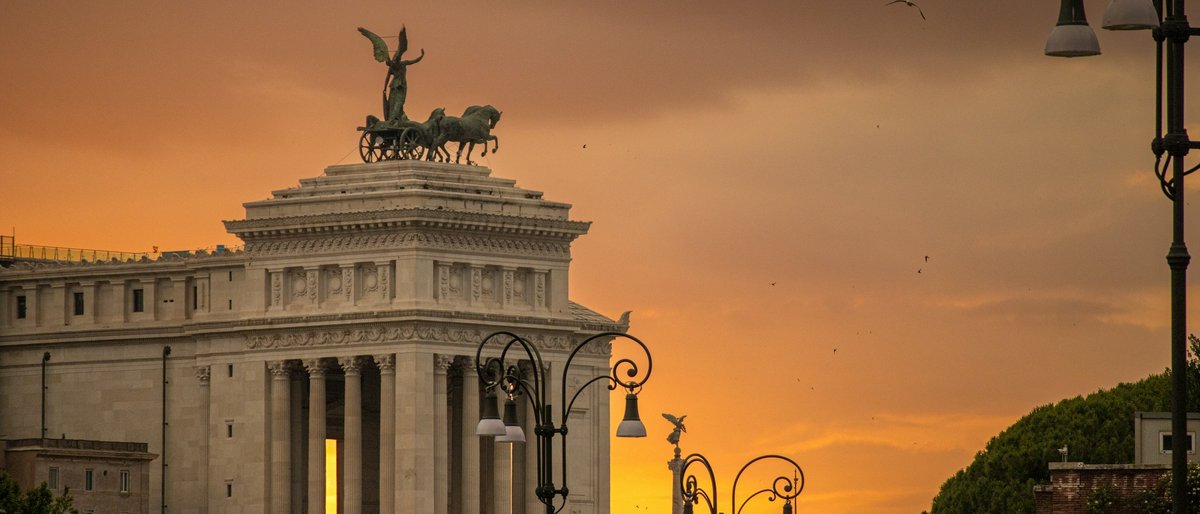
What's the must-see thing in Rome?
The Pantheon. Walk through bronze doors that have swung on the same pivots since 126 AD, stand under the open oculus while rain hits marble drainage channels Hadrian's engineers carved, and understand in fifteen minutes what Rome means by continuity. Entry is €5. The Colosseum needs advance tickets and a guide to land; the Pantheon lands the moment you look up.
The Pantheon sits on Piazza della Rotonda, a ten-minute walk south of the Trevi Fountain through narrow streets that smell like espresso grounds and damp travertine in the morning. Step inside and your eyes take a full thirty seconds to adjust. The dome is 43.3 metres across: still the largest unreinforced concrete dome on earth after nearly nineteen centuries. There is no stained glass, no electric lighting competing for attention. Just a single nine-metre hole in the ceiling that throws a slow-moving disc of sunlight across the coffered interior as the day passes. When it rains, water falls straight through onto the slightly convex floor and drains through 22 holes the original builders cut. The sound of rain hitting wet marble in a space that quiet is something photographs will never communicate. Entry runs €5 since mid-2023; weekday mornings before 10am tend to be the calmest.
Yes, visit the Colosseum. But go in with the right expectations: it is a skeleton, not a building. The tiers of seating are mostly gone. The underground hypogeum (where animals and gladiators waited) is now exposed, which is the interesting part, because you can see the mechanical lift shafts and trapdoor channels that made the spectacles work. Book a timed-entry ticket at least two days ahead; the €18 combined ticket covers the Forum and Palatine Hill as well. The 7:30am first-entry slot is worth the early alarm; by 9:30 the lower levels back up and the summer heat off that exposed stone can push past 38°C with no shade anywhere. One honest warning: without an audio guide or a human one, the interior reads as a large broken oval. The engineering story is what makes it land, and that story needs narration.
St. Peter's Basilica is free to enter, which still surprises people. The security line on the right side of the colonnade moves faster than the left: worth knowing when the queue wraps around the piazza. Inside, the scale defies preparation. You will see what look like normal-sized cherubs on the holy water fonts and then realize they stand two metres tall. Michelangelo's Pietà sits behind glass in the first chapel on the right; it is smaller than you expect and more affecting for it. The dome climb is the real draw: €8 for 551 steps, or €10 to take a lift partway. The staircase narrows until your shoulders nearly brush both walls, and then you emerge onto the exterior gallery with all of Rome below and the Tiber catching afternoon light. Dress code is enforced (no bare shoulders, no shorts above the knee) and the guards will turn you away without hesitation. Carry a light scarf in your bag.
If you have one full day, do the Pantheon first thing: it opens at 9am and you will be done by 9:20. Walk south to Largo di Torre Argentina to see where Julius Caesar was stabbed. It is a sunken ruin full of rescue cats; five minutes, no entry fee, oddly moving. Then cab or bus to the Colosseum for your timed slot. Save St. Peter's for late afternoon when the western light fills the nave and the morning crowds have thinned. That sequence keeps you moving roughly south-to-west across the city and avoids doubling back. Mind you, Roman distances look walkable on the map but the sampietrini cobblestones are uneven and hard on ankles: comfortable shoes over stylish ones, every time.
The top three
The Pantheon
The only ancient Roman building still intact after 1,900 years. The unreinforced concrete dome, the open oculus letting rain hit Hadrian's original marble floor: fifteen minutes here recalibrates how you see every other ruin in the city. €5 entry, no reservation needed.
The Colosseum
You already know you are going. The underground hypogeum (exposed lift shafts, trapdoor mechanisms) is the part that surprises. Book the 7:30am timed slot at least two days ahead; the €18 combo covers the Roman Forum and Palatine Hill.
St. Peter's Basilica
Free entry, no reservation. The interior scale is physically disorienting: those cherubs on the holy water fonts stand two metres tall. The 551-step dome climb puts all of Rome below you with the Tiber catching late light to the west.
Reservations required for at least one of these.
Verified attractions
Sourced from Wikidata and OpenStreetMap: each entry links to its authoritative page.
-
Vatican City
attractionHoly See's independent state, an enclave within Rome, Italy
View on Wikidata -
Colosseum
archaeological siteancient Roman amphitheatre, a landmark of Rome, Italy
View on Wikidata -
St. Peter's Basilica
churchchurch in Vatican City
View on Wikidata -
Sistine Chapel
churchchapel in the Apostolic Palace, Vatican City
View on Wikidata -
Pantheon
archaeological siteancient Roman temple in Rome, Italy
View on Wikidata -
Stadio Olimpico
stadiumsports venue in Rome, Italy
View on Wikidata -
Roman Forum
archaeological siteAncient Roman center of the city, a landmark of Rome, Italy
View on Wikidata -
Trevi Fountain
monumentBaroque fountain in Rome, Italy
View on Wikidata -
Saint Peter's Square
plazapiazza in Vatican City
View on Wikidata -
Vatican Museums
museummuseums of the Vatican City
View on Wikidata -
Palatine Hill
archaeological sitecentremost of the seven hills of Rome, Italy
View on Wikidata -
Archbasilica of St. John Lateran
churchcathedral in Rome, Italy
View on Wikidata -
Basilica di Santa Maria Maggiore
churchlargest Catholic Marian church in Rome
View on Wikidata -
Apostolic Palace
palaceofficial residence of the Pope in Vatican City
View on Wikidata -
Basilica of Saint Paul outside the Walls
churchchurch in Rome, Italy
View on Wikidata -
Castel Sant'Angelo
castlecastle and museum in Rome, formerly the imperial mausoleum of the emperor Hadrian and subsequent Roman emperors
View on Wikidata -
Pietà (Michelangelo)
attractionsculpture by Michelangelo
View on Wikidata -
Trajan's Column
archaeological siteancient Roman victory column, a landmark of Rome, Italy
View on Wikidata -
Quirinal Palace
palacehistoric building in Rome, Italy; official residence of the President of the Italian Republic
View on Wikidata -
Circus Maximus
archaeological siteAncient Roman circus in Rome
View on Wikidata -
Hadrian's Villa
archaeological sitearchaeological complex in Tivoli, Italy
View on Wikidata -
Arch of Constantine
archaeological sitetriumphal arch in Rome
View on Wikidata -
Ostia
archaeological siteancient Roman city and colony
View on Wikidata -
Aurelian Walls
archaeological sitehistoric line of walls built around the city of Rome, Italy
View on Wikidata -
Piazza Navona
plazapublic square in Rome, Italy
View on Wikidata -
Trajan's Forum
archaeological siteTrajan's Forum was the last of the Imperial fora to be constructed in ancient Rome. The architect Apollodorus of Damascus oversaw its construction. monumental square in Rome
View on Wikidata -
Capitoline Museums
museummunicipal museum of the city of Rome, Italy
View on Wikidata -
Galleria Borghese
museumArt museum in Rome, Italy
View on Wikidata -
Altare della Patria
museummonument built in honour of Victor Emmanuel II of Italy
View on Wikidata -
Baths of Caracalla
archaeological sitepublic baths in ancient Rome
View on Wikidata -
Alba Longa
archaeological siteancient city of Latium in central Italy
View on Wikidata -
Arch of Titus
archaeological sitetriumphal arch in Rome (constructed c. 81 AD)
View on Wikidata -
San Pietro in Vincoli
churchchurch in Rome
View on Wikidata -
Ara Pacis
archaeological siteancient Roman monument in Rome
View on Wikidata -
Church of the Gesù
churchchurch in Rome, Italy, and precursor of the Baroque style
View on Wikidata -
Mausoleum of Augustus
archaeological sitebuilding in Campo Marzio, Italy
View on Wikidata -
Piazza di Spagna
plazasquare in Rome, Italy
View on Wikidata -
Spanish Steps
attractionstairs in Rome, Italy
View on Wikidata -
Temple of Vesta
archaeological siteancient religious monument in Rome, Italy
View on Wikidata -
Veii
archaeological siteEtruscan city
View on Wikidata
Last verified by automated review (v1.5.J.2) on . What is automated review?