Compare every Italy city in June →
Stay in Rome in June
80 hotels in the Trip.com pool for Rome, from US$31 a night.
Opens Trip.com on Fri 4 Jun to Sun 6 Jun 2027; change the dates there.
June is when Rome gets properly hot and properly crowded. That's the headline. Daytime temperatures push past 30°C (87°F), the sun is relentless on all that pale travertine, and every major site from the Colosseum to the Vatican will have lines that stretch around corners and test your patience. The summer tourism increase is in full swing: school's out across Europe, and Americans are arriving in waves. You'll feel it on the Metro, in Trastevere's narrow streets at dinner hour, and at the Trevi Fountain, where getting close enough for a photo requires some creative elbowing.
That said, there's a reason people keep coming. The long daylight hours (you'll get light until nearly 9pm) give the city a golden, lingering quality that shorter months simply can't match. Rainfall drops sharply from spring; you might see five rainy days all month, and those tend to be quick afternoon showers that clear within the hour. The piazzas come alive in the evening as temperatures drop to a comfortable 19°C (66°F), and outdoor dining season is at its peak. Romans themselves are still in the city in June (unlike July and August, when many flee to the coast), so the restaurants and neighborhoods still have an authentic rhythm to them.
Is June the best month to visit Rome? Probably not: April, May, and October typically offer better conditions with fewer people. But it's far from the worst. If you can handle the heat, plan around the midday crush, and book key attractions well ahead of time, June rewards you with long warm evenings, seasonal food that's at its peak, and a city that feels fully alive. Just don't expect to have it to yourself.
Why visit in June
- Long daylight hours: sunset around 8:45pm means you can fit in a full day of sightseeing and still have a golden-hour passeggiata along the Tiber
- Rainfall is among the lowest of any month at just 38mm, so you're unlikely to lose days to weather
- Romans haven't yet fled for August holidays, so restaurants, bars, and neighborhood life still feel genuine rather than tourist-only
- Seasonal produce is outstanding: Roman markets are loaded with fresh figs, cherries, zucchini flowers, and apricots at peak ripeness
- Evening temperatures around 19°C (66°F) make outdoor dining in piazzas like Campo de' Fiori and Piazza Santa Maria comfortable
Worth knowing
- Peak-season pricing across the board: hotels run 40-60% above annual average, and you'll pay premium for skip-the-line tickets at every major site
- Crowds at the Colosseum, Vatican Museums, and Pantheon are at their densest, with wait times commonly exceeding an hour without pre-booked entry
- Midday heat regularly hits 31°C (87°F) and the reflected glare off Rome's stone surfaces makes it feel hotter: walking the Forum at 1pm is punishing
- Air conditioning is still inconsistent in older buildings, budget hotels, and many trattorias outside the tourist center
Best for
Think twice if
June marks Rome's shift into proper summer. Expect reliably hot days averaging 30.8°C (87°F) with mornings starting around 18.7°C (66°F): warm enough that you won't need a jacket even for an early walk. Humidity sits around 61%, which is noticeable but nothing like tropical heat; it's more of a dry warmth that builds through the afternoon. Rain is scarce at 38mm across roughly five days, and when it comes it tends to arrive as a brief, almost theatrical afternoon downpour that clears quickly. The sky is typically a deep, hard blue. Evenings cool down enough to sit comfortably outside, though you might still want to stick to shaded terraces.
Seasonal caution
- Midday heat at open-air archaeological sites like the Roman Forum and Palatine Hill can be intense: there's very little shade and temperatures on exposed stone surfaces feel several degrees hotter than the air temperature. Carry water and plan these visits for early morning or late afternoon.
Year-round climate
Averages from the last 5 years.
| Month | Avg high (°C) | Avg low (°C) | Rainfall (mm) |
|---|---|---|---|
| Jan | 13 | 5 | 76 |
| Feb | 15 | 5 | 67 |
| Mar | 17 | 7 | 98 |
| Apr | 19 | 9 | 64 |
| May | 24 | 13 | 83 |
| Jun | 31 | 19 | 38 |
| Jul | 34 | 22 | 18 |
| Aug | 33 | 21 | 45 |
| Sep | 28 | 18 | 104 |
| Oct | 23 | 14 | 79 |
| Nov | 18 | 9 | 151 |
| Dec | 14 | 6 | 104 |
Holidays and festivals in June
Public holidays
- Republic Day(Festa della Repubblica)2 June 2027
Headline events
Festa della Repubblica
June 2
Italy's national day on June 2nd brings a major military parade down Via dei Fori Imperiali: tanks, aircraft flyovers, and the presidential review right past the Colosseum. The Quirinale Palace gardens open to the public, which is one of the few chances all year to see them. The whole city takes the day off, so expect closures but also a festive, patriotic atmosphere that's unlike any other day in Rome.
Festa di San Giovanni
June 24
Rome's own patron saint celebration on June 24th, centered on the Basilica di San Giovanni in Laterano. The traditional feast features porchetta and snails (lumache di San Giovanni) eaten outdoors in the Lateran neighborhood. There's typically live music and fireworks near the basilica. It's a thoroughly Roman event that most tourists don't even know about, which is part of its charm.
Best things to do in June
Early morning Colosseum visit
sightseeingThe Colosseum opens at 9am and the first hour is dramatically less crowded than midday. The morning light slanting through the arches is also far better for photography than the flat overhead sun you'd get at noon. You'll be able to hear your guide and take in the scale of the place without being shoulder-to-shoulder.
June's peak crowds make timed morning entry essential: midday queues regularly exceed 90 minutes even with pre-booked ticketsBooking tipBook timed-entry tickets at least two weeks ahead. The underground and arena floor tour sells out fastest: grab those first.
Evening passeggiata from Piazza del Popolo to the Pantheon
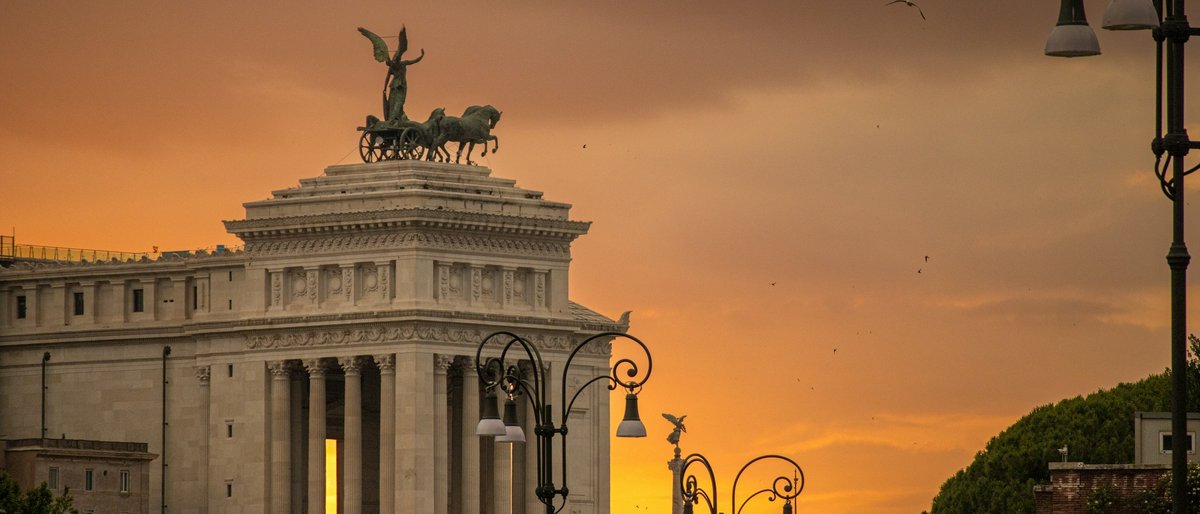
walkingJune's late sunset means you can start an evening walk around 7pm and still have golden light for over an hour. The route down Via del Corso to the Pantheon catches the city at its most atmospheric: gelato in hand, Romans out for their own evening stroll, the warm stone buildings glowing in low-angle light.
Sunset around 8:45pm gives you the longest possible golden hour of any month; late enough that the worst heat has broken but warm enough for a T-shirtRooftop aperitivo at sunset
food and drinkRome's rooftop bar scene comes fully alive in June. The views over domes and rooftops are best enjoyed with a Negroni or Aperol spritz as the sky turns pink. Terraces near Piazza Navona, the Aventine Hill, and Trastevere all offer different perspectives on the skyline.
June's dry, clear evenings and 8:45pm sunsets create the longest window for rooftop drinks before dark; conditions that July and August share but with even more oppressive heatBooking tipPopular terraces like those at Hotel Raphael or the Aroma restaurant near the Colosseum need reservations, for Friday and Saturday evenings.
Day trip to Tivoli: Villa d'Este and Hadrian's Villa
day tripThe Renaissance water gardens at Villa d'Este are at their best when the fountains are running full and you want the mist on your face. The elaborate hydraulic displays feel purposeful rather than decorative in June's heat. Hadrian's Villa nearby is large and exposed, so go early.
The extensive water features at Villa d'Este are most enjoyable in warm weather, and the gardens are fully in bloom with June roses and jasmineBooking tipTake the train from Roma Tiburtina to Tivoli: it's under an hour. Start at Hadrian's Villa in the morning before the heat peaks, then move to the shaded, water-cooled gardens of Villa d'Este after lunch.
Outdoor opera at the Baths of Caracalla
cultureThe Teatro dell'Opera di Roma moves its summer season to the ruins of the ancient Baths of Caracalla. Watching Aida or Tosca performed against the backdrop of 3rd-century Roman walls under a warm night sky is one of those experiences that's hard to replicate anywhere else. The acoustics are imperfect. The atmosphere is not.
The summer opera season at Caracalla typically opens in late June: this is among the first chances to catch a performance before the July and August dates sell outBooking tipTickets go on sale months ahead and the better seats sell quickly. Central sections offer the best sightlines to both stage and ruins.
Neighborhood food tour through Testaccio
food and drinkTestaccio is Rome's working-class food neighborhood: the old slaughterhouse district turned into a concentrated strip of some of the city's best traditional cooking. A guided walk hits the covered market, a few trattorias, a supplì shop, and usually ends with gelato. June's seasonal ingredients mean the menu is at its most interesting.
June produce (zucchini flowers, fresh pecorino, cherries, apricots) gives Testaccio's market stalls and kitchens their richest seasonal variety of the yearBooking tipMorning tours starting around 10am avoid both the midday heat and the lunch rush at the market stalls.
Sunset visit to the Pincio Terrace above Piazza del Popolo
sightseeingThe terrace in the Borghese Gardens overlooks Piazza del Popolo and gives you a panoramic sweep toward St. Peter's dome. Free to visit, never ticketed, and far less crowded than the Castel Sant'Angelo rooftop or the Altare della Patria terrace. Bring a bottle of wine if you like: Romans do.
June's late, drawn-out sunsets over the Vatican skyline are at their most photogenic from this west-facing vantage pointSwimming at Lago di Bracciano
day tripAbout an hour north of Rome by train, this volcanic lake is where Romans go to cool off before the August beach exodus. The water is clean, the lakeside town of Anguillara Sabazia is quietly charming, and it's a genuine escape from the city heat. Not a tourist attraction: more of a local habit.
June is the first month warm enough for comfortable lake swimming, but the lakeside beaches haven't yet hit the July-August saturation pointWhat to eat in June
In season: fruit
Ciliegie (Cherries)
Roman cherries peak in June: look for the dark, sweet varieties from the Castelli Romani hills at markets like Mercato di Testaccio. Eat them by the handful. They're cheap, well ripe, and a world apart from anything you'll find in a supermarket back home.
Albicocche (Apricots)
June apricots from the Vesuvian slopes and Lazio countryside arrive at Roman markets sun-warm and fragrant. The smaller, slightly blushed ones tend to have the most concentrated flavor: ask for vesuviane if you spot them.
On menus now
Fiori di zucca fritti
Fried zucchini flowers stuffed with mozzarella and anchovy: June is peak season for these delicate blossoms, and every Roman trattoria worth its salt will have them on the menu. The batter should be light and crispy, the flower still tender inside. You'll find them as antipasti or served in paper cones as street food near Campo de' Fiori.
Street food peaks
Supplì al telefono
Rome's answer to the arancino: fried rice balls with a molten mozzarella center that stretches like a telephone cord when you pull them apart. Available year-round, but June's lighter appetite makes these a perfect standing-lunch alongside a cold beer. The best ones come from pizzerie al taglio in Testaccio and Prati.
What to drink
Grattachecca
Rome's traditional shaved-ice drink, served from kiosks along the Tiber: the historic ones near Ponte Cestio. Fresh fruit syrup poured over hand-scraped ice. It's not a granita. The texture is rougher, icier, more refreshing in June's heat. Lemon and coconut are the classic choices.
Festival food
Lumache di San Giovanni
Snails cooked in tomato sauce with mentuccia (Roman wild mint): the traditional dish for the Festa di San Giovanni on June 24th. You'll find them at outdoor feasts near the Lateran basilica and at old-school Roman restaurants in the surrounding neighborhood. An acquired taste, but tied to the month.
Regular events in June
Roma Summer Fest (Auditorium Parco della Musica)
Rome's main summer concert series runs through June at the Auditorium, featuring international and Italian acts across multiple outdoor stages. The lineup mixes jazz, rock, pop, and world music.
Throughout JuneLungo il TevereFree
The annual summer festival along the Tiber riverbanks between Ponte Sisto and Ponte Mazzini: food stalls, bars, live music, book vendors, and craft stands set up on temporary platforms along the water. It usually opens in mid-to-late June and runs through September. The quality varies, but the atmosphere on a warm evening is hard to beat.
Mid-June through SeptemberIsola del Cinema
Open-air film screenings on Tiber Island (Isola Tiberina), typically starting in late June. A mix of Italian and international films shown against the backdrop of the river and the old hospital buildings. Bring a cushion: the seats are basic.
Late June through SeptemberInfiorata di GenzanoFree
About 30km south of Rome in the Castelli Romani town of Genzano, the streets are carpeted with elaborate flower petal designs for Corpus Domini. The artistry is notable: entire street scenes and religious images composed of petals. Worth the short train ride if the timing lines up with your visit.
Corpus Domini weekend, typically mid-JuneEstate RomanaFree
The city government's umbrella program for summer cultural events: concerts, theater, dance, and art installations scattered across parks, piazzas, and archaeological sites throughout Rome. Quality varies widely, but there's almost always something on any given evening.
Throughout June-SeptemberBest places this June
Villa Borghese Gardens
parkRome's central park is at its greenest and most lush in June, with umbrella pines providing welcome shade. The lake with rowboat rentals is appealing in the heat. Get there before 10am on weekends for relative quiet. The Galleria Borghese inside the park remains one of Rome's best museums: reserve ahead, entry is timed.
PincianoTrastevere
neighborhoodRome's most atmospheric neighborhood for evening wandering in June. The narrow cobblestone streets trap the cooler evening air, ivy-covered buildings glow in the lamplight, and outdoor tables spill across tiny piazzas. It gets busy after 8pm, but the vibe is more local bar scene than tourist strip: at least on the streets south of Viale di Trastevere.
TrastevereGiardino degli Aranci (Orange Garden)
parkA small hilltop park on the Aventine with a terrace view over the Tiber toward St. Peter's dome. The orange trees are in full leaf in June, providing shade, and the garden is less overrun than many guidebook favorites. Come at sunset. The keyhole view at the nearby Priory of the Knights of Malta is steps away.
AventineMercato di Testaccio
marketRome's best food market for seasonal produce and street food. June means piles of cherries, apricots, zucchini flowers, and fresh ricotta. The surrounding food stalls serve supplì, trapizzino, and other Roman street staples. Go hungry and eat your way through.
TestaccioAppian Way (Via Appia Antica)
historical siteThe ancient road heading southeast from the city is lined with crumbling tombs, umbrella pines, and open countryside. June mornings are good for renting a bike and riding out past the catacombs. The road is closed to most traffic on Sundays, making it peaceful. Bring water: shade is limited on exposed stretches.
Appio-LatinoQuartiere Coppedè
neighborhoodA pocket of wildly eccentric early-20th-century architecture tucked between Via Salaria and Piazza Buenos Aires. Art Nouveau meets medieval fantasy in a few blocks of fairy-tale buildings, gargoyles, and frescoed facades. Almost no tourists find it. The dappled morning light through the surrounding trees in June is good.
TriesteCastel Sant'Angelo rooftop terrace
viewpointThe rooftop of Hadrian's former mausoleum gives 360-degree views of Rome, and on clear June evenings the visibility extends to the Alban Hills. The interior museum is worth a walk-through, but the real draw this month is standing on the top level in the warm evening air with St. Peter's dome filling the western sky.
Prati
Your packing checklist
Tick items off as you pack. Your progress saves in this browser.
All packed — have a great trip.
Insider tips
The Vatican Museums are closed on Sundays except the last Sunday of each month, when entry is free, but the crowds are brutal. If June's last Sunday falls during your trip, go to the Borghese Gallery or Palazzo Doria Pamphilj instead and save the Vatican for a paid weekday morning when you can see the art.
Rome's best gelato shops (the ones Romans go to) are rarely on the main tourist streets. Look for covered metal lids over the gelato (not piled-high Instagram mounds) and natural colors. Bright blue 'Smurf' gelato is a tourist trap indicator. Neighborhoods like Prati, Monti, and Testaccio tend to have the real thing.
For dinner in Trastevere, walk south of Viale di Trastevere: the streets north of it are where most tourists cluster. The blocks around Piazza di San Cosimato have trattorias that still serve a mostly Roman clientele and price accordingly.
The Roma Pass sounds like good value but rarely is unless you're visiting exactly the right combination of sites. Do the math for your specific itinerary before buying. The 48-hour version almost never pays off.
If you want to see the Sistine Chapel without the crush, book the official early-morning entry that starts before the museums open to the general public. It costs more, but the difference between seeing the ceiling with 30 people versus 3,000 is worth every cent.
Avoid these mistakes
- Scheduling outdoor archaeological sites (the Forum, Palatine Hill, Ostia Antica) for midday. The heat between noon and 3pm is exhausting with no shade. Visit these at opening time (8:30-9am) or after 4pm when the worst has passed. Use the hottest hours for air-conditioned museums or a long lunch.
- Not pre-booking timed entry for the Colosseum and Vatican Museums. In June, showing up without a ticket means either a 90-minute queue in direct sun or being turned away entirely when daily capacity fills. Book online at least two weeks ahead: this is non-negotiable in peak season.
- Eating at restaurants directly on major piazzas like Piazza Navona or the Pantheon. The markup is 30-50% for mediocre food served to a captive tourist audience. Walk two blocks in any direction and quality improves dramatically while prices drop.
- Underestimating walking distances because the historic center looks compact on a map. Roman streets wind, cobblestones slow you down, and hills are steeper than they appear. Budget 15-20km of walking per full sightseeing day and plan rest stops: your feet will thank you by day three.
Practical tips for June
Book Colosseum, Vatican Museums, and Borghese Gallery tickets online at least two to three weeks before your trip: June availability disappears fast and same-day entry is effectively impossible at peak sites. Most churches are free but close for a midday break, typically from 12:30 to 3:00pm, so plan visits for morning or late afternoon. Restaurants serve lunch from roughly 12:30 to 2:30pm and dinner from 7:30pm onward; arriving at 6pm for dinner will find most kitchens closed. Tipping is not expected in Rome but rounding up or leaving a euro or two is appreciated at sit-down restaurants; the coperto (cover charge) of one to three euros per person is standard and legal. The Metro runs until 11:30pm Sunday through Thursday and until 1:30am on Friday and Saturday nights. Dress codes at churches are enforced year-round: covered shoulders and knees at a minimum, and St. Peter's Basilica security will turn you away in shorts or tank tops. Pharmacies (look for the green cross) sell excellent Italian sunscreen brands like Bionike and Angstrom that work well in the Mediterranean sun and are often cheaper than imported brands.
FAQ
Is June a good time to visit Rome?
June is a good but not ideal time. You get reliably dry weather, extremely long days with sunset near 9pm, and the full range of summer events and outdoor dining. The trade-offs are real though: peak-season crowds at every major site, hotel prices 40-60% above average, and midday heat that makes open-air ruins uncomfortable. If you plan around the heat (mornings and evenings for outdoor sights, midday for museums and long lunches) June works well. If you have flexibility, late April, May, or October offer similar weather with significantly fewer people and lower prices.
What is the weather like in Rome in June?
Hot and mostly dry. Average highs reach 30.8°C (87°F) with lows around 18.7°C (66°F). Humidity sits near 61%, which is noticeable but not tropical. Rainfall is low at 38mm over about five days: when it rains, it tends to be a brief afternoon shower rather than an all-day event. Evenings are warm and comfortable, good for sitting outside. The sun is strong and the light off Rome's pale stone buildings intensifies the heat, so sunscreen and a hat are not optional.
Is Rome crowded in June?
Yes, very. June is one of the three busiest months alongside July and August. The Colosseum, Vatican Museums, Trevi Fountain, and Pantheon all see their highest visitor numbers. Lines without pre-booked tickets regularly exceed an hour. The crowds thin noticeably if you visit major sites right at opening or in the last hour before closing, and neighborhoods outside the historic center (Testaccio, Pigneto, Monteverde) remain relatively calm even in peak season.
How many days do you need in Rome in June?
Four full days is the sweet spot for first-time visitors. That gives you time to cover the major sites (Colosseum and Forum, Vatican, Pantheon and historic center, Trastevere) without the exhausting pace that three days requires. In June specifically, the heat means you'll move slower than you think, and building in a long lunch break each day is not laziness, it's survival strategy. Five to six days lets you add a day trip to Tivoli or Ostia Antica and still have a slow morning at a neighborhood café.
Should I book tours and tickets in advance for Rome in June?
Absolutely, and further ahead than you might expect. Timed entry for the Colosseum and Vatican Museums should be booked at least two to three weeks out: popular time slots for morning entry sell out first. The Borghese Gallery requires advance booking year-round and is tight in June. Guided tours with small group sizes fill quickly. Restaurant reservations at well-known spots in Trastevere, Testaccio, and the centro are also worth making a few days ahead, for Friday and Saturday dinners.
Things to Do in Rome in June
 Free cancellation
 Rome 3 in 1 Cooking Class: Fettuccine, Ravioli & Tiramisu
Cooking class: 3 hours, free cancellation.
via Viator Free cancellation
 Pompeii, Amalfi Coast and Positano Day Trip from Rome
Day trip: 13 hours, free cancellation.
via Viator Free cancellation
 Pompeii from Rome with Optional Mt. Vesuvius & Pizza Lunch
Day trip: 12 hours, free cancellation.
via Viator Free cancellation
 Rome Pasta and Tiramisu Class: Ravioli, Fettuccine & Fine Wine 5*
Cooking class: 3 hours, free cancellation.
via Viator Free cancellation
 Learn to Make Pasta & Tiramisu with Wine and Limoncello Included
Cooking class: 2 hours, free cancellation.
via Viator Free cancellation
 Rome on a Golf Cart Semi-Private Tour Max 6 with Private Option
City tour: 3 hours, free cancellation.
via ViatorFind a flight to Rome
Live fares to Rome appear here once cookies are accepted.
Last verified by automated review (v1.7.1) on . What is automated review?