Compare every Italy city in November →
Stay in Rome in November
80 hotels in the Trip.com pool for Rome, from US$31 a night.
Opens Trip.com on Fri 6 Nov to Sun 8 Nov 2026; change the dates there.
November in Rome is wet. That's the headline. With around 151mm of rain spread across roughly 12 days, this is the city's rainiest month, and you'll feel it: grey skies rolling in off the Tyrrhenian Sea, cobblestones slick underfoot, and that particular damp chill that cuts through layers in a way that 9°C (49°F) lows really shouldn't. The upside? Summer's crushing tourist crowds have thinned dramatically. The Colosseum, the Vatican Museums, the Pantheon (places where you'd queue for two hours in July) are suddenly approachable. You can stand in the Sistine Chapel and look up without someone's elbow in your ribs.
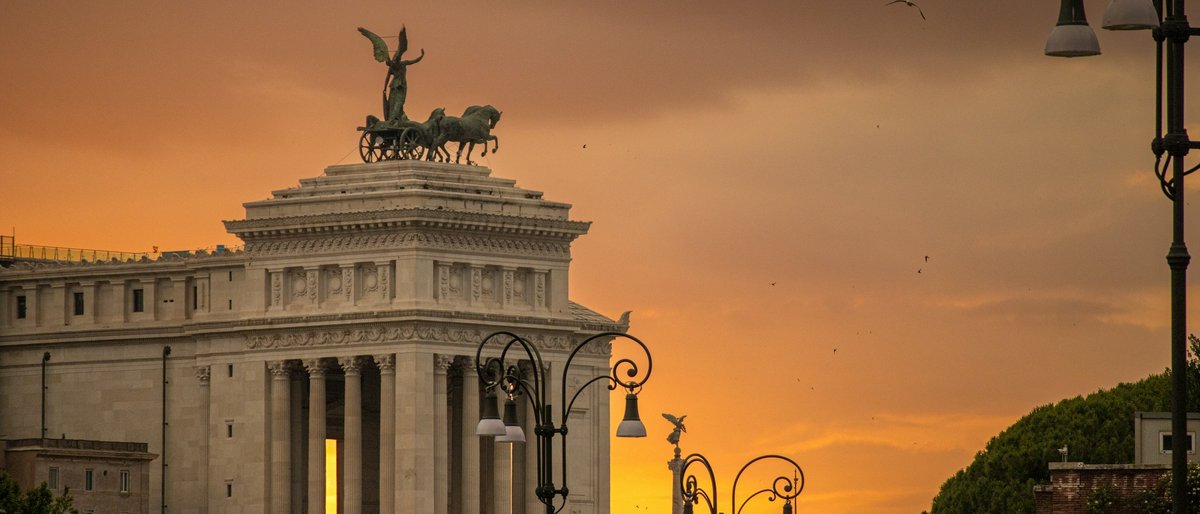
To be fair, November has a quiet beauty that the peak-season months can't match. The light turns golden and low in the afternoons, plane trees along the Tiber drop their leaves into the river, and the city smells of roasting chestnuts from the vendors who appear on street corners around early November. Romans themselves seem to exhale after the tourist onslaught: trattorias in Trastevere and Testaccio feel like neighbourhood spots again rather than reservation battlegrounds. Daytime highs hover around 17.5°C (64°F), which is pleasant for walking if you've layered properly.
That said, you need to go in with realistic expectations. This is not the Rome of summer postcards. Days are short: sunset comes before 5pm by month's end. Some outdoor attractions and rooftop terraces scale back hours or close entirely. And when it rains, it can rain with real conviction, the kind of downpour that sends everyone ducking into the nearest bar for an espresso. But if you're the sort of traveller who'd rather have a quieter, more intimate version of the city and doesn't mind carrying an umbrella, November rewards you with lower prices, shorter lines, and a Rome that feels more like it belongs to the Romans.
Why visit in November
- Tourist crowds drop sharply: major sites like the Vatican Museums and Borghese Gallery have noticeably shorter queues, and you can often walk into restaurants that require reservations in summer
- Hotel rates fall to some of the lowest levels of the year, typically 30-45% below summer peak pricing, with genuine deals in the Centro Storico
- Autumn produce hits its stride: porcini mushrooms, artichokes alla romana, new-press olive oil, and chestnuts are all at their seasonal best in Roman kitchens
- The cooler temperatures around 17°C (64°F) make walking the city far more comfortable than the punishing heat of June through September
- Cultural season kicks into gear: opera at Teatro dell'Opera opens its main season, and gallery exhibitions launch their autumn programmes
Worth knowing
- November is Rome's wettest month at roughly 151mm of rainfall, and rainy days can derail outdoor plans: the Forum and Palatine Hill are miserable in a downpour
- Daylight hours shrink noticeably, with sunset arriving before 5pm, which limits time for photography and outdoor sightseeing
- The damp cold at 80% humidity can feel more penetrating than the numbers suggest: 9°C with Roman humidity is not the same as 9°C in a dry climate
- Some seasonal businesses, outdoor dining terraces, and a few smaller museums reduce hours or close for the low season
Best for
Think twice if
November marks Rome's transition into proper autumn, and the city feels it. Expect daytime highs around 17.5°C (64°F): comfortable enough in a light jacket when the sun appears, but that sun is increasingly unreliable. Nights and early mornings dip to about 9.2°C (49°F), and the 80% humidity gives the chill real bite. Rainfall averages 151mm across approximately 12 rainy days, making this the wettest month on the Roman calendar. Showers can range from a light drizzle that barely registers to proper Mediterranean downpours that flood the streets near Piazza Navona. Wind picks up too, in the second half of the month. You'll get bright, crisp days mixed in (they're gorgeous when they come) but plan indoor alternatives for every outdoor activity.
Year-round climate
Averages from the last 5 years.
| Month | Avg high (°C) | Avg low (°C) | Rainfall (mm) |
|---|---|---|---|
| Jan | 13 | 5 | 76 |
| Feb | 15 | 5 | 67 |
| Mar | 17 | 7 | 98 |
| Apr | 19 | 9 | 64 |
| May | 24 | 13 | 83 |
| Jun | 31 | 19 | 38 |
| Jul | 34 | 22 | 18 |
| Aug | 33 | 21 | 45 |
| Sep | 28 | 18 | 104 |
| Oct | 23 | 14 | 79 |
| Nov | 18 | 9 | 151 |
| Dec | 14 | 6 | 104 |
Holidays and festivals in November
Public holidays
- All Saints Day(Tutti i Santi)1 November 2026
When is Christmas season in 2026?
27 November to 26 December 2026
Christmas season is a major cultural celebration in Rome. In 2026 it runs from 27 November to 26 December 2026.

Rome: Christmas Opera Concert & Traditional Italian Aperitivo
- 1.5 hr
- Free cancellation
- Easy pace
For a full refund, cancel at least 24 hours before the scheduled departure time.

Rome Christmas Walking Tour for Families: Lights and Legends
- 2 hr
- Free cancellation
- Easy pace
For a full refund, cancel at least 24 hours before the scheduled departure time.

Christmas Eve Mass with Pope Leo XIV
- 6–7 hr
- Free cancellation
- Private tour
- Easy pace
For a full refund, cancel at least 24 hours before the scheduled departure time.

Baroque Christmas Concert at Capuchin Crypt with Museum
- 1.5 hr
- Free cancellation
- Skip the line
- Easy pace
For a full refund, cancel at least 24 hours before the scheduled departure time.
Best things to do in November
Explore the Vatican Museums without summer crowds
cultureNovember drops Vatican visitor numbers considerably, which transforms the experience. You can pause in the Raphael Rooms, study the Gallery of Maps at your own pace, and spend real time in the Sistine Chapel without being shuffled through. The difference between a July and November visit is night and day.
Low season means dramatically shorter queues and thinner crowds inside: you might spend minutes waiting rather than hours.Booking tipBook timed-entry tickets online regardless of season. Friday evening openings, when available, are uncrowded in November.
Walk the Appian Way on a crisp autumn morning
outdoorThe Via Appia Antica stretches south from the city through umbrella pines, crumbling tombs, and Roman countryside. In November, the path is quiet, the light is soft and low, and you can hear birdsong rather than tour bus engines. The catacombs along the route add an atmospheric underground detour.
Cooler temperatures make the long walk comfortable, and the golden autumn light through the pine canopy is at its best.Booking tipRent bikes from the visitor centre near Cecilia Metella. Catacomb visits require a guided tour: check opening days, as some close on certain weekdays.
Dive into Rome's autumn food scene at Testaccio Market
foodMercato di Testaccio is Rome's working neighbourhood market, and November is when it shines with seasonal produce. Stalls overflow with porcini, artichokes, persimmons, and fresh ricotta. Grab supplì from one of the street food vendors inside, then browse the produce stalls where vendors will happily explain what's in season.
Peak autumn ingredients arrive simultaneously (porcini, artichokes, new olive oil, chestnuts) making November the densest month for seasonal Roman cooking.Booking tipGo in the morning before noon for the best selection. The market is closed on Sundays.
Attend a performance at Teatro dell'Opera di Roma
cultureRome's opera house opens its main season in November, and catching a performance in this ornate 19th-century theatre is one of the city's great cultural experiences. The acoustics are strong, the productions tend toward traditional Italian repertoire, and the building itself (all red velvet and gilt) sets the mood before the curtain rises.
The main opera and ballet season launches in November, bringing the first major productions of the year to the stage.Booking tipBook through the official website well ahead: opening-month performances attract loyal Roman subscribers. Weeknight shows are generally easier to get.
Wander Trastevere's back streets after dark
neighbourhoodTrastevere in November loses the summer hordes that can make its narrow lanes feel like a theme park. Walk the cobblestone alleys after dinner and you'll find ivy-covered facades lit by street lamps, the sound of someone's television drifting from an open window, and the occasional cat watching you from a windowsill. The neighbourhood feels like it belongs to residents again.
Summer crowds have gone, evening temperatures are cool but manageable with a jacket, and the neighbourhood's intimate character re-emerges.Booking tipNo booking needed, just walk. Start from Piazza di Santa Maria in Trastevere and let the side streets pull you in.
Visit the Borghese Gallery with breathing room
cultureThe Borghese Gallery's timed-entry system always limits crowds, but November makes getting a reservation far easier than summer months. Bernini's sculptures (Apollo and Daphne, The Rape of Proserpina) deserve unhurried attention, and you're more likely to get it now. The surrounding Villa Borghese gardens are atmospheric with autumn colour.
Easier to secure reservations, smaller groups inside each time slot, and the autumn gardens make the walk to and from the gallery part of the experience.Booking tipReservations are still mandatory: book at least a week ahead through the official site. The early morning slot tends to be quietest.
Take a day trip to the Castelli Romani wine towns
day_tripThe hilltop towns southeast of Rome (Frascati, Castel Gandolfo, Ariccia) are at their most appealing in autumn. The vineyards have just been harvested, trattorias serve porchetta and fresh wine, and the views over the volcanic lakes are sharpened by clear autumn air. Without summer heat, the uphill walks through these towns are pleasant.
Wine harvest is just wrapping up, autumn colours dress the hillsides, and the cooler weather makes walking these hilly towns comfortable.Booking tipRegional trains run frequently from Roma Termini to Frascati. No reservations needed, just show up and explore.
What to eat in November
On menus now
Carciofi alla Romana
Globe artichokes braised with garlic, mentuccia (wild mint), and olive oil: the Roman preparation is distinct from the Jewish-fried version, and November marks the start of the artichoke season that runs through spring. The first artichokes of the season tend to be tender and almost sweet.
Abbacchio (milk-fed lamb)
Roman butchers and trattorias lean into abbacchio as the weather cools. You'll find it roasted with rosemary and potatoes, or braised scottadito-style over coals. The meat is delicate, almost mild compared to older lamb, and November's cooler evenings make it the kind of dish you want to linger over with a carafe of Cesanese.
Street food peaks
Castagne arrosto (roasted chestnuts)
Street vendors set up their charcoal-fired chestnut roasters on corners throughout the centro storico starting in early November. The smoky, sweet smell becomes the background scent of autumn Rome. Grab a paper cone from any vendor: they're a cheap, warming snack while you walk, and the charred shells leave your fingers smelling like a wood fire for hours.
In markets
Porcini mushrooms
Fresh porcini appear on menus across the city in November: grilled, tossed through pappardelle, folded into risotto. The earthy, almost woodsy smell drifting from kitchen doors is one of autumn Rome's signature scents. Testaccio's market stalls pile them high.
Olio nuovo (new-press olive oil)
Late October through November is when Lazio's olive harvest wraps up and the first pressing of the season appears. Restaurants drizzle it over bruschetta, soups, and beans. It's peppery, green, and tastes nothing like the stuff that's been sitting on a shelf for months. Some trattorias make a point of announcing when their olio nuovo arrives.
Regular events in November
All Saints' Day (Ognissanti)Free
November 1st is a national holiday in Italy. Many Romans visit family graves and attend church services. Some shops and businesses close, and there's a brief domestic tourism bump as Italians take advantage of the long weekend. The Verano cemetery sees high foot traffic.
November 1Rome Film Fest (Festa del Cinema di Roma)
While the festival typically runs in late October, screenings and related events sometimes extend into early November at the Auditorium Parco della Musica. Check the programme: there are often public screenings and industry talks that remain accessible.
Late October into early NovemberRomaeuropa Festival
Rome's leading contemporary performing arts festival runs through November with dance, theatre, music, and multimedia installations at venues across the city. Programming tends toward the experimental and international, and it draws a more local, culturally engaged crowd than the tourist-facing attractions.
Through NovemberOlive Oil Festival season in LazioFree
Small towns in the Lazio countryside (Sabina region in particular) hold olive oil festivals (sagre) throughout November as the harvest wraps up. These are local affairs with tastings, food stalls, and a chance to buy directly from producers. Worth a short train or car trip from Rome.
Throughout NovemberBest places this November
The Pantheon
landmarkWithout summer crowds pressing against you, November lets you stand in the centre of the rotunda and watch rain fall through the oculus: one of Rome's most atmospheric experiences, and one that only happens when it rains. The light on overcast days gives the interior a moody, cathedral quality.
Centro StoricoPalazzo Doria Pamphilj
museumOne of Rome's most underrated galleries, still privately owned by the Doria Pamphilj family. The collection includes Velázquez's portrait of Pope Innocent X, and the ornate private apartments feel like stepping into a lived-in aristocratic home. November crowds are minimal: you might have entire rooms to yourself.
Centro StoricoAventine Hill and the Orange Garden
viewpointThe Giardino degli Aranci offers one of Rome's best views over the Tiber toward St. Peter's. In November, the orange trees still hold fruit against grey skies, and the bench-lined terrace is quiet enough to sit and watch the light change. The nearby Knights of Malta keyhole view is worth the short walk.
AventineTestaccio neighbourhood
neighbourhoodRome's traditionally working-class food quarter. The covered market is the anchor, but the surrounding streets hold some of the city's most authentic trattorias. November brings peak autumn produce to the neighbourhood's kitchens, and without tourist crowds, you'll eat alongside Romans who've been coming to these places for decades.
TestaccioCentrale Montemartini
museumA former power station converted into an archaeology museum, displaying classical Roman statues against industrial machinery. It's perpetually uncrowded even in peak season, and in November it's practically empty. The contrast between marble gods and turbines is unlike anything else in Rome.
OstienseVilla Borghese Gardens
parkThe park takes on a different character in November: golden and amber leaves on the ground, joggers and dog-walkers replacing the summer picnic crowds. The lake is peaceful, the Pincio terrace viewpoint over Piazza del Popolo catches the low afternoon light, and the quieter paths feel almost rural.
PincianoSan Clemente Basilica
landmarkA layered church near the Colosseum: a 12th-century basilica built over a 4th-century church, built over a 1st-century Mithraic temple. Descending through the levels is one of Rome's most memorable experiences, and you can hear underground water running beneath the deepest level. November means no queues at all.
CelioMAXXI: National Museum of 21st Century Arts
museumZaha Hadid's striking concrete building in the Flaminio neighbourhood houses rotating contemporary art and architecture exhibitions. November typically brings fresh autumn programming, and the building itself (all sweeping curves and layered galleries) is worth the visit even before you see what's on display.
Flaminio
Your packing checklist
Tick items off as you pack. Your progress saves in this browser.
All packed — have a great trip.
Insider tips
The Pantheon in the rain is a completely different experience from the Pantheon in sunshine: if it's raining, go immediately and stand under the oculus to watch water fall through the open roof. The drainage system in the floor, built two thousand years ago, still handles it well.
Rome's neighbourhood markets are where the city feeds itself. Testaccio's covered market and the smaller Mercato Trionfale near the Vatican are both packed with seasonal produce in November and have excellent prepared food stalls for cheap lunches.
November evenings in Rome are long, and Romans eat late. If you show up at a trattoria at 7pm you'll be eating alone: the locals arrive closer to 8:30 or 9pm. Use the early evening for an aperitivo instead, which typically comes with enough snacks to hold you over.
Many churches that charge nothing to enter hold excellent art that rivals what's in the paid museums. Caravaggio's paintings in San Luigi dei Francesi and Santa Maria del Popolo are free to see and rarely have November queues.
The Roma Pass and similar city cards are less valuable in November because queue times at major sites are already short. Do the maths before buying: you may save more by purchasing individual tickets.
For the best olio nuovo experience, ask your waiter which trattoria is currently serving their new-season oil. Some kitchens make a small event of it, drizzling the fresh green oil over simple dishes like white beans or bruschetta to show the flavour.
Avoid these mistakes
- Packing only a light rain jacket and getting soaked in a proper November downpour: Roman rain can be heavy and sustained, not just a passing shower.
- Assuming all attractions keep summer hours. Some smaller museums, certain villa gardens, and outdoor archaeological sites reduce their schedules or close earlier in November. Check opening times the day before you visit.
- Skipping indoor shoes at the hotel. If your walking shoes get soaked (and they likely will at some point) having a dry pair for evening restaurants saves the misery of wet feet at dinner.
- Trying to visit the Colosseum, Forum, and Palatine Hill on a rainy day. The outdoor ruins are unpleasant in heavy rain and the paths become muddy. Save these for a dry day and redirect rainy days to indoor museums and galleries.
- Underestimating Roman humidity. The temperature might read 10°C on your phone, but 80% humidity makes it feel colder than the number suggests. Dress warmer than you think you need to.
Practical tips for November
November in Rome calls for adaptable planning. Book accommodation in the Centro Storico or Trastevere to keep walking distances short when the weather turns: you don't want to be far from your hotel when a downpour hits. Public transport (metro and buses) runs on regular schedules, though buses can be slow and irregular in rain. The metro's two main lines cover the key tourist zones reasonably well.
Restaurant reservations are generally easy to get in November, but the best-regarded trattorias in Testaccio and Trastevere still fill up on Friday and Saturday evenings: book a day or two ahead for those. Lunch is often the better meal to eat out, as many restaurants offer the same quality at lower prices during midday service.
Sunset comes before 5pm, so front-load your outdoor sightseeing to the morning and early afternoon. Use the early darkness for museums with evening hours, shopping, or a long aperitivo. The Musei Capitolini and Vatican Museums both offer extended hours on certain evenings.
Cash is still useful at markets, smaller trattorias, and street vendors, not everywhere takes cards, the chestnut vendors and older neighbourhood shops. Keep some small bills on hand.
FAQ
Is November a good time to visit Rome?
November is a good time if you're comfortable with rain and shorter days. You trade sunny-postcard weather for dramatically fewer crowds, lower prices, and a version of the city that feels more authentically Roman. The major sites are all open, autumn food is at its peak, and the cultural calendar is active. It's not the best month for outdoor-focused trips, but for museums, food, and neighbourhood exploration, it's one of the better times to go.
How much rain should I expect in Rome in November?
November averages around 151mm of rain across roughly 12 days, making it Rome's wettest month. That said, rain doesn't usually mean all-day grey drizzle: it's more common to get intense showers that pass, followed by breaks of sunshine. You might get two or three completely dry days in a row, then a day of steady rain. A proper waterproof jacket and good shoes let you keep moving through most of it.
What should I wear in Rome in November?
Layers are the key. Daytime highs around 17°C feel pleasant in the sun but cool in the shade, and the temperature drops noticeably after dark. A merino base layer, a wool or fleece mid-layer, and a waterproof outer jacket covers most situations. Waterproof shoes with good grip are essential for wet cobblestones: leather-soled shoes become dangerously slippery. Romans dress relatively well even casually, so a scarf and decent jacket help you blend in.
Are the tourist crowds really gone in November?
They're significantly reduced, though not absent entirely. The Vatican Museums, Colosseum, and Trevi Fountain still attract visitors year-round, but queue times drop from hours to minutes. You'll notice the biggest difference inside museums and galleries, where you can stand in front of a painting without being jostled. Restaurants that need summer reservations weeks ahead can often seat you same-day. The first few days of November see a small domestic bump around the All Saints' Day holiday, but it passes quickly.
Is Rome too cold in November?
Not really, though the damp chill can surprise people. Daytime highs around 17°C are comfortable for walking when you're layered properly, and it rarely drops below 5°C even on the coldest nights. The issue is humidity rather than raw temperature: 80% humidity at 9°C feels colder than dry cold at the same reading. If you're coming from a northern climate, you'll likely find it mild. If you're used to warm weather, bring warmer layers than you think you need.
What food is in season in Rome in November?
November is one of Rome's best food months. Porcini mushrooms are everywhere: grilled, in pasta, in risotto. Artichokes begin their season, prepared either alla romana (braised) or alla giudia (fried). New-press olive oil (olio nuovo) arrives from the Lazio harvest, tasting peppery and intensely green. Roasted chestnuts from street vendors scent the air across the centro storico. And the cooler weather brings out heartier Roman classics like abbacchio (milk-fed lamb) and coda alla vaccinara (oxtail stew).
Things to Do in Rome in November
 Free cancellation
 Rome 3 in 1 Cooking Class: Fettuccine, Ravioli & Tiramisu
Cooking class: 3 hours, free cancellation.
via Viator Free cancellation
 Pompeii, Amalfi Coast and Positano Day Trip from Rome
Day trip: 13 hours, free cancellation.
via Viator Free cancellation
 Pompeii from Rome with Optional Mt. Vesuvius & Pizza Lunch
Day trip: 12 hours, free cancellation.
via Viator Free cancellation
 Rome Pasta and Tiramisu Class: Ravioli, Fettuccine & Fine Wine 5*
Cooking class: 3 hours, free cancellation.
via Viator Free cancellation
 Learn to Make Pasta & Tiramisu with Wine and Limoncello Included
Cooking class: 2 hours, free cancellation.
via Viator Free cancellation
 Rome on a Golf Cart Semi-Private Tour Max 6 with Private Option
City tour: 3 hours, free cancellation.
via ViatorFind a flight to Rome
Live fares to Rome appear here once cookies are accepted.
Last verified by automated review (v1.7.2) on . What is automated review?