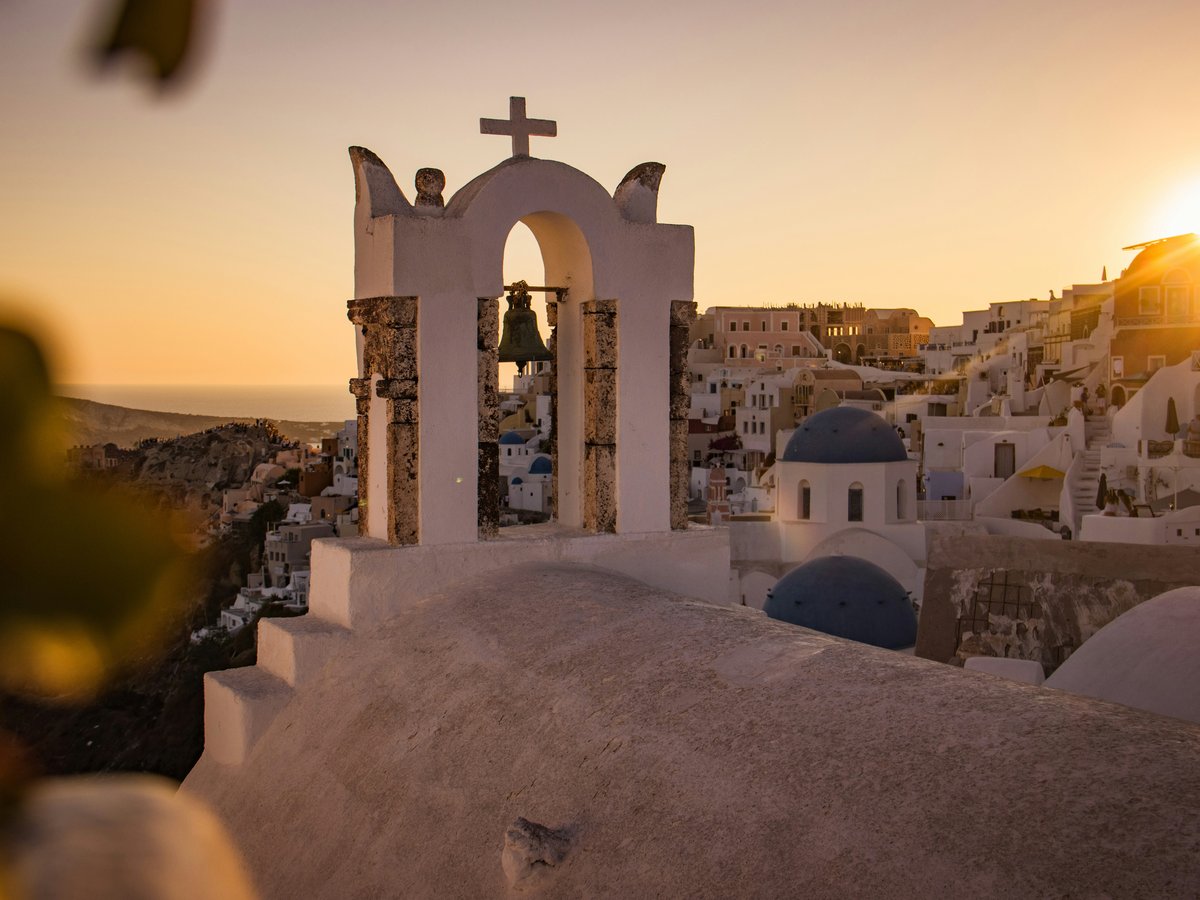
Best Time to Visit Santorini, by Season
Santorini's annual temperature range runs from February's 15.2°C high to July's 30.4°C peak, and the best month for your trip depends on whether you prioritize swimming, hiking, solitude, or value. This guide walks the full calendar and names a single best window for each kind of traveller.
Published
1 Santorini's 15-Degree Temperature Swing Defines Every Travel Trade-Off on This Island
The meltemi wind hits your face on the Fira clifftop in August, and even at a 29.9°C average high, the moving air makes the heat bearable. Step off the same ferry dock in February at 15.2°C with that same north wind, and Santorini feels like a different island entirely.
Santorini's average daily high ranges from a February floor of 15.2°C to a July ceiling of 30.4°C, a spread of 15.2 degrees across the calendar. The lows track the same arc. February bottoms at 11.5°C overnight. August peaks at 24.8°C. Those overnight figures matter more than most Santorini visitors expect. A July evening in Oia still holds at 24.7°C, warm enough for outdoor dinner on the caldera rim. A January evening drops to 12.4°C, cold enough that most open-air restaurants in Fira close for the season.
The year breaks into three climate bands. December through March clusters between 15.2°C and 17.2°C for daily highs. June through September runs hot at 27.3°C to 30.4°C. Two shoulder windows bridge the gap. April and May sit at 19.7°C and 23.2°C respectively. October and November land at 23.3°C and 20.5°C.
That structure makes the when-to-visit question worth a detailed answer. The gap between May's 23.2°C high and June's 28.0°C high is 4.8 degrees on paper. In practice, those 4.8 degrees mark where Santorini flips from a walking island to a beach island. The matching drop from October's 23.3°C to November's 20.5°C marks where outdoor dining along the caldera rim in Imerovigli and Firostefani starts to feel marginal.
If you need to swim in the Aegean, you need water that has absorbed months of Greek summer sun, which points to late June at the earliest. If you want to hike the Fira-to-Oia clifftop trail without heat risk, you need highs under 25°C, which rules out June through September entirely.
2 December Through February Drops to 15.2°C Highs and Empties the Caldera
Rain patters on empty cobblestones in Fira, and there is almost nobody to hear it. In January, when the average high reaches only 15.8°C and the overnight low drops to 12.4°C, Santorini belongs to its year-round residents and the occasional off-season traveller in a proper coat.
December sits slightly warmer at a 17.2°C high and 13.7°C low. February is the coldest month by daily high, bottoming at 15.2°C with lows of 11.5°C. The spread across all three months spans roughly 2 degrees for highs. December's 17.2°C versus February's 15.2°C is not a distinction most travellers would feel through a sweater on the caldera rim in Fira.
Swimming in winter Santorini is off the table. The Aegean needs months of summer sun to warm, and winter water sits well below comfortable range. Caldera-view hotel pools are drained or unheated. Kamari Beach and Perissa Beach sit empty and windswept, the black volcanic sand cold underfoot.
What you get in exchange is Santorini without the performance. The sunset crowds that pack Oia's castle ruin in July at 30.4°C do not exist in January at 15.8°C. You can walk Oia's narrow streets in a light coat, stopping wherever you like without reservations. Hotel prices in winter run at a fraction of July and August rates, though many boutique caldera-edge properties close entirely from November through March.
Winter Santorini is an architecture and photography trip, not a beach holiday. If you arrive expecting the sun-drenched postcard, February's 15.2°C highs will feel bleak against the island's bone-white buildings and grey Aegean sky. If you arrive wanting a quiet volcanic island with dramatic light and zero queues, December's 17.2°C days and 13.7°C evenings feel like a privilege. This window works for couples and photographers who choose solitude over warmth. January's 12.4°C overnight low rules out families with young children who need poolside afternoons.
3 March Crawls to 16.5°C but April's 19.7°C Is Where Shoulder Season Gets Real
You notice it in the Santorini light first. By late March, the afternoon sun sits higher and the caldera cliffs glow warmer, though the average high of 16.5°C still feels more like London in April than a Greek island in spring. The overnight low of 12.4°C in March matches January's floor exactly, so evenings on the Fira waterfront still need a jacket.
April is where the arithmetic shifts. The average high climbs to 19.7°C, a 3.2-degree leap from March's 16.5°C. The overnight low rises to 14.8°C. That 14.8°C threshold is where sitting outside for dinner on Santorini's caldera rim stops feeling like an endurance test and starts feeling like a choice you made on purpose.
The practical difference between March and April on Santorini is larger than 3.2 degrees suggest. In March at 16.5°C, many seasonal businesses in Oia and Fira remain closed or open tentatively. By April at 19.7°C, caldera-edge restaurants reopen, boat tours to Nea Kameni and the volcanic hot springs resume, and the Fira-to-Oia trail becomes comfortable for a full-length walk without layering up.
Swimming in April remains unlikely for most Santorini visitors. The Aegean has endured months at winter temperatures, and April's 19.7°C air does not translate to warm water. You might spot locals wading at Perissa Beach, but comfortable open-water swimming requires the sustained heat that arrives around June at 28.0°C.
The case for April over March comes down to that 3.2-degree gap and what it unlocks across the island. March at 16.5°C is a walking-and-wine month for Santorini's hillside villages of Pyrgos and Megalochori. April at 19.7°C is the first month where Santorini starts to resemble the postcards, though without the crowds that July's 30.4°C attracts. April's 14.8°C overnight low versus March's 12.4°C settles the question for most travellers who can flex their dates.
4 May at 23.2°C and June at 28.0°C Straddle the Line Between Walking Weather and Beach Weather
The first time you feel real Santorini heat in May, it catches you mid-step on a whitewashed staircase somewhere between Fira and Firostefani. The average high of 23.2°C does not sound extreme, but reflected off the caldera's white walls with no shade, it registers on your skin more intensely than the number suggests. The overnight low of 17.7°C still cools Santorini down for open-window sleep.
Then June arrives, and the thermometer jumps 4.8 degrees to a 28.0°C average high. The overnight low climbs to 22.2°C. That 22.2°C minimum is the number that changes the Santorini experience entirely. Evenings in Oia at 22.2°C feel properly warm. The caldera-rim restaurants fill for sunset dinner at tables that felt chilly two months earlier at April's 14.8°C.
May is the month that experienced Santorini travellers tend to argue about. At 23.2°C, days are warm enough for hiking, sightseeing, and tentative beach visits to Kamari and Red Beach. The Fira-to-Oia trail sits at its most comfortable temperature range in May. By June's 28.0°C, that same clifftop hike becomes a sweat-soaked effort unless you start at sunrise.
That said, the crowd gradient between these two months tends to be steep on Santorini. May draws couples and hikers who have done their homework. June marks the front of peak season, when cruise ships increase their Santorini port calls and Oia's narrow streets start to feel congested.
Hotel pricing in Fira and Imerovigli follows the same curve. May rates sit noticeably below June rates, though both run above April's shoulder prices. The traveller who wants warmth, walkable temperatures, and lighter crowds should target mid-to-late May, when 23.2°C highs and 17.7°C lows hit a balance that June's 28.0°C and 22.2°C overshoot for anything except beach-focused trips to Santorini's eastern shores.
5 July and August Peak at 30.4°C and 29.9°C, and the Famous Oia Sunset Becomes a Contact Sport
You smell sunscreen before you see the crowd. By mid-July in Oia, the sunset-viewing spot near the castle ruin packs tight two hours before the sun drops, and the 30.4°C average high means everyone radiates heat in close quarters. The overnight low of 24.7°C offers little relief after dark. Santorini's peak months feel earned, in both senses of the word.
August reads nearly identical on the thermometer. The daily high eases to 29.9°C while the low edges up to 24.8°C, making August nights the warmest of the Santorini year by a tenth of a degree over July. The 0.5-degree gap between July's 30.4°C and August's 29.9°C is imperceptible when you are standing on sun-baked volcanic rock in Fira.
This is Santorini as the brochure sells it, and as the brochure conveniently omits. Kamari Beach and Perissa Beach reach their warmest water temperatures. The volcanic hot springs near Nea Kameni draw steady boat traffic. Every caldera-view restaurant, pool, and bar in Fira and Oia operates at full capacity. But Santorini's infrastructure strains under the volume. The narrow road between Fira and Oia gridlocks with ATVs and tour buses. Restaurant reservations at popular caldera spots in Imerovigli require planning days ahead.
The meltemi wind, which blows from the north across the Cyclades in summer, provides Santorini's natural cooling. On days when it blows strong, July's 30.4°C can feel tolerable on the exposed clifftops above the caldera. On still days, heat pools in the caldera bowl and the white walls of Fira radiate it back at you.
If you chose Santorini for the caldera views and the architecture, visiting when it is too hot to walk comfortably at 30.4°C and too crowded to photograph in Oia is paying the most for the least. September's 27.3°C high delivers nearly the same Aegean swimming conditions with noticeably fewer people on the island.
If you chose Santorini for the caldera views, visiting at 30.4°C when it is too hot to walk and too crowded to photograph is paying the most for the least.
6 September at 27.3°C and October at 23.3°C Deliver What Peak Season Promises but Overcharges For
The light shifts in Santorini by September. It drops lower, turns golden earlier in the afternoon, and the caldera cliffs between Fira and Imerovigli take on the warm tone that photographers travel to this island to capture. The average high of 27.3°C still feels properly warm on skin. The overnight low of 23.0°C permits shorts-and-sandals evenings in Oia's caldera lanes.
October drops further to a 23.3°C high and a 19.4°C low. Those figures sit almost exactly where May sits, at 23.2°C high and 17.7°C low. But October carries one advantage over its spring mirror. The Aegean off Santorini has stored five months of summer heat. October swimming at Kamari Beach tends to be more comfortable than May swimming at the same air temperature, because the sea has not yet released its thermal reserve.
September's 27.3°C is 3.1 degrees cooler than July's 30.4°C peak. That gap transforms the Fira-to-Oia clifftop hike from a heat-risk liability into a pleasant morning walk. It makes an afternoon wandering the quiet streets of Pyrgos or Megalochori comfortable rather than punishing. The sunset crowds at Oia thin in September, though the castle ruin still draws visitors. October brings a sharper reduction in Oia's sunset traffic.
Santorini pricing follows the thinning crowds. September rates in the caldera hotels sit below July and August peaks but above April and May shoulder rates. October rates drop more sharply as the season winds down, and some seasonal restaurants and tour operators begin closing by late October.
Mind you, this window carries weather risk. Santorini's rain season begins around late October and into November at 20.5°C average highs. September on the island is typically dry. For couples and photographers, early September at 27.3°C offers Santorini's best balance of warm weather and manageable crowds. For budget travellers willing to gamble on rain, mid-October at 23.3°C and 19.4°C lows is the deeper value window.
7 The Verdict: Late May for Hikers, Early September for Couples, Skip the 30°C Peak Unless You Need the Beach
You are staring at a Santorini booking calendar and two months look the same on paper. The climate data separates them clearly, and the right window depends on the trip you are building.
The best window for couples who want the classic Santorini caldera experience is early-to-mid September. The 27.3°C high and 23.0°C low deliver warm days, comfortable evenings, and swimmable Aegean water after five months of heat storage. Caldera restaurants in Fira and Imerovigli still run full hours. The sunset at Oia's castle ruin draws a crowd but not a mob. September threads the needle between July's 30.4°C overcrowding and October's 23.3°C weather gamble.
The best window for hikers and active travellers is mid-to-late May. The 23.2°C high and 17.7°C low sit in the ideal range for the Fira-to-Oia clifftop trail, the descent from Oia down to Ammoudi Bay, and the caldera-rim walk through Firostefani and Imerovigli. By June's 28.0°C, those routes require dawn starts. By July's 30.4°C, they risk heat illness on exposed stretches above the caldera.
The best window for budget travellers is late October, when the 23.3°C high and 19.4°C low still support outdoor exploration across Santorini, hotel rates drop from summer peaks, and the island feels intimate. The trade-off is rain risk and some closed businesses in Oia. The deeper-budget alternative is January at 15.8°C and 12.4°C overnight, which is genuinely cheap but limits the trip to architecture, wine, and village walks through Pyrgos and Emporio.
The best window for families with children who need beach time is June. The 28.0°C high brings warm days at Kamari Beach and Perissa Beach without the extreme heat of July's 30.4°C. The 22.2°C overnight low keeps Santorini evenings mild for young children. June sits at the front of peak season rather than its center.
The months to approach with caution are July and August. The 30.4°C and 29.9°C highs, the 24.7°C and 24.8°C overnight lows, and peak-season crowds represent the highest cost and least comfortable conditions for any Santorini trip built around walking, sightseeing, or caldera dining. November at 20.5°C and 16.6°C is the wild card, offering April-like air temperatures with late-season Aegean warmth if the rain holds off.
September threads the needle between July's 30.4°C overcrowding and October's 23.3°C weather gamble.
Last verified by automated review (v1.7.2_onboard-santorini-flagship-2026-09-15) on . What is automated review?