What cultural etiquette should I know for Santorini?
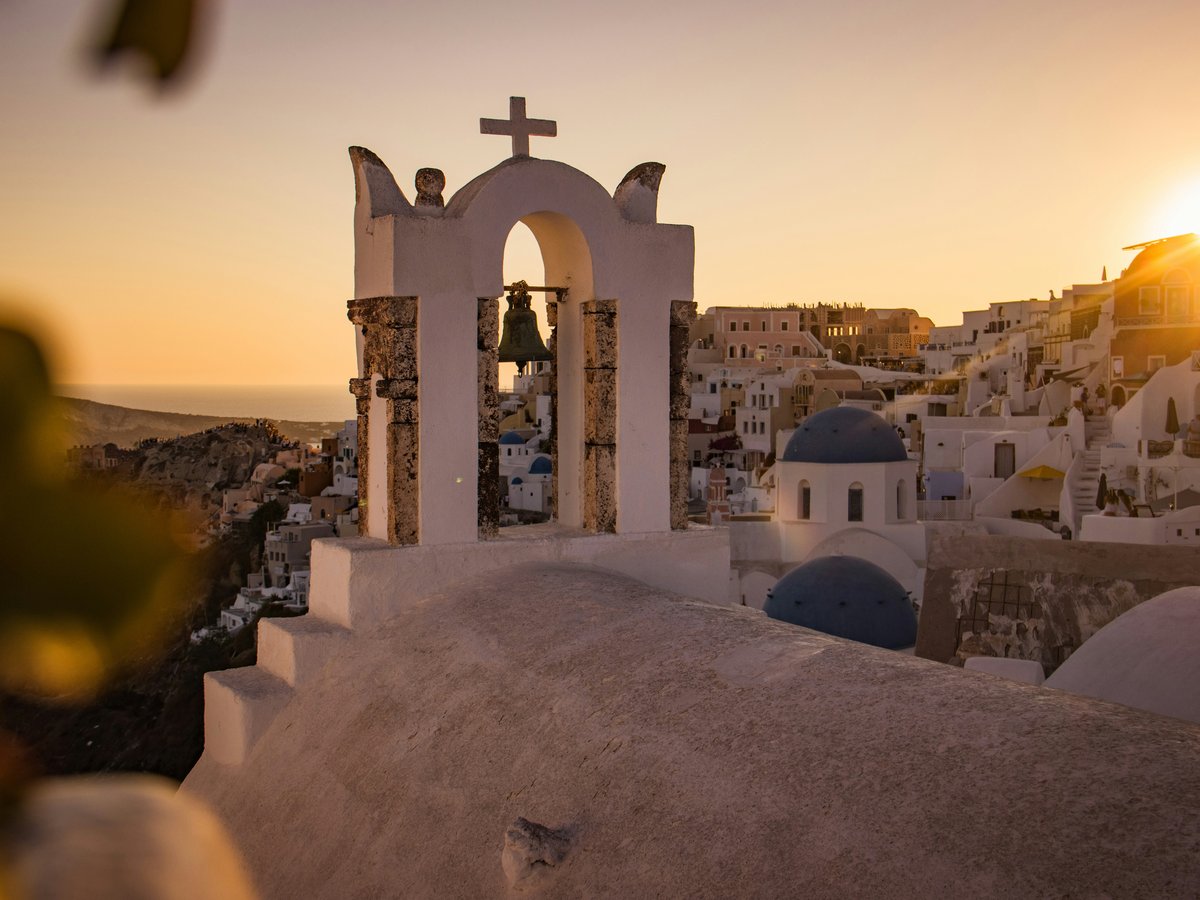
The mistake most Santorini first-timers make is stepping onto a whitewashed roof in Oia for a sunset photo, because those roofs are private terraces, often hotel suites. Cover up inside churches like Panagia Episkopi, greet with "kalimera" or "kalispera" before asking anything, tip in cash, and keep your hands off antiquities at Akrotiri.
Oia's sunset is where manners break down fastest. In October the sun drops a little before 7pm, and by about 6pm the Kastro ruins at the western tip of Oia are packed shoulder to shoulder. Anyone who hops a low wall onto a whitewashed terrace for a better angle is standing on a guest's private balcony, and those guests often pay several hundred euros a night for that view. Hotel staff in Oia and Imerovigli will ask you to leave, and some will not ask nicely. Pick your spot on the public lanes by 5:30pm and expect the crowd to applaud when the sun sinks into the Aegean. Mind you, Ammoudi Bay, roughly 300 steps below Oia, is calmer, and the smell of grilled octopus drifting off its tavernas beats the crush up top.
Fira's Old Port is the other trouble spot. The switchback path from the harbour up to Fira has 588 steps, and the donkey dung on them bakes in the afternoon sun, so the smell carries a long way. Greek authorities barred working donkeys from carrying riders over 100 kg in 2018, and animal-welfare groups still urge visitors to skip the ride. Take the cable car up from the Old Port instead, or walk the steps. If a donkey train comes down toward you, press yourself against the inside wall rather than the cliff edge, because the animals on the Fira path do not stop for tourists.
Santorini's plumbing is old and narrow, so every bathroom from a Fira cocktail bar to a cave suite in Imerovigli has a small lidded bin beside the toilet, and used paper goes in it, never the bowl. A blocked pipe in a cliffside hotel can mean a plumber hauling tools down 100 steps, and the staff in Oia will know which room caused it. The island's tap water is desalinated and tastes faintly of salt, so locals in Fira drink bottled water, and you should too.
Dinner runs late on Santorini. Families in Fira and Pyrgos sit down around 9pm to 10pm, so a taverna that is empty at 7pm says nothing about its kitchen. Your waiter will not bring the bill until you ask, because rushing a table is rude in Greece; say "to logariasmo, parakalo" or mime a scribble. Many tavernas on Santorini finish with a free plate of fruit or a shot of raki; accept the raki or the Vinsanto, the island's sweet sun-dried wine, since waving it away reads as cold. Order fava, the creamy yellow split-pea purée grown on Santorini, and tomatokeftedes, crisp tomato fritters, to share in the middle of the table. Tonight Fira sits at 17.3°C under a clear sky, cool enough that a light layer earns its place by 10pm, and it doubles as cover for a chapel visit.
Cultural norms
Greeks greet with a firm handshake and direct eye contact; among friends, expect a kiss on each cheek starting with the right. "Yassas" is the respectful hello for strangers, "yassou" the familiar form for one person. Conversations run warm and loud: interrupting to agree is participation, not rudeness. Avoid commenting on Greek-Turkish politics unless you know the room.
When entering an Orthodox church on Santorini (from the blue-domed chapels in Oia to Panagia Episkopi in Mesa Gonia) women should cover shoulders and knees, men must wear long trousers. Sleeveless tops and shorts will get you turned away. Outside churches, the island is relaxed: swimwear stays at the beach, not in Fira's shops or restaurants.
Tipping is appreciated but not obligatory. Leaving five to ten percent at a taverna is standard; at cafés, coins on the saucer suffice. Most restaurants add a cover charge called the "kouver" for bread and water, which is not a scam. Card payment is widespread since Greek tax law mandates POS terminals, but carry cash for smaller family-run places.
The moutza (an open palm thrust toward someone's face) is Greece's most offensive gesture, roughly equivalent to a raised middle finger. Never use an open hand to wave or signal "stop" at close range. Photographing military installations, including naval facilities near Athinios port, is illegal and enforced.
Greetings
Say "kalimera" (good morning) until about 1pm and "kalispera" after that; "Yia sas" is the polite hello for older people or groups. "Efharisto" (thank you) earns smiles at bakeries in Pyrgos and Emporio. Watch the head: a quick upward nod with raised eyebrows means "ochi" (no), while "ne" means yes.
Don't do this
- Climbing onto a cave-house roof or whitewashed terrace in Oia or Imerovigli for a photo, since it is somebody's home or hotel suite.
- Holding an open palm with fingers spread toward someone's face, which is the moutza, a crude Greek insult.
- Pocketing pottery shards or carved stone at Akrotiri or Ancient Thera, because removing antiquities is a criminal offence in Greece.
- Posing on the blue domes or bell towers above Oia and Firostefani, which are working church roofs.
- Treating a chapel wedding in Imerovigli or Oia as a photo backdrop, since couples book those churches and the guests notice.
- Riding a donkey up the Fira steps when you weigh over the legal limit, or shouting at the handlers who refuse you.
Tipping
Tipping is appreciated, not required. Leave 5 to 10% in cash at a taverna, since card tips may not reach staff; round taxi fares up to the next euro, and give hotel porters in Oia €1 to €2 per bag.
Dress code
Cover shoulders and knees at Panagia Episkopi, Profitis Ilias Monastery and the Candlemas Cathedral in Fira; a scarf in your bag solves it. Swimwear stays at Perissa, Kamari and Red Beach, and a bikini on Fira's main lane draws stares. Swap heels for rubber soles, because the polished marble lanes of Oia turn slick.
Religious norms
Most islanders are Greek Orthodox, though Fira's Catholic quarter holds St. John the Baptist Cathedral and the Three Bells of Fira. Men remove hats inside any church on Santorini, nobody sits on church steps with food or beer, and we'd keep flash off near the icons. Easter week and the 15 August feast of the Dormition bring candlelit processions through Fira and Pyrgos, so step aside and keep your voice down.
Last verified by automated review (v1.7.2) on . What is automated review?