Compare every Spain city in February →
Stay in Barcelona in February
78 hotels in the Trip.com pool for Barcelona, from US$19 a night.
Opens Trip.com on Fri 5 Feb to Sun 7 Feb 2027; change the dates there.
February is Barcelona's quietest month, and the single most important thing to know is that Mobile World Congress, the world's largest telecom trade show, lands in late February and can double hotel prices near Fira Gran Via for that week alone. Outside that spike, February sits firmly in low season. Days are cool but rarely cold by northern European standards, and the Mediterranean light stays clean and low. It casts the kind of golden afternoon glow across the Gothic Quarter that summer's harsh overhead sun cannot match.
The city feels noticeably different from its summer self. Lines at the Sagrada Família, which can stretch 90 minutes in August, shrink to 15 or 20. Restaurants in El Born that turn walk-ins away in July have empty tables at 9 PM. The trade-off is real, though. Days are short. The beaches are out of season entirely. February can string together 2 or 3 grey days that make the stone streets of Ciutat Vella feel damp and heavy.
What saves the month is Festes de Santa Eulàlia, Barcelona's biggest winter festival, which fills the old city with free concerts, castellers (human towers), and gegants (giant puppet processions). Carnestoltes, the Catalan Carnival, follows within the same few weeks, with satirical floats down La Rambla.
Why visit in February
- Hotel rates outside Mobile World Congress week drop 30-40% below Barcelona's annual average. Flights from most European capitals to El Prat airport also sit near their yearly lows in February.
- Festes de Santa Eulàlia fills the Barri Gòtic with free open-air performances every evening, without the crowd density that defines La Mercè in September.
- Calçot season peaks in February across Catalonia. Day-trip calçotada excursions to the Valls area, about 100 km southwest of Barcelona, are one of the region's best winter food experiences.
- Cool daytime temperatures are comfortable for covering 15-20 km on foot through the city's hillier neighborhoods without the heat exhaustion that sidelines visitors in July and August.
Worth knowing
- Barcelona's beach culture is dormant. Water temperatures near 13°C (55°F) and persistent onshore wind make Barceloneta a walk-along destination through February, with most chiringuitos closed until late spring.
- Sunset arrives around 6:15 PM, cutting outdoor sightseeing to roughly 8 hours of usable daylight after a 10 AM start. The northern facades of Gaudí buildings lose direct light by mid-afternoon.
- Some smaller independent restaurants in Gràcia and El Raval keep reduced winter hours or close on Mondays and Tuesdays, which limits weekday lunch options in those neighborhoods.
Best for
Think twice if
February is cool Mediterranean winter at its mildest. The average high reaches 15.3°C (60°F), comfortable enough for a full day on foot, while the low settles around 6.5°C (44°F) after sunset. Expect about 31mm of rain spread across roughly 6 days, so most of the month stays dry. Humidity sits at 78%, which you might notice on overcast mornings near the port when the air feels heavier than the temperature alone would suggest. Mornings in shaded streets can feel genuinely chilly before the sun clears the rooftops around 9 AM, and evenings after dark drop fast. The biggest weather surprise tends to be wind rather than rain.
Year-round climate
Averages from the last 5 years.
| Month | Avg high (°C) | Avg low (°C) | Rainfall (mm) |
|---|---|---|---|
| Jan | 14 | 5 | 18 |
| Feb | 15 | 7 | 31 |
| Mar | 16 | 9 | 69 |
| Apr | 18 | 10 | 58 |
| May | 22 | 14 | 59 |
| Jun | 27 | 20 | 34 |
| Jul | 29 | 22 | 50 |
| Aug | 29 | 22 | 47 |
| Sep | 26 | 18 | 115 |
| Oct | 23 | 15 | 68 |
| Nov | 18 | 10 | 51 |
| Dec | 16 | 6 | 48 |
Holidays and festivals in February
Public holidays
- Day of Andalucía(Día de Andalucía)28 February 2027
Headline events
Festes de Santa Eulàlia
Around February 12 (5-day festival)
Over 100 free activities across Ciutat Vella, from sardana dancing in Plaça de Sant Jaume to a correfoc (fire run) through narrow medieval streets on the final night. The festival honors Barcelona's co-patron saint and draws more locals than tourists, which keeps the atmosphere genuinely Catalan rather than packaged for visitors.
Best things to do in February
Visit the Sagrada Família in low season
sightseeingConstruction began in 1882 on Barcelona's most recognizable building, and it still is not finished. February is the month when you can stand in the nave, look up at the branching columns, and trace the colored light from the stained glass while the space is quiet enough to hear footsteps echo off the ceiling 45 meters above.
Winter visitor numbers drop to a fraction of summer peaks, and the interior echoes rather than buzzes. Weekday mornings are the quietest.Booking tipBook tickets online at least 3 days ahead. Reduced winter capacity means fewer daily time slots than you might expect.
Calçotada day trip to the Alt Camp
foodA calçotada is a full outdoor feast, not a restaurant dish. Groups gather at a masia (farmhouse), blacken bundles of calçots over open flames, and follow them with grilled lamb chops, botifarra sausage, and local red wine. The ritual involves bibs, stained hands, and romesco on everything.
The onions reach peak tenderness in February. By March the final harvest begins to thin supply at rural masias.Booking tipSeveral operators run group calçotada excursions from Barcelona on weekends. Book at least a week ahead since group sizes fill quickly.
Walk Montjuïc on a clear winter morning
outdoorsThe hill above the old port holds the Jardins de Joan Brossa, the Fundació Joan Miró, and the Castell de Montjuïc at its summit. A clear February morning, before the afternoon sea haze builds, gives panoramic views from the Tibidabo range to the Besòs river mouth.
Summer haze and heat make the hill's exposed paths uncomfortable after 11 AM from June through September. February's clean, cool air and low-angle light are ideal for the 3-4 km circuit.Join Barcelona's Carnestoltes
culturalThe Dijous Gras (Fat Thursday) feast marks the opening of Barcelona's Carnival. Each neighborhood runs its own procession on different evenings, so you can catch 3 or 4 by moving around the city. The final night closes with the Enterrament de la Sardina, a mock funeral for a papier-mâché sardine that winds through the Barri Gòtic.
Carnival dates move with the Easter calendar but typically fall in mid-to-late February. The event does not exist outside this window.Wine tasting in the Penedès
foodThe Penedès DO region, centered around Vilafranca del Penedès about 50 km southwest of Barcelona, produces most of Spain's cava alongside still wines. February is the dormant season for the vines, which means winery tasting rooms are quiet and staff have time for longer, more personal visits.
Harvest is months away, visitor numbers sit at their lowest, and winery owners are more likely to pour from reserve bottles that sell out by summer.Booking tipMost Penedès wineries require appointments. Email at least a week ahead. Some offer pick-up from Vilafranca del Penedès train station.
Spend an afternoon at Museu Picasso
cultureThe museum occupies 5 adjoining medieval palaces on Carrer de Montcada in El Born. The collection of over 4,250 works traces Picasso's formative years in Barcelona, including the complete Las Meninas series from 1957. The narrow medieval courtyard connecting the palaces is worth the visit on its own.
February is one of the few months when you can move through all 5 palace buildings without queuing between rooms or competing for sightlines at major canvases.Booking tipFree entry on the first Sunday of each month and every Thursday evening after 5 PM. February's thin crowds make these free windows genuinely usable.
Day trip to Montserrat
outdoorsThe monastery sits 725 meters above the Llobregat valley floor, roughly an hour from Plaça d'Espanya on the FGC R5 train. The Sant Joan funicular takes you higher to exposed ridge trails and hermitages carved into sandstone pinnacles. On clear February days, visibility can stretch to the Pyrenees.
Summer heat makes the exposed ridge trails punishing, and the monastery draws heavy crowds from Easter through October. February is uncrowded and cool enough for sustained hiking.Booking tipThe FGC R5 train runs roughly hourly. Catch the 8:36 AM departure from Plaça d'Espanya to arrive before the day-tripper wave.
What to eat in February
In season: fruit
Taronges de sang
Blood oranges from the western Mediterranean reach their peak sweetness in February. Market stalls at La Boqueria and Mercat de Sant Antoni pile them high, and their deep crimson juice turns up in fresh-squeezed glasses at breakfast counters across the city.
On menus now
Calçots amb salsa romesco
Long, mild spring onions from Tarragona province, charred over vine cuttings until blackened on the outside and sweet inside, then peeled by hand and dipped into romesco sauce. Most traditional restaurants in Barcelona feature calçot menus through the first months of the year.
Xató
A winter salad from the Garraf and Penedès coasts, built on a base of curly escarole with salt cod, tuna belly, anchovies, and olives, dressed in xató sauce (a romesco variant using nyora peppers and almonds). Several towns along the coast hold competitive xatonades in February.
Botifarra amb mongetes
Grilled Catalan pork sausage served with slow-cooked white beans (mongetes del ganxet). February is one of the colder months when this hearty lunch plate appears on nearly every neighborhood restaurant's menú del dia.
Festival food
Bunyols de Quaresma
Fried pastry rings dusted in sugar and sometimes filled with cream or chocolate, sold at pastisseries across Barcelona from Carnival through Lent. They appear in bakery windows around mid-February and disappear after Easter.
Regular events in February
Carnestoltes (Barcelona Carnival)Free
Barcelona's Carnival celebration brings neighborhood processions, satirical performances, and street parties to districts across the city over several days.
Mid-to-late February (varies with Easter calendar)Llum BCNFree
An urban light-art festival that transforms the streets and public spaces of Poblenou with large-scale installations by local and international artists over 3 evenings. The festival has grown steadily since its first edition.
Early February (typically first weekend)Mobile World Congress
The world's largest telecom industry congress draws over 80,000 attendees to Fira Gran Via. Not a tourist event, but it affects hotel pricing, taxi availability, and restaurant capacity across the Eixample and L'Hospitalet de Llobregat.
Last full week of FebruaryBest places this February
Park Güell
parkWinter mornings in the monumental zone mean a fraction of peak-summer visitors. The mosaic benches on the main terrace are cold to sit on, but you can photograph them without strangers in every frame. The viaducts and colonnades below the terrace are eerily quiet at 9 AM.
GràciaMercat de la Boqueria
marketIn February, Barcelona's most famous market on La Rambla is browsable. Citrus stalls pile up blood oranges and clementines from the Valencian coast, and the juice bars have open seats. The back stalls, where locals shop, are accessible without elbowing through tour groups.
Ciutat VellaBunkers del Carmel
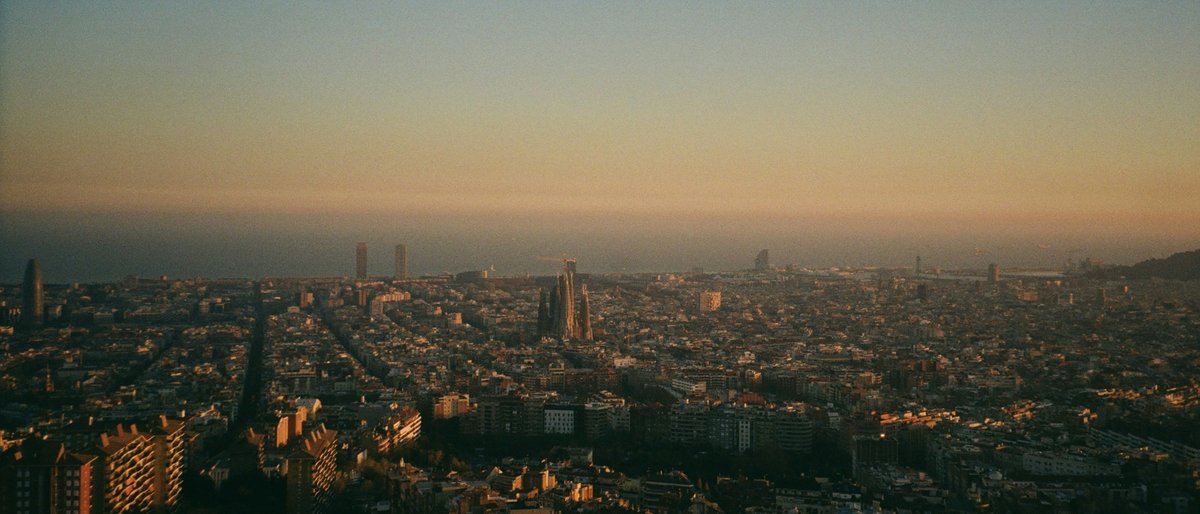
viewpointThe concrete ruins of a Civil War anti-aircraft battery sit 262 meters above sea level. On clear February mornings, the 360-degree view stretches from the Sagrada Família's towers to Montserrat, 40 km northwest. Fewer visitors than the sunset crowd that packs it in summer.
El CarmelFundació Joan Miró
museumJoan Miró's foundation on Montjuïc, open since 1975, houses over 14,000 works across painting, sculpture, and textile. Winter afternoons here are quiet enough to hear your own footsteps in the gallery. The rooftop sculpture terrace looks out over the port and the sea.
MontjuïcMuseu Nacional d'Art de Catalunya (MNAC)
museumThe Romanesque collection at MNAC, founded in 1934, contains Pyrenean church murals that were physically removed from remote mountain chapels and transported to Barcelona for preservation. The oval hall with the Sant Climent de Taüll apse painting is often yours alone in February.
MontjuïcPalau Güell
architectureGaudí's 1890 townhouse commission for Eusebi Güell sits on Carrer Nou de la Rambla in El Raval. February's thin visitor numbers make this intimate building feel closer to a private home than a museum. The chimney-top terrace, covered in broken-tile mosaics, previews the techniques Gaudí later refined at Park Güell.
El Raval
Your packing checklist
Tick items off as you pack. Your progress saves in this browser.
All packed — have a great trip.
Insider tips
The Cathedral of the Holy Cross and Saint Eulalia in the Barri Gòtic, founded in 1298, keeps 13 white geese in its cloister. One for each year of the saint's life. During Festes de Santa Eulàlia, the cloister becomes a gathering point between events, and the geese are the most photographed residents of the neighborhood.
Mercat de Sant Antoni, reopened in 2018 after a 9-year renovation, runs a Sunday morning book and coin market on the streets surrounding the main building. February crowds are thin enough to browse at leisure, and it sits a 10-minute walk from the Raval side of La Rambla.
If your trip overlaps with MWC, book accommodation in Gràcia or Poblenou rather than the Eixample. Conference attendees concentrate near Fira, and hotels in those outer neighborhoods maintain near-normal low-season pricing.
Vermut (vermouth on tap) is a Barcelona Sunday institution. In February, the pre-lunch vermut hour around 1 PM in the Poble Sec and Sant Antoni neighborhoods is a local ritual that fewer tourists know about. Bars serve it with olives, potato chips, and a soda siphon.
Avoid these mistakes
- Packing only a light summer jacket for 'southern Europe in winter.' Barcelona's latitude is similar to Rome's, but the waterfront wind chill can make a sunny 14°C afternoon feel closer to 8°C. Visitors from northern Europe tend to underdress because they associate Spain with heat.
- Not checking Mobile World Congress dates before booking. The congress shifts by a week or two each year, and travelers who assume it always falls the same week sometimes find themselves paying conference-week rates for a trip they intended as budget.
- Assuming outdoor dining is comfortable every evening. After sunset, temperatures drop enough that sitting still on a restaurant terrace gets cold quickly, even under heat lamps. Request an indoor table for dinner, or bring a warm layer specifically for terrace seating.
Practical tips for February
Book Sagrada Família tickets online at least 3 days ahead, even in low season, since reduced winter capacity means fewer daily slots. Many museums close on Mondays, including MNAC and Fundació Joan Miró, so plan indoor activities for Tuesday through Sunday. The T-Casual transit card (10 trips, valid on metro, bus, and tram within Zone 1) remains the most economical way around the city. Restaurants in Barceloneta and the Barri Gòtic tend to keep shorter winter hours, often closing kitchens by 10 PM rather than the summer norm of 11:30 PM. If your visit overlaps with MWC, book airport transfers in advance, as taxi queues at El Prat Terminal T1 grow significantly that week. At the current exchange rate (roughly 0.85 EUR per 1 USD), Barcelona in February offers strong value for dollar-denominated travelers.
FAQ
Is February a good time to visit Barcelona?
February is a fair time to visit. The weather is comfortable for walking, crowds reach their annual low, and prices outside MWC week are Barcelona's cheapest. The trade-off is short days and a dormant beach scene. Two winter festivals add genuine life to the old city, and calçotada season gives food travelers a reason to come specifically now.
What is the weather like in Barcelona in February?
Cool but mild by European winter standards. Expect temperatures similar to a chilly London spring day, with the notable difference that Barcelona tends to get more sunshine. Rain is modest, and most days stay dry. The main surprise is the wind chill along the waterfront, so layers work better than a heavy coat.
Is Barcelona crowded in February?
No. February is one of Barcelona's quietest months, alongside January. Queues at major attractions shrink compared to June through September, and finding a table at sought-after restaurants is easier than at any other time of year. A large industry conference in the last week fills business-district hotels but has little effect on tourist areas.
What should I wear in Barcelona in February?
Layers are the answer. Mornings can feel genuinely cold, especially in shaded streets of the Barri Gòtic, while sunny afternoons are pleasant in a light jacket. A windproof outer layer is more important than a heavy winter coat. Bring a scarf for evenings and a compact umbrella for the occasional shower.
Are the beaches worth visiting in Barcelona in February?
For a stroll, yes. Barceloneta's boardwalk is pleasant on a sunny afternoon, and local joggers and dog walkers give it a lived-in feel that the summer tourist crush drowns out. For swimming, no. The Mediterranean is too cold for comfort, and beach services are minimal until late April or May.
Things to Do in Barcelona in February
 Free cancellation
 Sagrada Familia Guided Tour with Skip the Line Ticket
City tour: 1.5 hours, free cancellation.
via Viator Free cancellation
 Park Guell Skip-the-Line Guided Tour in Barcelona
City tour: 1 hour, free cancellation.
via Viator Free cancellation
 From Barcelona: Half-Day Montserrat, Tapas & Wine Tour
Day trip: free cancellation.
via Viator Free cancellation
 Montserrat & Cogwheel Train, Gourmet Wine Tasting & Tapas/Lunch
Day trip: free cancellation.
via Viator Free cancellation
 Park Guell and Sagrada Familia Tour with Skip the Line Tickets
Day trip: 4 hours, free cancellation.
via Viator Free cancellation
 Montserrat, Girona & Costa Brava Guided Day Trip from Barcelona
Day trip: 11.5 hours, free cancellation.
via ViatorFind a flight to Barcelona
Live fares to Barcelona appear here once cookies are accepted.
Last verified by automated review (v1.7.2) on . What is automated review?