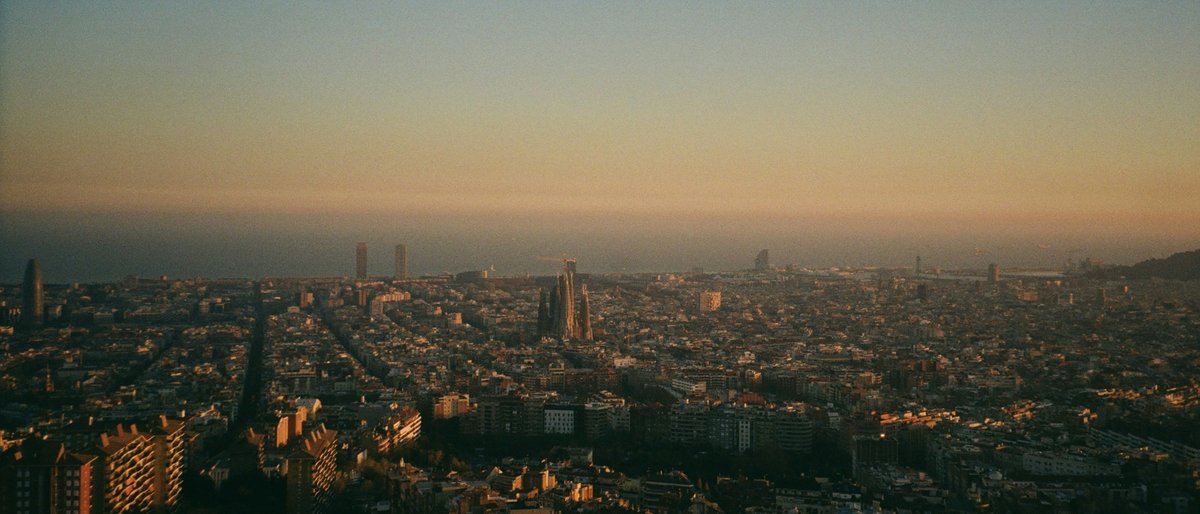
Barcelona sits in a kind of geographic sweet spot that most cities can only envy. The Mediterranean stretches out to the east, the Serra de Collserola rises behind the city like a green wall, and Montjuïc anchors the southern edge with its terraced slopes. You can be swimming in salt water at ten in the morning and hiking through pine forest by lunch. That's not marketing: it's just the layout of the place.
The climate helps, obviously. Winters are mild enough that you can comfortably hike from November through February without layering up like you're heading to the Alps. Summers get properly hot, though. July and August push well past 30°C, and the humidity off the sea makes midday exertion feel punishing. The sweet spot for outdoor pursuits tends to be spring and autumn (March through May, then late September into November) when temperatures hover in the comfortable mid-teens to low twenties and the light has that particular Mediterranean quality, warm and slanting.
What strikes you after spending time here is how quickly the city gives way to something wilder. Fifteen minutes on the FGC train from Plaça Catalunya and you're at trailheads in Collserola. An hour by car or regional train gets you to Montserrat's serrated peaks. The Garraf coast south of the city has rocky coves that feel surprisingly remote. Barcelona is loud and dense and chaotic at street level, but the edges are always right there.
Outdoor activities
-
Road Cycling the Garraf Coast
The BV-2111 road that winds from Castelldefels down through Garraf Natural Park toward Sitges is one of those rides that sticks with you. It's narrow, carved into limestone cliffs, and the smell of pine resin mixes with salt air the whole way. Traffic can be a concern on weekends since local cycling clubs flood the route, but early weekday mornings are quiet. The road undulates rather than climbs steeply, making it accessible if you have decent fitness. You'll pass small coves where the rock drops straight into turquoise water. Total out-and-back from Castelldefels to Sitges is roughly 40 km, though most people make it a one-way ride and take the Rodalies train back.
- Difficulty
- Moderate
- Duration
- 2-4 hours depending on pace and stops
- Best season
- March through May, or October through November
-
Mountain Biking in Collserola
The Parc Natural de la Serra de Collserola has a surprisingly dense network of fire roads and singletrack for a park that borders a city of nearly two million people. The Carretera de les Aigües (a flat gravel path that contours the mountain at about 300 metres elevation) works as a warm-up or an easy ride on its own. From there, you can branch off onto steeper trails heading up toward Tibidabo or down toward Vallvidrera. The terrain is mostly hard-packed dirt with some rocky sections, and it dries fast after rain. Mountain bikers share trails with runners and walkers, so keep your speed in check, on blind corners. Bike rental shops near Plaça Bonanova and Peu del Funicular can set you up.
- Difficulty
- Easy to moderate depending on trail choice
- Duration
- 1.5-3 hours
- Best season
- Year-round, though summer mornings before 10am are strongly recommended
-
Rock Climbing at Montserrat
Montserrat's conglomerate towers have been drawing climbers for over a century, and the rock there is unusual: rounded pebbles cemented into a natural concrete that creates these bulging, almost organic formations. Routes range from well-bolted single-pitch sport climbs to serious multi-pitch lines on the main massif. The area around Sant Benet and the Agulles sector tends to be where most visiting climbers end up, with routes graded from 5a through 8a on the French scale. The conglomerate demands trust in small holds and rounded features that feel insecure at first. A guided session with a local company makes sense for your first visit, since route-finding can be tricky and the rock requires a period of adjustment.
- Difficulty
- Moderate to advanced depending on route
- Duration
- Full day
- Best season
- October through April: summer heat on south-facing walls is brutal
-
Trail Running in Collserola
Barcelona has a serious trail running community, and Collserola is where most of them train. The park's network of paths lets you piece together loops of almost any distance, from quick 5 km jogs along the Carretera de les Aigües to 25 km circuits that tag the Tibidabo summit and loop back through Vallvidrera. The footing is generally good: packed earth and gravel with some root-covered sections in the shadier valleys. You'll hear woodpeckers and smell wild rosemary on the sunnier slopes. Water fountains (the old-fashioned fonts scattered throughout the park) still work, though carrying your own is wise since not all are reliable.
- Difficulty
- Easy to challenging depending on distance and elevation
- Duration
- 45 minutes to 4 hours
- Best season
- Year-round, early mornings in summer
-
Sea Kayaking Along the Barcelona Coast
Paddling out from the beaches near Port Olímpic or Barceloneta gives you a view of Barcelona that most visitors never get: the city skyline stretching from Montjuïc to the Besòs river mouth, the old port cranes silhouetted against Tibidabo. Several outfitters run guided tours that head north along the coast toward the Fòrum area or south past the breakwater. Conditions in the morning are usually calm, with a light onshore breeze picking up by early afternoon. Mind you, the water close to the port can have some boat traffic, so sticking with a guided group your first time out makes practical sense.
- Difficulty
- Easy to moderate
- Duration
- 2-3 hours
- Best season
- May through October
-
Paragliding from Montserrat or Collserola
Tandem paragliding flights operate from launch sites in the Collserola hills and near Montserrat, depending on wind conditions. The Collserola flights tend to be shorter but offer a panoramic sweep of the city: you can see the grid of the Eixample district from above, which is something. Montserrat flights are more dramatic, launching from higher elevation with views of the serrated peaks and the Llobregat valley. Wind conditions vary significantly by season and time of day, so flights often get rescheduled. Book with a licensed operator and expect flexibility with timing.
- Difficulty
- No experience needed for tandem
- Duration
- 15-30 minutes of flight, half day with transport and prep
- Best season
- Spring and early autumn for most stable conditions
Day hikes
-
Carretera de les Aigües
This is Barcelona's default after-work hike, and for good reason. The old water-channel road contours along the Collserola ridge at about 300 metres, staying almost well flat for its full length. The surface is wide gravel, the pine trees offer intermittent shade, and the views down over the city to the sea are constant companions. You share the path with runners, dog walkers, and cyclists, so it's social rather than solitary. Access it from the Peu del Funicular FGC stop or walk up from various points in Sarrià. It's the kind of route you end up doing dozens of times and never quite tire of, because the light is different every evening.
- Difficulty
- Easy: flat, wide, well-maintained gravel
- Duration
- 1.5-2.5 hours for the full length
- Best season
- Year-round
-
Tibidabo Summit via Vallvidrera
Starting from the Vallvidrera neighbourhood (reachable by FGC) you can hike up through oak and pine forest to the 512-metre summit of Tibidabo, the highest point in the Collserola range. The trail gains around 300 metres of elevation and passes through some quiet forest before emerging at the slightly surreal summit complex with its church and amusement park. The contrast between the peaceful woods and the fairground rides at the top is jarring in a way that feels very Barcelona. Descend the same way or vary the route through the Font del Mont or Font de la Budellera springs.
- Difficulty
- Moderate: steady uphill, some steeper sections near the summit
- Duration
- 2.5-3.5 hours round trip
- Best season
- October through May: summer midday is too exposed
-
Montserrat: Sant Joan Trail
Take the rack railway from Monistrol de Montserrat up to the monastery, then the Sant Joan funicular to the upper station. From there, the trail to the Sant Joan hermitage and beyond toward the summit ridgeline is properly spectacular: exposed conglomerate formations, views out to the Pyrenees on clear days, and a silence that feels almost theatrical after Barcelona's noise. The path is well-marked but involves some scrambling on the higher sections. Worth noting that the rock can be slippery when wet, and there are genuine drop-offs in places, so this isn't one for vertigo sufferers.
- Difficulty
- Moderate to challenging: some scrambling, exposed sections
- Duration
- 3-5 hours depending on how far you continue along the ridge
- Best season
- March through May, September through November
-
Garraf Natural Park: Coastal Path from Castelldefels
The Garraf massif rises steeply from the coast south of Barcelona, and the trails here feel drier and more rugged than Collserola: scrubby Mediterranean maquis, white limestone, and the constant sound of the sea below. A good circuit starts near Castelldefels, climbs through the garrigue to the ridge, and descends to one of the small coves. The vegetation is aromatic (thyme, rosemary, and rock rose) and in spring the wildflowers are dense. Footing can be loose on the limestone sections. Bring more water than you think you need; shade is scarce.
- Difficulty
- Moderate: some steep sections, little shade, uneven terrain
- Duration
- 3-4 hours for a ridge loop
- Best season
- February through April, October through November
-
Sant Llorenç del Munt: La Mola Summit
About an hour northwest of Barcelona by car, Sant Llorenç del Munt i l'Obac natural park centres on La Mola, a 1,104-metre summit topped by an 11th-century Romanesque monastery. The hike up from the Coll d'Estenalles car park is a steady climb through holm oak forest that opens onto exposed rock near the top. The final approach crosses broad rock platforms with views that sweep from Montserrat to the Pyrenean foothills. It can be windy up there, and the temperature drops noticeably from the valley. The monastery itself is still partly in use and has a simple, weathered beauty to it.
- Difficulty
- Moderate to challenging: sustained climb, exposed summit section
- Duration
- 4-5 hours round trip from Coll d'Estenalles
- Best season
- April through June, September through November
Water activities
-
Swimming at Barceloneta and Bogatell Beaches
Barceloneta is the beach everyone knows: packed in summer, full of energy, vendors walking the sand selling mojitos of dubious provenance. The water is clean enough and the sandy bottom slopes gently, so it's good for casual swimming. To be fair, Bogatell, a few beaches north, is calmer and tends to attract a slightly older crowd. The water temperature ranges from around 13°C in February to 25°C or so in August. Lifeguards are on duty from roughly June through September. The morning light on the water before the crowds arrive is worth setting an alarm for.
- Difficulty
- Easy
- Duration
- As long as you like
- Best season
- June through September for warm water, though locals swim year-round
-
Coastal Kayaking to Poblenou Beaches
Several operators along the Barceloneta waterfront rent sit-on-top kayaks or run guided tours that paddle north along the coast. The route passes the old industrial waterfront of Poblenou, which looks entirely different from the water: old brick chimneys behind the modern developments. Morning sessions before the afternoon breeze picks up are calmest. You don't need experience for the basic tours, though a bit of upper body stamina helps. Guided sunset tours are popular but book up fast in peak season.
- Difficulty
- Easy to moderate depending on conditions
- Duration
- 2-3 hours
- Best season
- May through October
-
Stand-Up Paddleboarding at Port Olímpic
The sheltered water near Port Olímpic makes for easy paddleboarding, and rental spots along the beach have boards available by the hour. The harbor breakwater blocks most of the swell, so conditions inside are usually flat. Head out past the breakwater and things get more interesting: you'll feel the Mediterranean swell and need better balance. Early mornings are glass-calm with almost no wind. The sensation of standing above the water looking back at the city skyline (with the Sagrada Família visible above the rooftops on clear days) is quietly memorable.
- Difficulty
- Easy in sheltered water, moderate in open sea
- Duration
- 1-2 hours
- Best season
- April through October
-
Sailing from Port Olímpic
The sailing clubs and charter operators based at Port Olímpic offer everything from beginner dinghy courses to skippered catamaran trips along the coast. The afternoon thermal wind (locals call it the garbí) typically fills in from the southwest around midday from spring through autumn, making afternoons the reliable sailing window. If you've sailed before, some operators rent small keelboats without a skipper. The coast south toward Garraf is the prettier direction, with limestone cliffs dropping into clear water.
- Difficulty
- Variable: beginner courses available
- Duration
- Half day to full day
- Best season
- April through October, best wind May through September
-
Snorkeling Day Trip to Costa Brava
The rocky coves of the Costa Brava (around Tossa de Mar, Cadaqués, or the Illes Medes marine reserve near L'Estartit) offer the closest decent snorkeling to Barcelona. The Illes Medes in particular is a protected area where fish populations are noticeably denser than along the open coast. Water visibility is usually good from June through September. It's roughly 90 minutes to Tossa de Mar by car, or you can take a bus. Bring your own mask and snorkel rather than renting: the quality is better and the cost adds up over multiple trips.
- Difficulty
- Easy to moderate depending on conditions and swim distance
- Duration
- Full day trip
- Best season
- June through September for warmest water and best visibility
Parks & gardens
-
Parc de la Ciutadella
FreeThis is the park Barcelona turns to when it needs green space and room to breathe. Built on the grounds of a former military citadel, it has wide gravel paths shaded by mature plane trees, a boating lake where you can rent rowboats, and the enormous Cascada fountain that Gaudí helped design as a young architecture student. On Sunday mornings the park fills with drummers, jugglers, and people doing acrobatic yoga on the grass. The zoo occupies the eastern section, but the western half is free and open. You'll hear parakeets (the city is full of feral monk parakeets) and the light filtering through the trees in late afternoon is beautiful.
Highlights: Rowboat lake, Cascada fountain with early Gaudí contribution, Sunday morning drum circles, mature tree canopy
-
Parc Güell
Gaudí's hillside park gets crowded in the monumental zone (the tiled benches and mosaic salamander that everyone photographs) and that section requires a timed ticket. But the larger park surrounding it is free, and honestly it's the better part for anyone who likes being outdoors. Pine-shaded paths wind up the hill past stone viaducts and twisted colonnades, and the views of the city from the upper terraces are the kind you sit with for a while. The stone is warm under your hands on a spring afternoon. Go early or late to avoid the tour bus crowds.
Highlights: Free upper terraces with city views, Gaudí's stone viaducts, pine-forested walking paths
-
Jardins de Mossèn Costa i Llobera
FreeTucked into the seaward slope of Montjuïc, this cactus garden is one of those places locals know about and visitors tend to walk right past. The collection of succulents and cacti from arid regions worldwide is reportedly one of the most important in Europe. The microclimate on this sheltered hillside allows species that shouldn't survive at this latitude to thrive. You get the strange sensation of walking through a desert garden while looking out over container ships in the port. The air smells different here: dry, resinous, nothing like the rest of the city.
Highlights: Excellent cactus and succulent collection, Mediterranean views over the port, sheltered microclimate
-
Parc del Laberint d'Horta
Barcelona's oldest surviving garden, dating to the 1790s, sits in the Horta-Guinardó district well north of the tourist circuits. The centrepiece is a cypress hedge maze that's been trimmed to chest height: you can see over it, which takes the frustration out of the thing and lets you enjoy the geometry. The neoclassical gardens include canals, pavilions, and a waterfall grotto. It feels formal and slightly melancholy, like stepping into an 18th-century painting. There's a small entrance fee and a daily visitor cap, which keeps the place quiet even on weekends.
Highlights: 18th-century cypress hedge maze, neoclassical gardens, low crowds due to visitor cap, romantic waterfall grotto
-
Parc de Collserola
FreeMore of a natural reserve than a city park, Collserola covers over 8,000 hectares of forested hillside directly behind Barcelona. It's reachable by FGC train to Baixador de Vallvidrera or the funicular to Tibidabo. The landscape is Mediterranean oak and pine forest, with clearings where wild boar root through the undergrowth: you'll see them at dusk if you're quiet. The Centro de Información at Vil·la Joana is worth a stop for trail maps. This is where Barcelona goes to escape itself.
Highlights: 8,000+ hectares of Mediterranean forest, wild boar sightings, accessible by FGC train, network of marked trails
-
Jardí Botànic de Barcelona
Perched on the Montjuïc hillside between the Olympic Stadium and the Castell, the botanical garden organizes its plantings by world regions sharing the Mediterranean climate: California, South Africa, Chile, Australia, and the Mediterranean basin itself. The layout follows the natural terrain rather than imposing formal geometry, so walking through it feels more like a hillside ramble than a garden visit. Views across the Llobregat delta toward the airport are surprisingly expansive. The signage is thorough without being fussy.
Highlights: Mediterranean climate zone plantings from five continents, hillside layout with Llobregat delta views, well-signed paths
Practical tips
- Sun Protection
- The Mediterranean sun hits harder than people expect, from May through September. A hat with a brim, SPF 50 sunscreen reapplied every two hours, and UV-protective sunglasses are non-negotiable for any extended outdoor time. The sea breeze creates a false sense of coolness while you're still absorbing serious UV. On exposed hikes like Garraf or Montserrat, there's often no shade for long stretches.
- Water and Hydration
- Barcelona's tap water is safe but tastes heavily of chlorine, so most people here drink filtered or bottled water. For hiking, carry at least 1.5 litres per person for anything over two hours, and double that in summer or on exposed routes. Some of the old fonts in Collserola still flow, but they're not always reliable and water quality varies: don't count on them as your sole supply.
- Footwear and Gear
- For Collserola and easy coastal paths, trail runners with decent grip are sufficient. Montserrat and Sant Llorenç del Munt call for proper hiking boots with ankle support, since the conglomerate rock and limestone can be slippery and the terrain is uneven. A lightweight rain shell is worth carrying from October through March: storms can develop quickly along the coast. Trekking poles help on the steeper descents.
- Trail Conditions and Access
- Most trails in Collserola and the natural parks are well-marked with coloured blazes and signposts at junctions. That said, after heavy rain some paths in Garraf and Collserola can wash out or become muddy enough to be slippery. Check the Diputació de Barcelona or park websites for any closures. During high fire-risk periods in summer, access to natural parks may be restricted: this is enforced and the fines are steep.
- Getting to Trailheads
- Barcelona's public transport is useful for reaching outdoor areas. The FGC train line to Vallvidrera and Peu del Funicular gets you to Collserola trailheads in about 15 minutes from Plaça Catalunya. The R5 line to Monistrol de Montserrat connects to the rack railway. Rodalies trains reach Castelldefels for Garraf. For Sant Llorenç del Munt, you'll likely need a car or a bus to Terrassa followed by a taxi. A T-Casual travel card covers ten trips across metro, bus, and FGC.
- Seasonal Planning
- Spring (roughly mid-March through May) is likely the best overall window for outdoor activities around Barcelona. Temperatures are comfortable, wildflowers are out in Garraf and Collserola, and the sea is starting to warm up. Autumn from late September through November is similarly good, with warmer sea temperatures than spring. Summer works for water activities and very early morning hikes, but midday heat limits options. Winter is mild enough for hiking and cycling, though the sea drops to around 13°C and some higher trails can be muddy.
FAQ
Do I need hiking permits for trails near Barcelona?
Generally no. The natural parks around Barcelona (Collserola, Garraf, Montserrat, Sant Llorenç del Munt) are open-access with no permits required for day hiking. The main restriction to watch for is fire-risk closures during summer, when the Catalan government may temporarily close park access. These closures are posted at trailheads and on park authority websites. There is no equivalent of a wilderness permit system here.
Is it safe to swim at Barcelona's city beaches?
The city beaches are regularly tested and water quality has improved significantly over the past couple of decades. Lifeguards patrol from roughly June through September during daylight hours, and coloured flags indicate conditions: green means safe, yellow means caution, red means no swimming. After heavy rainfall, it's worth waiting a day before swimming since storm runoff can temporarily affect water quality near drainage outlets. Jellyfish occasionally appear in summer but serious stings are uncommon.
Can I rent outdoor gear in Barcelona without bringing my own?
Bike rental (both road and mountain) is widely available, with shops concentrated in the Eixample and near the beach. Kayak and paddleboard rentals operate along the Barceloneta waterfront from spring through autumn. For hiking and climbing gear, there are several well-stocked outdoor shops along Carrer Consell de Cent and in the Born neighbourhood. Decathlon has multiple locations if you need affordable basics. Specialized climbing gear rental is best arranged through guide services.
How hot does it get in Barcelona during summer outdoor activities?
July and August regularly hit 30-34°C, sometimes higher during heat waves. Humidity from the sea makes it feel worse. The real concern is that exposed trails (Montserrat's rock faces, Garraf's limestone ridges) can push perceived temperatures well above 40°C in direct sun with no shade. Start any summer hike at dawn and plan to be finished by noon. Water activities become the sensible choice for afternoon hours.
Are Barcelona's mountain trails suitable for beginners?
Collserola is where beginners should start. The Carretera de les Aigües is flat, wide, and well-maintained with no route-finding needed. From there you can explore gentle trails through the forest toward Vallvidrera or Font del Mont. Montserrat and Sant Llorenç del Munt have more demanding terrain with genuine exposure in places, so build up to those. Trail signage across all the parks is generally reliable, though carrying a downloaded map on your phone is still a good idea since mobile signal can drop in valleys.
What is the best way to get from Barcelona to Montserrat for a day hike?
Take the FGC R5 line from Plaça Espanya station toward Manresa and get off at Monistrol de Montserrat. From there, the Cremallera rack railway climbs to the monastery: the ride itself is part of the experience, clinging to the mountainside past increasingly dramatic rock formations. The combined train and rack railway ticket is available at the FGC station. First trains depart around 8:30am, and you'll want the earliest one to maximise trail time. The whole journey from central Barcelona to the monastery takes roughly 90 minutes.
Outdoor experiences in Barcelona
 Free cancellation
 Sagrada Familia Park Guell and Casa Batllo Complete Gaudi Tour
Outdoor experience: free cancellation.
via Viator
Barcelona: Helicopter, Boat Ride & Old Town Small Group (Max 8)
Outdoor experience: 4 hours.
via Viator Free cancellation
 Costa Brava Tour: Kayak, Snorkel, Cliff Jump & lunch Small Group
Outdoor experience: 8 hours, free cancellation.
via Viator Free cancellation
 Balloon Ride over Catalonia with optional Pick-up from Barcelona
Outdoor experience: free cancellation.
via Viator Free cancellation
 Montserrat Half Day with Cable Car and Easy Hike from Barcelona
Outdoor experience: 6 hours, free cancellation.
via Viator Free cancellation
 2 hour Shared Sailing Tour in Barcelona with Open Bar & Snacks
Outdoor experience: 2 hours, free cancellation.
via Viator Free cancellation
 Costa Brava Tour: Easy Hike, Snorkel & Cliff Jump from Barcelona
Outdoor experience: 9 hours, free cancellation.
via Viator Free cancellation
 1 hour Shared Sailing Tour in Barcelona with Open Bar & Snacks
Outdoor experience: 1 hour, free cancellation.
via Viator Free cancellation
 Montserrat Monastery with Easy Hike & Sitges Tour from Barcelona
Outdoor experience: 9 hours, free cancellation.
via Viator Free cancellation
 Barcelona Segway Tour
Outdoor experience: free cancellation.
via Viator Free cancellation
 Montserrat, cogwheel train, hiking, very small group
Outdoor experience: 7 hours, free cancellation.
via Viator Free cancellation
 From Barcelona : Tossa de Mar, Coastal Path, Boat and Costa Brava
Outdoor experience: 10.5 hours, free cancellation.
via ViatorLast verified by automated review (v1.7.1) on . What is automated review?