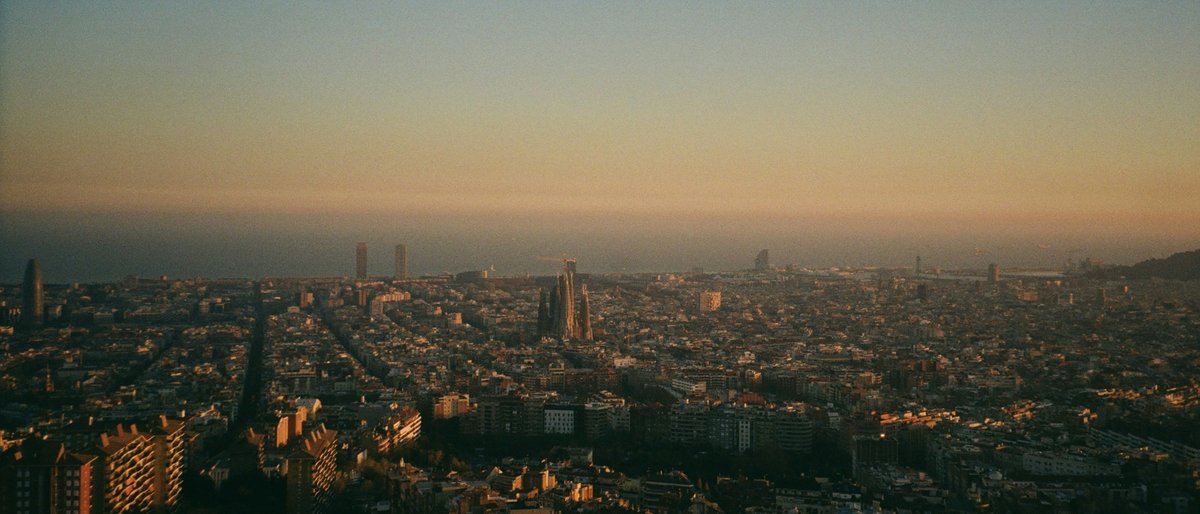
Barcelona is built on a logic that makes sense once you see it from above. The old city (the Ciutat Vella) sits tight against the waterfront, a tangle of medieval streets where you can lose your bearings in about forty seconds. Wrapped around it in a neat grid is the Eixample, the 19th-century expansion that gave Barcelona its signature octagonal blocks and wide, tree-lined avenues. From there, the city climbs uphill toward the former villages that got swallowed up as the city grew (Gràcia, Sarrià, Horta) each one still carrying a distinct personality. To the south you hit Montjuïc, the big hill with the parks and the Olympic stadium. To the north, the Besòs river marks the edge of newer developments. The beach stretches northeast from Barceloneta all the way up through the Forum area. The Metro connects most of it well enough, but honestly, walking is how you understand Barcelona. The distances between neighborhoods are shorter than they look on a map, and the stuff worth seeing tends to happen in the transitions: turning a corner from the Gothic Quarter into El Born, or crossing Diagonal and suddenly feeling the pace shift from downtown energy to residential calm. One thing worth knowing: the mountain-sea axis matters here. Locals give directions using 'mar' and 'muntanya': toward the sea or toward the mountain. Once that clicks, navigation gets a lot easier.
Neighborhoods
-
El Barri Gòtic (Gothic Quarter)
Narrow stone lanes, some dating back to Roman times, pressed so close together that the sunlight only reaches the street for a couple hours a day. It smells like old stone and coffee in the mornings, grilled meat and cigarette smoke by evening. The Cathedral of Barcelona anchors the northern end, and Plaça Reial (with its Gaudí-designed lampposts) sits near the southern edge. The noise level depends on which pocket you're in: the streets near the cathedral get a steady stream of tour groups, but duck one block east and you might find yourself alone with a cat sleeping on a moped seat. The architecture is medieval in places, though some of it was rebuilt in the early 20th century in a romantic medieval style. You can usually tell the difference: the real stuff has that slightly crooked, settled-into-the-earth quality.
- Best for
- First-time visitors who want to be in the thick of the old city, couples, and anyone who doesn't mind trading space for atmosphere. Not great for families with strollers: the cobblestones and stairs will wear you out.
- Key streets
- Carrer del Bisbe with its neo-Gothic bridge overhead, Plaça del Rei where Ferdinand and Isabella reportedly received Columbus, Carrer dels Banys Nous for antique shops, and Plaça de Sant Felip Neri: a small square with shrapnel scars from Civil War bombing still visible on the church walls.
-
El Born (Sant Pere, Santa Caterina i la Ribera)
El Born sits just east of the Gothic Quarter, separated by Via Laietana, and it has a noticeably different feel: still old, still narrow streets, but more polished. The Passeig del Born, the wide promenade that gives the neighborhood its common name, has the kind of bars where the vermouth is served in proper glasses and the bartenders have opinions about it. Santa Maria del Mar, the church that inspired the novel 'Cathedral of the Sea,' is arguably more beautiful than the main cathedral: built by dockworkers and merchants in the 14th century, it has a purity of line that the Gothic Quarter cathedral can't match. The Picasso Museum draws crowds to Carrer de Montcada, a street of medieval palaces now converted to galleries. The pace here is slower than the Gothic Quarter, the shops are independent, and there's a good chance you'll hear someone practicing classical guitar through an open window.
- Best for
- Design-minded travelers, food lovers, and anyone who wants old-city atmosphere with slightly better restaurants and fewer souvenir shops. Solid pick for a couple or solo traveler.
- Key streets
- Passeig del Born for evening drinks, Carrer de Montcada for the Picasso Museum and medieval architecture, Carrer de la Princesa for a mix of shops, and the Mercat de Santa Caterina: the colorful market that's less overwhelming than La Boqueria and where locals do their shopping.
-
El Raval
El Raval is the neighborhood that divides opinion. West of La Rambla, it was Barcelona's red-light district for most of the 20th century, and traces of that remain: you'll still see some rough edges, on the lower half below Carrer de l'Hospital. But the upper Raval, near the MACBA contemporary art museum, has turned into something interesting: Filipino grocery stores next to natural wine bars, a century-old pharmacy next to a Bangladeshi-run copy shop. The MACBA square is where the city's skateboarders gather, and the sound of wheels on concrete is as much a part of the Raval's identity as the smell of cumin and saffron drifting from the restaurants on Carrer de l'Hospital. It's dense, loud, and occasionally chaotic. The 19th-century apartment buildings lean in close, laundry strung between balconies.
- Best for
- Travelers comfortable with grit, budget-conscious visitors, people interested in contemporary art and varied food scenes. Not the first choice for families or anyone who wants a polished holiday experience.
- Key streets
- Rambla del Raval (a wide boulevard with Botero's bronze cat sculpture) for a breather from the tight streets. Carrer dels Tallers for record shops. Carrer de Joaquín Costa for bars that don't really get going until midnight. And the Antic Hospital de la Santa Creu, a 15th-century hospital complex with a courtyard garden that feels like a secret even though it's right in the middle of everything.
-
L'Eixample (Dreta and Esquerra)
The Eixample is Cerdà's 19th-century grid: wide streets meeting at octagonal intersections, each block designed to allow light and air. It's where Barcelona does its daily business. The Dreta (right side) is the fancier half, home to the Passeig de Gràcia with the big-name Modernista buildings: Casa Batlló, Casa Milà (La Pedrera), Casa Amatller all within a few blocks of each other on the so-called Manzana de la Discòrdia. The Esquerra (left side) is more residential, quieter, with good local restaurants and fewer tourists. The whole neighborhood has high ceilings, ornate entryways, and a certain bourgeois calm. It smells like bakeries in the morning, and the light comes down through the plane trees at golden hour in a way that makes you understand why people put up with the noise of Passeig de Gràcia.
- Best for
- Architecture lovers, shoppers, and anyone who wants a central location with reliable metro connections and the option to walk to most major sights. Families will appreciate the wider sidewalks and more predictable layout after the maze of the old town.
- Key streets
- Passeig de Gràcia for Modernista architecture and high-end shopping, Rambla de Catalunya for a quieter parallel stroll with terrace cafés, Carrer d'Aragó for a cross-section of the grid, and Mercat de la Concepció on Carrer d'Aragó: a gorgeous iron-and-glass market that's far less touristy than La Boqueria.
-
Gràcia
Gràcia was an independent town until Barcelona annexed it in 1897, and the residents haven't entirely gotten over it. It still feels like a village dropped into the middle of a big city: small squares (Plaça del Sol, Plaça de la Vila de Gràcia, Plaça de la Virreina) where people sit out with beers in the evening, independent shops that have resisted the chain-store creep, and a pace of life that runs maybe twenty percent slower than downtown. The architecture is lower-rise than the Eixample, three or four stories instead of seven, and the streets are tighter. In August, the Festa Major de Gràcia transforms the neighborhood: residents spend weeks decorating their streets in competitive themed displays, and the whole area becomes an open-air party. The food scene tilts toward casual: vermuterías, natural wine bars, and immigrant-run restaurants that quietly serve some of the best meals in the city.
- Best for
- Longer stays, travelers who want to feel like they live here rather than visit, and anyone interested in independent shops and a relaxed evening scene. Couples and solo travelers.
- Key streets
- Carrer de Verdi for independent cinemas and restaurants, Plaça del Sol for the evening gathering spot, Carrer de Torrijos for small shops, and Travessera de Gràcia: the commercial artery that marks the border with the Eixample and has a bit of everything.
-
Barceloneta
Barceloneta is a grid of narrow 18th-century streets between the old port and the beach, originally built to house residents displaced when the Ciutadella fortress went up. The buildings are small (mostly three or four stories) and the balconies are so close across the street that neighbors could probably pass a salt shaker between them. The smell of frying fish is constant, and the sound of the sea carries a block or two inland on quiet mornings. The beach itself is wide and well-maintained, busy from May through October. The chiringuitos (the temporary beach bars) serve cold beer and patatas bravas, and the boardwalk fills with joggers and cyclists early in the day. It gets loud on summer weekends. Very loud. Mind you, during the winter months, Barceloneta takes on a completely different character: quieter, moodier, with the Mediterranean looking grey and serious.
- Best for
- Beach lovers, seafood enthusiasts, anyone who wants to swim and sunbathe without a long commute. Works for families with older kids who can handle the summer crowds.
- Key streets
- Passeig Marítim for the boardwalk, Carrer de l'Almirall Aixada for the old-Barcelona feel of the interior streets, Plaça de la Barceloneta for a sit-down in central the neighborhood, and Passeig de Joan de Borbó along the marina: touristy, but the boats are nice to look at.
-
Poble-sec
Tucked between the bottom of Montjuïc and Avinguda del Paral·lel, Poble-sec is the neighborhood that locals currently recommend when someone asks where to eat. The streets climb gently uphill from the Paral·lel, lined with apartment buildings from the early 1900s: nothing fancy, but solid, with iron balconies and ceramic tile entryways. Ten years ago it was sleepy and overlooked. Now Carrer de Blai has become the city's unofficial pintxos street, with a dozen or more bars laying out bite-sized dishes on the counter for a euro or two each. That said, Poble-sec hasn't tipped into full-on tourist territory yet. The Teatre Grec, an open-air theater carved into the Montjuïc hillside, hosts a summer festival that's worth checking. The Refugi 307 (a Civil War air-raid shelter under the neighborhood) offers guided tours that are sobering and fascinating.
- Best for
- Food-focused travelers on a reasonable budget, couples looking for a neighborhood with good nightlife that isn't as chaotic as the Raval, and anyone who wants quick access to Montjuïc's parks and museums without staying on the hill itself.
- Key streets
- Carrer de Blai for the pintxos crawl, Avinguda del Paral·lel for theaters and the old music-hall district, Carrer de Poeta Cabanyes for a quieter stretch with good restaurants, and the Jardins de les Tres Xemeneies: a park built around three old power station chimneys that's become a neighborhood gathering point.
-
Sant Antoni
Sant Antoni has been quietly becoming one of Barcelona's most livable neighborhoods. It sits at the junction of the Eixample grid and the Raval, centered on the newly renovated Mercat de Sant Antoni: a gorgeous iron market building that reopened in 2018 after years of restoration. On Sunday mornings, the area around the market hosts a book and coin market that's been running since the 1870s. The streets have the Eixample's grid pattern but feel more neighborhood-scaled, less grand. Breakfast culture is strong here: the terrace tables on Carrer del Parlament fill up on weekend mornings with people reading the paper over a café amb llet and a bikini (the local term for a ham and cheese toastie). The residential-to-tourist ratio still leans heavily toward residents, which keeps the food honest and the prices reasonable.
- Best for
- Travelers who want an Eixample-adjacent location without Eixample prices, anyone who values good markets and breakfast culture, and people who like being within walking distance of both the old city and the uptown grid.
- Key streets
- Carrer del Parlament for brunch spots and casual restaurants, Ronda de Sant Antoni for the edge between old and new Barcelona, Carrer del Comte Borrell for a residential feel, and of course the Mercat de Sant Antoni itself: go on Sunday morning for the book market.
-
Sarrià-Sant Gervasi
Up the hill from the Eixample, past the Diagonal, Barcelona starts to feel like a different city entirely. Sarrià was another independent town absorbed by Barcelona, and the old village core (around Plaça de Sarrià and Major de Sarrià street) still has that small-town feel: a church, a pastry shop that's been open since your grandparents were young, a plaça where kids kick a football around after school. Sant Gervasi, the area between Sarrià and the Diagonal, is solidly upper-middle-class residential, with apartment buildings that have doormen and garages. The air is noticeably cleaner up here, the noise drops, and the temperature can be a degree or two cooler in summer. It's not where you go for nightlife or tourist sights, but it has a quality of life that the center can't match.
- Best for
- Families, longer stays, anyone who values quiet and green space over proximity to the action. You'll need the FGC train (Ferrocarrils) to get down to the center, which takes about fifteen minutes.
- Key streets
- Major de Sarrià: the old village high street with bakeries and small shops, Plaça de Sarrià for the weekly market, Via Augusta as the main connecting artery, and Carrer de Muntaner which runs all the way from Sarrià down to the Eixample like a spine.
FAQ
Which Barcelona neighborhood is best for a first-time visitor?
The Eixample Dreta gives you the best combination of location and convenience. You're walking distance to Gaudí's buildings, the old town is fifteen minutes on foot, the Metro connections are solid, and the grid layout means you won't get lost. That said, if atmosphere matters more than practicality, staying in El Born puts you in central old Barcelona with better restaurants and a sense of place that the Eixample can't quite match. It comes down to whether you want a reliable base or a more immersive experience.
Is Barcelona walkable between neighborhoods?
Very much so. The old city neighborhoods (Gothic Quarter, El Born, Raval, Barceloneta) are all within about fifteen minutes of each other on foot. From the center of the Eixample to Plaça Catalunya (the way into the old town) is a ten-minute walk down Passeig de Gràcia. Gràcia is a twenty-minute walk from Plaça Catalunya. The only areas where you'll want transit are Sarrià (take the FGC train), upper Montjuïc (cable car or bus), and the Forum area in the northeast. Comfortable shoes matter more than a transit pass for most visits.
Which neighborhoods should I avoid at night in Barcelona?
Barcelona is generally safe, but common sense applies. The lower Raval (south of Carrer de l'Hospital toward the port) can feel sketchy after dark: petty theft and drug activity are present, though violent crime is uncommon. The Gothic Quarter's tightest alleys near the port end get quiet and dark late at night. Barceloneta beach after 2 AM on summer weekends can get rowdy. None of these areas are dangerous by big-city standards, but keep your phone in your front pocket and stay aware. Pickpocketing on La Rambla and in the Metro is the most common issue, and it's opportunistic rather than threatening.
Where should I stay in Barcelona for the best food?
Poble-sec currently has the highest concentration of good, affordable food in a small area: Carrer de Blai alone could keep you busy for a week of pintxos. El Born has more refined options and some of the city's best wine bars. Sant Antoni is strong for breakfast and brunch culture. Gràcia wins for casual vermuterías and immigrant-run restaurants serving cuisines from across the globe. The Eixample Esquerra has serious Catalan restaurants that locals go to. Honestly, you'll eat well in any of these: Barcelona's food scene is spread out enough that no single neighborhood has a monopoly.
How does Barcelona's public transport work between neighborhoods?
The Metro has eight lines and covers most neighborhoods well: L3 (green) and L4 (yellow) are the ones you'll use most as a visitor. Single tickets currently run around 2.40 euros, but the T-casual card gives you ten trips for about 11.35 euros and works on Metro, bus, tram, and FGC trains within zone 1. The FGC (Ferrocarrils de la Generalitat) is a separate commuter rail that's essential for reaching Sarrià and Tibidabo. Google Maps gives reliable real-time transit directions. Buses are useful for cross-town routes the Metro doesn't cover, the V15 and V17 lines running mountain-to-sea.
When is the best time of year to visit Barcelona?
Late September through mid-November tends to be the sweet spot: summer crowds have thinned, the Mediterranean is still warm enough for swimming into October, and temperatures sit in the low twenties. Late April through May is similarly comfortable. July and August are hot (regularly above 30°C), humid, and packed with tourists; hotel prices peak and the beaches become sardine tins. Winter is mild by European standards (rarely below 8°C) and the city takes on a more local character, though some beach restaurants and chiringuitos close. The Festa Major de Gràcia in mid-August is worth the heat and crowds if you can time it.
Last verified by automated review (v1.7.1) on . What is automated review?