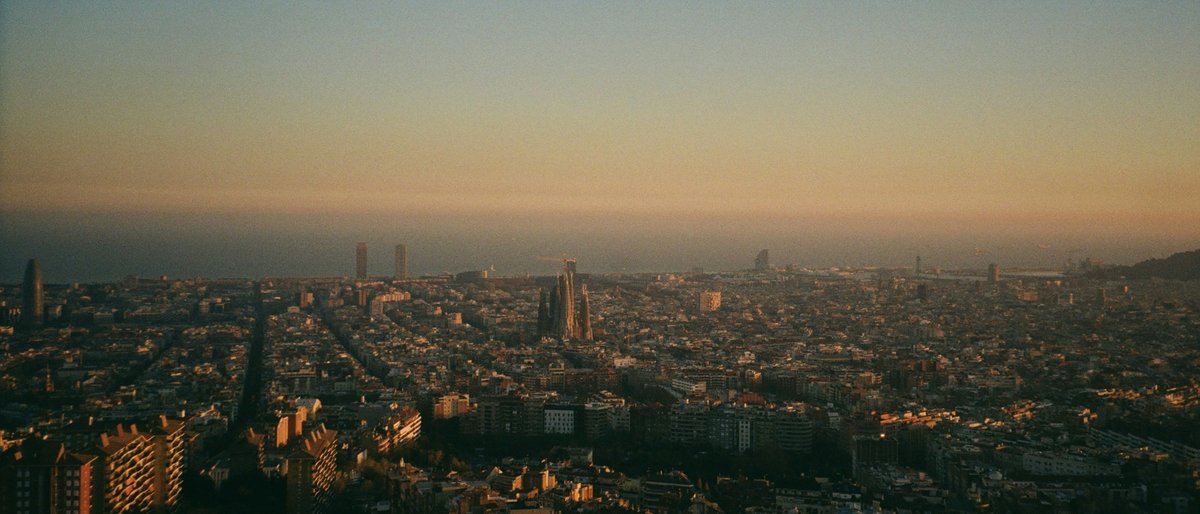
What's the must-see thing in Barcelona?
Sagrada Família, and it's not close. Book the 9am entry online: morning sun fires through the east nave's stained glass and throws shifting blues and greens across the stone floor in a way no photograph prepares you for. Tickets run €26, sell out days ahead. No other building on earth looks like this.
You've seen photos. They don't work. Gaudí designed the interior of Sagrada Família as a stone forest: the columns branch at calculated angles to distribute load the way tree limbs do, and when morning light enters through the east facade's stained glass, the nave floods with colour that drifts across the floor as the sun tracks overhead. The sensation is less 'visiting a cathedral' and more 'standing inside a living thing.' That sounds like exaggeration. It is not.
Book at sagradafamilia.org at least a week ahead. The 9am slot is the one you want: fewer bodies, better light on the east glass, and the stone still holds overnight coolness before Barcelona's afternoon heat settles in. Basic entry is €26 (about $30); the tower-access ticket at €36 adds a lift ride up the Nativity facade with views over Eixample's rigid street grid, but the interior alone justifies the visit. Budget ninety minutes. The gift shop funnels you through on exit: the architecture books are good, skip the keychains.
After Sagrada Família, two things are worth your first 48 hours. Park Güell's monumental zone: the tiled terrace, the mosaic salamander, the colonnaded market hall with its leaning doric columns: needs a €10 timed ticket and is best before 9:30am when the curved stone benches are still cool to sit on and the selfie crowds haven't yet packed the serpentine terrace. Take the L3 metro to Vallcarca and walk downhill to the entrance; the main approach from Carmel hill is steep and miserable in warm weather. The Barri Gòtic is the third pick: the Cathedral of Santa Eulàlia (free entry weekday mornings, €9 afternoons), the narrow Carrer del Bisbe with its neo-Gothic bridge overhead, and Plaça del Rei where Ferdinand and Isabella received Columbus after his first voyage. The neighbourhood gets loud and packed by 11am near Las Ramblas, but step two blocks east toward El Born and the foot traffic drops sharply: you'll find yourself on quieter stone streets with better coffee and half the prices.
A word on La Rambla, since every guidebook mentions it: the pedestrian boulevard runs from Plaça de Catalunya down to the Columbus monument at the port, and it is currently the most pickpocketed stretch in southern Europe. That's not local myth: Barcelona's own police statistics back it up year after year. Walk it once for the plane trees and the old newspaper kiosks, keep your phone in a front zip pocket, and do not sit at any of the tourist-trap restaurants lining either side. The food tends to be microwaved paella at twice what you'd pay three streets over in El Raval or El Born. Mind you, the Boqueria market halfway down La Rambla is still worth a quick pass: the fruit stalls near the entrance are overpriced, but walk to the back counters for a paper cone of fried squid and a glass of cava at Bar Pinotxo. That's a different experience entirely.
The top three
Sagrada Família
Gaudí's unfinished basilica in Eixample. The interior's branching stone columns and colour-shifting stained glass create something no photograph captures accurately. Book the 9am slot at sagradafamilia.org: €26, sells out days ahead. Budget ninety minutes inside.
Park Güell
Gaudí's hillside park above the Gràcia neighbourhood. The monumental zone (€10, timed entry) has the mosaic salamander, serpentine tiled bench, and colonnaded hall. Go before 9:30am when the stone is cool and the crowds thin. Take L3 metro to Vallcarca and walk downhill.
Barri Gòtic
Barcelona's medieval core between Las Ramblas and Via Laietana. Cathedral of Santa Eulàlia, Carrer del Bisbe's overhead bridge, Plaça del Rei. Free to walk; cathedral free weekday mornings. Skip the Rambla-side restaurants and head two blocks east toward El Born for better food at half the price.
Reservations required for at least one of these.
Verified attractions
Sourced from Wikidata and OpenStreetMap: each entry links to its authoritative page.
-
Basilica and Expiatory Church of the Holy Family
churchbasilica under construction since 1882 in Barcelona, Spain
View on Wikidata -
Camp Nou
stadiumfootball stadium in Barcelona, Catalonia, Spain
View on Wikidata -
Park Güell
attractionpublic park system in Barcelona, Spain
View on Wikidata -
Cathedral of the Holy Cross and Saint Eulalia
churchGothic cathedral and seat of the Archbishop of Barcelona, Spain
View on Wikidata -
Plaça de Catalunya
plazahistorical public square in Barcelona, Catalonia, Spain
View on Wikidata -
RCDE Stadium
stadiumStadium in Barcelona, Spain
View on Wikidata -
Casa Vicens
museumfamily residence in Barcelona (Catalonia, Spain), designed by Antoni Gaudí
View on Wikidata -
Palau Güell
palacemansion in Barcelona, Spain, designed by Antoni Gaudi
View on Wikidata -
Museu Nacional d'Art de Catalunya
museumart museum in Barcelona, Catalonia
View on Wikidata -
Basilica of Our Lady of the Sea
churchchurch
View on Wikidata -
Fundació Joan Miró
museummuseum of modern art about Joan Miró located in Barcelona (Spain)
View on Wikidata -
Museu Picasso
museumart museum in Barcelona, Spain
View on Wikidata -
Arc de Triomf
monumenttriumphal arch
View on Wikidata -
MACBA Barcelona Museum of Contemporary Art
museummuseum in Barcelona, Spain
View on Wikidata -
FC Barcelona Museum
museumsports museum in Camp Nou, Barcelona
View on Wikidata -
Gran Teatre del Liceu
theateropera house in Barcelona, Spain
View on Wikidata -
Johan Cruijff Stadium
stadiumStadium in Spain
View on Wikidata -
Parc de la Ciutadella
monumenturban park in Barcelona
View on Wikidata -
Magic Fountain of Montjuïc
monumentfountain in Barcelona, Spain
View on Wikidata -
Barcelona Zoo
zoozoo in Spain
View on Wikidata -
Columbus Monument
monumentmonument in Barcelona
View on Wikidata -
Plaça d'Espanya
plazasquare in Barcelona, Spain
View on Wikidata -
Torre de Collserola
towera telecommunications tower in Barcelona
View on Wikidata -
Aquarium Barcelona
aquariumaquarium located in Port Vell, a harbor in Barcelona, Catalonia, Spain
View on Wikidata -
Montjuïc Communications Tower
towercommunication tower in Barcelona, Spain
View on Wikidata -
Museo de Historia de Barcelona
museumHistory museum in Barcelona, Spain
View on Wikidata -
Terrassa Cathedral
churchchurch building in Terrassa, Spain
View on Wikidata -
Basilica of Our Lady of the Pine Tree
churchcultural property in Barcelona, Spain
View on Wikidata -
Church of Colònia Güell
churchcultural property in Santa Coloma de Cervelló, Spain
View on Wikidata -
National Expiatory Basilica of the Sacred Heart of Jesus
churchchurch in Barcelona, Spain (European Union)
View on Wikidata -
Bellesguard
historic housemanor house
View on Wikidata -
Montjuïc Castle
castlecultural property in Barcelona, Spain (European Union)
View on Wikidata -
Royal Square
plazasquare in Barcelona, Spain
View on Wikidata -
La Monumental
theaterbullring in Barcelona, Spain
View on Wikidata -
Montjuïc Cemetery
cemeterycemetery in Barcelona
View on Wikidata -
Parc del Laberint d'Horta
gardenpark and maze in Barcelona, Spain
View on Wikidata -
CosmoCaixa Barcelona
museumscience museum in Catalonia, Spain
View on Wikidata -
Gaudi House Museum
museumhistoric home museum in Barcelona, Spain
View on Wikidata -
Maritime Museum of Barcelona
museummuseum
View on Wikidata -
plaça del Rei
plazasquare in Barcelona
View on Wikidata
Last verified by automated review (v1.5.J.2) on . What is automated review?