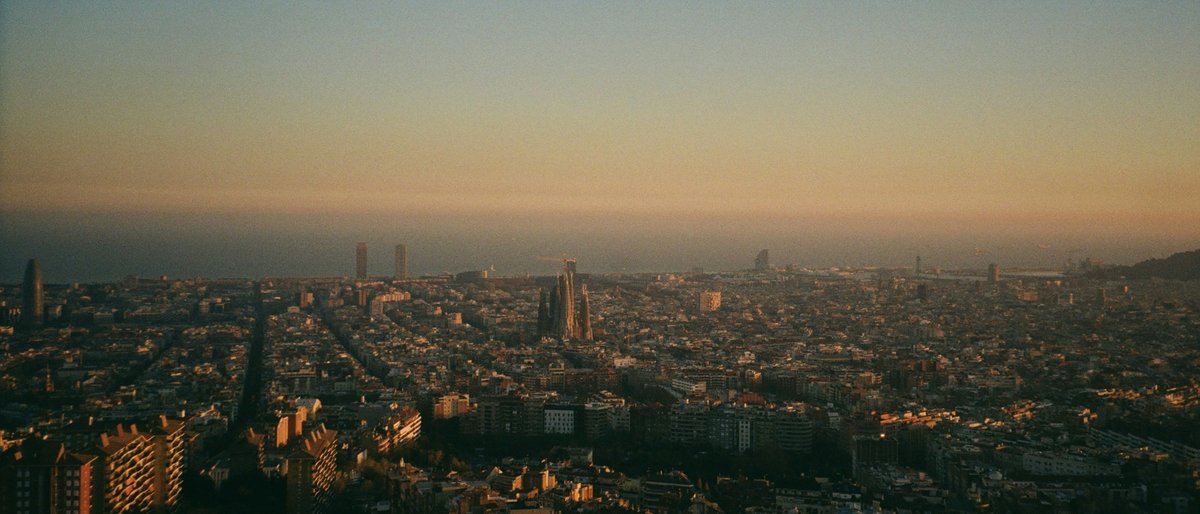
How do I get around Barcelona?
Walk and metro. Barcelona's centre is flat and compact: most first-time destinations sit within a 20-minute walk or one metro transfer. Buy a T-Casual card (11.35€ for 10 rides) at any station machine; it works on metro, bus, tram, and commuter rail in Zone 1. Taxis fill the gaps after midnight.
Book the connection
One search across trains, buses & flights: live times and prices for Barcelona.
The metro does most of the work. TMB runs eight lines that cover every neighbourhood a first-time visitor cares about, and the T-Casual card: 11.35€ for ten trips, about $13.30: is the only ticket worth buying. Load it at any station's touchscreen machine (they do English fine) and it scans on metro, bus, tram, and commuter rail within Zone 1. The lines that matter: L3 green connects Plaça Catalunya, Passeig de Gràcia, and Diagonal; three stations you'll hit constantly. L4 yellow runs to Barceloneta beach and the Born. L1 red gets you to Arc de Triomf and Hospital de Sant Pau near Sagrada Família. One transfer covers almost anywhere. Trains come every three to five minutes, so you never check a schedule. The catch is closing time: midnight Sunday through Thursday, 2 a.m. Fridays, all night Saturdays. That weeknight midnight cutoff bites harder than you'd think: dinner here rarely starts before 9 p.m., and one post-dinner drink puts you past the last train.
Barcelona rewards walking more than most European cities because Ildefons Cerdà's 1859 grid gave the Eixample wide pavements, chamfered corners that open into small plazas at every intersection, and a built-in compass: mountains uphill, sea downhill. Plaça Catalunya to Sagrada Família is about 35 minutes on foot. Gothic Quarter to Barceloneta, maybe 15. You'll feel the shift underfoot when you cross into the Barri Gòtic: smooth granite slabs give way to uneven medieval stone, and the alleys tighten until you could stretch your arms and brush both walls. Bring shoes with grip for those passages. Summer changes everything. From late June through September the pavement throws heat back at you by early afternoon (35°C in the shade, worse at ankle level) and the shaded side of any Eixample boulevard becomes the only tolerable route between noon and five. The plane trees along Rambla de Catalunya and Passeig de Sant Joan throw decent cover. La Rambla is fine for one walk to see it. After that, use the parallel streets: less crowded, fewer pickpockets, better shops.
Taxis are black and yellow, metered, and straight: Barcelona is not a city where you fight for the fare. Flagfall sits around 2.30€ with roughly 1.21€ per kilometre after; a ride from Barceloneta to Gràcia runs 8–12€ depending on traffic. Uber technically operates but dispatches the same licensed taxi fleet, so there is no price edge over flagging one down. The apps worth downloading are Free Now and Cabify. Cabify tends to price a little lower on weekend nights when demand spikes around 2 a.m. near Poble Sec and the Raval. One thing that might surprise you: taxi meters here are honest enough that the app is a convenience, not a survival tool. After midnight Sunday through Thursday, when the metro shuts, a taxi is how you get home. A 3 a.m. ride from the Raval to Gràcia costs about 10€: cheaper than a second round of drinks at most cocktail bars in Sant Antoni.
Skip the hop-on-hop-off bus. The route covers ground you can walk or metro for a tenth of the 30€+ fare, and you'll spend half your time crawling through Eixample traffic watching the same beige apartment blocks slide past at 8 km/h. The exception is Montjuïc: the hill is steep, and while the funicular from Paral·lel metro handles the first pitch, the bus or Telefèric cable car saves a hot uphill slog to the castle and the Miró foundation. Bikes work along the seafront promenade from Barceloneta to the Fòrum, where the path is flat and separated from traffic. Inland, the Eixample bike lanes mix you with delivery scooters doing 40 km/h. It feels less safe than the painted lane suggests. Rent from a shop in Barceloneta for the coast; skip Bicing, which requires an annual resident subscription. One last note: the T-Casual does not work on the Aerobus from the airport. That is a separate 7.75€ ticket: see the airport-to-city guide for the full breakdown.
On-the-ground: metro available · ride-hail apps work.
Primary modes of transit
- Metro
- Walking
- Taxi
- Cabify / Free Now
- Bus
- Bicycle
- Funicular
Barcelona's network by the timetable
Read from the published timetables, not from memory: 12 operators, 121 routes and 3,091 stops within 11 km of the centre.
- Operators, by routes here
- DIREXIS TUSGSAL (39)
- Avanza (20)
- FGC (17)
- Moventis (14)
- Monbus i Julià (10)
- Soler i Sauret (7)
- Moventis (Port) (3)
- TRAMBAIX (3)
- and 4 more
- Routes by mode
- 98 Bus
- 13 Rail
- 5 Tram
- 4 Metro
- 1 Funicular
- Weekday service
- 00:05 to 31:23 (07:23 the next morning)
- Fares in the timetable
- EUR 7.75
- Timetables valid
- 2024-01-01 to 2026-12-31
Read 2026-09-14, version 2026-09-09T13:43:25+02:00_not tagged; 20260914, from 5 feeds:
- TRAM Barcelona Besós (Tranvía Metropolitano Barcelona) (the operator's own local feed, Mobility Database source 1004). Licence: not stated in the catalog; the agency's terms apply.
- Railways of the Generalitat of Catalonia (Ferrocarrils de la Generalitat de Catalunya) (the operator's own local feed, Mobility Database source 1856). Licence
- TRAM Barcelona (Tranvía Metropolitano Barcelona) (the operator's own local feed, Mobility Database source 1003). Licence: not stated in the catalog; the agency's terms apply.
- Àrea Metropolitana de Barcelona (AMB) (the operator's own local feed, Mobility Database source 892). Licence: not stated in the catalog; the agency's terms apply.
- Renfe commuter trains (Cercanias) (the operator's own national feed, Mobility Database source 2653). Licence
Catalogued but not read, so the network may be larger than these counts: Transports Metropolitans de Barcelona (TMB) (could not be fetched).
Popular connections from Barcelona
Lowest fares and fastest times for the most-booked departures, as observed on Omio in August 2025. Live prices vary.
Barcelona to Madrid
Check times & book on Omio →Mode Fare from Fastest Train Most booked from £20.07 2 h 36 min Bus from £21.67 7 h 5 min Flight from £52.75 1 h 25 min Barcelona to Paris
Check times & book on Omio →Mode Fare from Fastest Train from £59.81 6 h 46 min Bus Most booked from £24.69 12 h 15 min Flight from £39.01 1 h 50 min Barcelona to Valencia
Check times & book on Omio →Mode Fare from Fastest Train Most booked from £25.61 2 h 47 min Bus from £30.49 3 h 50 min Flight from £63.03 1 h Barcelona to Seville
Check times & book on Omio →Mode Fare from Fastest Train from £47.41 5 h 33 min Bus from £92.51 14 h Flight Most booked from £32.63 1 h 40 min Barcelona to Málaga
Check times & book on Omio →Mode Fare from Fastest Train from £43.95 6 h Bus from £56.99 15 h Flight Most booked from £33.49 1 h 39 min Barcelona to Zaragoza
Check times & book on Omio →Mode Fare from Fastest Train Most booked from £2.57 1 h 22 min Bus from £4.77 3 h 30 min
Ready to book the connection?
Compare trains, buses & flights to and around Barcelona on Omio: live times & prices in one search.
Compare on Omio →More transport questions
How do I get from the airport to Barcelona?
Take the Aerobus from El Prat (BCN) to Plaça Catalunya: €7.75 ($9), 35 minutes, every 5 to 10 minutes until 1am. Drops you at the top of La Rambla, walking distance to the Barri Gòtic and L'Eixample. After 1am, taxis run a fixed €39 ($46) to anywhere in the city center.
Full answerHow do I get to Barcelona?
Barcelona-El Prat (BCN), 18 km southwest of the city, handles nearly all international traffic. Direct flights run from New York (8 hours, $500–900 round-trip), London (2.5 hours, £60–200 on BA/Vueling/easyJet), and most European capitals via Vueling, which uses BCN as its home base. Girona-Costa Brava (GRO), 103 km north, picks up overflow Ryanair routes.
Full answerWhat are the best day trips from Barcelona?
Montserrat is the default pick: 60 km north-west, under an hour by FGC rack railway from Plaça Espanya, round trip about €22. Girona works better for couples who want to linger over lunch: 38 minutes on the AVE, €12–24 return, and the old Jewish quarter is worth the walk. Sitges is 35 minutes south for a beach day.
Full answerLast verified by automated review (v1.5.J.2) on . What is automated review?