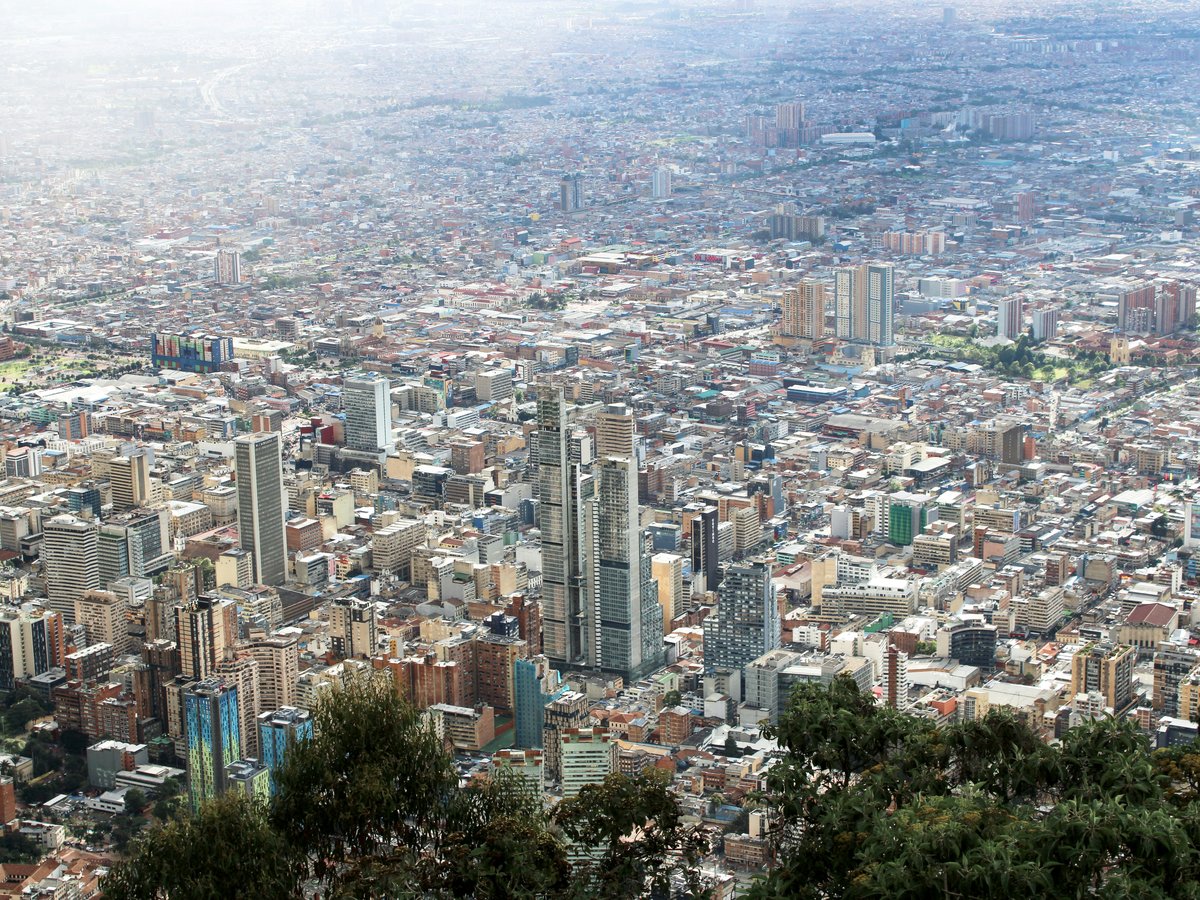
Stay in Bogota in January
87 hotels in the Trip.com pool for Bogota, from US$11 a night.
Opens Trip.com on Fri 1 Jan to Sun 3 Jan 2027; change the dates there.
January is one of Bogota's two driest windows, and that single fact shapes the whole trip. Bogotanos call this stretch verano, their version of summer, though summer at 2,640 meters (8,660 feet) feels nothing like the coast. Mornings are cold enough to see your breath in La Candelaria before 8 AM. Afternoons warm to the low 20s Celsius, comfortable for walking without the rain that turns March through May into a soggy grind. The air smells cleaner in January, drier, with less of the damp-concrete mustiness that the wet months bring.
The first week rides December's holiday wave. New Year's Day empties the streets for family gatherings, and Dia de Reyes on January 6 closes out the festive season with gift exchanges and Masses at the Catedral Primada, which has anchored Plaza de Bolivar since 1807. Firecrackers still pop through neighborhoods like Teusaquillo, and many smaller shops stay shuttered until around January 10. After that first week, the rhythm shifts. Hotel rates come back down. Restaurant queues in Chapinero and La Macarena shorten. The city belongs to the people who live in it again.
Worth noting, Bogota rates 4.2 out of 10 for solo-traveler safety (see the TTDI Solo-Safety Index), so awareness matters in any month. But January rewards that alertness with clear mountain views, dry sidewalks, and full museum schedules. If you're choosing between the rainy shoulder months and this dry spell, the answer is straightforward.
Why visit in January
- One of the 3 driest months in Bogota, with roughly a third of the rainfall that March through May delivers, which means more outdoor time and fewer canceled plans.
- Clear January skies open views of the Cerros Orientales from elevated points like Cerro de Monserrate that cloud cover hides for much of the year.
- Hotel and restaurant prices normalize after the first week as the December holiday surge fades, making mid-to-late January a strong value window.
- Museums, galleries, and theaters run full schedules after the brief holiday closure, with noticeably thinner crowds than the December peak.
Worth knowing
- The first 7-10 days of January still carry peak-season pricing and reduced business hours, so arriving after January 8 gives better value and more open doors.
- Nighttime temperatures drop enough to require a proper jacket. Travelers expecting tropical warmth based on Colombia's latitude are routinely caught off guard.
- January has no signature festival or major calendar event. If a trip-defining celebration matters to you, August's Festival de Verano or December's holiday season deliver more spectacle.
Best for
Think twice if
January sits in Bogota's dry season. Mornings tend to start clear, sometimes with a thin fog that burns off by 9 AM. Afternoon clouds may build, but full downpours are uncommon. When rain does arrive, it typically lasts under an hour. The humidity sits at 77%, which feels different at altitude than at sea level. You'll notice a wide diurnal range, with over 13 degrees Celsius separating early morning from mid-afternoon. The equatorial sun angle is nearly overhead at noon, and UV radiation at this elevation burns faster than the mild air temperature suggests.
Seasonal caution
- UV index at Bogota's altitude is 30-40% stronger than at sea level. Sunburn happens in under 30 minutes on exposed skin, even on overcast afternoons. SPF 50+ sunscreen and a hat are not optional.
- Altitude adjustment affects some visitors in the first 24-48 hours with headaches, shortness of breath, or fatigue. Take it easy on day one, stay hydrated, and skip alcohol until you have acclimatized.
Year-round climate
Averages from the last 5 years.
| Month | Avg high (°C) | Avg low (°C) | Rainfall (mm) |
|---|---|---|---|
| Jan | 21 | 7 | 57 |
| Feb | 21 | 9 | 110 |
| Mar | 20 | 9 | 185 |
| Apr | 20 | 9 | 159 |
| May | 19 | 9 | 131 |
| Jun | 19 | 9 | 106 |
| Jul | 19 | 8 | 62 |
| Aug | 20 | 8 | 46 |
| Sep | 20 | 8 | 52 |
| Oct | 20 | 8 | 110 |
| Nov | 20 | 9 | 149 |
| Dec | 21 | 8 | 64 |
Holidays and festivals in January
Public holidays
- New Year's Day(Año Nuevo)1 January 2027
- Epiphany(Día de los Reyes Magos)11 January 2027
Best things to do in January
Hike Cerro de Monserrate
outdoorThe 3,152-meter (10,341-foot) peak east of the city center offers panoramic views across the Sabana de Bogota. You can hike the switchback trail in about 1.5 hours, take the funicular, or ride the aerial tramway. The summit holds a 17th-century church and a handful of restaurants with heated seating areas.
January's drier air produces some of the year's clearest views from the summit. During the wetter months, clouds roll in by late morning and erase the valley panorama.Booking tipStart before 7 AM on weekends to beat the trail entrance queue and catch the low morning light across the city.
Ride the Ciclovia
outdoorEvery Sunday and public holiday, Bogota closes 127 kilometers (79 miles) of roads to motor vehicles between 7 AM and 2 PM. Cyclists, joggers, and skaters take over major corridors including Carrera Septima. Bike rentals are available along the route near Parque de la 93.
Dry January Sundays let you ride the full circuit without dodging rain. The route passes through Parque Simon Bolivar, where the dry season keeps paths firm and the grass green.Booking tipArrive by 8 AM for the widest selection of rental bikes. Sizes go fast after 10.
Walk the street art circuit in La Candelaria
cultureThe neighborhood's walls carry large-scale murals by Colombian and international artists, concentrated along Calle 26 and the streets between Carrera 2 and Carrera 5. Guided tours run daily and cover the stories behind the pieces, from political commentary to indigenous symbolism.
Dry conditions make the 2-to-3-hour walking route comfortable, and January's low-angle sun brings out pigment in the murals that overhead midday light flattens.Booking tipBook English-language group tours at least 2 days ahead. Weekday departures are smaller and more conversational.
Explore the Museo del Oro
cultureThe museum holds over 34,000 pre-Columbian gold objects and 20,000 stone, ceramic, and textile pieces. The third-floor Ofrenda hall, kept deliberately dark to spotlight the gold, is one of the more striking museum rooms on the continent. Founded in 1968, it expanded into its current building on the north side of Parque Santander in 2008.
Post-holiday crowds thin noticeably after the first week of January. Mid-January weekday mornings offer space to sit with the Muisca raft replica without jostling.Booking tipSundays offer free entry but longer lines. Weekday mornings give the best balance of crowd size and lighting for photography.
Browse the Usaquen Sunday Flea Market
shoppingThe outdoor market fills the streets around Parque de Usaquen with antiques, handmade jewelry, Colombian single-origin coffee, and leather goods every Sunday. Food stalls serve arepas, empanadas, and craft beer from Bogota's growing microbrewery scene. The smell of grilled corn and roasted coffee hangs in the air.
January's dry weather keeps the market fully outdoors and browsable. During the rainy months, vendors retreat under canopies and the selection shrinks.Booking tipArrive before 10 AM for antiques and vintage finds. The jewelry and craft vendors set up later, around 11.
Day trip to the Catedral de Sal in Zipaquira
day_tripAn underground church carved into a working salt mine, 48 kilometers (30 miles) north of Bogota. The journey takes about 90 minutes by bus from the Portal del Norte TransMilenio station. Inside, 14 small chapels line the descent to the main nave, which sits 180 meters (590 feet) below the surface. The air below is cool and still, tasting faintly of mineral.
Dry roads make the drive smoother, and the mine's constant interior temperature of around 14 degrees C feels less jarring when surface conditions are similarly cool.Booking tipBuses from Portal del Norte depart every 15 minutes. Aim for a weekday to dodge the Sunday domestic-tourist crowds.
Attend a performance at Teatro Colon
cultureBogota's national theater, a neoclassical building on Calle 10 in La Candelaria. The 892-seat auditorium hosts opera, ballet, symphonic concerts, and spoken-word performances. Founded in 1892 and restored in 2014, the interior features Italian frescoes, gilded molding, and acoustics that reward a live performance in ways larger modern venues cannot match.
The January season typically opens with classical and contemporary music programming as the city's cultural calendar restarts after the holiday break.Booking tipCheck the online schedule 2 weeks ahead. January performances sell steadily among returning bogotanos eager for the new season.
Visit the Jardin Botanico Jose Celestino Mutis
natureThe 19.5-hectare (48-acre) botanical garden in Teusaquillo holds Colombia's largest collection of highland orchids, along with sections for tropical forest, paramo ecosystem, and medicinal plants. Founded in 1955, it maintains over 5,000 species. The greenhouse air is thick and warm, a sharp contrast to the morning chill outside.
Several orchid species bloom during the dry period, and low rainfall keeps the outdoor trails mud-free. The rose garden and palm collection tend to peak between late December and February.Booking tipWeekday mornings are nearly empty. The guided orchid tour runs twice daily and covers species you would miss walking alone.
What to eat in January
In season: fruit
Mango de azucar
Colombia's small, intensely sweet mango variety reaches peak ripeness between December and February. Street vendors along Carrera Septima sell bags of them peeled and sliced. The flavor is noticeably more concentrated than what reaches export markets.
Lulo
The tart citrus-like fruit, also called naranjilla, peaks in the early months of the year. Bogotanos drink it as fresh juice at nearly every meal, and it shows up as sorbet at heladeria carts around the Usaquen market on Sundays.
On menus now
Changua
A breakfast broth of hot milk, water, poached eggs, and chopped scallions, served in pottery bowls at small fondas. The cold January mornings at altitude make this simple, warming dish feel essential. The texture is thin and silky, nothing like a heavy soup.
What to drink
Canelazo
A warm blend of aguardiente, panela (unrefined cane sugar), and cinnamon, traditionally served during cold evenings and celebrations. January's chilly nights keep vendors pouring it at open-air gatherings across the city. The warmth hits your throat before your stomach.
Festival food
Tamal bogotano
Corn-masa parcels filled with pork, chicken, rice, and vegetables, wrapped in bijao leaves. A holiday staple that families prepare in bulk for December and January. Street vendors and fondas across the city sell them through mid-January. The bogotano version is larger and denser than its tolimense cousin.
Regular events in January
Ano Nuevo (New Year's Day)Free
Public holiday with family gatherings and fireworks over Plaza de Bolivar at midnight. Most businesses close entirely for the day and many stay closed on January 2 as well.
January 1Dia de Reyes (Epiphany)Free
Public holiday marking the end of the Christmas season. Children receive gifts, church services fill venues across the city, and families gather for a final holiday meal. Under Colombia's Ley Emiliani, the public holiday shifts to the following Monday.
January 6 (observed on the nearest Monday)CicloviaFree
Bogota closes 127 kilometers of roads to motor vehicles every Sunday and public holiday, from early morning to early afternoon, for cyclists, runners, skaters, and pedestrians.
Every Sunday, 7 AM to 2 PMBest places this January
Museo Botero
museumFernando Botero's donation of 208 works fills this colonial house that opened as a museum in 2000. The collection includes his own paintings and sculptures alongside pieces by Picasso, Dali, Renoir, and Monet. Free admission year-round. The interior courtyard is worth a few quiet minutes on its own, with stone walls that hold the morning cool.
La CandelariaMuseo Nacional de Colombia
museumColombia's oldest museum, founded in 1823, occupies a former panopticon prison along Carrera Septima. The radial layout and thick stone walls remain visible in the architecture. Collections span pre-Columbian artifacts through contemporary Colombian art, and January's post-holiday lull means you can move through the halls at your own pace.
San DiegoParque Simon Bolivar
parkThe 113-hectare (279-acre) park in the center of the city functions as Bogota's equivalent of Central Park. In the dry season, the lake reflects clear skies and the jogging paths stay firm underfoot. Weekend crowds thin compared to December's holiday weeks, and the grass dries out enough for comfortable picnics.
TeusaquilloMAMBO (Museo de Arte Moderno de Bogota)
museumThe modern art museum, founded in 1955, sits along Calle 24. Rotating exhibitions focus on Colombian and Latin American contemporary artists. January shows tend to open toward the second or third week as curators set up fresh seasonal programming after the break.
San DiegoParque de la 93
parkA compact park surrounded by restaurants and outdoor cafes in the Chico area. January's dry evenings make the terrace seating particularly pleasant, and the post-holiday calm means tables open up without the usual wait.
ChicoCasa de Narino
landmarkThe official residence of Colombia's president, completed in 1906 on the south side of Plaza de Bolivar. The changing of the guard ceremony draws daily onlookers. Interior tours require advance coordination, but the exterior and the surrounding plaza offer a sense of the building's neoclassical scale.
La Candelaria
Your packing checklist
Tick items off as you pack. Your progress saves in this browser.
All packed — have a great trip.
Insider tips
TransMilenio runs on reduced holiday schedules through the first week of January, with longer waits at major stations like Calle 72 and Heroes. Switch to ride-hailing apps during that stretch for reliability.
The fondas near Plaza de la Concordia in La Candelaria serve changua and other breakfast staples at a fraction of what Zona Rosa restaurants charge for the same dish. The portions run larger too.
The Botero Museum and the Gold Museum sit within 2 blocks of each other in La Candelaria. Visiting both in a single morning leaves the afternoon free before any weather shifts.
Mercado de Paloquemao, roughly 10 minutes west of the historic center by taxi, is where restaurant chefs source their produce. The January fruit tables there outclass what tourist-facing juice bars offer, at notably lower cost.
Avoid these mistakes
- Packing for tropical weather because Colombia sits near the equator. The altitude keeps afternoons mild and nights genuinely cold. Shorts and sandals leave you shivering by 6 PM.
- Filling day one with aggressive sightseeing. The altitude affects many visitors with headaches and fatigue for the first 24-48 hours. A gentle start with an indoor museum and an early dinner lets your body adjust.
- Assuming everything reopens on January 2. Smaller shops, family-run restaurants, and neighborhood services commonly stay closed through the Dia de Reyes holiday. Major museums reopen sooner, but the street-level rhythm takes about 10 days to normalize.
- Staying only in La Candelaria and missing the neighborhoods where Bogota's food scene has shifted in recent years. Chapinero Alto, La Macarena's Calle 30, and the Zona G restaurant strip each offer distinct dining cultures that the historic center does not.
Practical tips for January
Book accommodation in Chapinero or Usaquen for better restaurant access and a calmer nighttime atmosphere, especially if arriving after the holiday week. TransMilenio connects most major neighborhoods for a flat fare, but holiday schedules reduce frequency through approximately January 8. The airport taxi queue at El Dorado uses a fixed-rate voucher system from the official desk inside the arrivals hall. Avoid unlicensed cars outside. Bogota rates 6 out of 10 for family friendliness (see the TTDI Family-Friendliness Index), which means it works well with older children but needs more planning for toddlers. January's dry weather opens up the Ciclovia and outdoor markets that make family outings more practical than in the wet months. If you plan to visit the salt cathedral in Zipaquira, go on a weekday. Colombian families fill the site every Sunday. Tipping at restaurants is typically 10%, added to the bill as a voluntary service charge that you can decline. Carry small bills for tips at museums and for street food vendors, who rarely carry change for large denominations.
FAQ
Is January a good time to visit Bogota?
January ranks among Bogota's top 3 months for visitors. The weather is drier and slightly warmer than the annual average, with far less rain than the March-to-May wet season. The first week carries holiday pricing and some closures, but the rest of the month offers cooperative weather, full cultural programming, and moderate prices. It is not the best month if you want a festival-driven trip, but for general sightseeing and outdoor exploration, it is a strong window.
What is the weather like in Bogota in January?
Mild but not warm. Afternoon temperatures feel comfortable for walking in a light layer, while mornings and evenings are cold enough for a proper jacket and scarf. Rain appears on roughly a third of the month's days but passes quickly, usually in the afternoon. The equatorial sun at high altitude burns faster than the moderate air temperature suggests. Layers and sunscreen matter more than any single garment.
Is Bogota crowded in January?
The first week carries spillover from December's holiday season, with Colombian families still on vacation and domestic tourism at elevated levels. By mid-January the city returns to its working rhythm and international tourist density sits at moderate levels. You won't fight for museum entry or restaurant tables after about January 10.
What should I wear in Bogota in January?
Think layers for a wide daily temperature swing. A warm mid-layer like a fleece for early outings, a breathable rain shell for surprise showers, and sturdy walking shoes for cobblestone streets. Shorts are uncommon among locals and impractical for cool evenings. Trousers, a T-shirt, and a sweater cover most of the day.
Is it safe to visit Bogota in January?
The same safety considerations apply in January as in any other month. Stay aware of your surroundings, keep electronics out of sight, and use official taxis or ride-hailing apps rather than flagging cars on the street. La Candelaria requires more vigilance after dark. Chapinero, Usaquen, and the Zona T area feel more relaxed for evening activities. January's drier weather keeps more people on the streets in the evenings, which tends to improve the general sense of safety in commercial areas.
Things to Do in Bogota in January
 Free cancellation
 Bogota Zipaquira Salt Cathedral Private Tour + Lunch
Day trip: 7 hours, free cancellation.
via Viator Free cancellation
 Bogota: Small Group Tour Zipaquira Salt Cathedral with Pickup
Day trip: 8 hours, free cancellation.
via Viator Free cancellation
 From Hotel - Guatavita and Zipaquirá - Route of the 7 Treasures
Day trip: free cancellation.
via Viator Free cancellation
 Colombia’s Tallest Waterfalls: La Chorrera Hike
Outdoor experience: free cancellation.
via Viator Free cancellation
 Cheapest ZIPAQUIRA & GUATAVITA LAKE Visit 5 Top Sights w/PICKUP
Outdoor experience: free cancellation.
via Viator Free cancellation
 Group Tour Zipaquirá salt cathedral gastro tour
Day trip: free cancellation.
via ViatorLast verified by automated review (v1.7.2) on . What is automated review?