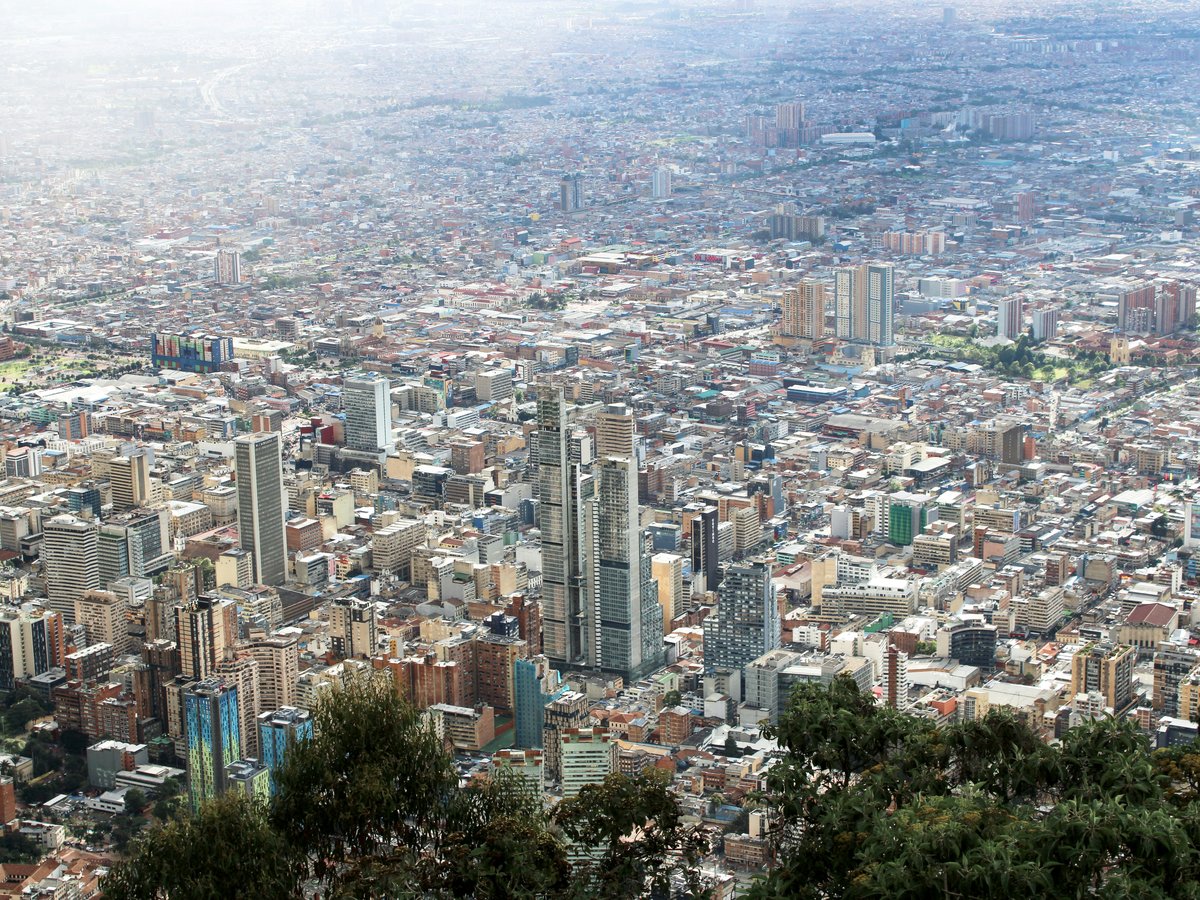
How do I get around Bogota?
TransMilenio, Bogota's bus rapid transit, handles the heavy lifting. Ridehail apps like Uber, InDriver, and DiDi fill the gaps with upfront pricing. Walking works in La Candelaria and the Zona T area, but the 2,640-meter altitude slows first-timers down. No metro yet. Load a TuLlave card at any TransMilenio station for single-ride fares under $1 USD.
TransMilenio is the spine. It opened in 2000, runs on dedicated lanes down major corridors like Avenida Caracas, Calle 80, and the Autopista Norte, and moves about 2.4 million riders per day. Buy a TuLlave card at any station kiosk for 5,000 COP, roughly $1.60 USD, and load rides at 2,950 COP each. The stations smell like diesel and warm concrete. Mind you, rush hour between 7:00 and 9:00 AM packs 160 riders into each articulated bus. You will feel every one of them. If you can travel outside those windows, TransMilenio covers the 12 km from Portal del Norte to Calle 72 in about 25 minutes. The SITP feeder buses connect neighborhoods the trunk lines miss, same TuLlave card, same fare.
Uber, InDriver, and DiDi all operate in Bogota, and all three show the fare before you confirm. That matters because yellow taxis can still run a rigged meter or take the scenic detour through Autopista Sur when Carrera Séptima was the direct route. InDriver lets the passenger propose a fare, which tends to land 10-20% below Uber on short trips. That said, legitimate yellow cabs are cheap. Flagfall sits around 4,500 COP, and a 20-minute ride from Zona T to La Candelaria costs roughly 15,000 to 18,000 COP, about $5-6 USD. Ask the driver for the meter, 'taxímetro, por favor,' or use the apps. After midnight, stick to ridehail. Bogota rates 4.2 out of 10 on solo-traveler safety (see the TTDI Solo-Safety Index), and the streets around Chapinero and La Candelaria get quieter than you'd expect for a city of 8 million.
La Candelaria is walkable in the way a hill town is walkable. You can cover the 800 meters from Plaza de Bolívar to the Botero Museum in 10 minutes, then wonder why your lungs burn. Bogota sits at 2,640 meters above sea level, and the thin air catches sea-level visitors on their first steep block. Drink at least 2 liters a day. Walk slowly the first 48 hours. The sidewalks in the historic center are narrow, cracked, and often interrupted by vendors selling arepas con queso for 3,000 COP, the smell of grilling corn mixing with car exhaust. North of Calle 72, the pedestrian infrastructure improves. The tree-lined blocks around Parque de la 93 and Zona T feel closer to a European city grid. Bogota has no operating metro. Line 1 is under construction along Avenida Caracas, with a target opening around 2028.
Sunday changes Bogota. From 7:00 AM to 2:00 PM, the city closes about 128 km of roads to cars and opens them to cyclists, runners, and dog walkers on the Ciclovía. The route runs the length of Carrera Séptima, through Parque Simón Bolívar, and out toward Usaquén. Renting a bike near Parque Nacional costs about 10,000 to 15,000 COP for three hours. Without the traffic, you hear the city differently. Cumbia from portable speakers, the thud of a street soccer ball, vendors calling out 'jugo de lulo' from their carts. Worth noting, the Ciclovía is not staged for tourists. It has run every Sunday since 1974. On weekdays, Bogota also has about 550 km of permanent bike lanes called ciclorrutas, though their condition varies block by block.
On-the-ground: ride-hail apps work.
Primary modes of transit
- TransMilenio
- Uber / InDriver / DiDi
- Yellow taxi
- Walking
- SITP feeder bus
- Ciclovía bike rental
Bogota's network by the timetable
Read from the published timetables, not from memory: 7 operators, 1,024 routes and 8,157 stops within 40 km of the centre.
- Operators, by routes here
- Zonal-Urbano (717)
- Transmilenio-Alimentadores (158)
- Transmilenio-Troncal (109)
- Transmilenio-Dual (26)
- Zonal-Complementario (9)
- Zonal-Especial (4)
- TransMiCable (1)
- Routes by mode
- 1,023 Bus
- 1 Aerial lift
- Weekday service
- 02:20 to 26:05 (02:05 the next morning)
- Fares in the timetable
- COP 3550.00
- Timetables valid
- 2026-01-01 to 2026-12-31
Read 2026-09-16, version 1, from one feed:
- SIMUR Bogota (the operator's own local feed, Mobility Database source 3358). Licence
More transport questions
How do I get from the airport to Bogota?
From El Dorado (BOG), take an official yellow taxi from the regulated stand outside arrivals. Fares run 25,000 to 40,000 COP ($8 to $13) on a fixed-rate card, not a meter, so there is no haggling. Budget 30 to 60 minutes depending on destination and traffic. TransMilenio is the budget option at under $1 but impractical with luggage.
Full answerHow do I get to Bogota?
Bogota's El Dorado International Airport (BOG) receives direct nonstop service from 8+ US cities, Madrid, and Amsterdam. Round-trip fares from the US run $300-600; from Europe, €500-900. Avianca, LATAM, JetBlue, and Spirit handle most North American routes. Low-season fares between February and May drop 30-40% below December peaks.
Full answerWhat are the best day trips from Bogota?
Zipaquirá's Salt Cathedral, 49 km north, is the strongest single-day trip from Bogota. The weekend Turistren train from Estación de la Sabana costs 60,000 COP round trip. Laguna de Guatavita fills a full day with a 2 km guided hike at 3,100 meters and the El Dorado backstory. Villa de Leyva is better as an overnight.
Full answerLast verified by automated review (v1.7.2) on . What is automated review?