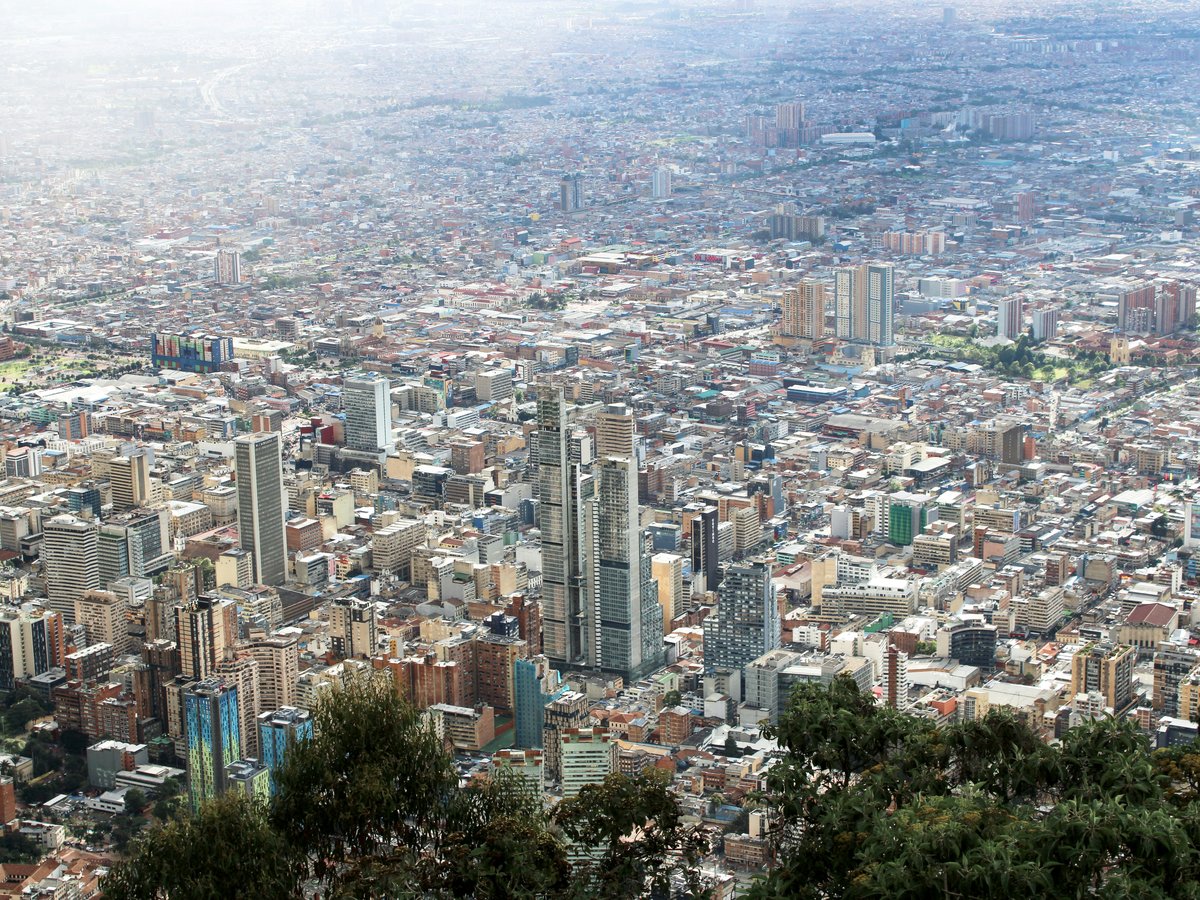
Bogota sits at 2,640 meters on the Sabana de Bogotá, pressed against the Cerros Orientales that rise another 800 meters to the east. On a mid-September evening, the sky hangs overcast at 13°C with 83% humidity, and a damp chill settles over Chapinero and Usaquén by 6 PM. The smell of eucalyptus from the Eastern Hills drifts into the neighborhoods below on still mornings. Two drier stretches, December through February and June through August, open the best windows for trail days, though Bogotanos head out in every season. Cloud forests, páramo grasslands, and high-altitude reservoirs sit within a 2-hour drive of the city center. On Sundays, Bogota closes over 120 kilometers of roads for the Ciclovía, a tradition since 1974 that turns the Carrera Séptima and connecting arterials into one long bike lane. Roughly 1.5 million people fill those lanes on a busy Sunday. Where Bogota's apartment blocks end along the eastern edge, the mountains begin. The páramo above 3,500 meters sits a 90-minute drive from Plaza de Bolívar.
Outdoor activities
-
Ciclovía Sunday Cycling
Every Sunday and most public holidays, Bogota converts its major arterials into car-free lanes for cyclists, runners, and skaters. The route runs from Usaquén in the north down through the Centro Histórico, and the city operates it from 7 AM to 2 PM. Bike rentals along the route run about 15,000 to 30,000 COP, roughly $5 to $10 USD at current exchange rates. The pace tends to be relaxed, with families on cruisers mixing alongside serious road cyclists in full kit. Food vendors set up on the main stretches selling empanadas and fresh-squeezed orange juice for 3,000 COP a cup.
- Difficulty
- Easy
- Duration
- 1 to 4 hours
- Best season
- Year-round, though the drier months tend to be more comfortable for long rides
-
Rock Climbing at Suesca
The sandstone cliffs along the Río Bogotá near the town of Suesca sit about 60 kilometers north of the capital. The main crag stretches roughly 3 kilometers with over 400 established routes, from 5.6 to 5.13 on the Yosemite Decimal Scale. Several guiding outfits in Suesca rent gear and lead half-day or full-day sessions, typically for 120,000 to 200,000 COP per person including equipment. The sandstone faces are coarse-grained with good friction when dry. You can take a Transmilenio bus to the Portal del Norte and then a regional bus to Suesca, which takes about 90 minutes total.
- Difficulty
- Beginner to advanced (5.6 to 5.13 YDS)
- Duration
- Full day including transport
- Best season
- December through March and June through August, when rain is less likely
-
Tandem Paragliding near Sopó
The launch site near Sopó, about 40 kilometers north of Bogota on the road toward Guatavita, sits on a hillside overlooking the Sabana. Tandem flights with a certified pilot typically last 15 to 25 minutes and cost between 180,000 and 280,000 COP. The view drops you over green dairy pastures and the small towns of the northern plateau. Wind conditions tend to be best in the morning hours before noon. Several operators pick up from meeting points in Bogota and include transport in the price. Minimum age at most operators is 5 years old, and the weight limit is typically 100 kilograms.
- Difficulty
- None for tandem flights, no prior experience needed
- Duration
- 3 to 4 hours including transport from Bogota
- Best season
- November through March, when morning thermals are more consistent
-
Mountain Biking in the Cerros Orientales
Trails on the eastern hillsides above the city run through eucalyptus and pine plantations between 2,700 and 3,200 meters. Several routes start near the La Calera road and the Patios area, with descents that drop 400 to 600 meters over rocky singletrack. The red clay soil on the Cerros turns to slick mud after Bogota's afternoon showers, so tire choice matters. A full-suspension rental in Bogota runs about 80,000 to 150,000 COP for a half day. Guided rides are available from shops in Chapinero and Usaquén. The eucalyptus canopy keeps the trails shaded and cool, and you'll hear the wind through the trees more than traffic once you're 10 minutes above the road.
- Difficulty
- Moderate to difficult
- Duration
- 3 to 5 hours
- Best season
- Drier months for firmer trail surfaces
-
Trail Running on the Eastern Hills
Several maintained paths climb the Cerros above neighborhoods like La Macarena and northern Chapinero, with vertical gains of 200 to 500 meters over distances of 3 to 8 kilometers. The trails are a mix of packed dirt, stone steps, and occasional muddy stretches. The altitude above 2,800 meters humbles even fit runners who have not acclimatized. Local running clubs organize group runs on Saturday mornings, often starting from Parque Nacional before heading uphill. The morning air up in the hills smells of damp earth and eucalyptus, and the city noise fades fast above the first ridge. Elevation gains on the shorter loops average about 250 meters.
- Difficulty
- Easy to moderate depending on route
- Duration
- 1 to 3 hours
- Best season
- Year-round, with firmer footing during the drier stretches
-
Horseback Riding on the Sabana de Bogotá
The flat grasslands and gentle hills of the Sabana north of the city, around towns like Zipaquirá and Cajicá, are traditional horse country. Several ranches offer 2 to 4-hour rides through green pastures and along unpaved rural roads. Prices range from 60,000 to 120,000 COP per person for a guided ride. The cool temperatures around 14 to 18°C make for comfortable riding without overheating. Some operators combine a ride with a visit to the salt cathedral in Zipaquirá, which adds about 3 hours and a separate entrance fee of roughly 70,000 COP for adults.
- Difficulty
- Easy, suitable for beginners
- Duration
- 2 to 4 hours for the ride, longer with add-ons
- Best season
- Year-round, with drier months preferred for unpaved roads
Day hikes
-
Cerro de Monserrate
The most popular day hike in Bogota climbs from the base station near La Candelaria to the summit shrine at 3,152 meters. The trail gains about 500 meters of elevation over roughly 2.5 kilometers of stone steps and packed-dirt switchbacks. The steps are steep and uneven in places, and the altitude makes the climb feel harder than the distance suggests. The summit has a church, restaurants, and views across the entire Sabana. On clear mornings you can see the snow line on Nevado del Tolima to the west. The trail opens at 5 AM on weekdays and draws a steady stream of Bogotanos doing their morning exercise. A funicular and cable car also run to the top for about 25,000 COP round trip if you prefer to hike one way and ride the other.
- Difficulty
- Moderate, strenuous at altitude for unacclimatized visitors
- Duration
- 1.5 to 3 hours round trip on foot
- Best season
- Year-round, with clearest summit views from December through February
-
Quebrada La Vieja
A popular morning trail that follows a creek into the Cerros Orientales above the Rosales neighborhood. The path starts near Calle 71 and climbs through mixed forest along the stream, gaining about 300 meters over roughly 2 kilometers. The city opens this trail only from about 5:30 AM to around 9 AM for security reasons, so it is strictly an early-morning outing. The trail is well-trodden and muddy in places after rain. The canopy closes in quickly as you climb, and the sound of the creek keeps you company the whole way. It is a shorter and less crowded alternative to the Monserrate climb, though the early closure means you need to be moving by 6 AM at the latest for a comfortable pace.
- Difficulty
- Easy to moderate
- Duration
- 1 to 2 hours round trip
- Best season
- Year-round, though the trail can be slippery during the October and November rainy peak
-
Chicaque Natural Park
A cloud forest reserve about 30 kilometers southwest of Bogota, near the town of San Antonio del Tequendama. Several trails loop through the park, ranging from short 1-kilometer walks to longer 5 to 7-kilometer routes that descend into the Tequendama canyon. The forest is thick, mossy, and dripping wet even on days without rain. Orchids and bromeliads hang from the branches. The temperature inside the forest drops a few degrees below the surrounding area, and the air feels noticeably heavy with moisture. A canopy walkway suspended about 20 meters above the forest floor gives a perspective into the treetops. The park charges an entrance fee of around 22,000 COP for adults. Overnight rates at the park lodge start around 200,000 COP per person including meals.
- Difficulty
- Easy to moderate, with some steep sections on the longer trails
- Duration
- 3 to 6 hours depending on trail choice
- Best season
- December through March for drier conditions, though the cloud forest is perpetually damp
-
Chingaza National Park
A high-altitude páramo ecosystem about 65 kilometers east of Bogota, with entry points near the town of La Calera. The park sits between 3,200 and 4,000 meters, and the landscape is open grassland dotted with frailejón plants, the shaggy rosette columns endemic to Andean páramo. The Lagunas de Siecha trail passes three glacial lakes at roughly 3,700 meters. The wind up here is cold and persistent, and fog rolls in without warning. The park limits daily visitors, and reservations through the national parks website are typically required. A 4x4 vehicle or arranged transport is needed for the final stretch of unpaved road to the trailhead. Average temperatures in the park range from 4 to 10°C.
- Difficulty
- Moderate to difficult due to high altitude, cold, and exposed terrain
- Duration
- Full day including 2-hour drive each way
- Best season
- December through February for the clearest skies and driest trails
-
La Chorrera Waterfall near Choachí
La Chorrera is a cascading waterfall about 40 kilometers east of Bogota, near the town of Choachí in Cundinamarca. The total drop across its tiers reaches roughly 590 meters, which likely makes it one of the tallest waterfalls in Colombia. The hike from the parking area to the base of the main falls takes about 90 minutes on a well-marked trail through farmland and then cloud forest. The trail is muddy in the wet season but not technically difficult. At the falls, the mist is thick enough to soak your clothes within minutes, so a rain jacket earns its weight. The area is managed by a local community organization that charges an entrance fee of about 18,000 COP. The unpaved section of the road from La Calera to Choachí takes about 45 minutes to cover.
- Difficulty
- Easy to moderate
- Duration
- 4 to 6 hours including the drive from Bogota
- Best season
- Best water flow during and after the rainy months, March through May and September through November
Water activities
-
Kayaking on Embalse de Tominé
The Tominé reservoir sits about 60 kilometers northeast of Bogota, near the town of Guatavita, at roughly 2,600 meters elevation. The lake is large enough for sailing, windsurfing, and extended kayak trips along the shoreline. Kayak rentals are available from operators along the shore for about 30,000 to 60,000 COP per hour. The water is cold, around 14 to 16°C year-round, and tends to get choppy when afternoon winds pick up after 11 AM. Morning paddles before 10 AM are calmer and less crowded. The drive from Bogota takes about 90 minutes via the road to Guatavita. Several lakeside restaurants serve grilled trout pulled from the reservoir for about 35,000 COP with sides.
- Difficulty
- Easy in calm morning conditions, moderate in afternoon wind
- Duration
- Half day to full day including transport
- Best season
- December through March for the driest weather and best visibility
-
Sailing and Windsurfing on Embalse de Tominé
The same reservoir that draws kayakers also gets windsurfers and small-boat sailors on weekend afternoons when thermal winds develop across the water. Gear rental for windsurfing starts at about 80,000 COP for a half-day session, and small sailboat rentals are available through clubs on the western shore. The afternoon gusts can reach 20 to 30 km/h, which suits intermediate windsurfers but can challenge beginners. Water temperature stays around 15°C, so a wetsuit or thick rash guard helps. Pack SPF 50 lip balm and wraparound sunglasses for the reflected glare.
- Difficulty
- Intermediate to advanced for windsurfing, beginner-friendly for casual sailing
- Duration
- Half day
- Best season
- September through November for the most consistent afternoon thermal winds
-
Trout Fishing at Embalse del Neusa
The Neusa reservoir lies about 70 kilometers north of Bogota, near the municipality of Tausa in Cundinamarca. The Colombian government stocked the lake with rainbow trout decades ago, and fishing is permitted with a rod from the shore or from rented rowboats. Boat rentals run about 40,000 to 60,000 COP for a half day. The surrounding landscape is open páramo and pine plantations at roughly 3,000 meters, and the air up here bites. Mornings are foggy and cold, often dropping to 4 or 5°C before sunrise. The reservoir also has camping areas along the shoreline, and the combination of fishing and overnight camping makes it a popular weekend trip for Bogota families. The drive from Bogota takes about 2 hours, mostly on paved roads through the northern Sabana.
- Difficulty
- Easy
- Duration
- Half day to overnight
- Best season
- Year-round, with the driest conditions from December through February
-
Kayaking and Paddleboarding on Embalse de Sisga
A smaller and quieter reservoir than Tominé, Sisga sits about 50 kilometers north of Bogota near the town of Chocontá. The lake is popular with stand-up paddleboarders and recreational kayakers because it tends to stay calmer than its larger neighbor. Kayak and SUP rentals are available from waterfront vendors for about 25,000 to 50,000 COP per hour. The surrounding hills are grassy and open, and the shoreline has picnic areas with grills that fill up on Sundays. The water is cold but swimmable on warmer afternoons. Regional buses from the Portal del Norte Transmilenio station reach Chocontá, making Sisga accessible without a car in about 2 hours.
- Difficulty
- Easy
- Duration
- Half day including transport
- Best season
- Year-round, with calmer water and clearer skies during the drier months
Parks & gardens
-
Parque Simón Bolívar
FreeThe largest urban park in Bogota covers about 113 hectares in the center-west of the city, between the Salitre and Teusaquillo neighborhoods. The park has a central lake where you can rent pedal boats for about 10,000 COP per half hour. Wide paths circle the lake and wind through open lawns. On weekends, families spread out with picnics, and you'll hear cumbia and vallenato from portable speakers competing across the grass. The park hosts the annual Rock al Parque festival, typically in late June or early July, which draws over 300,000 people across 3 days. A running loop of about 4 kilometers circles the main grounds.
Highlights: Central lake with pedal boats, the 4-kilometer running loop, and the Rock al Parque festival venue
-
Jardín Botánico José Celestino Mutis
Founded in 1955, the Bogotá Botanical Garden spreads across 20 hectares in the Engativá locality, near the Simón Bolívar park complex. The garden holds around 5,000 plant species organized by Colombian climate zones, from lowland tropical to high-altitude páramo. The tropical greenhouse is warm and humid inside, a sharp contrast to the cool air outside. The rose garden and the native orchid collection are the standout sections. Weekday mornings are the quietest time to visit. Admission for international visitors is around 10,000 COP.
Highlights: Tropical greenhouse, native orchid collection, rose garden, and themed zones representing Colombia's climate regions
-
Parque Nacional Enrique Olaya Herrera
FreeOne of Bogota's oldest public parks, Parque Nacional sits at the base of the Cerros Orientales in the La Macarena neighborhood. The park covers roughly 280 hectares when the forested slopes above are included, though the flat, accessible section is considerably smaller. Tall eucalyptus and pine trees shade the walking paths, and the ground is soft with fallen needles. A public pool operates on the grounds, generally open from Tuesday through Sunday. Joggers and dog walkers fill the paths in the early morning hours. The park sits between Carrera 7 and the hillside, with its north entrance near Calle 39.
Highlights: Mature eucalyptus and pine canopy, public swimming pool, and direct trailhead access to the Cerros Orientales
-
Parque El Virrey
FreeA narrow linear park that runs along the canal in northern Bogota's Chicó neighborhood, between Calles 85 and 93. The park stretches about 1.2 kilometers and is popular with runners, especially before 7 AM when the humidity is still high and the air smells of wet grass. Food trucks and coffee carts set up on weekends near the Calle 93 end. The trees along the canal are a mix of native species and imported ornamentals, and the park connects to a broader network of bike paths heading toward Parque de la 93.
Highlights: Morning running route, weekend food vendors near Calle 93, and the canal-side bike path linking northern green spaces
-
Humedal Juan Amarillo
FreeBogota's largest urban wetland covers roughly 220 hectares in the Suba and Engativá localities in the northwest of the city. The site is a critical habitat for resident and migratory bird species, with over 100 species recorded in surveys. A boardwalk and dirt paths loop through sections of the wetland, and early mornings bring the sounds of moorhens and southern lapwings calling from the reeds. The wetland is still recovering from decades of urban encroachment, so some sections are more manicured than others. Birdwatchers will want binoculars and patience during the October through March migration window when species from North America pass through.
Highlights: Over 100 bird species, boardwalk paths through reed beds, and active ecological restoration underway
-
Parque de la 93
FreeA small but well-maintained park at Calle 93 with Carrera 13 in the Chicó Norte neighborhood. The park is surrounded by restaurants, cafes, and bars, and it serves more as a social gathering point than a green retreat. Trees provide shade over the central lawn area, and on Friday evenings the surrounding streets fill with after-work crowds. The park itself is compact, maybe 3 or 4 blocks long, but its position in the Chicó Norte district's dining core makes it a natural starting point before dinner at one of the 50-plus restaurants on surrounding blocks.
Highlights: Central location in the Zona Rosa dining district, tree-shaded lawn, and proximity to dozens of surrounding restaurants
Practical tips
- Altitude acclimatization
- At Bogota's elevation, oxygen levels are about 27% lower than at sea level. Give yourself at least 48 hours after arriving before attempting strenuous hikes or trail runs. Headaches, shortness of breath, and fatigue are common on the first day or two. Drink more water than usual, avoid heavy meals, and consider carrying coca tea bags, which are sold at grocery stores throughout the city for about 3,000 COP per box.
- Sun protection at altitude
- The UV index in Bogota regularly reaches 11 to 13 on the WHO scale, even on overcast days. The city's proximity to the equator and its elevation combine to create intense solar exposure. Wear SPF 50 sunscreen, reapply every 2 hours, and bring a wide-brimmed hat and UV-rated sunglasses. Sunburn can happen in under 30 minutes of unprotected exposure above 3,000 meters.
- Water and hydration
- Bogota's tap water is safe to drink and is sourced from the Chingaza watershed east of the city. Carry at least 1.5 liters per person for any hike over 2 hours. The cool air masks dehydration because you do not feel as thirsty, but the altitude and low humidity dry you out faster than expected. Electrolyte packets are available at any Éxito or D1 store for about 2,000 COP each.
- Gear and layering
- Bogota's weather shifts fast. Morning sun can give way to cold rain within an hour, especially between March and May. Carry a packable rain jacket on every outing. Temperatures on exposed trails above 3,500 meters can drop below 5°C with wind chill. Dress in moisture-wicking layers rather than cotton. Good trail shoes with grip are essential on the clay-heavy paths of the Cerros Orientales, which turn slick after rain. Outdoor gear shops in Chapinero, particularly along Carrera 13 between Calles 53 and 60, stock local and imported brands at prices lower than North American retail.
- Trail conditions and personal safety
- Most trails in the Cerros Orientales have fixed opening hours, typically 5 or 5:30 AM to early or mid-morning, and are patrolled by city security. Stick to official trails and marked paths. Hike in groups when possible, and leave valuables locked in your accommodation. The solo-traveler safety score for Bogota is 4.2 out of 10 (see the TTDI Solo-Safety Index), so extra awareness is warranted on less-trafficked paths. Carry a charged phone with the Colombian emergency number 123 saved.
- Transport to trailheads
- For day trips to parks like Chicaque or Chingaza or the reservoirs, a rental car or arranged transport is the most practical option. Car rental agencies in Bogota charge from about 120,000 COP per day for a compact. The app-based services InDriver and DiDi are widely used and often cheaper than formal taxis for out-of-town trips. Agree on a round-trip fare before departing. For Suesca and the northern reservoirs, regional buses leave from the Portal del Norte Transmilenio station. For more details on local transit, the Wikivoyage Bogota article covers getting around the city.
FAQ
Is it safe to hike alone in the hills above Bogota?
The main trails like Monserrate and Quebrada La Vieja are patrolled during their official opening hours, and the steady stream of Bogotanos exercising makes them feel safe. Less-trafficked paths in the Cerros Orientales are better done in groups of 3 or more. Avoid carrying visible jewelry or expensive gear, and keep your phone in an interior pocket. As a general rule, stay on official trails during posted hours and head back before the closure time.
What is the best time of year for outdoor activities in Bogota?
Bogota's clearest days cluster in two windows each year, with late December through early March and mid-June through mid-August typically seeing the least rain. Trail conditions on the Cerros are firmest during these periods. Outside of those stretches, mornings are still often clear, and afternoon showers rarely last more than 2 hours. If you carry a rain jacket and start before 8 AM, every month works.
Do I need to be in good shape to hike Monserrate?
Monserrate is a legitimate climb at altitude, not a casual stroll. Even reasonably fit people find themselves winded on the stone steps if they have not acclimatized for a couple of days. Plan for a slower pace than you would expect at sea level. Bring water, wear layers, and do not be embarrassed to stop frequently. The funicular and cable car offer a no-hike option for the summit views, or you can ride up and walk down, which is easier on the lungs. Mornings before 7 AM are the least crowded time on the trail.
Can I swim in the reservoirs near Bogota?
Swimming is generally discouraged at reservoirs like Tominé and Neusa because they serve as part of the regional water supply. Some sections of the Tominé shoreline see waders on warm weekends, but the water temperature discourages much more than a quick dip. There are no lifeguards. Within Bogota, the pool at Parque Nacional is the most accessible public option. The thermal springs at Paipa in Boyacá, about 4 hours north by road, offer warm mineral pools if you want to make a day trip of it.
What should I wear for the Sunday Ciclovía?
Comfortable athletic clothes and closed-toe shoes are all you need. The temperature on Sunday mornings in Bogota hovers between 10 and 17°C depending on the season and time of day. A light jacket or long-sleeved shirt is useful for early starts, but you will likely warm up within the first 20 minutes of pedaling. Sunscreen is essential even under clouds. If you are renting a bike, most shops include a helmet, though the quality varies. Your own cycling gloves and a water bottle make the ride more comfortable over distances of 10 kilometers or more.
Outdoor experiences in Bogota
 Free cancellation
 Colombia’s Tallest Waterfalls: La Chorrera Hike
Outdoor experience: free cancellation.
via Viator Free cancellation
 Cheapest ZIPAQUIRA & GUATAVITA LAKE Visit 5 Top Sights w/PICKUP
Outdoor experience: free cancellation.
via Viator Free cancellation
 Hike to Colombia's Tallest Waterfall: La Chorrera & El Chiflón
Outdoor experience: 8 hours, free cancellation.
via ViatorLast verified by automated review (v1.7.2) on . What is automated review?