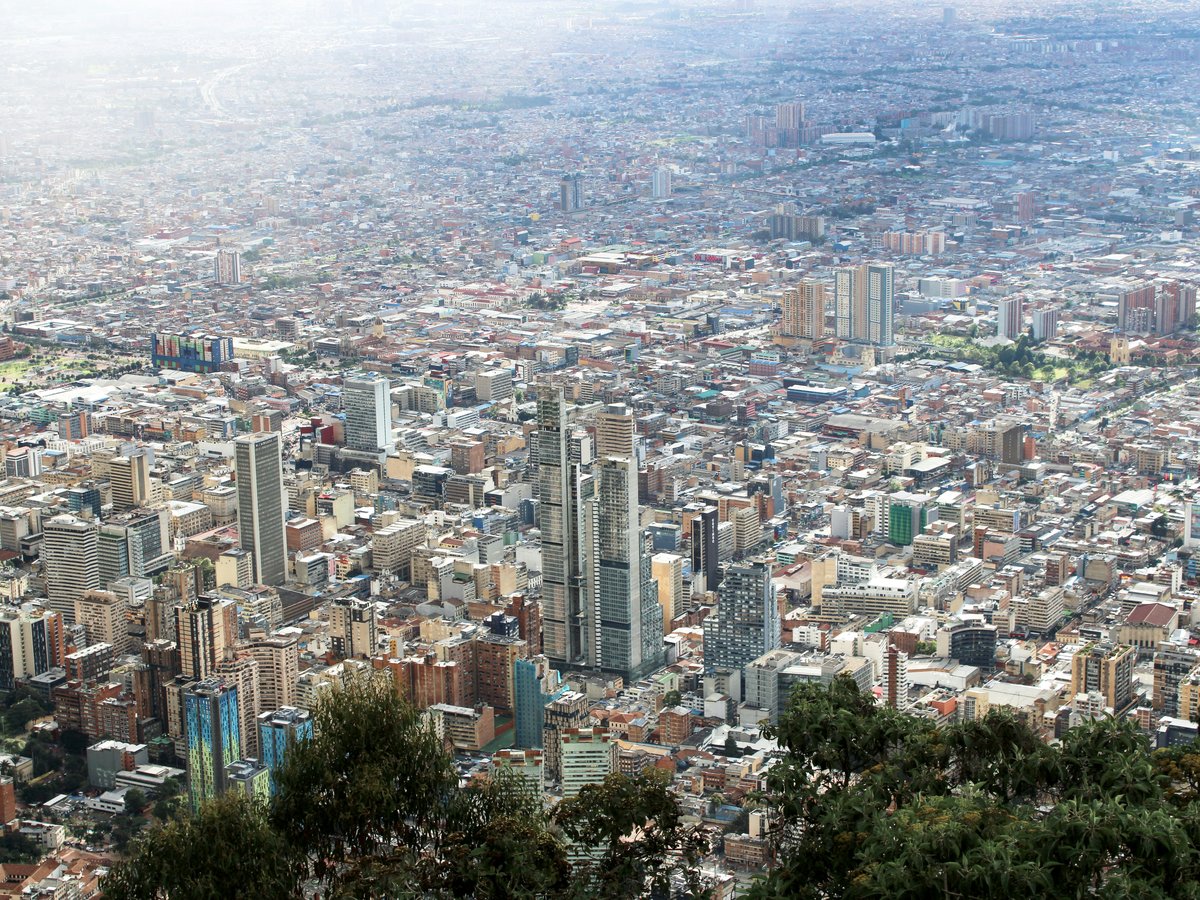
Bogota sits at 2,640 meters in the Eastern Cordillera, where temperatures currently hover around 13°C. The Colombian capital keeps several premier museums permanently free, a tradition shaped by the Banco de la República's cultural mandate. Three of those institutions stand within four blocks of each other in La Candelaria, the colonial quarter. Every Sunday, the city closes roughly 127 kilometers of roadway for Ciclovía, which has run since 1974. Between the open-door museums, a string of publicly funded concert festivals, and parks spread across the city's 20 localidades, the capital tends to deliver more zero-cost culture per block than most South American cities. Mind you, the altitude keeps walking comfortable through September, when lowland cities like Cartagena approach 32°C.
Free attractions
-
Museo del Oro
The Banco de la República founded this pre-Columbian archaeology museum in 1968. Over 34,000 gold pieces from the Muisca, Quimbaya, and Calima cultures fill three floors of displays. Free on Sundays. On other days, adult admission runs a few thousand COP. The Sala de la Ofrenda on the top floor dims the lights and surrounds visitors with illuminated gold on every wall.
La CandelariaMuseum -
Museo Botero
Fernando Botero donated 208 works to the Banco de la República, and the museum opened around that collection in 2000. It has been free every day since. The ground floor holds 123 of Botero's oversized figures. Upstairs, international pieces by Picasso, Monet, and Dalí fill quieter galleries. The building itself is a restored colonial house on Calle 11, and the interior courtyard smells of damp stone on rainy afternoons.
La CandelariaMuseum -
Casa de Moneda
Colombia's colonial mint occupies a 17th-century building beside the Museo Botero. Exhibits trace the country's monetary history from pre-Columbian barter goods through Spanish colonial coinage to modern pesos. Free every day. The two museums share the same Banco de la República compound, so combining them takes under an hour.
La CandelariaMuseum -
Plaza de Bolívar
Bogota's main square dates to the city's 16th-century colonial founding. The Catedral Primada anchors the eastern edge, the Palacio de Justicia sits on the northern side, and the Capitolio Nacional fills the southern face. Pigeons outnumber people most mornings. Free and open at all hours.
La CandelariaLandmark -
Catedral Primada de Bogotá
The current neoclassical structure was completed in 1807, though a chapel has occupied this site since the 1530s. Inside, paintings attributed to Gregorio Vásquez de Arce y Ceballos line several side chapels. The ceiling height and cool stone walls create a noticeable drop in temperature from the street. Free to enter outside of mass times.
La CandelariaChurch -
Parque Simón Bolívar
Bogota's largest urban park covers about 113 hectares near the geographic center of the city. An artificial lake fills the middle, and runners circle it on a crushed-gravel path that crunches underfoot. The main stage on the eastern edge hosts the annual 'al Parque' concert series. Free and open daily.
TeusaquilloPark -
Parque Nacional Enrique Olaya Herrera
This park extends along the western face of the Cerros Orientales, northeast of La Candelaria. Eucalyptus groves shade the upper paths, and the sharp scent of the trees intensifies after a rain shower. A running track and basketball courts occupy the southern end. Free and open daily, though the northeastern sections feel less safe after dark.
Santa FePark -
Cerro de Monserrate
The Sendero Peatonal to the summit gains about 500 meters of elevation over 2.3 kilometers. The trail is free to hike, though the funicular and teleférico charge for the ride up. Most hikers start before 7:00 AM, when morning mist still clings to the hillside and the city below has not yet disappeared into haze. From the summit at 3,152 meters, the view stretches across the entire sabana on clear days.
La Candelaria (trailhead)Viewpoint -
Museo Nacional de Colombia
Founded in 1823, this is the oldest museum in Colombia and one of the oldest in the Americas. The building is a former prison known as the Panóptico, designed by Danish-born architect Thomas Reed. Collections run from pre-Columbian artifacts through Colombian independence-era paintings to contemporary art. Free on Sundays.
San DiegoMuseum -
Parque de la 93
A tree-lined square at the intersection of Calle 93 and Carrera 11a in the Chicó neighborhood. Office workers fill the benches at lunch, and families take over on weekends. The park itself costs nothing. Seasonal holiday markets appear in the square through December.
ChicóPark
Free activities
-
Walking La Candelaria
La Candelaria's colonial streets run on a rough grid between Calles 7 and 13, from Carrera 1 east to Carrera 10. The route passes Teatro Colón, a neoclassical theater that opened in 1892, and dozens of student-run cafes with coffee scenting the sidewalk on Carrera 2. Morning light hits the painted facades best between 8:00 and 10:00 AM.
La CandelariaWalking route -
Street Art Along Calle 26 and La Candelaria
Bogota's street art scene gained official backing after the 2011 death of 16-year-old artist Diego Felipe Becerra during a police encounter. The district government decriminalized public murals, and major walls along Calle 26 and Carrera 3 through La Candelaria now carry commissioned works alongside independent pieces. No cost to view. Several guided walks operate on a tips-only model.
La Candelaria and CentroStreet art -
Ciclovía
The city's Sunday and holiday road closures turn major avenues into car-free corridors for cyclists, runners, and skaters. Routes run from the center through neighborhoods like Chapinero and Teusaquillo, with entry points along most main roads. No registration, no cost.
CitywideCycling and recreation -
Mercado de las Pulgas de Usaquén
Every Sunday, the streets around Parque de Usaquén fill with craft vendors, antique sellers, and food stalls. The smell of arepas and grilled corn drifts through the stalls from late morning on. Browsing costs nothing.
UsaquénMarket -
Browsing Plaza de Mercado de Paloquemao
One of Bogota's largest wholesale markets fills a block-sized hall near Avenida Calle 19 and Carrera 25. The flower section is best early in the morning, when overnight deliveries from the Eastern Plains have piled the stalls high. The fruit stands offer samples, and the fragrance of fresh-cut tropical flowers carries across the building. Browsing is free.
PaloquemaoMarket -
Casa de Nariño Exterior
The official presidential residence was completed in 1906, built on the birthplace of independence leader Antonio Nariño. Free guided tours of the interior have been available by advance reservation during some administrations, though access varies with the political calendar. The neoclassical facade on Carrera 8 is visible without any booking.
La CandelariaLandmark
Free events
-
Rock al Parque
Annually, typically June or JulyColombia's largest free rock festival takes over the main stage at Parque Simón Bolívar for three days, typically in late June or early July. The lineup mixes Colombian rock, metal, and punk acts with international headliners. The event started in 1995 and is organized by the city's Instituto Distrital de las Artes. No ticket or registration required.
Parque Simón Bolívar -
Jazz al Parque
Annually, typically August to OctoberTwo days of free jazz performances, typically falling between August and October. Sets range from Latin jazz to bebop and experimental fusion. Part of the broader 'al Parque' festival series organized by Idartes, with the same no-ticket policy as its rock counterpart.
Parque Simón Bolívar -
Salsa al Parque
Annually, typically August or SeptemberA free weekend of salsa, cumbia, and tropical music that tends to land between August and September. Live orchestras play alongside smaller combos, and the crowd dances on the grass of Parque Simón Bolívar. The sound of brass and timbales carries to the surrounding streets.
Parque Simón Bolívar -
Festival Iberoamericano de Teatro de Bogotá
Biennial, typically March or April in even-numbered yearsOne of the world's largest theater festivals, typically held in even-numbered years during March or April. The event has run since 1988 and brings companies from across Latin America, Spain, and beyond. Many street performances and outdoor shows are free, though indoor marquee productions sell tickets. Free programming tends to cluster in the plazas of La Candelaria.
La Candelaria and various venues
Timing Your Visit Around the Free Calendar
Sunday stacks the best of Bogota's zero-cost calendar into a single day. The museums that normally charge a few thousand pesos open for free, the Usaquén flea market sets up by mid-morning, and the weekly road closures make the city navigable by bike. If your schedule allows only one full day of free exploring, Sunday is the obvious pick. On weekday mornings, you can hear your own footsteps in the Botero galleries, which offer a quieter pace at the permanently free Banco de la República compound between 10:00 AM and noon. The 'al Parque' festival season runs loosely from June through October, so travelers in that window might catch a major concert.
Staying Safe While Exploring for Free
Bogota's solo-traveler safety score sits at 4.2 out of 10 (see the TTDI Solo-Safety Index), reflecting real concerns about petty theft in certain neighborhoods after dark. That said, the free attractions in this guide cluster in well-trafficked parts of La Candelaria, Usaquén, and the major parks. After about 6:00 PM, avoid the eastern hillside streets and the less-patrolled sections of Parque Nacional on foot. The TransMilenio bus system connects most of these zones for a modest fare and is worth the cost when crossing between neighborhoods after dark. Keep your phone in an inside pocket, particularly on the TransMilenio during the 5:00 to 7:00 PM rush.
Sources
For broader orientation on arriving in Bogota, neighborhoods, and logistics, see the Wikivoyage Bogota article at https://en.wikivoyage.org/wiki/Bogota. Museum and gallery details are covered at https://en.wikivoyage.org/wiki/Bogota#See. Safety guidance is at https://en.wikivoyage.org/wiki/Bogota#Stay_safe. Local transit options, including TransMilenio routes, are detailed at https://en.wikivoyage.org/wiki/Bogota#Get_around. Food and drink recommendations beyond the free markets above can be found at https://en.wikivoyage.org/wiki/Bogota#Eat and https://en.wikivoyage.org/wiki/Bogota#Drink. Practical information on money, language, and internet access is at https://en.wikivoyage.org/wiki/Bogota#Cope. Arrival details by air and road are at https://en.wikivoyage.org/wiki/Bogota#Get_in.
FAQ
What is the best day of the week for free activities in Bogota?
Sunday. The Ciclovía road closures, the Usaquén flea market, and waived museum admissions all converge on the same day, making it the strongest single option for a zero-budget outing.
Is Bogota family-friendly on a zero budget?
Bogota scores 6 out of 10 for family friendliness (see the TTDI Family-Friendliness Index). The large parks, free museums, and weekly road closures keep children entertained at no cost. The altitude might fatigue younger kids on long walking days, so pace your itinerary and carry water. The Banco de la República museums sometimes run weekend workshops for children.
Is Bogota welcoming for LGBTQ+ travelers?
The city scores 7.5 out of 10 for LGBTQ+ friendliness (sourced from TTDI's editorial rubric). Colombia legalized same-sex marriage nationwide in 2016, and Bogota's Chapinero neighborhood has been the center of LGBTQ+ social life for decades. The free attractions and public parks are welcoming regardless of orientation. Chapinero lies about 15 minutes by TransMilenio from La Candelaria.
Can digital nomads work from free spaces in Bogota?
The city scores 7.8 out of 10 for digital-nomad suitability (sourced from TTDI's editorial rubric). The Bibliored public library network offers free Wi-Fi and workspaces across multiple locations. Biblioteca Virgilio Barco, near Parque Simón Bolívar, was designed by architect Rogelio Salmona and tends to be quieter than the cafes in Chapinero on weekday mornings. Free public Wi-Fi also covers parts of the TransMilenio system and some parks.
Do I need to speak Spanish to enjoy the free attractions?
Most free museums in Bogota offer signage in both Spanish and English, particularly the Banco de la República institutions. Street markets and public parks require no language at all. For the 'al Parque' festivals, between-set announcements are in Spanish, but the performances need no translation. A few common phrases go a long way at Paloquemao or the Usaquén market.
How much does getting between free attractions cost?
Most free museums and plazas in La Candelaria sit within a 10-minute walk of each other. For longer crosstown trips, a single TransMilenio ride costs about 2,950 COP. At the current rate of roughly 3,092 COP to 1 USD, that works out to under a dollar. On Sundays, the Ciclovía routes let you bike between many of these areas at no charge.
Last verified by automated review (v1.7.2) on . What is automated review?