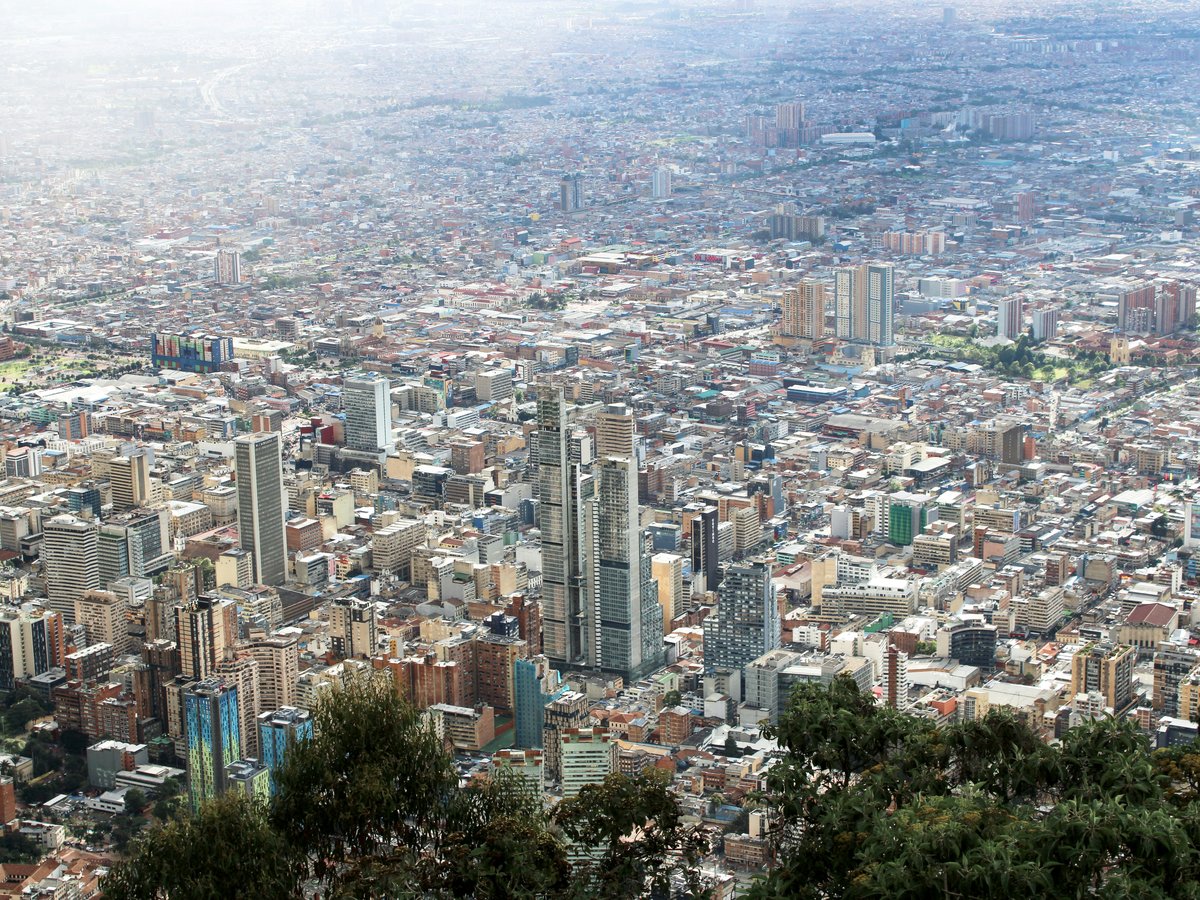
What's the must-see thing in Bogota?
The Gold Museum on Calle 16 in La Candelaria. Its third-floor vault goes dark, then the lights rise on thousands of pre-Columbian gold objects and the room turns amber. Free on Sundays, under $2 on weekdays. No reservation needed. Go before 11am to avoid school groups.
The Museo del Oro sits at Calle 16 #5-41, two blocks east of Parque Santander in La Candelaria. It opened in 1968 and now holds roughly 55,000 pre-Columbian gold objects across three floors. The ground floor, 6 rooms of context panels on pre-Columbian trade networks, is skippable. The second floor has Quimbaya and Muisca ceremonial pieces behind glass, cold to the touch if you lean close, with the faint metallic smell of old display cases. Floor three holds the Ofrenda Room. It seats about 30 people in darkness, then the lights rise slowly on a cylindrical vault of gold, and the walls turn warm amber. The whole sequence takes 8 minutes. Weekday admission runs 6,000 COP, roughly $2 USD at current rates. Sundays are free, which means the school groups arrive by 10am and the Ofrenda wait stretches to 40 minutes. A Tuesday or Wednesday morning around 9am gives you the vault nearly alone.
Plaza de Bolívar sits 4 blocks south, a 7-minute walk downhill on Carrera 7. The square is large, wind-swept at 2,640 metres above sea level, and cooler than you expect. September temperatures in Bogotá settle around 15°C by late afternoon, with humidity near 77%, so a packable rain jacket earns its weight before noon. The Primary Cathedral of Bogotá fills the east side, dating to 1807. Step inside for 5 minutes. The nave is dim, the stone floor cold through thin shoes, and the incense reaches you from the entrance. Across the square, Casa de Nariño is the presidential residence (built 1906), visible but not open without a prior request through the Presidencia website. The cathedral is the priority on this square. That said, the square's real value is orientation. Stand at its centre and face east. The Cerros Orientales mountain wall rises directly ahead. That ridge is the compass that keeps you from getting turned around in La Candelaria's grid.
The Botero Museum on Calle 11 opened in 2000 when Fernando Botero donated 208 works, 123 of his own and 85 by artists including Picasso, Dalí, and Monet. Free entry, every day. The building is a converted colonial house with thick whitewashed walls that stay cool inside even when the afternoon sun breaks through Bogotá's cloud cover. You'll hear your footsteps on the wooden floors in the quieter back rooms. The Botero originals fill the ground level. The international collection sits upstairs. Most visitors spend 45 minutes. The gift shop sells small prints for 15,000 to 40,000 COP. Worth noting, the museum connects internally to the Banco de la República Art Collection next door, a second free museum that most first-timers walk right past. Together the two fill about 90 minutes.
Skip Monserrate on your first day. The 3,152-metre peak above La Candelaria looks tempting from the plaza. The funicular queue runs 60 to 90 minutes on weekends. The altitude hits harder at the summit than you expect, and the view is mostly grey urban spread. Save it for day two or three once your lungs have adjusted. Mind you, the cable car is faster than the funicular when both operate. The Colombian National Museum on Carrera 7, founded in 1823 in a former prison, is solid but not a first-day priority. Its 20,000 pieces spread thin across too many rooms. Teatro Colón on Calle 10, dating to 1892, is worth entering only if you catch a performance. The interior seats 900 and the ceiling murals are the draw, but the lobby alone does not justify a visit.
Bogotá's solo-traveler safety scores 4.2 out of 10 (see the TTDI Solo-Safety Index), so keep your phone in a front pocket and don't pull it out on the street in La Candelaria after dark. The neighbourhood empties fast after 7pm. For your first day, start at the Gold Museum by 9am, walk south to the cathedral, then loop west to the Botero Museum. That circuit takes about 4 hours at a comfortable pace with a coffee stop at Juan Valdez on Carrera 7, where a tinto costs 4,500 COP. The Bogotá Botanical Garden, founded in 1955, sits in Engativá on the west side and is better saved for a day when you have the TransMilenio figured out.
The top three
Gold Museum (Museo del Oro)
The Ofrenda Room on the third floor, where pre-Columbian gold fills a darkened cylindrical vault and the walls glow amber when the lights rise, is unlike any other museum experience in the Americas. Under $2 on weekdays, free Sundays, no reservation.
Plaza de Bolívar and the Primary Cathedral
The city's geographic and historical anchor, with a cathedral dating to 1807 whose dim stone nave and heavy incense hit you physically. The mountain-framed square orients every other walk in La Candelaria.
Botero Museum
208 works donated by Fernando Botero in 2000, including pieces by Picasso and Dalí. Free every day, connects internally to the Banco de la República collection next door. Ninety minutes covers both.
Verified attractions
Sourced from Wikidata and OpenStreetMap: each entry links to its authoritative page.
-
Gold Museum
museumpre-Columbian archaeology museum in Bogota, Colombia
View on Wikidata -
Estadio El Campín
stadiumfootball stadium
View on Wikidata -
Primary Cathedral of Bogotá
churchnational monument of Colombia
View on Wikidata -
Colombian National Museum
museumnational museum
View on Wikidata -
Plaza de Bolívar
plazamain square of the city of Bogota, capital of Colombia
View on Wikidata -
Casa de Nariño
historic houseofficial residence and office of the President of Colombia
View on Wikidata -
Botero Museum
museummuseum in Bogota, Colombia
View on Wikidata -
Bogotá Museum of Modern Art
museummuseum in Colombia
View on Wikidata -
BD Bacatá
attractionmixed-use in Bogotá, Colombia
View on Wikidata -
Bogotá Botanical Garden
museumbotanical garden
View on Wikidata -
Central Cemetery of Bogotá
cemeterynational monument of Colombia
View on Wikidata -
Museo Casa de Moneda
museumColombian currency museum based in the city of Bogotá
View on Wikidata -
Teatro Colón
theatertheatre in Bogtoá, Colombia
View on Wikidata -
Bogotá Colombia Temple
churchtemple of the LDS church
View on Wikidata -
93 Park
parkpark in Bogotá, Colombia
View on Wikidata -
Basílica del Sagrado Corazón de Jesús, Bogotá
churchchurch building in Bogotá, Colombia
View on Wikidata -
Monserrate Sanctuary
churchchurch
View on Wikidata -
Santamaría Bullring
theaternational monument of Colombia
View on Wikidata -
Simon Bolivar Park
gardenpark in Bogotá
View on Wikidata -
Cathedral of St. James Apostle
churchCathedral of Fontibon Diocese
View on Wikidata -
Museum of Colonial Art
museumart museum in Bogota, Colombia
View on Wikidata -
Planetarium of Bogotá
museumscience museum, Planetarium in Bogotá, Colombia
View on Wikidata -
Catedral San Juan Bautista de la Estrada
churchchurch in Engativá, Colombia
View on Wikidata -
International Charismatic Mission Church
churchchurch in Bogotá, Colombia
View on Wikidata -
Parque El Virrey
parkpark in Bogotá, Colombia
View on Wikidata -
Castillo Marroquín
historic househouse in Chía, Colombia
View on Wikidata -
Iglesia de Nuestra Señora de Lourdes
churchchurch building in Bogotá, Colombia
View on Wikidata -
Luis Carlos Galán Velodrome
stadiumvelodrome in Bogotá, Colombia
View on Wikidata -
Maloka Museum
museuminteractive museum of sciences at Bogotá, Colombia
View on Wikidata -
Museo de la Independencia Casa del Florero
museumnational monument of Colombia
View on Wikidata -
Museum of Contemporary Art of Bogotá
museumcontemporary art museum in Bogotá
View on Wikidata -
Alfonso López Pumarejo Stadium
stadiumnational monument of Colombia
View on Wikidata -
Basílica de Nuestra Señora de las Mercedes, Chinchiná
churchView on Wikidata -
Cathedral of Jesus Christ Our Peace
churchColombian catholic church cathedral
View on Wikidata -
Church of Our Lady of Carmen, Bogota
churchnational monument of Colombia
View on Wikidata -
Church of San Francisco
churchchurch in Bogota, Colombia
View on Wikidata -
Claustro de San Agustín
museumnational monument of Colombia
View on Wikidata -
Colombian Military Museum
museumView on Wikidata -
Iglesia de Nuestra Señora de las Nieves, Bogotá
churchchurch building in Bogotá, Colombia
View on Wikidata -
Iglesia de Santa Bárbara
churchnational monument of Colombia
View on Wikidata
Last verified by automated review (v1.7.2) on . What is automated review?