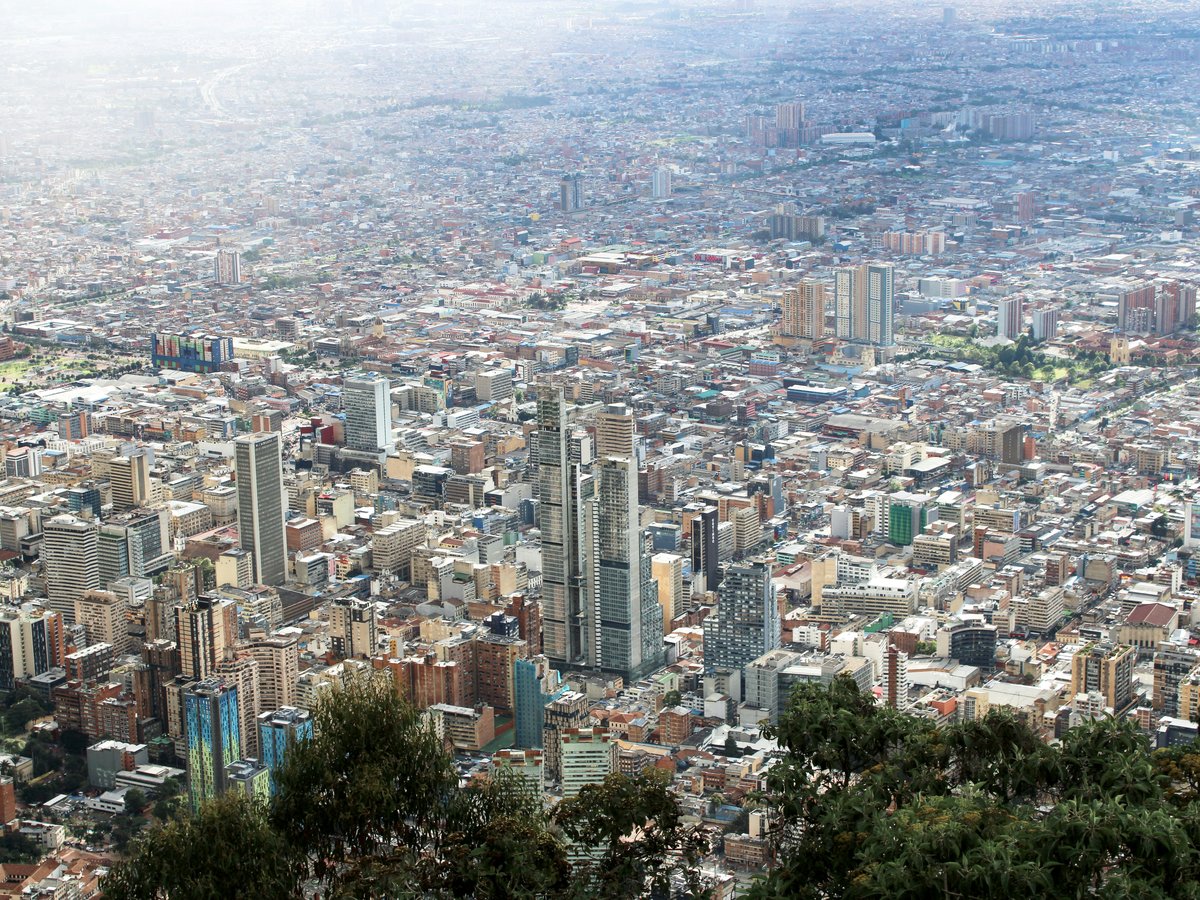
Bogota sits at 2,640 meters in the Eastern Cordillera, and its shopping culture follows a north-south axis that mirrors the city's economic geography. Northern neighborhoods from Chapinero through Usaquén hold the modern malls, designer boutiques, and specialty coffee roasters. The colonial core around La Candelaria concentrates emerald dealers, artisan workshops, and market stalls that predate the Gold Museum's 1968 opening by generations. Colombia produces somewhere between 70 and 90 percent of the world's emeralds, and Bogota is where most of that supply gets cut, graded, and sold. The city is also the strongest place in the country to buy single-origin beans, with roasters sourcing from Huila, Nariño, and Tolima at prices that look low against international standards. Mochila bags woven by Wayúu communities from La Guajira show up at nearly every market, though the gap between a mass-produced tourist piece and an authentic hand-woven bag can run from 30,000 COP to over 400,000 COP. The peso sits near 3,092 to the dollar as of September 2026. Locally made leather goods, woven textiles, and artisan ceramics carry price tags that tend to surprise visitors used to paying North American or European rates for comparable handwork.
Shopping districts
-
Usaquén
mid-range to highUsaquén occupies the far north of Bogota, centered on a colonial-era plaza near Calle 119 and Carrera 6a. The Hacienda Santa Bárbara complex anchors the area's retail behind restored 19th-century walls and terra-cotta tile roofs. Smaller galleries, leather workshops, and independent Colombian fashion labels line the cobblestone blocks between Carrera 5 and Carrera 7. On Sundays the neighborhood fills with several hundred vendors and food stalls for the weekly flea market. During the rest of the week, you'll find designer labels alongside home goods stores selling artisan ceramics and hand-loomed textiles from the highland departments.
Best for: Designer boutiques, artisan home goods, weekend browsing
-
Zona T and Zona Rosa
luxuryThe Zona T takes its name from the T-shaped pedestrian area where Calle 82 meets Carrera 12a. Centro Comercial Andino and Atlantis Plaza anchor the strip with international labels alongside high-end Colombian fashion. The surrounding blocks of the Zona Rosa hold restaurants, cocktail bars, and clubs that keep foot traffic going well past midnight on Fridays and Saturdays. Mind you, this is the most expensive retail zone in Bogota. A pair of locally made leather boots at a Zona T boutique might cost twice what the same quality runs in Chapinero, a few kilometers south.
Best for: International fashion brands, luxury Colombian designers, nightlife-adjacent browsing
-
La Candelaria
budget to mid-rangeLa Candelaria is the colonial heart of Bogota, and most visitors pass through while walking between Plaza de Bolívar and the Botero Museum, which opened in 2000. The emerald trade clusters along Avenida Jiménez and the side streets near Carrera 6, where dozens of dealers display loose stones and finished jewelry behind glass cases in dedicated trading buildings. The smell of fresh tinto from corner vendors fills the narrow streets around Calle 11. Established shops provide certificates of authenticity, but be cautious with street sellers, as synthetic and low-grade stones are common here. Beyond emeralds, the district's souvenir stalls carry handmade leather journals, pre-Columbian replica pottery, and woven goods at prices that tend to run below what the northern shopping districts charge.
Best for: Emeralds, artisan crafts, souvenirs, pre-Columbian replicas
-
San Victorino
budgetSan Victorino sits west of La Candelaria around the plaza that shares its name, near the crossing of Calle 10 and Carrera 10. This is where working-class Bogotanos buy clothes, shoes, and household goods at wholesale-adjacent prices. Thousands of small stalls pack the surrounding blocks with jeans, sneakers, bedding, and kitchenware. Crowds are thick, especially on Saturdays. Keep your belongings close, as Bogota's solo-traveler safety score sits at 4.2 out of 10 (see the TTDI Solo-Safety Index). That said, residents from the city's southern neighborhoods shop here daily, and the prices are the lowest you'll find in any formal retail setting in the capital.
Best for: Wholesale clothing, shoes, household goods at the lowest prices in the city
-
Chapinero
mid-rangeChapinero stretches along Carrera 7 and Carrera 13 between roughly Calle 45 and Calle 72, and the shopping character shifts block by block. The lower section near Calle 53 has a middle-class commercial feel, with clothing and shoe stores alongside the Galerías mall. Further north, Chapinero Alto and Quinta Camacho tilt toward independent fashion, vintage record shops, and secondhand bookstores. The Chapinero Alto blocks draw a younger, creative crowd. You'll find Colombian indie designers who sell nowhere else, small-batch leather goods, and vinyl stores stocking cumbia and vallenato deep cuts from the 1970s. Chapinero is also the center of Bogota's LGBTQ+ community, with a friendliness score of 7.5 out of 10 (sourced from TTDI's editorial rubric). Prices run moderate here, below what you'd see in the Zona T but above what you'd pay in San Victorino.
Best for: Independent fashion, vintage vinyl, bookstores, creative and LGBTQ+-friendly scene
Markets
-
Mercado de las Pulgas de Usaquén
flea and artisanThe Usaquén flea market takes over the streets around Parque de Usaquén every Sunday. Vendors sell antiques, handmade jewelry, leather bags, artisan soaps, and secondhand curiosities. You'll find Wayúu mochilas, hammocks from San Jacinto in Bolívar department, and hand-carved wooden utensils from the coffee region. Food stalls serve arepas de choclo, empanadas, and fresh fruit juices between the craft vendors. The quality of goods tends to be higher here than at most tourist-facing stalls in the colonial center. Prices are negotiable, especially after 3 PM when vendors start packing up.
Sundays, roughly 9 AM to 5 PM
-
Plaza de Mercado de Paloquemao
food and flowersPaloquemao is Bogota's largest food market, occupying a full city block near Calle 19 and Carrera 25. It opens before dawn, with the widest selection of tropical fruit between 5 and 8 AM. Beyond the familiar mango and papaya, you'll find lulo, guanábana, granadilla, mangostino, and curuba that rarely reach export markets. The flower section sells Colombian roses and orchids at wholesale rates. A dozen long-stem roses can go for around 10,000 COP. The cooked-food court in the back serves tamales tolimenses, sancocho, and ceviche de camarón. A full lunch plate typically costs under 15,000 COP.
Daily, best selection before 8 AM
-
Plaza de Mercado La Perseverancia
foodLa Perseverancia market sits in the neighborhood of the same name, east of the Colombian National Museum. It's smaller and quieter than the city's main food hall, which makes it easier to walk through without feeling overwhelmed. The vendors serve the surrounding residential area, not tourists. You'll hear cumbia and salsa from portable speakers while browsing. The food section sells home-cooked almuerzo corriente for well under restaurant prices in the colonial center. The produce stalls stock highland tubers like cubios, rubas, and ibias that rarely appear outside Colombia's Andean departments.
Daily, busiest mornings through early afternoon
-
Pasaje Rivas
artisan and craftsThis covered commercial passage sits on Calle 10 near Carrera 10 in La Candelaria and has been operating as a craft market since the early 20th century. The narrow corridors are packed with small stalls selling handmade baskets, wooden kitchen implements, ruanas from the Boyacá highlands, sombreros vueltiaos from the Caribbean coast departments, and pre-Columbian replica figurines. Vendors here sell at near-wholesale margins, so prices tend to run noticeably lower than in the tourist-facing shops closer to the colonial center's main square. Worth noting, the atmosphere is chaotic and enclosed, but the concentration of traditional Colombian crafts is hard to match anywhere else in the city.
Monday to Saturday, roughly 8 AM to 5 PM
Souvenirs worth bringing home
Colombian emeralds remain the most iconic purchase, but they require homework. Each stone is graded on color, clarity, and cut, and reputable Bogota dealers provide laboratory certificates that you should always insist on. Loose emeralds start around 200,000 COP for small, lower-clarity pieces and climb into the millions for top-grade specimens. Mochila bags from Wayúu weavers are the second most recognizable Colombian souvenir. An authentic mochila takes 20 to 30 days to hand-weave, and the tight, even stitching is easy to distinguish from machine-made copies at tourist stalls. Ruanas, the wool ponchos worn in the Boyacá highlands, make a practical cold-weather souvenir. The city currently hovers around 13°C, so you might end up wearing yours before leaving. Sombrero vueltiao hats, woven from caña flecha and recognized as a cultural symbol of Colombia, come from the departments of Córdoba and Sucre. Colombian single-origin coffee is the easiest souvenir to carry home. Look for bags from Bogota roasters that list the specific finca and growing altitude rather than generic branding. Pottery from the town of Ráquira in Boyacá makes a fragile but distinctive gift, and smaller ceramic replicas of traditional chiva buses appear at craft stalls across the city.
Practical tips
- Bargaining
- Bargaining is normal at Bogota's street markets, flea markets, and emerald trading buildings, but not at shopping malls or branded retail stores. Start at roughly 20 to 30 percent below the asking price and work toward a middle ground. Vendors at the Usaquén flea market tend to hold firmer on price because steady tourist traffic gives them leverage, while sellers in budget districts like San Victorino and the food markets have more room to move.
- Tax refunds (IVA)
- Colombia's IVA rate is 19 percent, and international visitors can reclaim it on qualifying purchases. The refund process happens at El Dorado International Airport through designated counters before departure. Colombian customs staff at the counter will ask for original receipts, your passport, and the purchased goods. Not all Bogota retailers participate, so confirm eligibility at the point of sale before any large purchase. Allow an extra 30 to 45 minutes at the airport for processing.
- Opening hours
- Most Bogota malls open at 10 AM and close between 8 and 9 PM, seven days a week. Traditional food markets start as early as 4 AM and wind down by early afternoon. Small shops in the colonial center and Chapinero typically open around 9 AM and close by 6 or 7 PM. Sunday closures are less common in Bogota than in Buenos Aires or Lima, though some family-run shops in residential neighborhoods still close for the day.
- Payment methods
- Cash in Colombian pesos is preferred at all markets and most small shops. ATMs from Bancolombia, Davivienda, and BBVA are widely available in the northern districts and around the major attractions. Visa and Mastercard are accepted at malls, chain restaurants, and larger retailers. Some market vendors accept mobile payments through Nequi or Daviplata, Colombia's two leading digital wallet apps. US dollars are not commonly accepted outside the emerald trade. For current details on ATM fees and exchange options, the Wikivoyage Bogota page at https://en.wikivoyage.org/wiki/Bogota#Cope has useful guidance.
- Safety while shopping
- Keep your phone and wallet in a front pocket or cross-body bag, especially in crowded market environments south of Calle 26. Avoid wearing visible jewelry or counting bills openly at stalls in San Victorino or La Candelaria. The emerald trading corridors near Avenida Jiménez are a known area for petty theft. If you're carrying purchased emeralds, use a registered Bogota taxi to head directly back to your accommodation rather than walking through the colonial center.
FAQ
Can I take purchased emeralds out of Colombia legally?
Colombian law permits emerald exports when backed by proper documentation. Keep the Bogota purchase receipt and any grading certificate that accompanies the stone. If the combined value exceeds your home country's duty-free customs threshold, declare the Colombian emeralds at border control on arrival. Most established dealers in the trading district handle the export paperwork at the point of sale.
Is the Usaquén Sunday market worth a special trip?
The Sunday flea market in Usaquén is likely the most visitor-friendly market experience in the city. Craft quality tends to run higher than at comparable stalls elsewhere, and the surrounding blocks of Carrera 6a have good restaurants for lunch after browsing. Plan to arrive before 11 AM for the widest selection. The market runs rain or shine through Bogota's year-round drizzle season, so carry a light jacket regardless of the month.
What shopping scams should visitors watch for in Bogota?
The most common problem involves synthetic or heavily treated emeralds sold as natural stones by street vendors near the La Candelaria trading district. Never buy loose stones from a street seller in Bogota, period. In San Victorino and similar crowded markets, a common technique has one person bump into you while a partner lifts your phone or wallet. At some souvenir shops, opening prices for foreign-looking customers can start at 3 to 5 times the local rate, so comparing stalls before buying helps. The Wikivoyage Bogota safety section at https://en.wikivoyage.org/wiki/Bogota#Stay_safe covers additional scam patterns beyond the shopping context.
Do Bogota shops accept US dollars or only Colombian pesos?
Nearly all shops, malls, and markets in Bogota operate exclusively in Colombian pesos. The emerald trade is the one notable exception, with some La Candelaria dealers quoting prices in US dollars. For everything else, withdraw pesos from ATMs in the commercial districts or exchange currency at casas de cambio in the colonial center and at the arrival hall of El Dorado.
Last verified by automated review (v1.7.2) on . What is automated review?