Stay in Bogota in April
87 hotels in the Trip.com pool for Bogota, from US$11 a night.
Opens Trip.com on Fri 2 Apr to Sun 4 Apr 2027; change the dates there.
April in Bogota is wet. Rain hits roughly two-thirds of the month's days, mostly as afternoon showers that clear by evening. The morning hours stay dry for walking La Candelaria or Chapinero. Temperatures hold between about 9°C and 20°C at 2,640 meters above sea level, closer to a mild English spring than anything tropical. Visitors arriving from Cartagena at 2 meters or Medellín at 1,495 meters commonly hit mild headaches and fatigue for the first 24 to 48 hours while adjusting to the altitude.
La Candelaria empties after dark on weeknights, so evening plans work better in Chapinero's Zona G on Calle 69A or La Macarena along Carrera 4A, where restaurants and foot traffic hold past 10 p.m. Bogota's nightlife centers on the Zona T corridor between Calle 82 and Calle 85, where bars and clubs stay open until 3 a.m. on weekends. The TransMilenio BRT connects most neighborhoods for COP 2,950 per ride on a rechargeable TuLlave card, and Uber operates freely throughout the city. A sit-down lunch in Chapinero or La Macarena typically runs COP 18,000 to COP 35,000.
Why visit in April
- If Semana Santa falls in April, the capital empties. Queues at the Gold Museum drop to near-zero, and restaurant wait times in La Candelaria disappear for the better part of a week.
- Morning weather is reliably clear and cool, good for walking La Candelaria's street-art corridors or starting the Monserrate trail before clouds build after noon.
- In even-numbered years, the Festival Iberoamericano de Teatro brings roughly 800 performances to venues across the city over 2 weeks, with free outdoor acts alongside ticketed shows.
- Accommodation outside Semana Santa tends to sit below the annual average, since the wet season discourages short-stay visitors. Mid-range hotels in Chapinero that run COP 200,000 to COP 300,000 per night in January can drop 20% to 30% in April.
Worth knowing
- Rain on the majority of April's days, concentrated in heavy afternoon bursts that can strand you indoors for 1 to 2 hours at a stretch.
- Semana Santa, when it falls in April, closes most small restaurants, corner shops, and banks for 4 days. Self-catering travelers need to stock up by Wednesday, and ATM cash runs low by Saturday in some neighborhoods.
- Persistent overcast skies from midday onward limit golden-hour photography and shorten the useful daylight window for outdoor plans.
- Petty theft and phone-snatching concentrate around major TransMilenio stations and the blocks south of Calle 10 in La Candelaria after 8 p.m. April's lower visitor numbers reduce the crowd density that deters opportunistic crime, and the Policía de Turismo patrols thin out by evening.
Best for
Think twice if
April sits in the middle of Bogota's first rainy season, which runs roughly March through May. Rain falls on about 20 of 30 days, but most of it concentrates between 2 p.m. and 6 p.m. Mornings tend to break clear and cool around 9.0°C (48°F). Temperatures climb to near 19.9°C (68°F) by early afternoon before clouds build. Humidity averages 81%. The feel is damp and cool, closer to London in April than anything on the Caribbean coast. Thunder rolls through on most afternoons. Individual downpours typically last 30 to 90 minutes before tapering off. Nighttime temperatures settle around 10°C (50°F), and wind picks up slightly on the exposed western side of the Sabana.
Seasonal caution
- UV radiation at 2,640 meters stays high even under cloud cover. Sunburn is a genuine risk on overcast April days, especially for visitors arriving from sea level. Apply SPF 30 or higher every 2 hours when outdoors.
- Mild altitude effects, including headache, fatigue, and shortness of breath, can hit visitors for 1 to 2 days after arriving from lower elevations. Hydrate well, avoid strenuous hikes on the first day, and limit alcohol the first night.
Year-round climate
Averages from the last 5 years.
| Month | Avg high (°C) | Avg low (°C) | Rainfall (mm) |
|---|---|---|---|
| Jan | 21 | 7 | 57 |
| Feb | 21 | 9 | 110 |
| Mar | 20 | 9 | 185 |
| Apr | 20 | 9 | 159 |
| May | 19 | 9 | 131 |
| Jun | 19 | 9 | 106 |
| Jul | 19 | 8 | 62 |
| Aug | 20 | 8 | 46 |
| Sep | 20 | 8 | 52 |
| Oct | 20 | 8 | 110 |
| Nov | 20 | 9 | 149 |
| Dec | 21 | 8 | 64 |
Headline events
Festival Iberoamericano de Teatro de Bogotá
Late March through mid-April (even years only)
One of the world's largest theater festivals, held biennially in even-numbered years since 1988. Over 2 weeks, the festival stages roughly 800 performances from about 40 countries in theaters, parks, and streets across the city. Attendance has historically topped one million. The program spans experimental work, circus, dance, and classical theater, with free outdoor performances alongside ticketed shows at venues like Teatro Colón.
Best things to do in April
Walk the Monserrate trail at dawn
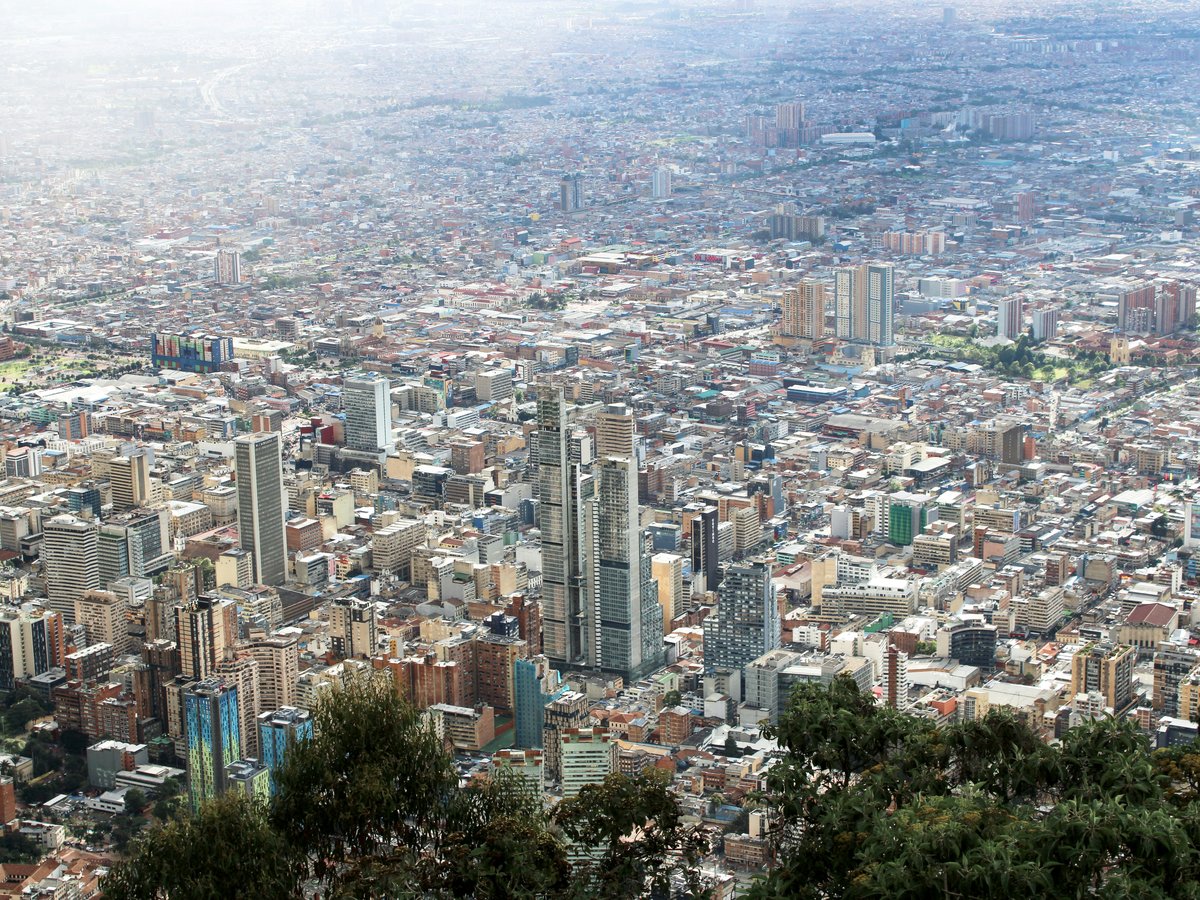
outdoorThe path to the 3,152-meter summit of Cerro de Monserrate takes about 60 to 90 minutes from the base station in the Santa Fe neighborhood. At the top, the Santuario del Señor Caído, a pilgrimage church with roots in the 1600s, overlooks the full spread of the city across the Sabana de Bogotá. The temperature at the summit sits 3°C to 5°C cooler than the base.
April's rainfall keeps the hillside forest lush and the trail-side bromeliads in active growth. Hummingbirds are more visible along the path than in drier months.Booking tipStart by 6:30 a.m. to reach the top before clouds build. The funicular (COP 12,500 one way) opens around 6 a.m. on weekdays, noon on Sundays.
Spend a morning at the Gold Museum
museumOver 55,000 pieces of pre-Columbian gold and metalwork spread across three floors. Founded in 1968, the collection holds Muisca, Quimbaya, and Calima artifacts. The third floor's darkened Ofrenda room simulates a Muisca offering ceremony with light and sound. The Balsa Muisca, a gold raft depicting the origin of the El Dorado legend, sits in a dedicated display on that same floor.
Weekday visitor counts in April drop to roughly half the December-January peak, so you can linger at the Balsa Muisca display without being pushed along by the next group.Booking tipEntry is free on Sundays and costs COP 4,000 on other days. The museum sits on Calle 16 at Carrera 6, a 5-minute walk from the Las Aguas TransMilenio station.
Attend a show at Teatro Colón
cultureColombia's national theater, opened in 1892, seats about 900 under a neoclassical interior influenced by Italian Renaissance design. The regular season offers opera, ballet, and orchestral concerts. The acoustics are strong for a house of that vintage, and the sight lines from the upper balcony rows are tight but workable.
In even-numbered years the Festival Iberoamericano fills the calendar with international acts. In odd years, the national season runs a full April program. Tickets for non-festival shows start around COP 30,000.Booking tipFestival shows sell fast. Check the program at teatrocolon.gov.co 4 weeks ahead and book early for popular international companies.
Ride the Sunday Ciclovía along Carrera Séptima
outdoorEvery Sunday from 7 a.m. to 2 p.m., over 120 km of city roads close to motor traffic. The main route along Carrera Séptima runs from Usaquén in the north through the historic center. Cyclists, runners, and skaters take over the lanes while food vendors sell empanadas, fruit, and agua de panela along the route.
April's cool mornings, typically 10°C to 14°C at 8 a.m., make the ride more comfortable than drier months when the sun bears down by mid-morning.Booking tipNo reservation needed. Rental bikes are available near Parque Nacional and at several points along the route for roughly COP 10,000 to COP 15,000 per hour.
Visit Bogotá Botanical Garden in peak bloom
natureThe Jardín Botánico José Celestino Mutis, founded in 1955, covers 19 hectares and holds one of Colombia's largest orchid collections. The garden lies in the Teusaquillo area, west of the city center, reachable by TransMilenio to the Calle 63 station followed by a 10-minute walk.
April's soil moisture triggers bloom cycles in the orchid collection, and the garden's wetland sections attract migratory birds crossing the Sabana. The sparkling violetear hummingbird (Colibri coruscans) is commonly spotted near the pond.Booking tipEntry costs COP 5,000 for adults. Weekday mornings are quietest. Arrive before 10 a.m. to get the best light and avoid afternoon weather.
Take a day trip to the Zipaquirá Salt Cathedral
cultureAn underground Catholic church carved inside a salt mine, 65 km north of Bogota. The cathedral sits 180 meters below the surface, with 14 stations of the cross carved from salt along the descent tunnel. The main nave, hollowed from a working halite deposit, seats several hundred under a salt cross illuminated from behind.
The underground temperature stays a constant 14°C regardless of surface weather. The drive through the Sabana de Bogotá passes pastures at peak green from the rains.Booking tipBuses leave every 15 minutes from the Portal del Norte TransMilenio terminal. The ride takes about 90 minutes and costs roughly COP 6,000 each way. Cathedral entry is around COP 65,000 for foreign adults.
Explore the Paloquemao market before 9 a.m.
marketBogota's largest wholesale market, covering nearly a full city block near the Ricaurte TransMilenio station. The fruit section stocks 30 to 40 tropical varieties, many unfamiliar to visitors from temperate climates. The flower hall, supplied by growers in the Sabana, fills with carnations, roses, and orchids at wholesale prices.
April brings feijoa, lulo, and curuba into peak supply. The market is busiest and most stocked on Friday and Saturday mornings before 8 a.m.Booking tipArrive before 9 a.m. for the best selection. The market is a 5-minute walk from the Ricaurte TransMilenio station. Juice vendors blend any fruit to order for COP 3,000 to COP 5,000.
Walk a street-art tour through La Candelaria
cultureThe blocks between Calle 12 and Calle 10, south of Carrera 2, hold one of Latin America's densest concentrations of large-scale murals. The work ranges from political commentary to abstract portraiture, much of it by Colombian artists like Toxicómano and DJ Lu. The facades turn over regularly, so repeat visits surface new pieces.
Cool morning temperatures, typically 10°C to 15°C, make walking the hilly cobblestone streets more comfortable than in hotter months. The overcast light reduces glare for photographing murals.Booking tipSeveral operators run guided walking tours starting near Chorro de Quevedo for COP 30,000 to COP 50,000 per person, usually 2.5 to 3 hours. Self-guided walks are free.
What to eat in April
In season: fruit
Feijoa
This tart green fruit peaks in the highland rainy months of April and May around Bogota. Juice bars across the city blend it fresh, and bakeries in Chapinero and Teusaquillo fold it into pastry fillings and marmalades. A fresh feijoa juice typically costs COP 5,000 to COP 8,000.
On menus now
Ajiaco bogotano
The city's signature soup, built on three types of potato (criolla, pastusa, sabanera) plus corn, chicken, capers, cream, and the herb guascas. The Boyacá highlands supply the potatoes, and April's cool damp weather turns it from a cultural staple into a physical craving. A bowl runs COP 18,000 to COP 28,000 at most sit-down restaurants.
Changua
Bogota's traditional breakfast soup. A bowl of milk and water with a poached egg and chopped scallion, served steaming at around 7 a.m. It divides opinion among visitors, but on a chilly April morning at 9°C it becomes self-explanatory. Most cafes in the historic center serve it for COP 6,000 to COP 10,000.
What to drink
Chocolate santafereño
Hot chocolate made from Colombian cacao, served with farmer's cheese you drop into the cup and bread for dipping. A Bogota morning ritual, especially satisfying when April's chill settles in before 8 a.m. La Puerta Falsa on Calle 11 near Plaza de Bolívar has served it since 1816.
Lulo juice
Tart, citric, and bright green. Lulo is an Andean fruit that reaches peak abundance during the rainy months in markets like Paloquemao. Street vendors and juice shops serve it cold for COP 3,000 to COP 5,000, a sharp counterpoint to the cool weather.
Regular events in April
Semana Santa (Holy Week)Free
Colombia's most widely observed religious holiday. Processions wind through La Candelaria, and churches across the city hold special services from Palm Sunday through Easter. Thursday and Friday are public holidays. Many businesses close through Sunday.
Variable, late March or early April (moveable feast)Ciclovía dominicalFree
Over 120 km of city roads close to cars every Sunday. Cyclists, runners, and skaters take over from 7 a.m. until 2 p.m., with food vendors along the major routes.
Every Sunday, 7 a.m. to 2 p.m.Mercado de las Pulgas de UsaquénFree
Weekly flea market with artisan goods, antiques, and street food in the cobblestoned streets around Parque de Usaquén. About 200 vendors set up on a typical Sunday.
Every SundayDía del Idioma (Language Day)Free
Colombia marks April 23 in honor of Cervantes with literary readings, book fairs, and poetry events at libraries and cultural centers across Bogota, including the Biblioteca Luis Ángel Arango.
April 23Liga BetPlay matches at Estadio El Campín
Bogota's two major football clubs, Millonarios and Independiente Santa Fe, play home matches at the 36,000-seat stadium during the apertura season. Before kickoff, drums and grilled-meat smoke from sidewalk vendors fill the blocks around Carrera 30. Tickets typically start at COP 25,000 for general admission.
Weekends throughout AprilBest places this April
Parque Nacional Enrique Olaya Herrera
parkThe park's 283 hectares turn deep green by April. Joggers and families use the shaded paths in the morning. After a downpour, the eucalyptus canopy gives the air a sharp, clean scent that lingers for about an hour. The Carrera Séptima entrance sits near the TransMilenio's Calle 39 station.
Santa FeLa Macarena
neighborhoodA compact restaurant district wedged between the Andes foothills and the old bullring. The concentration of Colombian and international kitchens on Carrera 4A between Calle 27 and Calle 29 makes it a reliable dinner or lunch destination. Most restaurants fill for lunch between noon and 2 p.m. rather than dinner.
La MacarenaChapinero
neighborhoodBogota scores 7.5/10 for LGBTQ+ friendliness (sourced from TTDI's editorial rubric), and Chapinero is the epicenter of that community. The Calle 65 corridor and streets around Parque de Lourdes hold specialty coffee roasters like Azahar and Catación Pública, bookshops, and modern Colombian restaurants. The Zona G restaurant strip on Calle 69A concentrates higher-end dining.
ChapineroPrimary Cathedral of Bogotá
landmarkCompleted in 1807, the neoclassical cathedral anchors the east side of Plaza de Bolívar, across from the Casa de Nariño presidential compound. The interior holds the remains of Gonzalo Jiménez de Quesada, who founded the city in 1538. During Holy Week services, the nave fills with incense, candlelight, and congregants.
La CandelariaBogotá Museum of Modern Art (MAMBO)
museumFounded in 1955, the museum's rotating exhibitions of Colombian contemporary art occupy a building near the Centro Internacional, a 10-minute walk south along Carrera 5 from the Colombian National Museum. Entry is COP 8,000 for adults.
Centro InternacionalPlazoleta del Chorro de Quevedo
plazaA small square in the heart of La Candelaria, traditionally cited as the 1538 founding site of Bogota. On dry mornings, street performers and storytellers gather here. The surrounding alleys between Calle 12B and Calle 13 are thick with murals that turn over every few months.
La CandelariaZona T and Parque de la 93
nightlifeBogota's main nightlife corridor runs through the pedestrianized streets between Calle 82 and Calle 85, near Carreras 12 and 14. Cocktail bars and clubs on Calle 83 stay open until 3 a.m. on weekends, with cover charges at clubs ranging from COP 20,000 to COP 40,000 on a typical Saturday. Parque de la 93, about 10 blocks north, holds a calmer dining scene around a landscaped square with outdoor seating that fills on dry evenings.
Chicó
Your packing checklist
Tick items off as you pack. Your progress saves in this browser.
All packed — have a great trip.
Insider tips
The Gold Museum is free on Sundays. On a dry April Sunday morning, combine it with the Ciclovía route along Carrera Séptima, which passes within a block of the museum entrance on Calle 16.
Chocolate santafereño, hot chocolate served with a chunk of farmer's cheese dropped into the cup, sounds strange to most visitors. La Puerta Falsa on Calle 11 has served it since 1816, but Chapinero bakeries tend to use better single-origin cacao and draw fewer tourists.
The Funicular de Monserrate stops running when lightning is detected near the summit. If you see dark clouds building at 11 a.m., take the funicular up rather than hiking, so you are not caught on the exposed trail above 2,900 meters.
Bogota's tap water is drinkable and has been since the Chingaza treatment system came online. Many visitors buy bottled water out of habit, but refilling is both cheaper and the norm among locals.
For Liga BetPlay matches at El Campín, sit in the oriental (east) grandstand for the best view and the calmest crowd. The south end is standing-only for the barra bravas. Arrive 30 minutes early to clear the queue at the gates on Carrera 30.
Bogota's nightlife starts late by most standards. Restaurants in Zona G and La Macarena fill around 8:30 p.m., but bars in the Zona T corridor on Calle 83 stay quiet until after 11 p.m. on Fridays and Saturdays. Cover charges at Zona T clubs often drop or disappear before midnight.
Avoid these mistakes
- Planning outdoor activities for the afternoon. April's rain concentrates between 2 p.m. and 6 p.m. Monserrate hikes, street-art walks, and market visits should start before noon.
- Packing only light clothes because Colombia sits near the equator. At 2,640 meters, April evenings feel more like a cool European autumn than a tropical night. Visitors arriving from Cartagena at 2 meters or Medellín at 1,495 meters are sometimes caught off guard.
- Taking unofficial taxis hailed on the street. Use Uber, Didi, or the Tappsi app instead. Official yellow taxis from designated stands are fine, but informal pickups carry a higher risk, especially after dark.
- Underestimating altitude effects on the first day. Walking Monserrate's trail at 3,000+ meters within hours of arriving from sea level is a common path to a splitting headache. Give yourself at least 24 hours to acclimatize before any sustained uphill effort.
Practical tips for April
Book accommodation 4 to 6 weeks early if Semana Santa falls in April, since domestic travelers pass through Bogota en route to the coast. The TransMilenio BRT runs a reduced holiday schedule that week with less frequent feeder routes, though trunk lines along Carrera 10 and Calle 26 still operate. A rechargeable TuLlave card costs COP 5,000 at station kiosks and loads in any denomination. Uber and Didi operate legally throughout the city. A ride-hailing trip from El Dorado airport (BOG) to La Candelaria runs about COP 20,000 to COP 30,000. Tipping at sit-down restaurants is voluntary at roughly 10%, and many places include a suggested service charge on the bill that you can decline. The Zona T in northern Bogota and the Zona G on Calle 69A have the densest concentration of ATMs that accept foreign cards. Carry cash in denominations of COP 10,000 or smaller for market vendors and street food, since many stalls do not take cards. Pharmacies in Chapinero and La Candelaria stock altitude-sickness remedies over the counter, and most sell acetaminophen in single-dose packets for COP 1,000 to COP 2,000.
FAQ
Is April a good time to visit Bogota?
April is fair, not ideal. It is the second-wettest month of the year, with roughly 159mm of rainfall spread across about 20 days. Mornings tend to stay dry, though, and museum queues are shorter than during the December-January dry season. If you can schedule outdoor plans before noon and keep afternoons flexible, the city rewards you with lower hotel rates and less competition for restaurant tables. For reliably dry days, January, February, or August are stronger picks.
What is the weather like in Bogota in April?
Cool and damp. Mornings feel brisk at around 9°C (48°F), warming to near 20°C (68°F) by midday before clouds build. The temperature range surprises visitors expecting tropical heat, but at 2,640 meters Bogota is cooler and more stable year-round than most Colombian cities. Bring a sweater for mornings, a waterproof layer for afternoons, and closed-toe shoes with grip for wet cobblestones.
How do I get around Bogota in April?
The TransMilenio BRT covers most tourist-relevant areas for COP 2,950 per ride, payable via a TuLlave card available at station kiosks for COP 5,000. Uber and Didi work reliably and cost COP 8,000 to COP 20,000 for most in-city trips. The Sunday Ciclovía closes 120 km of roads to cars, making cycling the fastest way to move between neighborhoods that day. Rental bikes along the Ciclovía route run COP 10,000 to COP 15,000 per hour. During Holy Week, TransMilenio runs a reduced schedule on feeder routes.
Is Bogota family-friendly in April?
Bogota scores 6/10 for family friendliness (see the TTDI Family-Friendliness Index). In April, the weather makes it important to plan indoor activities for afternoons. The Gold Museum, Botero Museum, and Maloka interactive science museum in Salitre work well for children over 6. Younger kids may find the damp weather tiring, and stroller access on La Candelaria's cobblestones is limited. The Sunday Ciclovía is a strong family activity in the dry morning window.
Does Bogota celebrate Semana Santa?
Yes, though less dramatically than cities like Popayán or Mompox, where processions carry UNESCO recognition. Bogota's observance centers on religious services at churches in La Candelaria and smaller neighborhood processions. The bigger effect for visitors is practical. Many restaurants and shops close Thursday through Sunday, banks go offline, and TransMilenio runs a holiday timetable. Stock up on groceries by Wednesday if you are self-catering.
What should I budget for a day in Bogota in April?
A mid-range day might run COP 150,000 to COP 250,000 per person before accommodation. A corrientazo set lunch costs COP 12,000 to COP 18,000, a sit-down dinner in Chapinero or La Macarena runs COP 30,000 to COP 50,000, and museum entries are COP 4,000 to COP 8,000 each (several are free on Sundays). TransMilenio rides cost COP 2,950 each, and Uber trips across the city rarely top COP 20,000. Budget travelers eating street food and using public transit can manage COP 80,000 to COP 120,000 per day.
Things to Do in Bogota in April
 Free cancellation
 Bogota Zipaquira Salt Cathedral Private Tour + Lunch
Day trip: 7 hours, free cancellation.
via Viator Free cancellation
 Bogota: Small Group Tour Zipaquira Salt Cathedral with Pickup
Day trip: 8 hours, free cancellation.
via Viator Free cancellation
 From Hotel - Guatavita and Zipaquirá - Route of the 7 Treasures
Day trip: free cancellation.
via Viator Free cancellation
 Colombia’s Tallest Waterfalls: La Chorrera Hike
Outdoor experience: free cancellation.
via Viator Free cancellation
 Cheapest ZIPAQUIRA & GUATAVITA LAKE Visit 5 Top Sights w/PICKUP
Outdoor experience: free cancellation.
via Viator Free cancellation
 Group Tour Zipaquirá salt cathedral gastro tour
Day trip: free cancellation.
via ViatorLast verified by automated review (v1.7.2) on . What is automated review?