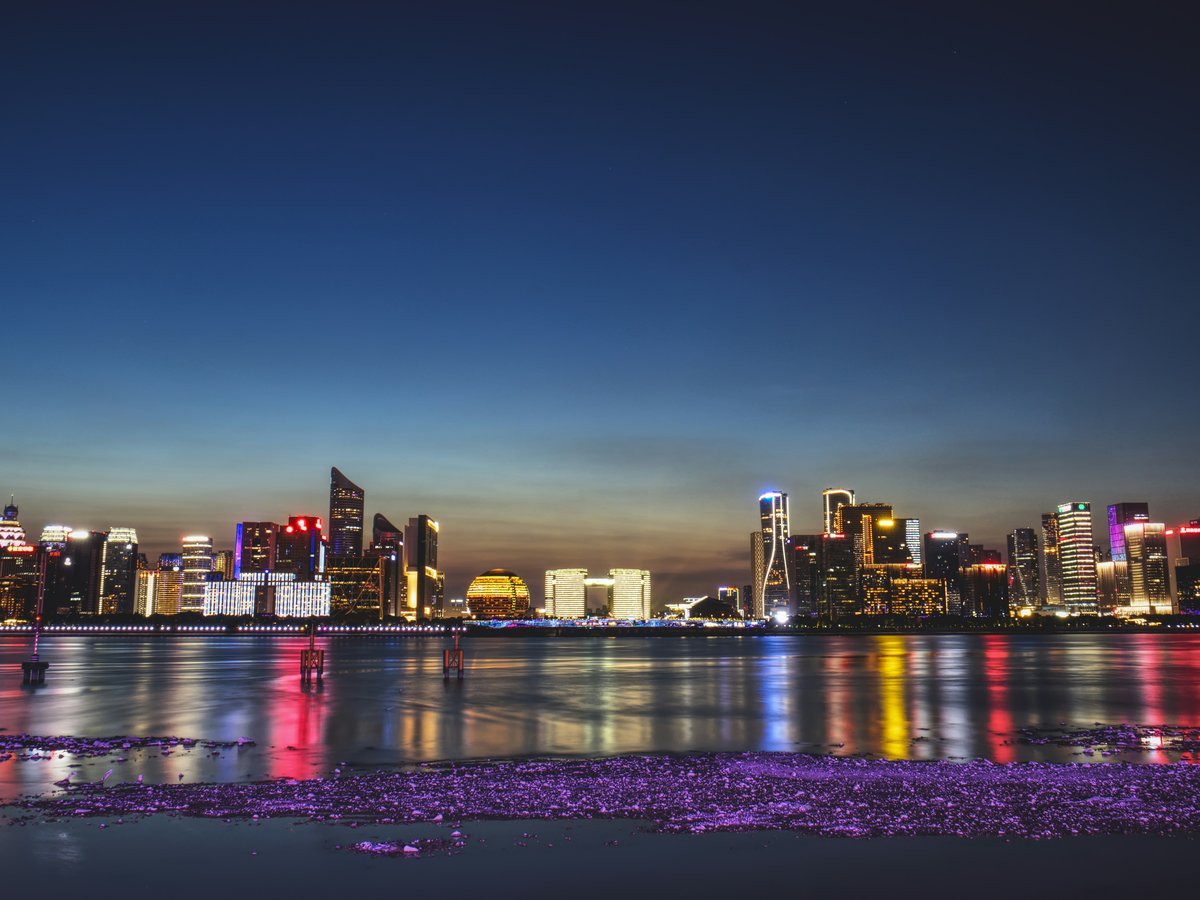
Stay in Hangzhou in February
94 hotels in the Trip.com pool for Hangzhou, from US$13 a night.
Opens Trip.com on Fri 5 Feb to Sun 7 Feb 2027; change the dates there.
February in Hangzhou revolves around Chinese New Year. The Spring Festival (Chūnjié) shifts between late January and mid-February each year on the lunar calendar, and it reshapes daily life for roughly 10 days. Half the small restaurants along Hefang Street close as workers head home to their provinces. The Wulin commercial district, normally packed with office workers and shoppers, goes quiet. Then Lingyin Temple and the West Lake promenades fill to capacity with domestic holiday crowds lighting incense and setting off firecrackers at midnight.
The weather is honestly not great. Daytime temperatures reach about 11.5°C (53°F) and drop to 3.3°C (38°F) at night, with a damp, bone-level cold that 76% humidity makes feel several degrees worse. Hangzhou sits in a basin with hills on three sides, and in February the moisture settles and stays. Expect about 100mm of rain across 13 days. The air carries the smell of wet stone and wood smoke from tea houses that stay open along Longjing Road. It is not a brutal winter by northern Chinese standards, but the lack of central heating in most buildings south of the Qinling-Huaihe line means you feel every degree indoors and out.
There is a genuine reason to come, though. Plum blossoms start opening at Lingfeng Hill near the Hangzhou Botanical Garden, typically from late January into early March. Over 5,000 plum trees at this site, representing more than 200 cultivated varieties, make it one of the finest méihuā viewing grounds in eastern China. On a still February morning, pale pink and white blossoms against the misty hillside produce the kind of scene Song Dynasty painters built entire careers around. February also delivers something the popular months cannot. West Lake without 300,000 daily visitors looks like a completely different place.
Why visit in February
- Chinese New Year celebrations at Lingyin Temple and across the Shangcheng district offer immersive access to traditions that few foreign visitors typically see, including midnight incense ceremonies, lion dances, and neighborhood firecrackers.
- Plum blossoms at Lingfeng Hill typically reach early-to-mid bloom in February, drawing photographers to 5,000-plus trees across hillside groves. You will share the paths with a fraction of the March and April crowds.
- West Lake in winter mist produces the classic Chinese ink-painting atmosphere that the Song Dynasty poets wrote about. Broken Bridge, Bai Causeway, and Solitary Hill are genuinely peaceful on weekday mornings.
- Hotel rates outside the 7-day CNY holiday window drop 30-40% below the annual average, and high-speed trains from Shanghai Hongqiao to Hangzhou East run at well below capacity.
Worth knowing
- The damp cold penetrates in a way that dry 3°C air does not. Buildings south of China's heating line typically lack central heating, so restaurants, guesthouses, and even some hotel rooms can feel as cold inside as outside.
- Roughly 100mm of rain falls across 13 days, often as fine drizzle that lasts all morning. Extended outdoor walking around West Lake requires genuine waterproof gear, not a fashion jacket.
- Small restaurants and independent shops close for 5-10 days around Chinese New Year, particularly in the Shangcheng and Wulin districts. Your dining options narrow to hotel restaurants, chain noodle shops, and the handful of places that stay open.
- Air quality in the Yangtze Delta basin can deteriorate during February temperature inversions, pushing PM2.5 readings above 100 for several consecutive days. The hills that make Hangzhou scenic also trap polluted air.
Best for
Think twice if
February in Hangzhou is cold and damp with frequent light rain. The basin geography traps moisture, and overcast skies dominate most days. Clear days tend to come in clusters of 2-3 between rainy stretches. Morning fog on West Lake is common and usually lifts by 10am. The cold feels sharper than the numbers suggest because of persistent humidity.
Seasonal caution
- Overnight temperatures occasionally dip below 0°C (32°F), and light snow falls on Hangzhou roughly once or twice per winter. West Lake causeways and hillside paths to Lingyin Temple become slippery when iced.
- Temperature inversions in the Yangtze Delta basin can trap smog for 3-5 consecutive days in February, pushing PM2.5 above 100. Check air quality forecasts before planning long outdoor walks around West Lake or hikes in the surrounding hills.
Year-round climate
Averages from the last 5 years.
| Month | Avg high (°C) | Avg low (°C) | Rainfall (mm) |
|---|---|---|---|
| Jan | 11 | 1 | 51 |
| Feb | 12 | 3 | 100 |
| Mar | 18 | 8 | 116 |
| Apr | 23 | 13 | 121 |
| May | 27 | 17 | 162 |
| Jun | 29 | 22 | 341 |
| Jul | 34 | 26 | 196 |
| Aug | 35 | 26 | 182 |
| Sep | 30 | 23 | 149 |
| Oct | 24 | 16 | 65 |
| Nov | 19 | 10 | 71 |
| Dec | 12 | 3 | 29 |
Holidays and festivals in February
Public holidays
- Chinese New Year (Spring Festival)(春节)6 February 2027
Headline events
Chinese New Year (Spring Festival / Chūnjié)
Late January to mid-February (varies by lunar calendar; 7-day public holiday)
China's most important holiday transforms Hangzhou for roughly 10 days. Lingyin Temple hosts midnight incense ceremonies on New Year's Eve that draw tens of thousands. The Shangcheng old town fills with lion dances, temporary market stalls selling paper cuttings and red lanterns, and neighborhood fireworks. Many migrant workers leave the city, closing small businesses, while domestic tourists flood West Lake's causeways and scenic spots. The first and fifth days of the lunar new year see the heaviest temple traffic.
Best things to do in February
Plum blossom viewing at Lingfeng Hill (灵峰探梅)
natureThe Lingfeng plum grove at the western edge of the Hangzhou Botanical Garden holds over 5,000 plum trees across hillside terraces. Varieties range from pale green (lǜè méi) to deep crimson (zhūshā méi). The blooms open in stages from late January, with mid-February typically catching early-to-mid peak. On misty mornings the fragrance of the blossoms carries 50 meters (165 feet) before you see the first tree.
February catches the early-to-mid bloom window. By late March the petals have fallen and cherry blossoms take over the attention.Booking tipNo booking needed. Entry to the Botanical Garden is around 10 RMB. Arrive before 9am on weekends to avoid domestic tour groups.
Chinese New Year temple visit at Lingyin Temple (灵隐寺)
cultureOne of China's largest and most historically important Buddhist temples, Lingyin Temple sits against the forested slopes of the Wulin Mountains west of West Lake. During Spring Festival, monks conduct special prayer services and the temple grounds fill with incense smoke so thick it catches in your throat. The carved stone grottoes at Feilai Feng, dating to the 10th century, line the path to the temple entrance.
The Spring Festival prayer ceremonies and midnight incense lighting on New Year's Eve are annual traditions specific to the holiday period.Booking tipIf visiting on the first or fifth day of the lunar new year, arrive before 6am. By 8am the queue past Feilai Feng can reach 2-3 hours. Combined ticket for Feilai Feng grottoes and temple is approximately 75 RMB.
Winter mist photography on West Lake
photographyWest Lake's three causeways, two islands, and surrounding hills produce a layered composition that changes with every shift in fog density. Broken Bridge (断桥) is the classic subject in winter. The bridge sits on the Bai Causeway, and when morning fog rolls across the lake, the far end of the bridge disappears into white. If February delivers light snow, the Melting Snow on Broken Bridge scene (断桥残雪) becomes briefly real.
February has the most frequent morning fog of any month, and the lowest visitor counts at waterside viewpoints. No other month combines both conditions.Booking tipWest Lake scenic area is free and open 24 hours. The best fog typically appears between 6:30am and 8:30am on mornings after overnight rain.
Lantern Festival evening at West Lake
cultureThe Lantern Festival (Yuánxiāo Jié) falls on the 15th day of the lunar new year, which places it in February or early March depending on the year. Traditional riddle-guessing games (cāi dēngmí) set up along the lakeside near Yongjin Park, and restaurants serve tāngyuán throughout the evening. The lake reflects red and gold lanterns strung along the Bai and Su causeways.
The Lantern Festival only happens once a year, marking the final night of the Spring Festival period. It frequently falls in February.Booking tipNo tickets needed for the lakeside celebrations. Arrive by 5pm to walk the causeways before the crowds peak around 7pm.
Tea house afternoon in Longjing Village (龙井村)
food and drinkLongjing Village sits in the hills southwest of West Lake, surrounded by the terraced tea fields that produce China's most famous green tea. The new spring harvest does not start until late March, but the tea houses along Longjing Road serve last season's stored leaves in a setting that feels removed from the city by a century. On a February afternoon the hillside is quiet enough to hear water dripping from bamboo.
February is pre-harvest season, meaning the tea village paths are empty. The terraced fields look silver-green under winter light, a visual contrast to the dense foliage that hides them from April onward.Booking tipNo booking needed. Take bus K27 from the Huanhu South Road stop to Longjing Village. Tea service at village houses runs 30-80 RMB depending on the grade of stored leaf.
Xixi National Wetland Park winter birdwatching
natureXixi Wetland Park covers 11.5 square kilometers (4.4 square miles) of reed marshes, ponds, and persimmon groves on Hangzhou's western fringe. February is wintering season for migratory birds including grey herons, egrets, and mandarin ducks. The boat routes through the reeds pass close to nesting areas that are cordoned off in warmer months. The skeletal persimmon trees and brown reed beds give the park a spare, quiet beauty.
February is peak wintering-bird season, and the leafless landscape opens sightlines that dense summer foliage blocks. Visitor numbers are at their annual low.Booking tipEntry is 80 RMB. Electric boat tours of the wetland interior run about 60 RMB additional. Weekday mornings are best for birdwatching as boat traffic stays low.
Feilai Feng Buddhist grottoes walk
cultureThe cliff faces along the path to Lingyin Temple hold over 470 Buddhist stone carvings dating from the Five Dynasties period (907 CE) through the Song and Yuan dynasties. The most famous is a laughing Maitreya Buddha carved into the rock face in the year 1000. In February, with fewer visitors blocking the narrow paths, you can study individual carvings that are impossible to see in the October crowds. Moss and damp stone give the grotto walls a green-black patina that photographs well in flat winter light.
February's low visitor count lets you linger at individual carvings. In October's Golden Week, the path is one-directional crowd flow with no stopping.Booking tipIncluded in the combined Lingyin Temple ticket (approximately 75 RMB). Allow 45-60 minutes for the grotto path alone.
What to eat in February
On menus now
Dōngpō Ròu (东坡肉)
Hangzhou's signature braised pork belly, named after the Song Dynasty poet Su Dongpo who served as the city's governor. Cubes of pork belly braised for 2-3 hours in Shaoxing rice wine until the fat layer turns translucent. February's cold makes this rich, warming dish feel particularly right. Most traditional Hangzhou restaurants along Zhongshan Road serve a version.
Piàn'ér Chuān (片儿川)
Hangzhou's signature noodle soup with hand-cut wheat noodles, thin-sliced pork, pickled mustard greens (xuěcài), and bamboo shoots in a clear broth. The combination of salt, acidity, and earthy bamboo warms from the inside. It costs 15-20 RMB at most neighborhood noodle shops and is arguably the city's best cheap meal in cold weather.
In markets
Winter bamboo shoots (冬笋, dōngsǔn)
Harvested from late November through February in the hills around Hangzhou, winter bamboo shoots are smaller and more tender than spring shoots. They appear in stir-fries, soups, and as a side dish across the city during these months. The Longjing area restaurants tend to serve them simply, sautéed with a little oil and salt to let the sweet, nutty flavor come through.
Festival food
Tāngyuán (汤圆)
Glutinous rice balls filled with black sesame or peanut paste, served in warm sweet broth. Traditionally eaten for the Lantern Festival (Yuánxiāo Jié) on the 15th day of the lunar new year. Hangzhou's version tends toward smaller, more delicate balls than the northern style. Street vendors near Hefang Street serve them by the bowl for around 10-15 RMB.
Niángāo (年糕)
Sticky rice cakes are a Spring Festival staple across China, but Hangzhou's version is typically stir-fried with pickled mustard greens and shredded pork rather than served sweet. The name is a homophone for 'higher year,' making it an auspicious New Year food. Look for the savory stir-fried preparation at noodle shops in the Shangcheng district.
Bābǎo Fàn (八宝饭, Eight-Treasure Rice)
A steamed glutinous rice pudding studded with 8 dried fruits and nuts, including red dates, lotus seeds, and candied winter melon, served as a CNY dessert. It arrives at the table dome-shaped, glossy with sugar syrup, and is meant to be shared. Restaurants in the Shangcheng district typically add it to their Spring Festival set menus.
Regular events in February
Lantern Festival (元宵节, Yuánxiāo Jié)Free
The 15th day of the lunar new year closes the Spring Festival season with lantern displays, riddle-guessing games, and tāngyuán eating. West Lake's causeways and the Wulin Square area host the largest displays in Hangzhou.
15th day of lunar new year (falls in February or early March depending on the year)Lingfeng Tanmei Plum Blossom Festival (灵峰探梅)
Annual plum blossom viewing season at the Hangzhou Botanical Garden's Lingfeng Hill. Cultural events including calligraphy demonstrations and photography exhibitions accompany the natural bloom.
Late January through mid-March, peak typically mid-February to early MarchSpring Festival temple fairs (庙会, miàohuì)Free
Temporary market stalls selling paper cuttings, candy figures (tánghuà), calligraphy scrolls, and New Year decorations set up near Lingyin Temple and along Hefang Street during the first week of the lunar new year.
First 7 days of the lunar new yearBest places this February
Lingfeng Hill Plum Blossom Grove (灵峰探梅)
parkOver 5,000 plum trees in a hillside setting at the Hangzhou Botanical Garden. The grove covers several terraces, with early-blooming varieties (lǜè méi) opening first near the lower paths and later varieties (gōngfěn) higher up. On overcast February mornings the fragrance hangs in the still air. A small pavilion at the top of the grove offers a view down through the blossoms to the city skyline beyond.
Xihu DistrictBroken Bridge (断桥)
landmarkThe stone bridge at the eastern end of the Bai Causeway is one of West Lake's most photographed spots. In February, morning fog frequently obscures the far end of the bridge, creating the illusion that it stops mid-lake. On the rare February morning after snowfall, you get a version of the famous Melting Snow on Broken Bridge (断桥残雪) scene that is literally one of the Ten Classical Views of West Lake.
BeishanLingyin Temple (灵隐寺)
templeFounded in 328 CE, this is one of China's ten major Buddhist monasteries. The Hall of the Great Hero (大雄宝殿) houses a 19.6-meter (64-foot) gilded Sakyamuni statue carved from 24 blocks of camphorwood. During Spring Festival the courtyards fill with incense smoke and the sound of wooden prayer drums. February, outside the CNY holiday days, offers rare quiet access to the carved wooden interior.
Xihu DistrictGushan / Solitary Hill (孤山)
parkA small hill on the north shore of West Lake connected to the mainland by the Bai and Xiling causeways. The Zhejiang Provincial Museum and the Xiling Seal Engraving Society (founded 1904) sit on its slopes. Scattered plum trees on the southern face bloom in February with far fewer visitors than the Lingfeng groves. The hillside paths give unobstructed views across the entire lake.
BeishanHefang Street (河坊街)
historic streetA restored Qing Dynasty-era pedestrian street in the Shangcheng historic district. During Spring Festival the street hosts temporary stalls selling sugar paintings (tánghuà), hand-pulled candy, and paper cuttings. Outside CNY week, many shops close, but the traditional medicine hall Huqingyutang (established 1874) stays open year-round, and its ornate interior is worth a 15-minute walk-through on its own.
ShangchengXixi National Wetland Park (西溪湿地)
parkAn 11.5 square kilometer (4.4 square mile) urban wetland of reed marshes, fish ponds, and persimmon orchards. The slow electric boats through the interior channels pass close to wintering bird colonies that nest in the brown reeds. In February the deciduous trees are bare and the landscape has a spare, watercolor quality. The film studio set from Feng Xiaogang's 2008 movie 'If You Are the One' still stands near the east entrance.
XixiChina National Tea Museum (中国茶叶博物馆)
museumLocated on Longjing Road near the tea villages, this museum covers 3,000 years of Chinese tea history across two campuses. The Longjing campus focuses on green tea production. February is a good time to visit because the museum is empty and docents have time for questions. A tea-tasting session with commentary costs around 30 RMB. The walk from the museum down through the tea terraces to Longjing Village takes about 40 minutes.
LongjingLeifeng Pagoda (雷峰塔)
landmarkRebuilt in 2002 on the foundations of the original 975 CE structure on the south shore of West Lake. The viewing platform at the top gives a 360-degree panorama of the lake and surrounding hills. In February, winter haze sometimes softens the view into an atmospheric wash that suits the Legend of the White Snake mythology associated with the pagoda. Entry is approximately 40 RMB.
Shangcheng
Your packing checklist
Tick items off as you pack. Your progress saves in this browser.
All packed — have a great trip.
Insider tips
Hangzhou sits south of China's Qinling-Huaihe central heating line. This means most buildings, including many mid-range hotels, lack radiators or forced-air heating. Hotel lobbies and shopping malls run wall-mounted AC on heat mode, but older guesthouses and traditional restaurants can feel as cold inside as out. When booking, look specifically for rooms that mention 'floor heating' (dìnuǎn) or electric blankets (diànrè tǎn).
The plum blossoms at Gushan (Solitary Hill) along the north shore of West Lake are scattered and informal compared to the manicured groves at Lingfeng, but they are also free and almost empty on weekday mornings. Walk the path from Broken Bridge toward Xiling Bridge. The blossoms frame views of the lake that Lingfeng's hillside position cannot match.
If you visit Lingyin Temple on the first day of the lunar new year, arrive before 6am. By 8am the incense-offering queue stretches past the Feilai Feng entrance and wait times reach 2-3 hours. The fifth day of the new year (pò wǔ, when businesses symbolically reopen) is nearly as crowded. Any other day during the holiday week is calmer.
West Lake in rain is not a consolation prize. Broken Bridge in Melting Snow (断桥残雪) is literally one of the Ten Classical Scenes of West Lake, and February is the only month you might see it. Overcast days produce diffuse light that eliminates harsh shadows on the water, willows, and pagodas. Some of the most-published photographs of West Lake were taken in February drizzle, not October sunshine.
Download Alipay and set up the international visitor wallet before you arrive. Cash works at hotels and larger restaurants, but street food vendors near Hefang Street, convenience stores, and bus fares increasingly expect mobile payment. The Hangzhou Metro accepts Alipay QR codes at turnstiles, which saves queuing for single-journey tokens.
Avoid these mistakes
- Assuming indoor heating exists everywhere. Hangzhou is south of the Qinling-Huaihe line, and most hotels, restaurants, and public buildings do not have central heating. Visitors from Europe, North America, or northern China pack for outdoor cold but are unprepared for cold hotel rooms, unheated restaurants, and temple halls where their breath is visible. Request a room with floor heating or an electric blanket at booking time.
- Traveling by high-speed train without pre-booking during the Spring Festival rush. Return trains from Hangzhou East to Shanghai Hongqiao and other major cities sell out weeks in advance for the last 2-3 days of the CNY holiday. Tickets release 15 days before departure on the 12306 app. If you miss that window, the slower D-series trains on the same route sometimes have availability.
- Planning a full day of outdoor West Lake walking without waterproof gear. The 100mm of February rain often arrives as fine drizzle that lasts 4-6 hours. A morning walk along the Su Causeway in a cotton jacket becomes a miserable, chilled slog by noon. Carry a waterproof layer and change plans to indoor options like the Zhejiang Provincial Museum on Gushan if rain sets in.
- Visiting Lingyin Temple on the first or fifth day of the lunar new year without arriving before dawn. These are the two most crowded temple days of the entire year in Hangzhou. The queue for incense offering can reach 3 hours by mid-morning. Every other day of the CNY holiday week is noticeably calmer, and weekdays outside the holiday period are nearly empty.
Practical tips for February
Book Hangzhou East high-speed train tickets on the 12306 app at least 15 days ahead if traveling during the Spring Festival rush (chūnyùn). The 20-minute Fuxing service from Shanghai Hongqiao fills first. Many restaurants in the Shangcheng and Wulin districts close for 5-10 days around CNY, so identify which hotel restaurants and chain noodle shops stay open before you need them. The Hangzhou Metro runs extended hours on CNY Eve, usually until around 1am, but schedules vary by line. Check the official Hangzhou Metro Weibo account for that year's schedule. Lingyin Temple charges a combined entry fee of approximately 75 RMB for the Feilai Feng grottoes and temple. Most West Lake scenic spots, including the causeways, Broken Bridge, and Gushan, are free and open 24 hours. Leifeng Pagoda and some enclosed gardens charge 40-80 RMB. If you want the plum blossoms at Lingfeng without crowds, weekday mornings before 9:30am are reliably quiet. For currency, Alipay's international visitor wallet works at most vendors, but carry some cash for older tea houses in Longjing Village and small snack stalls at temple fairs. February daylight runs roughly 6:45am to 5:45pm, so plan outdoor activities for the middle of the day when temperatures are highest.
FAQ
Is February a good time to visit Hangzhou?
February is a fair-to-marginal month for visiting Hangzhou. The weather is cold and damp, with temperatures between 3°C and 12°C (38-53°F) and about 100mm of rain. Many small businesses close during the Chinese New Year holiday week. That said, February offers plum blossoms at Lingfeng Hill, immersive Spring Festival traditions at Lingyin Temple, and a West Lake almost free of the crowds that overwhelm it in October and April. If you come prepared for the cold and time your trip around CNY events rather than despite them, it can be a rewarding visit. If you want warm weather and reliable dining options every day, wait until April or October.
What is the weather like in Hangzhou in February?
Expect daytime highs around 11.5°C (53°F) and nighttime lows around 3.3°C (38°F). Humidity runs at about 76%, which makes the cold feel more penetrating than the numbers suggest. Rainfall averages 100mm across roughly 13 rainy days, usually as light drizzle rather than heavy downpours. Occasional overnight frost is possible, and Hangzhou sees light snow once or twice per winter. Most buildings lack central heating, so the cold follows you indoors. Pack thermal layers, a waterproof jacket, and shoes with good grip for wet stone paths.
Is Hangzhou crowded in February?
It depends on the week. During the 7-day Chinese New Year holiday, major tourist sites like Lingyin Temple, West Lake's Broken Bridge, and Hefang Street fill with domestic visitors. Lingyin Temple on the first day of the lunar new year can see queues of 2-3 hours. Outside the CNY holiday window, February is one of the quietest months of the year. Commercial districts like Wulin feel emptier than normal because many workers have left the city. If you want to avoid CNY crowds but still catch plum blossoms, the last week of February (after the holiday period ends) is typically the sweet spot.
What should I wear in Hangzhou in February?
Layer for cold, damp conditions between 3°C and 12°C (38-53°F). A thermal base layer, a fleece or light down mid-layer, and a waterproof shell jacket is the most versatile combination. Waterproof shoes with rubber soles are important because the stone paths around West Lake and the steps up to Lingyin Temple get slippery in rain. Avoid cotton next to skin as it absorbs moisture and stays cold. Most buildings south of the Qinling-Huaihe line lack central heating, so dress as though you will be at outdoor temperature for the entire day.
When is Chinese New Year in Hangzhou and how does it affect a visit?
Chinese New Year falls on a different date each year based on the lunar calendar, typically between late January and mid-February. The public holiday runs 7 days. During this period, many small restaurants and independent shops in Hangzhou close for 5-10 days as workers return to their hometowns. High-speed train tickets sell out weeks in advance. Hotel rates near West Lake can reach 2-3x their normal price. On the positive side, Lingyin Temple hosts special prayer ceremonies, temple fairs set up along Hefang Street, and the city takes on a festive atmosphere with red lanterns and firecrackers. The Lantern Festival follows 15 days after CNY Day 1, often falling in late February or early March.
Find a flight to Hangzhou
Live fares to Hangzhou appear here once cookies are accepted.
Last verified by automated review (v1.7.2) on . What is automated review?