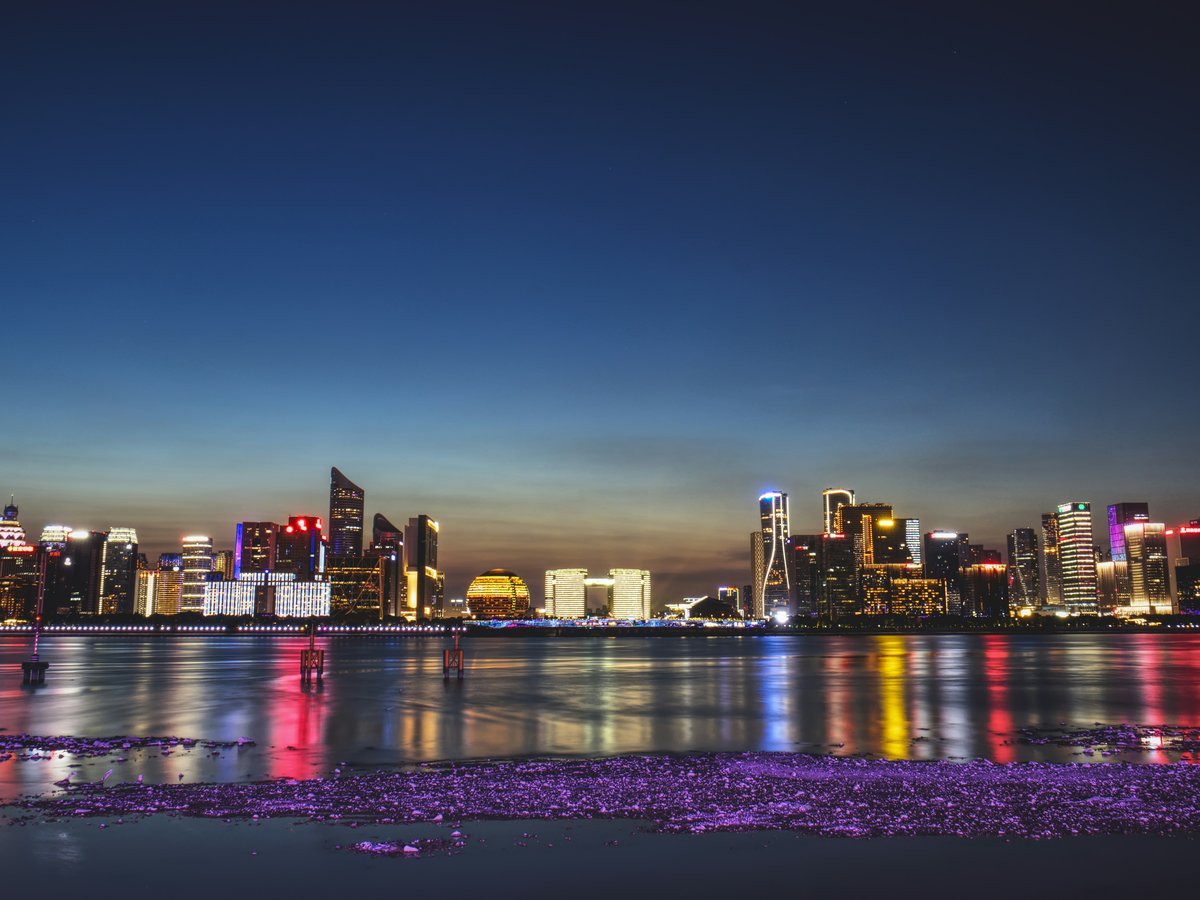
Hangzhou sits in a bowl of low green mountains that curve around West Lake's 6.5 square kilometers of water, then slope east toward the Qiantang River. The city has been a destination for walkers and poets since the Tang Dynasty, and that legacy still shapes how people use the outdoors here. On any given morning you'll find retirees practicing tai chi along the Su Causeway, runners circling the lakeside path (roughly 15 km around), and weekend hikers heading for the forested ridgelines above Longjing Village. The surrounding hills rarely top 400 meters, but they're steep enough to earn your lunch. Summers run hot and humid, with July temperatures regularly hitting 38°C. Spring (late March through May) and autumn (October to mid-November) tend to be the sweet spot for anything strenuous. Winter stays mild by northern China standards, with lows around 2-3°C in January, and the trails get pleasantly empty.
Outdoor activities
-
Cycling the West Lake Loop and Beyond
The paved path circling West Lake runs about 15 km and stays flat the whole way, which makes it a good warm-up or a relaxed afternoon. Shared bike stations from Hellobike and Meituan Bike dot the lakeshore every few hundred meters, typically costing 1.5 RMB per 15 minutes. For something with more bite, the road climbing from the lake's western shore up through Longjing Village to Meijiawu gains around 200 meters of elevation over 5-6 km. You'll smell roasted tea leaves before you see the plantation terraces. The pavement is smooth but narrow, and tour buses share the road on weekends.
- Difficulty
- Easy (lake loop) to Moderate (Longjing climb)
- Duration
- 1-3 hours depending on route
- Best season
- March through May, October through November
-
Rock Climbing at Yanxia Cave Area
The limestone formations near Yanxia Cave (Yanxia Dong), about 20 minutes west of the lake by bus, have a small but loyal local climbing community. Routes tend to be short, mostly in the 10-15 meter range, with a mix of sport bolts and some trad placements on the harder lines. The rock is sharp and featured, though it gets slippery after rain. Worth noting that this is not a commercially operated crag. You'll need your own gear and a partner who knows the area. The local climbing group organizes meetups, often posted on WeChat.
- Difficulty
- Moderate to Advanced
- Duration
- Half day
- Best season
- October through April, when humidity drops
-
Trail Running on Beishan and Baoshi Mountain
Beishan (North Mountain) and Baoshi Mountain sit right above the northern shore of West Lake, and the network of stone-stepped trails connecting them has become popular with Hangzhou's growing trail running scene. The Baoshi summit reaches 78 meters, Beishan around 200 meters. You can string together a loop of roughly 8 km that touches both peaks, the Baochu Pagoda, and drops back down to Broken Bridge. The footing is mostly stone steps and packed earth, with some root-covered sections that get slick in rain. Morning runs here tend to be crowded with walkers before 8 AM.
- Difficulty
- Moderate
- Duration
- 1-1.5 hours for the full loop
- Best season
- Year-round, though summer mornings before 7 AM are advisable
-
Paragliding at Yongan Mountain
Commercial tandem paragliding operates from a launch site on Yongan Mountain in Lin'an District, about 70 km west of downtown Hangzhou. Flights typically last 10-15 minutes and cost around 580-880 RMB depending on the operator and whether you want video. The thermals in this area seem to be most reliable from April through October. Operators handle all equipment and provide a brief ground school. You'll fly over tea-covered hills with the reservoir glinting below.
- Difficulty
- Beginner-friendly (tandem)
- Duration
- Half day including travel from downtown
- Best season
- April through October
-
Camping at Thousand Island Lake (Qiandao Hu)
Qiandao Hu sits about 150 km southwest of Hangzhou, roughly 2.5 hours by car. The reservoir covers 573 square kilometers and holds 1,078 islands at normal water levels. Several designated camping areas dot the lakeshore, and a few islands allow overnight stays with advance booking. The water is clean enough to swim in during summer months. Nights in October can drop to 8-10°C by the lakeshore, so bring layers. Some operators near the dam area rent tents and basic cooking equipment if you're traveling light.
- Difficulty
- Easy
- Duration
- Overnight, 2-day trip recommended
- Best season
- May through October
Day hikes
-
Ten-Mile Langdang (Shili Langdang)
This is Hangzhou's most popular ridge walk, running roughly 10 km along the hills northwest of West Lake. The trail connects multiple small peaks between Longmen and the area near Zhejiang University's Yuquan Campus. Elevation stays between 100 and 360 meters, with plenty of up-and-down along stone steps and packed-earth paths. You'll pass several pavilions with lake views and a few tea stalls selling Longjing by the cup. The trail is well-marked but not signposted in English. Allow 4-5 hours at a comfortable pace with stops. The stone steps can be punishing on the knees during the descents. Weekends get busy after 9 AM.
- Difficulty
- Moderate (cumulative elevation gain around 600-800 meters)
- Duration
- 4-5 hours
- Best season
- Late October through November for autumn color, March through April for new growth
-
Baoshi Mountain to Gem Hill (Baoshi Shan)
A short but satisfying climb starting from the north shore of West Lake near Beishan Road. The summit of Baoshi sits at 78 meters, crowned by the Baochu Pagoda, which dates to the 10th century in its original form (rebuilt multiple times since). The trail is mostly stone steps, well-maintained, with sections shaded by bamboo. You can extend the walk by continuing along the ridge toward the Yellow Dragon Cave scenic area. The round trip from the lakeshore and back takes about 1.5 hours without rushing. Good option when you have a spare morning.
- Difficulty
- Easy to Moderate
- Duration
- 1-1.5 hours round trip
- Best season
- Year-round
-
Longjing Village to Meijiawu Tea Village
Start at Longjing Village (reachable by bus K27 from the lake) and follow the paths through terraced tea plantations to Meijiawu, about 5-6 km away. The trail winds through rows of Longjing tea bushes, past small farmhouses, and along shaded lanes of camphor trees. Elevation change is gentle, maybe 150 meters over the whole route. In late March and April, the picking season, you'll see workers harvesting the top leaves by hand. Tea farmers along the route sell fresh Longjing, typically 200-800 RMB per jin (500g) depending on grade and harvest date. The trail surface is paved in places and packed earth elsewhere.
- Difficulty
- Easy
- Duration
- 2-3 hours one way
- Best season
- Late March through April for harvest season, October for cooler walking
-
Lingyin to Beigao Peak
This trail starts near the Lingyin Temple complex (entry to the scenic area costs 45 RMB, though you don't need to enter the temple itself to access the trailhead). The path climbs through dense forest to Beigao Peak at 314 meters, Hangzhou's tallest point within the urban core. The forest is thick enough that you lose sight of the city entirely within 15 minutes of the trailhead. The upper sections have some scrambling over roots and rocks. At the summit there's a small clearing with partial views north. The descent can loop back through the Feilai Feng rock carvings if you want to combine exercise with culture.
- Difficulty
- Moderate to Strenuous
- Duration
- 3-4 hours round trip
- Best season
- September through November, March through May
-
Jingshan to Wuzhen Ridge Hike
Located about 80 km north of Hangzhou in Yuhang District, Jingshan (Pathway Mountain) sits at 616 meters. The trail climbs through bamboo forest, which is dense and fragrant, especially after rain. The route passes Jingshan Temple, one of the origin points of Japanese tea ceremony tradition, founded in 1271. The hike from the base to the summit and back covers roughly 10 km with about 500 meters of elevation gain. The bamboo groves block most wind but also trap humidity, so summer hikes here feel heavy. The temple area has simple vegetarian food available for around 20-30 RMB.
- Difficulty
- Moderate
- Duration
- 4-5 hours round trip
- Best season
- April through May, September through November
Water activities
-
West Lake Boating
Hand-paddled boats, electric boats, and traditional wooden rowing boats are all available from multiple docks around West Lake. Self-drive electric boats cost around 150 RMB per hour with a 300 RMB deposit. The traditional rower-guided boats seat 6 and run about 180 RMB for the circuit. Paddling yourself is the better option for reaching the quieter western bays near Maojiabu. The water is shallow, mostly 1.5-2.5 meters deep, and the lake itself covers about 6.5 square kilometers. Mind you, swimming in West Lake is technically prohibited, though you'll sometimes see locals doing it at dawn near Su Causeway.
- Difficulty
- Easy
- Duration
- 1-2 hours
- Best season
- March through May, September through November
-
Qiantang River Tidal Bore Viewing and Riverside Cycling
The Qiantang River produces one of the world's largest tidal bores, and the peak viewing happens around the Mid-Autumn Festival in September or October. The bore can reach 3-4 meters in height near Yanguan town, about 45 km east of central Hangzhou. Even outside peak season, the river's south bank has a continuous cycling and walking path that runs for over 20 km through the Binjiang District. The wind off the river keeps things cooler than the city center by a few degrees. That said, this is not a river for recreational swimming. The currents are strong, and the tidal shifts make conditions unpredictable.
- Difficulty
- Easy (cycling), Spectator (bore viewing)
- Duration
- 2-4 hours for the riverside path
- Best season
- Mid-Autumn Festival period (September-October) for tidal bore, year-round for cycling
-
Kayaking on Xianghu Lake
Xianghu Lake, about 30 km south of the city center in Xiaoshan District, covers around 3.2 square kilometers and tends to be far quieter than West Lake. A few outfitters near the north shore rent sit-on-top kayaks, usually for 80-120 RMB per hour. The lake is calm and shallow enough for beginners. The surrounding parkland was extensively restored starting in 2006, and the banks now have a mix of wetland grasses and lotus ponds. In summer, the lotus flowers bloom across the northern bays from June through August. Paddle early before the afternoon wind picks up, typically around 2 PM.
- Difficulty
- Easy to Moderate
- Duration
- 2-3 hours
- Best season
- May through October, mornings before wind builds
-
Thousand Island Lake (Qiandao Hu) Swimming and Boating
The water quality at Qiandao Hu is rated Class I, the highest in China's surface water standards. Several beaches along the shore permit swimming from June through September, with water temperatures reaching 25-28°C in July and August. Boat tours of the islands run from the main terminal near Chun'an town and cost 100-150 RMB depending on the route. For more independence, some lakeside resorts rent small motorboats or paddle boards. The drive from Hangzhou takes about 2.5 hours via the G2501 expressway. Getting there early on weekday mornings means you'll likely have sections of shoreline to yourself.
- Difficulty
- Easy
- Duration
- Full day or overnight
- Best season
- June through September for swimming, April through November for boating
-
Fuchun River Bamboo Rafting
About 50 km southwest of the city, the Fuchun River (Fuchunjiang) runs through a valley that the 14th-century painter Huang Gongwang made famous in his scroll 'Dwelling in the Fuchun Mountains.' Several operators near Tonglu town offer bamboo raft trips on calm sections of the river, typically covering 3-5 km and lasting about an hour. The cost runs around 100-150 RMB per person. The river is gentle here, more scenic float than whitewater. The bamboo rafts seat 4-6 people. The surrounding hillsides are covered in tea and bamboo, and the water runs green-clear over a pebble bottom in the shallower stretches.
- Difficulty
- Easy
- Duration
- 1-2 hours on the water, half day with travel
- Best season
- April through October
Parks & gardens
-
Xixi National Wetland Park
Xixi covers about 11.5 square kilometers of marshland, ponds, and persimmon groves on the city's western edge. It was China's first national wetland park when it opened in 2005. The best way through is by the slow electric boats that wind along the channels, but the wooden boardwalk paths let you set your own pace. In November, the persimmon trees turn orange and the park hosts the Huoshi Festival (Fire Persimmon Festival). Bird activity peaks during spring migration, with over 126 documented species. The air smells like mud and vegetation in a way that's honestly refreshing after the city center.
Highlights: Persimmon groves in November, electric boat channels, Qiuwetang and Shentang historic homes, spring bird migration corridor
-
Hangzhou Botanical Garden
Tucked into the hills west of West Lake near Lingyin Road, the Botanical Garden spreads across 248 hectares and has been open since 1956. The collection includes over 3,400 plant species. The layout follows the natural terrain, so walking through feels more like a hike than a garden visit. The osmanthus grove blooms in late September and early October, and the scent carries for hundreds of meters. It tends to be cooler than the city center by 2-3 degrees in summer because of the tree cover and elevation.
Highlights: Osmanthus grove (late September-October bloom), bonsai collection, medicinal plant garden, alpine plant house
-
Prince Bay Park (Taiziwan)
FreeThis park occupies the southwestern corner of West Lake's shoreline and covers about 14 hectares. It's less famous than the causeways, which means fewer tour groups. The tulip display in late March and April draws crowds for good reason, with around 500,000 bulbs planted annually in over 70 varieties. The rest of the year it's a quiet stretch of mature camphor trees and waterside walkways. Local families spread blankets on the lawns for picnics on weekends.
Highlights: Spring tulip fields (late March-April, 500,000+ bulbs), camphor tree groves, West Lake waterfront access
-
Wushan Hill Park
FreeWushan Hill rises 94 meters in the middle of downtown, south of the lake, and the park that covers it is small but vertical. The climb takes about 20 minutes at a steady pace. From the top you get the best combined view of West Lake to the north and the Qiantang River to the south. The hilltop has a few pavilions and a teahouse where you can sit with a cup of Longjing for 30-40 RMB and look at the water below. Evening is the prime time, when the lake's Su and Bai causeways light up.
Highlights: Dual panorama of West Lake and Qiantang River, hilltop Chenghuang Pavilion, evening causeway lights, affordable teahouses
-
Nine Creeks (Jiuxi) Meandering Through Misty Trees
FreeThis linear park follows a stream valley south from West Lake into the tea hills. The name is literal. Nine small creek crossings mark the 3 km path, some with stepping stones that sit barely above the water level after rain. The canopy of maple and camphor trees filters the light into green patches on the trail. It connects to the Longjing tea village area if you keep walking south. Weekday mornings are quiet enough to hear the water clearly. The smell of damp leaves and creek water sits in the valley.
Highlights: Nine stone creek crossings, maple canopy (autumn color in late November), connection to Longjing tea fields, creek-side picnic spots
Practical tips
- Sun and Heat Protection
- Hangzhou's summer heat is serious. July and August regularly hit 38-40°C with humidity above 70%. Carry at least 2 liters of water per person for any hike over 2 hours. A UV-blocking umbrella is standard gear locally, and honestly more effective than sunscreen alone. The city's pharmacies (look for the green cross signs) sell electrolyte powder sachets for about 3 RMB each, which helps when you're sweating through everything.
- Trail Conditions and Footwear
- Most Hangzhou trails are stone-stepped, which means they're well-defined but hard on the knees during descents. After rain, the stone gets slippery enough that hiking poles are worth carrying. Trail running shoes with decent grip work better than heavy boots for the shorter hikes around West Lake. For Jingshan or the longer Langdang route, proper ankle support helps. Mud season runs roughly from mid-June through early July during the plum rain (meiyu) period.
- Navigation and Trail Markers
- English signage on Hangzhou trails ranges from partial to nonexistent once you leave the main West Lake scenic area. Download offline maps on Gaode (Amap) or Baidu Maps before heading out. The Chinese hiking app Liangbu (两步路) has GPS tracks for most local trails uploaded by other hikers. Cell signal holds on the popular routes like Baoshi and Langdang but can drop in the valleys around Lingyin and Jingshan.
- Water and Food on the Trail
- Small tea stalls and drink vendors appear at surprisingly regular intervals on the popular Hangzhou trails, especially along the Langdang ridge and near temple areas. A bottle of water costs 3-5 RMB, a cup of fresh Longjing tea 15-30 RMB. That said, don't count on these outside of peak weekends. Convenience stores (FamilyMart, Lawson) near trailheads sell onigiri, bread, and nuts. For Qiandao Hu and Jingshan day trips, pack lunch from the city.
- Getting to Trailheads
- City buses K27, K87, and Y2 reach the West Lake area trailheads including Longjing Village and Lingyin. Alipay or WeChat Pay works on all public transit. For Jingshan, Qiandao Hu, and Tonglu, Didi (the ride-hailing app) or the intercity bus from Hangzhou West Bus Station are your main options. The metro Line 1 connects to Xiaoshan for Xianghu Lake access. Budget 60-100 RMB each way for Didi to the farther trailheads.
- Seasonal Planning
- The plum rain season (meiyu) typically runs from mid-June to early July, bringing 2-3 weeks of near-daily rain. Trail conditions during this period range from muddy to washed out. Typhoon tail winds can hit between July and September, occasionally closing mountain trails. The golden windows are late March through May (warm but not brutal, tea harvest in full swing) and mid-October through late November (dry air, autumn color on the maples along Jiuxi and Langdang). Winter hiking is viable but the hills empty out and some tea stalls close.
FAQ
Is it safe to drink tap water in Hangzhou while hiking?
Tap water in Hangzhou is not considered safe to drink without boiling. Carry bottled water from convenience stores (2-3 RMB for 550ml at FamilyMart or Lawson) or bring a filtered bottle. The hot water dispensers at many trailhead rest stops and temples provide boiled water for free, which is safe. Trail-side streams should not be used as drinking water without treatment, especially near the tea-growing areas where runoff may contain agricultural residue.
Do I need permits for hiking trails around Hangzhou?
The major trails within the West Lake scenic area (Baoshi Mountain, Langdang, Longjing to Meijiawu, Jiuxi) do not require permits or advance booking. Some areas charge a scenic area entry fee. The Lingyin scenic area costs 45 RMB to enter, and Xixi Wetland charges 80 RMB admission. Beigao Peak is accessible through the Lingyin entrance. Jingshan has no entry fee for the hiking trail, though the temple complex has a small donation box. Qiandao Hu scenic spots charge separately, typically 100-150 RMB.
Can I rent outdoor gear in Hangzhou?
Hangzhou has several outdoor gear shops along Tiyuchang Road (Sports Ground Road) and near the Wulin commercial district. Decathlon has multiple locations including one in Xihu District near West Lake. For specialized climbing or camping gear, the locally popular chain Toread has stores in most shopping malls. Rental options are limited compared to Western cities. Kayak and boat rentals are available at the water activity locations themselves. Consider buying budget gear at Decathlon if you're staying more than a few days.
What is the best month to visit Hangzhou for outdoor activities?
October and November tend to offer the best overall conditions. Temperatures sit around 15-25°C, humidity drops to comfortable levels, rain is infrequent, and the autumn foliage along routes like Jiuxi and Langdang peaks in late November. Late March through April is the second best window, with Longjing tea harvest adding atmosphere and the tulips at Prince Bay Park blooming. Avoid mid-June through early July (plum rains) and the first week of October (National Holiday crowds, when popular trails get shoulder-to-shoulder).
Are Hangzhou's outdoor areas accessible by public transport?
Most of the popular spots are reachable without a car. Buses K27 and Y2 run from the city center to Longjing Village and Lingyin Temple area. Metro Line 1 connects to Xiaoshan District for Xianghu Lake. The West Lake loop is walkable from anywhere in the Shangcheng or Xihu districts. For farther destinations like Qiandao Hu (150 km) or Tonglu for Fuchun River rafting (50 km), intercity buses leave from Hangzhou West Bus Station, with journey times of 2-3 hours. Didi ride-hailing covers everything else.
How crowded are the trails on weekends versus weekdays?
The difference is significant. Baoshi Mountain and the Su Causeway path can feel almost like a queue on Saturday mornings, especially between 9 AM and noon. The Langdang trail gets busy but manageable since it's longer and people spread out. Weekday mornings before 10 AM are a different experience entirely, with some stretches where you won't see another person for 15-20 minutes. If your schedule allows, Tuesday through Thursday mornings are the quietest times. National holidays (especially the October 1-7 Golden Week) multiply normal weekend crowds by 3-4 times.
Last verified by automated review (v1.7.2) on . What is automated review?