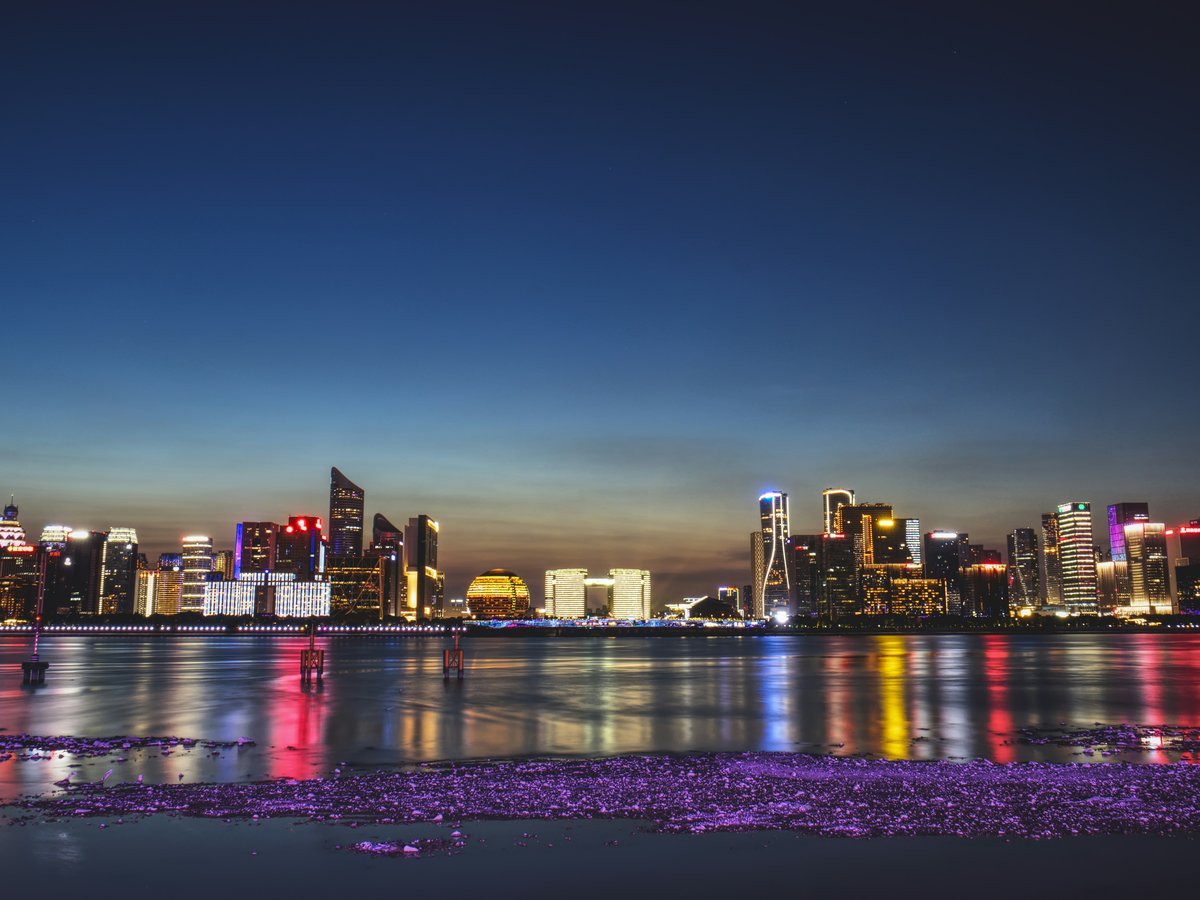
Hangzhou after dark is quieter than Shanghai, about 160 km to the northeast, and that's part of the appeal. The city's roughly 12 million residents tend to pace their evenings around West Lake, where the energy leans contemplative rather than chaotic. Alibaba's headquarters in the Xixi Wetland area has drawn a steady population of tech workers in their 20s and 30s since the early 2010s, and that demographic shapes the drinking culture across the city's bar districts. You'll find more craft cocktail spots and specialty beer bars than you might expect from a place best known internationally for Longjing green tea. Most bars fill up around 9 PM on weekends and thin out by 1 AM. Friday and Saturday are the real nights. Midweek, even Nanshan Lu feels subdued by 11 PM. By 2 AM on a Saturday, the last pockets of noise tend to be the barbecue stalls south of Hefang Jie.
Where Hangzhou Drinks
Nanshan Lu remains the city's most concentrated bar strip. The road runs along the southern edge of West Lake for about 2 km, and after sunset the lakeside stretch between Yongjin Gate and the China Academy of Art fills with warm lamplight from dozens of small bars. The cocktail scene here has matured noticeably since roughly 2018, when a wave of bartenders who'd trained in Shanghai started opening their own spots in Hangzhou. Prices for cocktails typically fall between 58 and 98 RMB, depending on the venue and the complexity of the drink. That puts them at maybe 60-70% of comparable Shanghai prices. Wine bars have been growing around the Xihu Tiandi complex on the northeast shore of West Lake. These tend to attract a slightly older crowd, couples and small groups in their 30s, with bottles of natural wine from France and Georgia appearing on more lists since around 2023. Mind you, the selection still trails what you'd find in Shanghai's former French Concession, but it's improving season by season. Rooftop bars are fewer in Hangzhou than in Shanghai or Chengdu. The geography helps, though. Several hotels around West Lake offer terrace seating with lake views, and the premium is usually a 20-30 RMB markup per drink rather than a separate cover charge. The Binjiang side of the Qiantang River has seen a few newer rooftop concepts open in the mixed-use towers built between 2020 and 2022. The dive bar category in Hangzhou tends to blur into late-night barbecue restaurants. On streets around Zhongshan Nan Lu and in the older parts of Xiacheng District, you can find no-frills spots where a bottle of Tsingtao or Snow Beer costs 8-15 RMB and the real draw is the lamb skewers on the charcoal grill outside. Smoke hangs thick over the plastic stools. Groups of 4 or 5 crowd around low tables, rolling dice and slamming bottles down between rounds. These spots get loud after midnight. Craft beer has found a foothold in Hangzhou. The city likely has 15-20 dedicated craft beer bars as of 2025, with local producers selling IPAs, wheat beers, and the occasional Longjing tea-infused ale. A half-pint of local craft tends to run 35-55 RMB.
Clubs and the Late-Night Floor
Hangzhou's club scene exists in the shadow of Shanghai, which sits less than an hour away by high-speed rail from Hangzhou East Station. Serious clubbers from Hangzhou regularly take the last train east for bigger DJ bookings and return on an early-morning service. That said, the local scene has its own rhythm. Most of the larger clubs cluster in two areas. The Huanglong Sports Center neighborhood and the newer developments in Binjiang District both host venues that hold 500-1,000 people on a busy night. EDM and commercial hip-hop dominate most playlists. Techno nights happen less frequently but have been gaining ground since around 2022, often in smaller warehouse-style spaces rather than the main-room clubs. Dress codes are relatively relaxed by Chinese club standards. Clean sneakers and streetwear pass at most Hangzhou venues. A few upscale spots around the Hubin area may turn away guests in flip-flops or athletic shorts, but that's the exception. Entry norms vary. Some clubs charge no cover but operate on a minimum-spend table system, where a table for 4-6 people might start at 1,500-3,000 RMB with a bottle of whiskey or vodka included. Walk-in cover at the door, when it exists, typically ranges from 50 to 150 RMB and often includes one drink. Peak hours tend to start around 11 PM. Before that, the dance floor stays sparse. On Friday and Saturday nights, the busiest stretch runs from midnight to about 2:30 AM. Some venues keep going until 4 or 5 AM, but the crowd thins noticeably after 3 AM. Thursday has become a secondary going-out night in Hangzhou, partly because Alibaba's work culture historically treated Friday evening as the start of the weekend. KTV remains the dominant form of nightlife for a large share of Hangzhou's locals. Private karaoke rooms with food and drink service fill up every night of the week across every district. A room for 6-8 people typically costs 200-600 RMB for 3-4 hours depending on the time slot. Groups often start KTV sessions after dinner, around 9 or 10 PM, and sing until midnight or later.
Live Music After Dark
Hangzhou's live music scene is smaller than Beijing's or Shanghai's but has a loyal following. The city sits within what musicians sometimes call the Yangtze Delta circuit, along with Shanghai, Nanjing, and Suzhou. Touring acts from across China regularly pass through Hangzhou on multi-city runs. The venues that host live music tend to be intimate, with capacity usually in the 100-300 range. Indie rock, post-punk, and folk acts appear on most bills. The Chinese indie scene that grew out of Beijing's Gulou neighborhood in the 2000s has built a solid listener base in Hangzhou, especially among students from Zhejiang University and the local tech crowd. Hip-hop grew in popularity across the city after the Zhejiang-produced TV show "The Rap of China" debuted on iQiyi in 2017. Friday and Saturday are the most reliable nights for live bookings. Weeknight shows happen but tend to draw smaller, more dedicated crowds. Doors usually open around 8 PM, with the first act on by 8:30 or 9 PM. Tickets typically cost 80-180 RMB, pre-sold through platforms like Damai or Xiudong. Door prices, when available, run about 20-50 RMB higher. Jazz has a quieter presence in Hangzhou. A handful of bars and hotel lounges feature jazz combos on certain nights, usually Thursday through Saturday. The sound leans toward smooth and accessible rather than experimental. Sets at most spots start around 9 PM. Street performance along the West Lake shoreline picks up in warmer months, roughly April through October. The Bai Causeway and the promenade near Broken Bridge attract buskers in the early evening. On a good night you might catch an erhu player or a folk guitarist near the Bai Causeway, with the lake behind them.
Nightlife neighborhoods
-
Nanshan Lu (南山路)
Hangzhou's original bar street, running about 2 km along West Lake's southern shore. Warm lamplight from ground-floor bars spills onto the lakeside path after sunset. The pace stays mellow, more conversation than bass, with occasional acoustic sets drifting through open windows. In September and October, the scent of osmanthus carries from the old trees along the waterfront.
- Best for
- Couples, small groups, cocktail-focused evenings, weeknight drinks within walking distance of West Lake's southern scenic spots
-
Xihu Tiandi (西湖天地)
A pedestrian complex on West Lake's northeastern edge with wine bars, upscale lounges, and restaurant terraces that stay open past 11 PM on weekends. The crowd trends older and more moneyed than Nanshan Lu. The lake surface reflects the building lights at night, and the stone walkways between venues feel polished and deliberate. Things stay relatively quiet on weeknights, but Friday and Saturday bring a steady flow of couples and after-dinner groups.
- Best for
- Wine drinkers, date nights, visitors who prefer a calmer, more curated atmosphere over bar-hopping
-
Binjiang District (滨江区)
The south bank of the Qiantang River has filled in rapidly since the mid-2010s, with residential towers and mixed-use complexes replacing what was largely open land. Tech company offices from Alibaba subsidiaries and startups cluster here, and the after-work crowd is noticeably younger than around West Lake. Rooftop bars in the newer towers face north toward the river, and you can hear the low hum of traffic on the Qianjiang bridges from the open-air terraces. The nightlife is more scattered than Nanshan Lu, spread across shopping mall basements and street-level spots in Xingguang Avenue's commercial blocks.
- Best for
- Tech workers, younger professionals, anyone exploring Hangzhou's newer side south of the Qiantang River
-
Wulin Lu and Yan'an Lu (武林路 / 延安路)
Hangzhou's central commercial corridor connects Wulin Square to the northern end of West Lake. The area around Hangzhou Tower and the Intime department stores has KTV halls, late-night restaurants, and a handful of bars tucked into side streets. The foot traffic peaks between 7 and 10 PM as shoppers filter out of the malls and the after-dinner crowd fills the sidewalks. The feel is more urban and commercial than Nanshan Lu, with neon signage and the chatter of street vendors selling stinky tofu and grilled squid from carts along the smaller alleys.
- Best for
- KTV groups, post-shopping nightcaps, visitors staying in the Wulin or Fengqi Road hotel cluster who want something walkable
-
Hefang Jie and Zhongshan Nan Lu (河坊街 / 中山南路)
The old town area south of West Lake has a split personality after dark. Hefang Jie itself is a restored pedestrian street that caters mainly to tourists and closes most shops by 10 PM. But the surrounding side streets and Zhongshan Nan Lu's southern stretches host late-night barbecue spots and no-frills beer stalls that keep going past 1 AM. The smell of charcoal and cumin hangs in the air. Plastic stools on the sidewalk, dice games at crowded tables, bottles of Snow Beer sweating in the humid air. This is where Hangzhou's nightlife meets its street-food culture.
- Best for
- Late-night eaters, budget-friendly drinking, anyone looking for Hangzhou's grittier, more local after-midnight scene
Safety after dark
Hangzhou is generally considered one of China's safer large cities after dark, and violent crime targeting visitors remains rare. That said, keep your phone secure in crowded bar areas along Nanshan Lu on weekend nights, as petty pickpocketing does happen. Taxi apps like Didi work reliably in Hangzhou, and rides from the West Lake bar districts to most hotels within the city cost well under 50 RMB. Avoid unlicensed drivers who approach outside clubs after 2 AM. The Hangzhou Metro currently runs until about 10:30-11 PM depending on the line, so it's generally not an option for getting home after a late night. Shared bikes from Hellobike and Meituan Bike are docked throughout the city and work 24 hours, though riding along the lake paths at night requires some caution on the unlit stretches. Drink spiking is not widely reported in Hangzhou, but standard precautions apply at any crowded venue. If you're eating at late-night barbecue stalls, the food quality is typically fine, though spice levels can catch visitors off guard. Tap water in Hangzhou is not safe to drink, so stick to bottled water between rounds.
Practical tips
- Payment
- Cash is rarely accepted at Hangzhou bars and clubs. WeChat Pay and Alipay are essentially mandatory. International visitors without a Chinese bank account can now link Visa or Mastercard to WeChat Pay or Alipay as of 2024, though some smaller barbecue stalls still have trouble processing foreign-linked accounts. Carry a small amount of cash in RMB as a backup.
- Drinking culture
- Hangzhou's drinking culture is less intense than in northern Chinese cities like Beijing or Harbin. Toasting with baijiu is more common at dinner banquets than at bars. In bar settings, beer and cocktails are the norm. If you're invited to a KTV session by local friends, expect the host to order snacks and drinks for the table. Splitting the bill is less common in these contexts. The host typically pays.
- Opening hours
- Most bars along Nanshan Lu open between 6 and 7 PM and stay open until 1-2 AM on weekends, with earlier closes around midnight on weeknights. Clubs rarely see real activity before 11 PM. KTV venues often operate from late afternoon through 2 or 3 AM, with some 24-hour branches in the Wulin commercial area. Late-night barbecue spots in the Hefang Jie area tend to fire up around 9 PM and run until 3 or 4 AM on weekends.
- Language
- English is not widely spoken in Hangzhou's bars and clubs outside of international hotel lounges. Having a translation app ready helps. Bar menus at the more established cocktail spots on Nanshan Lu sometimes include English, but smaller venues and barbecue stalls rarely do. Learning the characters for beer (啤酒, píjiǔ) and the bill (买单, mǎidān) covers the two most common needs.
- Seasonal considerations
- Hangzhou's summers are notoriously hot and humid, with temperatures regularly above 35°C from late June through August. Rooftop bars and outdoor terraces become uncomfortable in July and August, and the indoor spots with air conditioning fill up faster. The best months for evening drinking outdoors are April through early June and September through November. The osmanthus bloom in late September and October adds a sweet, floral scent to the West Lake bar areas that's genuinely distinctive.
FAQ
Is Hangzhou's nightlife worth visiting if I'm already going to Shanghai?
Hangzhou offers a different pace. Shanghai has bigger clubs, more international DJs, and a later-running scene. Hangzhou's appeal is the setting. Drinking along West Lake on a warm October evening with osmanthus blossoms scenting the air is an experience Shanghai can't replicate. The two cities are under an hour apart by high-speed rail from Hangzhou East Station, so many visitors do both. If you have one evening, Nanshan Lu gives you the most concentrated taste of what Hangzhou does differently.
What time do people go out in Hangzhou?
The rhythm starts later than you might expect. Bars along Nanshan Lu begin filling around 9 PM on weekends. Clubs stay empty until 11 PM, with the peak running from midnight to about 2:30 AM on Fridays and Saturdays. KTV sessions typically start after dinner, around 9 or 10 PM, and run 3-4 hours. Late-night barbecue stalls hit their stride after midnight. By 3 AM, most of the city has wound down, though a few clubs and barbecue spots keep going until 4 or 5 AM.
Do I need to speak Mandarin to enjoy Hangzhou's nightlife?
It helps significantly. English is uncommon in most Hangzhou bars and clubs outside international hotel venues. A translation app on your phone handles most situations. The cocktail bars on Nanshan Lu sometimes have English menus, and staff at the larger clubs in Binjiang and Huanglong may know basic English. At barbecue stalls and KTV venues, pointing at what other tables have ordered works when language fails. Learning a few key phrases like 'beer' (啤酒) and 'the bill' (买单) goes a long way.
How do I get home after a late night in Hangzhou?
Didi, China's main ride-hailing app, operates 24 hours in Hangzhou and is the most reliable option after midnight. The Hangzhou Metro stops running around 10:30-11 PM depending on the line, so it's not useful for late returns. Shared bikes from Hellobike and Meituan are available around the clock for shorter distances. Avoid unmarked cars that approach outside clubs after closing. Rides from the West Lake nightlife areas to most city-center hotels are relatively short and affordable through Didi.
What's the dress code for Hangzhou bars and clubs?
Relaxed by Chinese city standards. Clean streetwear and sneakers are fine at the vast majority of venues. A few upscale spots around the Hubin area and Xihu Tiandi may expect slightly smarter attire, but enforcement is loose. Flip-flops and athletic shorts might get you turned away at a handful of clubs. For KTV, anything goes. The barbecue stalls along Zhongshan Nan Lu have no dress code whatsoever.
Last verified by automated review (v1.7.2) on . What is automated review?