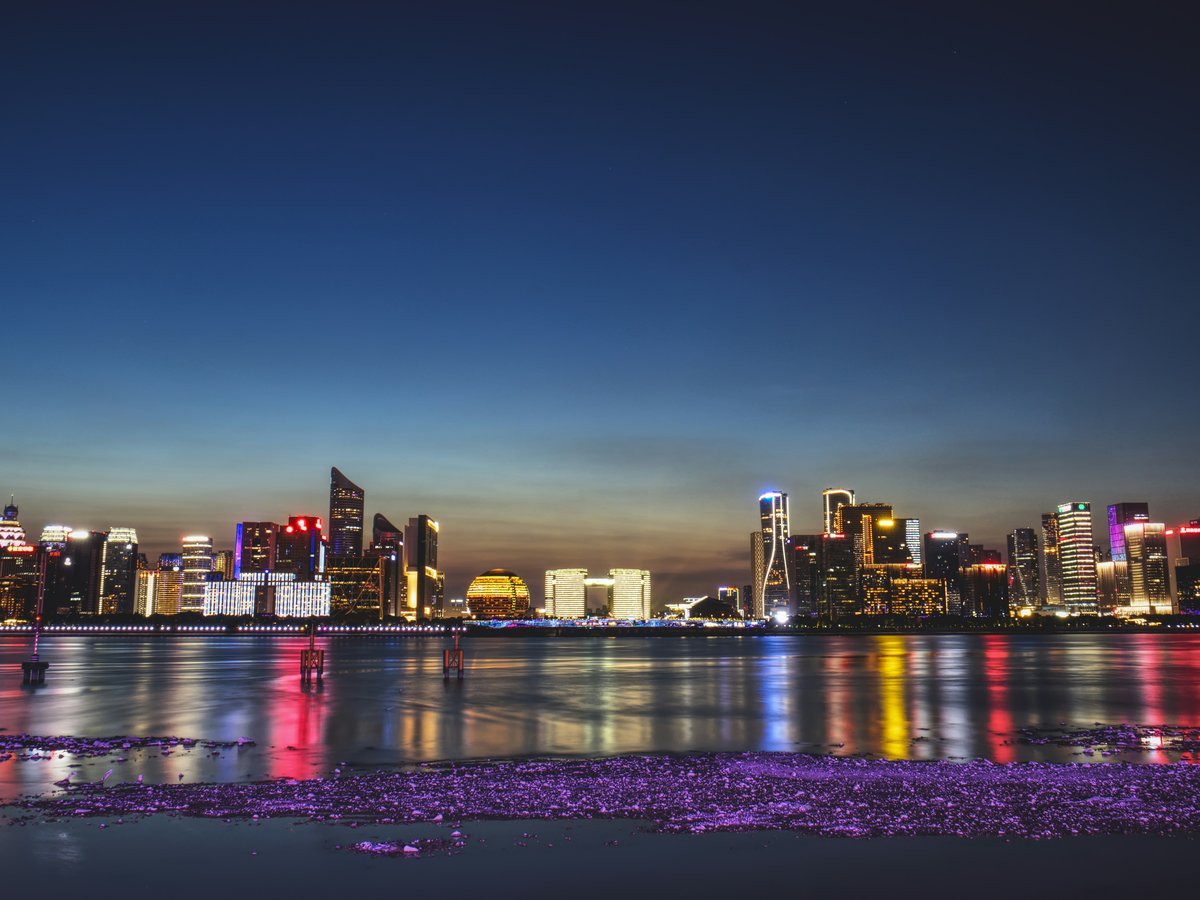
Where do locals actually go in Hangzhou?
The Hangzhou that locals know runs along a different map: Baoshi Mountain and Baochu Pagoda before 7am, Shengli River food street in Gongshu after dark, the Grand Canal at Xiaohe Street on weeknights, and weekend drives to Meijiawu or Manjuelong for tea lunches. On workdays, Hangzhou Library in Qianjiang New City and Qingteng Tea House on Nanshan Road are the places they choose over any cafe.
Head to Baoshi Mountain between 5:30am and 7am. The trail climbs from Beishan Road on the north shore of West Lake, and by 6am the stone steps are damp with dew and full of retirees in tracksuits, a few of them clapping or shouting into the camphor trees as a breathing routine. Baochu Pagoda stands at the top, and the rock shelf beside it looks across the whole lake while haze still sits on Su Causeway. By 8am the tour groups reach Broken Bridge below, and the locals have gone back down toward Shuguang Road for breakfast, where noodle counters serve pian'er chuan, Hangzhou's soup of pork, bamboo shoots and pickled greens, for roughly 15 to 25 yuan (about US$2.25 to US$3.75 at 6.6743 yuan to the dollar). The summit loop is steep in places, and from June to August the humidity on those steps tends to soak a shirt within 20 minutes.
Evenings belong to the Grand Canal in Gongshu District, roughly 6 km north of the lake, where few tourists bother to go. Xiaohe Street and the Qiaoxi block beside Gongchen Bridge are restored late-Qing and Republican-era lanes, and after 8pm on weeknights they fill with families pushing strollers, couples on e-bikes and men fishing off the stone embankment. The water smells faintly of diesel whenever a canal waterbus passes. A short walk away, Shengli River food street lines a smaller canal with grills, crayfish joints and hotpot shops, staying loud past midnight on Fridays and Saturdays, with crayfish season peaking in June and July, when plastic gloves and chilli oil cover every outdoor table. Gongshu also works as a base for a month: rents tend to sit below Xihu District's, and the main roads around the canal carry supermarkets, wet markets and laundry shops within a few blocks of each other.
On weekends, Hangzhou families drive into the tea hills southwest of the lake, and the farmhouse front rooms of Meijiawu and Longjing villages sell this spring's Longjing green tea by the jin (500 g). The nongjiale farmhouse restaurants serve tea-fried shrimp, bamboo shoots and free-range chicken at long shared tables from 11am. Manjuelong, closer to the lake on the road toward Hupao Spring, is where locals head in late September and October, when the osmanthus trees bloom and the valley smells of honey and apricot. On an October Saturday, a table at Meijiawu after noon can mean a long wait: get there by 11am. Viator and GetYourGuide both sell tea-village day tours that slot between work weeks, though a Didi ride from West Lake will likely cost less if you can show the driver a pinned address in Chinese.
For workdays, Hangzhou's free libraries beat most cafes. The main branch of Hangzhou Library in Qianjiang New City admits anyone, a policy toward migrant workers and the homeless that made national news, and its reading rooms stay quiet and air-conditioned into the evening. Zhejiang Library on Shuguang Road draws students cramming for civil-service exams, so seats near power outlets tend to go by 9am. Library and cafe wifi in China usually wants SMS verification on a mainland number, and foreign eSIM data from Jetogo typically routes through Hong Kong, which keeps Gmail and Google Docs reachable where local wifi will not. Qingteng Tea House on Nanshan Road is the local answer to laptop afternoons: one tea order covers unlimited snacks, from melon seeds to roasted sweet potato, and staff rarely move anyone along. The trade-off at Qingteng is noise, since card games at the next table get loud by 3pm. Hangzhou's 5.8/10 digital-nomad suitability (sourced from TTDI's editorial rubric) reflects good infrastructure weighed against firewall friction.
Where they actually go
Baoshi Mountain dawn climb
Beishan Road, north shore of West Lake: Dew-slick stone steps from 5:30am, retirees in tracksuits clapping and calling into the trees, and the lake still under haze from the rock shelf beside Baochu Pagoda. Empty of locals by 8am.
Xiaohe Street and Qiaoxi block
Gongshu District, Grand Canal: Late-Qing and Republican-era lanes by Gongchen Bridge, with strollers, e-bikes and anglers on the embankment after 8pm, and a whiff of diesel each time a waterbus passes.
Shengli River food street
Gongshu District: Grill smoke, crayfish in chilli oil and hotpot steam along a narrow canal, loud with office groups until past midnight on Fridays and Saturdays.
Meijiawu tea village
West Lake tea hills, southwest of the lake: The farmhouse front rooms sell Longjing by the 500 g jin, and from 11am on weekends the long nongjiale tables of tea-fried shrimp and bamboo shoots fill with Hangzhou families.
Manjuelong
Hupao Road valley, south of West Lake: The osmanthus trees fill the whole valley with the smell of honey in late September and October, petals dropping into cups while locals sit drinking tea under the branches.
Qingteng Tea House
Nanshan Road: One tea order buys you an afternoon of unlimited melon seeds and sweet potato, laptops at the window tables, and card games that turn loud by 3pm.
Hangzhou Library main branch
Qianjiang New City: The reading rooms are cool and hushed, open to everyone: students, retirees and remote workers share long desks, and the only sound is pages and the air conditioning.
Best times to visit
Baoshi Mountain 5:30am to 7am daily; Grand Canal lanes after 8pm Monday to Thursday; Shengli River until past midnight Friday and Saturday; tea villages from 11am on weekends, with osmanthus peaking late September to October.
Last verified by automated review (v1.7.2) on . What is automated review?