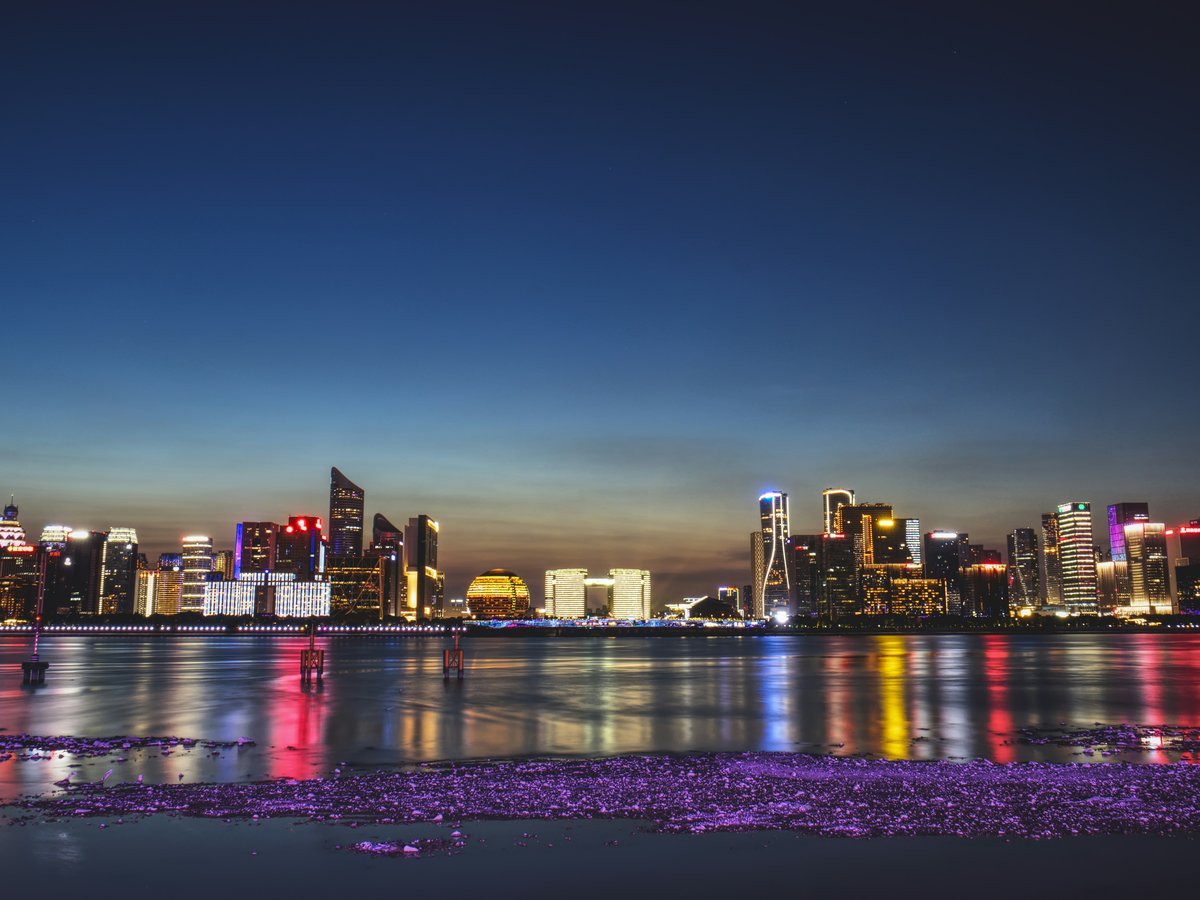
Stay in Hangzhou in January
94 hotels in the Trip.com pool for Hangzhou, from US$13 a night.
Opens Trip.com on Fri 1 Jan to Sun 3 Jan 2027; change the dates there.
January in Hangzhou is defined by damp cold. The thermometer reads 11°C (52°F) during the day and drops to 1°C (34°F) at night, which sounds manageable until the Yangtze Delta humidity turns every degree into something that bites harder than the number suggests. Most buildings south of the Yangtze lack central heating, a fact that catches nearly every first-time winter visitor off guard. Your hotel room might have a wall-mounted unit that warms a cone-shaped zone in front of it while the bathroom tiles stay frigid. Restaurants along Nanshan Lu prop their doors open year-round out of habit, and the cold follows you to your table.
That said, January has a quality that peak-season Hangzhou lacks entirely. West Lake in winter mist looks like the Song Dynasty ink-wash paintings that made it famous. The causeways that draw shoulder-to-shoulder crowds in October Golden Week are quiet enough to hear your own footsteps on the flagstones. If snow arrives, and Hangzhou typically gets 2-3 snowfall days each January, the Broken Bridge scene (断桥残雪) becomes one of the most photographed landscapes in eastern China. Plum blossoms begin opening on Gushan Island and around Lingyin Temple toward month's end.
Hotel rates along Beishan Lu and in the Wulin commercial district drop 30-40% compared to the autumn peak. Flights from Beijing and Guangzhou are at their annual low. The tradeoff is straightforward. You save money and avoid crowds, but you'll plan more time indoors and layer up more aggressively than you expected for a city at the same latitude as Cairo.
Why visit in January
- West Lake in winter mist offers the classic ink-wash-painting atmosphere that defined centuries of Chinese landscape art, with a fraction of the autumn crowds on Su Causeway and Bai Causeway
- Hotel rates near West Lake drop 30-40% from the October Golden Week peak, and flights from Shanghai Pudong, Beijing Capital, and Guangzhou Baiyun are at annual lows
- Plum blossoms (梅花) begin opening at Gushan Island and Hangzhou Botanical Garden in late January, drawing local photographers before the February peak
- Lingyin Temple's Laba Festival congee distribution (typically mid-to-late January) is a centuries-old tradition that draws tens of thousands of locals and feels genuinely communal
- Rainfall averages only 51mm across 7 days, making January the second-driest month after December's 29mm. Dry spells of 5-7 consecutive days are common
Worth knowing
- The damp cold penetrates layers in a way that continental cold at the same temperature does not. At 68% average humidity, 1°C (34°F) mornings feel significantly colder than the thermometer reads
- Most buildings in Hangzhou lack central heating. Hotels, restaurants, and museums rely on individual air conditioning units or space heaters, leaving cold pockets everywhere
- Daylight is short. Sunrise comes after 6:50 and sunset falls before 17:20, limiting outdoor sightseeing to roughly 10 productive hours
- Some West Lake boat services and outdoor attractions run reduced winter schedules. The lake's electric boats stop running by 16:30, about 90 minutes earlier than summer
Best for
Think twice if
January is Hangzhou's second-coldest month after a near-identical December. Daytime highs average 11.2°C (52°F) and lows settle around 1.2°C (34°F), though the 68% humidity makes both feel several degrees colder. Rainfall totals about 51mm across 7 rainy days, making this the second-driest month of the year. Overcast skies are common. Clear days tend to cluster in runs of 4-5 before the next grey stretch moves in. Snow falls on perhaps 2-3 days, rarely accumulating more than a few centimeters before melting by midday. Wind chill along the exposed lake causeways can push the perceived temperature well below freezing on clear mornings.
Seasonal caution
- Overnight temperatures regularly drop to or below 0°C (32°F), and the combination of high humidity with near-freezing air creates a penetrating damp cold that feels significantly worse than dry cold at the same temperature. Frostbite is not a risk, but hypothermia-level discomfort is possible on exposed lake causeways without proper layering.
- Stone paths and bridges around West Lake, particularly the approach to Broken Bridge and the steps at Leifeng Pagoda, become slippery after rain or light snow. The city rarely salts or sands these surfaces.
Year-round climate
Averages from the last 5 years.
| Month | Avg high (°C) | Avg low (°C) | Rainfall (mm) |
|---|---|---|---|
| Jan | 11 | 1 | 51 |
| Feb | 12 | 3 | 100 |
| Mar | 18 | 8 | 116 |
| Apr | 23 | 13 | 121 |
| May | 27 | 17 | 162 |
| Jun | 29 | 22 | 341 |
| Jul | 34 | 26 | 196 |
| Aug | 35 | 26 | 182 |
| Sep | 30 | 23 | 149 |
| Oct | 24 | 16 | 65 |
| Nov | 19 | 10 | 71 |
| Dec | 12 | 3 | 29 |
Holidays and festivals in January
Public holidays
- New Year's Day(元旦)1 January 2027
Headline events
Laba Festival at Lingyin Temple (腊八节)
Mid-to-late January (8th day of the 12th lunar month, varies annually with the lunar calendar)
Lingyin Temple has distributed free Laba congee (腊八粥) on the 8th day of the 12th lunar month for over a thousand years. The queue starts forming before dawn and can stretch more than a kilometer by 7:00. Tens of thousands of Hangzhou residents participate, making it one of the largest communal food traditions in eastern China. The rice porridge is cooked overnight in massive iron pots on the temple grounds.
Best things to do in January
West Lake winter mist photography
photographyWest Lake on a grey January morning produces the misty, layered atmosphere that inspired centuries of Chinese ink-wash landscape painting. Su Causeway and the view from the Zhejiang Provincial Museum terrace toward Baoshi Hill offer compositions where the pagodas dissolve into fog. Early morning, before 8:00, is when the mist sits lowest over the water.
January's cold, humid air creates the dense low-lying mist that is rare in warmer months. The bare willow branches along Bai Causeway frame compositions that leafy summer canopy obscures.Booking tipNo booking needed. Arrive before 7:30 for the thickest mist. Bring a lens cloth. Condensation on glass is constant.
Broken Bridge snow viewing (断桥残雪)
sightseeingWhen snow falls on Hangzhou, the north end of Bai Causeway at Broken Bridge (断桥) becomes one of the most photographed spots in China. The snow melts faster on the bridge's south-facing stone surface than on the surrounding banks, creating the 'remnant snow' effect that earned its place among the Ten Scenes of West Lake. Locals rush to the bridge within hours of a snowfall.
January accounts for roughly half of Hangzhou's annual snowfall days. Snow events are brief but the city mobilizes quickly. Weibo and Douyin light up with Broken Bridge photos within minutes of the first flakes.Booking tipUnpredictable by nature. Monitor Hangzhou weather forecasts for the 2-3 snowfall windows. The bridge is free and open 24 hours.
Early plum blossom viewing at Lingyin Temple and Gushan Island
natureThe earliest plum blossoms (腊梅 wintersweet, and true meihua varieties) begin opening in the last 10 days of January around Lingyin Temple's grounds and on Gushan Island in West Lake. The pale yellow wintersweet blooms first, filling the cold air with a sharp, sweet fragrance that carries surprisingly far in the still winter atmosphere. Gushan's Xiling Seal Society (西泠印社) grounds have some of the oldest plum trees in the city.
Late January marks the very start of plum blossom season in Hangzhou. The earliest blooms appear before the February crowds, and the contrast of delicate flowers against bare winter branches is strongest now.Booking tipLingyin Temple charges 75 RMB admission (30 RMB for the scenic area plus 45 RMB for the temple). Gushan and Xiling Seal Society grounds are free.
Indoor tea tasting at Meijiawu Village (梅家坞)
food and drinkMeijiawu, a tea village 8km west of West Lake, has dozens of family-run tea houses where farmers serve their own Longjing green tea. In January, the atmosphere is quieter than the famous Longjing Village, and farmers have more time to walk visitors through proper brewing technique. The tea from the previous spring's harvest is fully settled by January, and tasting sessions typically cost 50-100 RMB per person with unlimited refills.
The quiet winter season means tea farmers have time for unhurried tasting sessions that are impossible during the spring harvest rush. Peak-season Meijiawu is a tour-bus bottleneck. January is conversational.Booking tipNo booking needed for walk-in tastings. Take bus K324 from Lingyin to Meijiawu. Weekday mornings are quietest.
Lingyin Temple Laba Festival congee queue
culturalOn Laba Festival day (the 8th of the 12th lunar month), Lingyin Temple distributes free congee starting around 5:00. The experience is more communal ritual than tourist activity. Thousands of Hangzhou residents queue in the pre-dawn cold, breath visible in the dark, carrying their own bowls and thermoses. The temple's monks cook the porridge overnight in iron pots across the courtyard. Receiving a bowl from a temple that has performed this ritual for over a thousand years carries weight regardless of your beliefs.
Laba Festival falls exclusively in January. This is a once-a-year event tied to the lunar calendar, dating back over 1,000 years at Lingyin Temple.Booking tipArrive before 5:00 to queue near the front. The temple grounds open for queuing around 4:30. Bring a thermos of hot water and wear your warmest layers.
Xixi National Wetland Park winter birding
natureXixi Wetland Park (西溪湿地), about 10km northwest of West Lake, hosts overwintering migratory birds from December through February. Egrets, grey herons, and mandarin ducks are reliable sightings from the park's elevated boardwalks. The deciduous trees are bare in January, which improves visibility into the reed beds. The park covers 11.5 square kilometers and takes 3-4 hours to walk the main circuit.
Migratory bird populations peak in January. The bare winter vegetation and low visitor numbers make this the best month for actual bird spotting, even if the scenery lacks the green lushness of promotional photos.Booking tipEntry is 80 RMB. The electric boat tour (60 RMB extra) covers more ground but misses the quieter eastern boardwalks where bird activity is highest.
Hangzhou winter comfort food crawl
food and drinkJanuary is when Hangzhou's hot pot restaurants and comfort-food kitchens fill up every evening. Gaoyin Street (高银街) near Hefang Jie concentrates over 20 restaurants within 300 meters, mixing Hangzhou-style dishes with Sichuan hot pot, Cantonese claypot rice, and lamb soup from the Muslim quarter on Zhongshan Nan Lu. A focused evening hitting 2-3 spots typically costs 100-200 RMB per person.
Cold weather makes Hangzhou's indoor dining scene the main draw rather than the backup plan. Restaurants that need reservations in October have walk-in availability in January.Booking tipGaoyin Street restaurants fill up after 18:00 on weekends. Arrive by 17:30 or eat late after 20:00.
Qinghefang Historic District and Hefang Street evening walk
cultureHefang Jie (河坊街) and the surrounding Qinghefang (清河坊) quarter date to the Southern Song Dynasty. The covered portions of the street provide shelter from January's occasional rain. The reduced winter crowds mean you can stop at the traditional medicine shops, the Zhang Xiaoquan scissors store (est. 1628), and the Huqingyu Tang pharmacy museum (est. 1874) without being pushed along by foot traffic.
January crowds are roughly a third of Golden Week levels. The covered sections of Hefang Jie make it one of the few comfortable outdoor-but-sheltered walks in winter Hangzhou.Booking tipFree to walk. The Huqingyu Tang pharmacy museum charges 10 RMB. Evening visits after 18:00 catch the street food vendors in full swing.
What to eat in January
On menus now
Dongpo Pork (东坡肉)
Hangzhou's signature braised pork belly, slow-cooked in Shaoxing rice wine for 2-3 hours until the fat renders to a trembling, almost translucent texture. Named after the Song Dynasty poet Su Dongpo who governed Hangzhou. Louwailou (楼外楼) on Gushan has served it since 1848. Winter is when this dish feels right.
Street food peaks
Sugar Roasted Chestnuts (糖炒栗子)
Street vendors on Hefang Jie and around Wulin Square roast chestnuts in giant woks of black sand and sugar. The smell carries for half a block. The shells crack easily when fresh and the flesh inside is floury and sweet. Typically 15-20 RMB per bag.
Jiuniang Tangyuan (酒酿圆子)
Small glutinous rice balls floating in a warm, mildly alcoholic fermented rice soup. Hangzhou's go-to winter street dessert, sold from carts near Hefang Jie and in the basement food courts of Hangzhou Tower. The fermented rice gives it a faintly sour, yeasty warmth.
In markets
Winter Bamboo Shoots (冬笋)
Harvested from the hills west of Hangzhou from December through January, winter bamboo shoots are smaller, more tender, and sweeter than their spring counterparts. They appear in stir-fries, soups, and the local favorite pairing with xuecai (pickled mustard greens) at restaurants along Gaoyin Street.
Festival food
Laba Congee (腊八粥)
A thick rice porridge made with eight or more ingredients including red beans, lotus seeds, dried longan, peanuts, and jujubes. Lingyin Temple distributes it free on Laba Festival day, but restaurants and street vendors across Shangcheng district serve their own versions throughout January.
Niangao (年糕)
Pounded glutinous rice cakes that become especially prominent in late January as Spring Festival preparations begin. In Hangzhou, they are typically stir-fried with pork and napa cabbage rather than served sweet. Ningbo-style niangao, made from a slightly different rice variety, is widely available at Wushan Temple Fair stalls.
Regular events in January
Hangzhou Botanical Garden Plum Blossom Festival (杭州植物园梅花节)
The Botanical Garden on Taoyuanling Lu opens its annual plum blossom exhibition in late January, running through early March. Over 5,000 plum trees across the Lingfeng Tanmei area bloom in waves, with the earliest wintersweet varieties opening first.
Late January through early MarchWushan Temple Fair and Pre-Spring Festival Market (吴山庙会)Free
Wushan Square at the southern end of Hefang Jie hosts a traditional market in the last 10 days of January as Spring Festival approaches. Vendors sell Spring Festival couplets (春联), paper cuttings, dried meats, and niangao. The crowd is almost entirely local.
Late January through Spring Festival eveNew Year's Day Sunrise at Chenghuang Pavilion (城隍阁)
Hangzhou residents climb Wushan Hill to watch the first sunrise of the year from Chenghuang Pavilion. The pavilion at 62 meters elevation overlooks West Lake to the west and the Qiantang River to the south. Hundreds gather in the cold dark before dawn on January 1.
January 1Best places this January
West Lake (西湖) and Su Causeway
parkThe 6.5km Su Causeway spanning the full length of West Lake is at its most atmospheric in January. The bare willow branches, low mist, and empty benches create the contemplative landscape that made this a UNESCO World Heritage Site in 2011. The Huagang Guanyu (花港观鱼) fish-viewing park at the south end has some of the best-maintained winter gardens around the lake.
Shangcheng / West Lake scenic areaLingyin Temple (灵隐寺)
templeOne of China's largest and wealthiest Buddhist temples, founded in 328 AD. The winter grounds feel more contemplative than the packed autumn version. The Feilai Feng cliff carvings, 470 Buddhist sculptures carved between the 10th and 14th centuries, are easier to examine closely without crowds. The cold air carries incense smoke in slow, visible plumes.
Xihu District, western hillsGushan Island (孤山)
parkA small island-hill on the north side of West Lake, connected by bridges at both ends. Home to the Xiling Seal Society (est. 1904), the Zhejiang Provincial Museum, and some of the oldest plum trees in Hangzhou. The wintersweet along the museum path starts blooming in late January. Free to access.
Beishan Lu areaChina National Tea Museum (中国茶叶博物馆)
museumTwo campuses set in the Longjing tea-growing hills west of West Lake. The museum covers 3,000 years of Chinese tea history with well-curated English signage. January is the only month where you can walk the tea terraces without navigating tour groups. The on-site teahouse serves proper Longjing by the pot.
LongjingHefang Street and Qinghefang Historic District (河坊街 / 清河坊)
historic districtA 460-meter pedestrian street dating to the Southern Song period, lined with traditional Chinese medicine shops, silk stores, and food vendors. The Huqingyu Tang traditional pharmacy (est. 1874, a national heritage site) is worth 30 minutes. January thins the crowd enough that you can browse the side alleys branching off the main corridor.
ShangchengXixi National Wetland Park (西溪国家湿地公园)
nature reserveAn 11.5-square-kilometer wetland reserve with boardwalk trails winding through persimmon groves, reed beds, and scattered fishing villages. Winter strips the foliage back, exposing the wetland's skeletal beauty and making overwintering birds far easier to spot from the elevated paths.
Xihu District, northwest HangzhouLeifeng Pagoda (雷峰塔)
landmarkReconstructed in 2002 on the foundations of the 977 AD original, the pagoda's upper-level viewing platform provides the defining panoramic view of West Lake. On a clear January day the visibility extends to the hills beyond Lingyin. The underground archaeological layer preserves the original Song-era base. Elevator access makes it manageable in cold weather.
Nanshan LuMeijiawu Tea Village (梅家坞)
villageA working tea village 8km from West Lake center, quieter and more authentic than the more famous Longjing Village in January. Family-run tea houses line both sides of the single main road. The terraced hillsides of dormant tea bushes have a stark, geometric beauty in winter light.
Western hills
Your packing checklist
Tick items off as you pack. Your progress saves in this browser.
All packed — have a great trip.
Insider tips
The Laba Festival congee queue at Lingyin Temple is a local ritual, not a tourist attraction. If you go, bring your own thermos and a reusable bowl. The line starts forming around 4:30 and the congee runs out by 9:00. Most Hangzhou residents consider it good luck for the year, so the mood is festive even at -2°C in the dark.
Meijiawu Village tea houses are open all January and far less commercialized than Longjing Village. Farmers will sit with you for 45 minutes walking through proper brewing steps, something that is impossible during the spring tea harvest rush. Bus K324 from Lingyin gets you there in 15 minutes.
The Zhejiang Provincial Museum on Gushan is free (bring your passport), rarely crowded in January, and has one of the best celadon ceramics collections in China. The Longquan celadon gallery alone is worth an hour.
For the Broken Bridge snow photo, follow Hangzhou locals on Weibo or the Hangzhou weather WeChat account. When snow is forecast, locals race to the bridge within the first hour. The snow rarely lasts past noon. Arrive at dawn or miss it.
The basement food courts in Hangzhou Tower (杭州大厦) and Intime Department Store (银泰百货) near Wulin Square offer local Hangzhou dishes at 20-40 RMB per meal in heated, comfortable spaces. They are a practical winter lunch base when the outdoor cold becomes tiresome.
Avoid these mistakes
- Packing for the temperature number instead of the humidity. Visitors from Beijing or northern Europe arrive with light jackets rated for 0°C in dry cold and find themselves miserable in Hangzhou's damp 3°C. Layer for wet cold, not dry cold.
- Booking a full day of outdoor sightseeing without warming-up stops. Plan indoor breaks every 90 minutes. The China National Tea Museum, Zhejiang Provincial Museum, and Huqingyu Tang pharmacy are all near West Lake and free or cheap.
- Missing the Broken Bridge snow window. Snow in Hangzhou rarely lasts more than 4-5 hours. Visitors who see snow from their hotel and plan to visit after breakfast find it gone by the time they arrive. Go immediately or not at all.
- Expecting Longjing tea fields to be green. January tea terraces are brown and dormant. The famous green hillsides return in March. Visitors who make the trek to Longjing Village in January for the scenery find it underwhelming. Go for the indoor tea tastings at Meijiawu instead.
Practical tips for January
Book accommodation in Shangcheng district near West Lake or along Beishan Lu to minimize cold outdoor transit between your hotel and major sites. Hangzhou Metro Line 1 connects Hangzhou East Railway Station to the West Lake area (Longxiang Bridge station) in about 25 minutes for 4 RMB. The high-speed rail from Shanghai Hongqiao takes 45 minutes and runs every 10-15 minutes, making day trips feasible. Most West Lake attractions close by 17:00 in January, roughly 90 minutes earlier than summer schedules. Download Alipay before arrival, as cash acceptance has dropped sharply and many small vendors, taxi apps, and even some museums now accept only mobile payment. Dress in layers rather than one heavy coat, since indoor heating varies wildly from building to building. Restaurants on Gaoyin Street and Hefang Jie typically open by 10:30 and serve through 21:00 even in low season. If you plan to visit Lingyin Temple on Laba Festival day, budget an extra 2 hours for the queue and arrive before 5:00 for the congee distribution. The last week of January may see modest hotel price increases as Spring Festival preparations begin, though genuine peak pricing does not hit until February.
FAQ
Is January a good time to visit Hangzhou?
January is a fair but not ideal time. You get West Lake at its most atmospheric, the lowest prices of the year, and minimal crowds, but you trade that for damp cold that averages 1°C (34°F) at night and 11°C (52°F) during the day in buildings that lack central heating. If you're already in eastern China and can tolerate cold, a 2-3 day visit is worthwhile. If Hangzhou is your primary destination and you have flexibility, October or November are significantly more comfortable.
What is the weather like in Hangzhou in January?
Cold and damp. The average high is 11.2°C (52°F) and the average low is 1.2°C (34°F), with 68% humidity that makes it feel colder than the numbers suggest. Rainfall averages 51mm across about 7 days, mostly as light, intermittent drizzle rather than heavy downpours. Snow falls on 2-3 days in a typical January but rarely accumulates. Overcast skies are common, with clear spells lasting 4-5 days between grey stretches.
Does it snow in Hangzhou in January?
Yes, typically 2-3 times per January, but snow events are light and brief. Accumulation rarely exceeds a few centimeters, and it usually melts by midday. When it does snow, the Broken Bridge Remnant Snow scene at West Lake draws thousands of locals within hours. Follow Hangzhou weather WeChat accounts for 24-hour forecasts if you want to catch it, because waiting until morning likely means you've missed it.
Is Hangzhou crowded in January?
No. January is one of the quietest months at West Lake and other major sites. Crowd levels run at roughly 20-30% of the October Golden Week peak. The exception is the last 7-10 days of January, when domestic travel increases ahead of Spring Festival. Lingyin Temple on Laba Festival day is the one genuinely crowded January event, drawing tens of thousands of locals before dawn.
What should I wear in Hangzhou in January?
Layer for damp cold, not dry cold. A waterproof insulated jacket, thermal base layers, a warm scarf, gloves, and waterproof shoes with grip are all necessary. The humidity at 68% makes 1°C feel significantly worse than the same temperature in Beijing or Seoul. Most importantly, you cannot count on indoor heating. Restaurants, museums, and hotel lobbies may be barely warmer than outside, so base layers earn their weight.
Find a flight to Hangzhou
Live fares to Hangzhou appear here once cookies are accepted.
Last verified by automated review (v1.7.2) on . What is automated review?