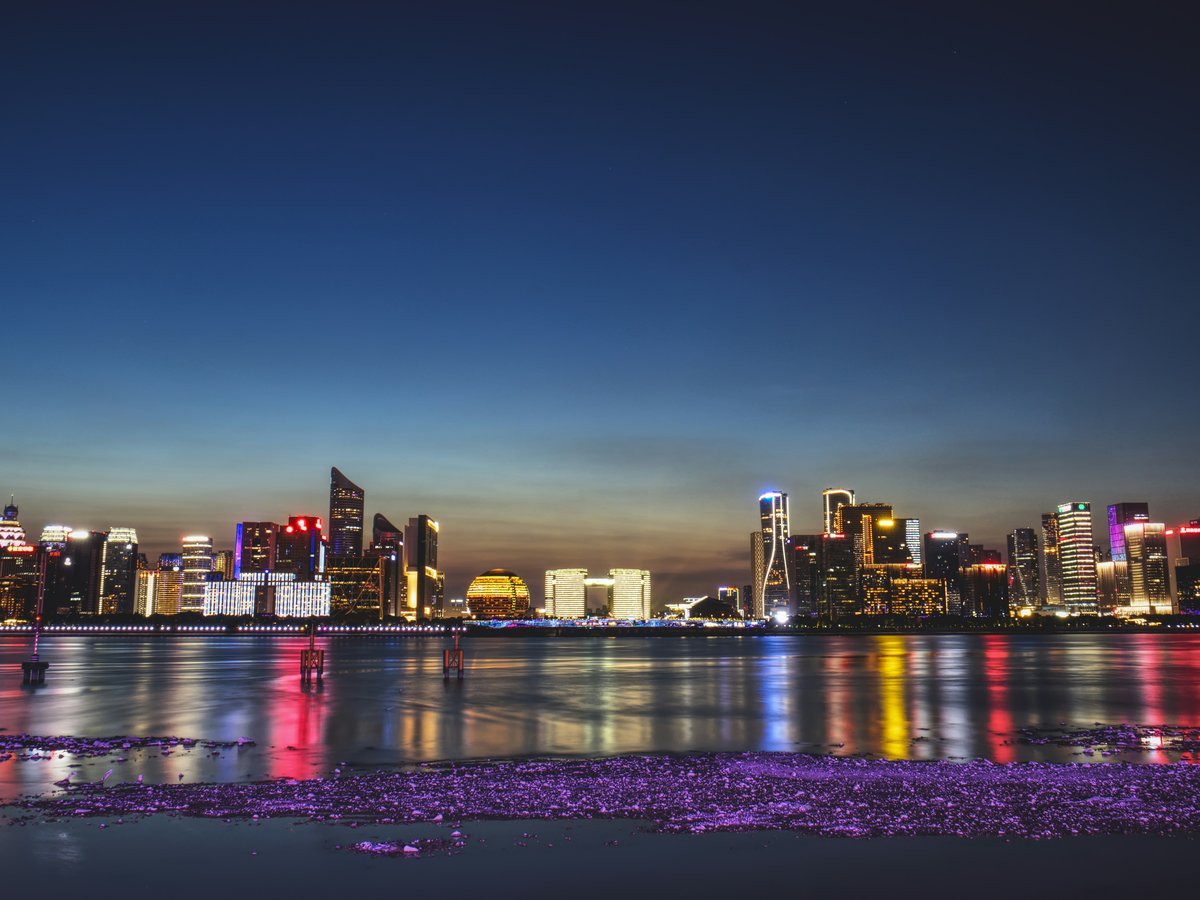
Stay in Hangzhou in December
94 hotels in the Trip.com pool for Hangzhou, from US$13 a night.
Opens Trip.com on Fri 4 Dec to Sun 6 Dec 2026; change the dates there.
December in Hangzhou is cold, quiet, and remarkably dry. Daytime temperatures hover around 11.8°C (53°F) and drop to 2.6°C (37°F) overnight, which keeps most domestic tour groups away from West Lake. The famous lakeside willows along Bai Causeway are bare by early December, and the last of the autumn ginkgo color at Lingyin Temple has likely faded by the first week. Only 29mm of rain falls across roughly 5 rainy days, making this the driest stretch of Hangzhou's year.
That said, December has a quality that Hangzhou's peak months lack. The crowds that pack the Su Causeway shoulder-to-shoulder in October thin to a trickle. Hefang Street's antique shops and teahouses are navigable again. You might find yourself alone at the Broken Bridge on a weekday morning, something unthinkable during the Golden Week crush. Hotel rates at properties near the lake tend to drop 30-40% from October's peak prices.
The month's cultural anchor is Dongzhi, the Winter Solstice Festival, which falls around December 21-22. Hangzhou families gather for tangyuan, sticky glutinous rice balls filled with sesame or red bean. Some of the older neighborhoods in Shangcheng District still maintain the tradition of visiting ancestral halls on the solstice. It's not a public spectacle, but it gives December a specific cultural texture you'll notice in the restaurants and markets around Wushan Square.
Why visit in December
- West Lake without crowds. October draws 800,000+ visitors on a single Golden Week day. December weekdays might see a few hundred. The Su Causeway, Broken Bridge, and Three Pools Mirroring the Moon are yours to photograph in peace.
- The driest month of the year at 29mm of rainfall across roughly 5 rainy days. Clear winter skies and low haze make for sharp views of the surrounding hills from Baochu Pagoda.
- Hotel rates drop 30-40% from October peak pricing. A lakeside 4-star property that runs 1,200 RMB per night in October might list at 700-800 RMB in December.
- Dongzhi Festival around December 21-22 offers a window into local family traditions. Tangyuan shops along Hefang Street prepare special seasonal fillings. Restaurants in Shangcheng add winter solstice set menus.
- Winter food culture peaks. Cured meats hang from balconies in older neighborhoods like Xiaohezhi Jie, street vendors sell roasted chestnuts by the jin (500g), and mutton hot pot restaurants fill up on cold evenings.
Worth knowing
- No central heating south of the Yangtze River. Hangzhou's indoor temperatures in December can feel colder than the 2-3°C outdoor readings suggest, because many older hotels, restaurants, and shops rely on portable heaters or air conditioning units set to heat mode. The damp cold seeps through walls.
- Trees are bare and vegetation is brown. West Lake's signature weeping willows are skeletal by early December. The Ten Scenes of West Lake lose the lush backdrop that defines most postcard shots.
- Daylight runs short. Sunrise around 6:40 and sunset near 17:00 gives you roughly 10 hours of usable light, compared to 14+ hours in June. Afternoon sightseeing at places like Nine Creeks and Eighteen Gullies feels rushed.
- Occasional cold snaps can push overnight temperatures below 0°C. Frost is possible 3-5 mornings per month, and rare snow events (once every 2-3 winters) can briefly disrupt transport on hillside roads near Longjing Village.
Best for
Think twice if
December in Hangzhou brings dry, cold winter weather. Expect grey skies on roughly half the days, though rain is infrequent. Morning fog over West Lake is common and typically lifts by 10:00. The air feels colder than the numbers suggest because of the damp chill that characterizes Yangtze Delta winters. Wind is generally light, but cold fronts from the northwest can bring sudden 5-8°C drops over 24 hours, usually 2-3 times per month.
Seasonal caution
- Hangzhou sits south of China's historic heating line (the Qinling-Huai River boundary). Most buildings lack central heating. Indoor temperatures in older hotels and restaurants may sit at 8-12°C without supplemental heaters. Budget hotels are worst affected. Request a room with a functional wall-mounted heat pump before booking.
- Cold fronts from Siberia occasionally push overnight lows below -2°C to -4°C, typically 1-2 nights per month in a cold December. Frost forms on the lakeside paths and stone bridges. Walking surfaces near West Lake and at temple complexes like Lingyin become slippery before 9:00.
Year-round climate
Averages from the last 5 years.
| Month | Avg high (°C) | Avg low (°C) | Rainfall (mm) |
|---|---|---|---|
| Jan | 11 | 1 | 51 |
| Feb | 12 | 3 | 100 |
| Mar | 18 | 8 | 116 |
| Apr | 23 | 13 | 121 |
| May | 27 | 17 | 162 |
| Jun | 29 | 22 | 341 |
| Jul | 34 | 26 | 196 |
| Aug | 35 | 26 | 182 |
| Sep | 30 | 23 | 149 |
| Oct | 24 | 16 | 65 |
| Nov | 19 | 10 | 71 |
| Dec | 12 | 3 | 29 |
Best things to do in December
Dawn walk along the Su Causeway and Broken Bridge
sightseeingThe Su Causeway stretches 2.8 km across West Lake, lined with bare winter willows and stone bridges. In December, morning mist sits on the water until 9:00-10:00, and the Broken Bridge at the northeast end becomes a study in grey and white. On clear mornings, the pagodas on the southern shore reflect in still water. With few visitors, you can photograph each of the six bridges without waiting for gaps in foot traffic.
December's low crowds (a fraction of October's 800,000+ daily visitors) and frequent dawn mist create the conditions for the classical Ten Scenes composition that is impossible to frame in peak season.Lingyin Temple (灵隐寺) winter visit
cultureOne of China's oldest Buddhist temples, founded in 328 AD, sits against a forested hillside of camphor and cedar trees that stay green through winter. The Feilai Feng cliff carvings (飞来峰石刻), 470+ Buddhist figures carved between the 10th and 14th centuries, are easier to study without crowds. The temple complex covers roughly 87,000 square meters. Incense smoke hangs in the cold air with a density it never reaches in summer.
Cold, still December air holds incense smoke low in the courtyards, creating the atmospheric effect photographers and contemplative visitors seek. Winter admission lines are typically under 10 minutes versus 60+ in October.Booking tipArrive before 8:30 to enter with the morning prayer groups. Entry is 30 RMB for the scenic area plus 75 RMB for the temple itself.
Tea village visit in Longjing (龙井) or Meijiawu (梅家坞)
food and drinkLongjing Village and neighboring Meijiawu sit in the hills southwest of West Lake, surrounded by terraced tea fields. December's bare tea bushes are being pruned for the spring harvest, and farmers have time to sit with visitors for extended tastings. You'll drink the previous spring's Longjing in quiet farmhouse tea rooms with views of the misty valleys. The China National Tea Museum, a 10-minute walk from Longjing Village, covers 3.7 hectares of exhibits and gardens.
Tea farmers are between harvests and more available for unhurried private tastings. December tea prices are at their annual low, and you can buy high-grade spring Longjing at 20-30% less than the April asking price.Booking tipNo booking needed for walk-in tastings at Meijiawu farmhouses. For a guided session at the China National Tea Museum, check their WeChat official account for weekend workshop schedules.
Grand Canal heritage walk in Gongshu District
cultureThe 1,794 km Beijing-Hangzhou Grand Canal terminates in Hangzhou, and the Gongshu District stretch between Gongchen Bridge and the China Knife, Scissors and Sword Museum has been preserved as a UNESCO World Heritage corridor. Xiaohezhi Jie (小河直街), a restored canal-side lane, has traditional houses with whitewashed walls and dark timber frames. In December, the curing-season larou and lachan hanging from these houses give the lane a distinctly winter character.
December is when families along the canal cure meats for Chinese New Year. The sight and smell of pork bellies and sausages drying on bamboo poles from residential balconies is a December-specific cultural scene that disappears by February.Xixi National Wetland Park (西溪湿地) winter birding
natureXixi covers 11.5 square kilometers of marshland, ponds, and persimmon groves on Hangzhou's western edge. December brings migratory birds including grey herons, egrets, and occasional mandarin ducks to the wetland. The persimmon trees are bare by December, but their silhouettes against the grey winter sky, reflected in still water, have a stark beauty. Boat rides through the narrow waterways (6 passengers per boat, 60 RMB per person) take roughly 60-90 minutes.
Migratory waterfowl arrive in late November and stay through February. December's low visitor numbers mean the boat routes are quiet enough to spot herons feeding along the banks. Summer humidity and crowds make birding impractical.Booking tipEnter from the less-visited Wenhui Road gate (文汇路入口) on the wetland's south side to avoid the main gate queues, which still form on weekends.
Dongzhi Festival food walk
food and drinkAround December 21-22, Hangzhou marks the Winter Solstice with tangyuan, cured meats, and family gatherings. Hefang Street and the lanes around Wushan Square fill with vendors selling fresh tangyuan with black sesame and red bean fillings. Bakeries stock winter pastries. It's a walking-and-eating holiday, not a parade or spectacle, and you'll share pavement with local families rather than tour groups.
Dongzhi falls on December 21 or 22 each year. The tangyuan tradition is specific to the solstice week, and Hangzhou's version emphasizes sweet fillings over the savory styles found in northern China.Leifeng Pagoda (雷峰塔) sunset viewing
sightseeingThe reconstructed pagoda on the south shore of West Lake stands 71.7 meters tall and offers 360-degree views from its upper gallery. December sunsets, when they break through the overcast, light up the lake surface in golds and pinks. The pagoda's glass floor on the base level reveals the excavated ruins of the original 10th-century structure below. Leifeng Pagoda in Evening Glow (雷峰夕照) is one of the Ten Scenes of West Lake.
December's early sunset (around 17:00) means you don't need to wait until 19:00+ as in summer. The low winter sun angle creates longer shadows and warmer tones across the lake. Fewer visitors means the observation deck is not shoulder-to-shoulder.Booking tipArrive by 16:00 to explore the excavated ruins before heading up for sunset. Admission is 40 RMB. The pagoda closes at 17:30 in winter (20:30 in summer).
China National Silk Museum
cultureLocated near West Lake's southeast shore, this is the world's largest silk-dedicated museum, covering 5 hectares with exhibits spanning 5,000 years of Chinese silk production. December's cold and dry weather is better for the textile displays than summer humidity. The museum includes live silkworm exhibits (though December is off-season for silk production) and a workshop where you can try hand-weaving on a traditional loom.
An excellent cold-day option. December's low visitor counts mean you can linger at the Qing Dynasty imperial robes and the Han Dynasty silk fragment displays without being pushed along by tour groups. Free admission.Booking tipFree entry. Book the hand-weaving workshop through the museum's WeChat mini-program at least 3 days ahead.
What to eat in December
On menus now
Dongpo Pork (东坡肉)
Hangzhou's signature dish, named after the Song Dynasty poet Su Dongpo who governed the city. The belly pork is braised for 2-3 hours in Shaoxing wine, soy sauce, and rock sugar until the fat layer turns translucent. It's available year-round, but the cold weather makes the rich, warming fat feel appropriate rather than heavy. Louwailou Restaurant near West Lake has served it since 1848.
Mutton hot pot (羊肉火锅)
Hangzhou's winter hot pot tradition leans toward clear-broth mutton rather than the heavy Sichuan mala style. Restaurants in the Wulin area and near Hubin Road serve bone-broth bases with thin-sliced lamb, winter greens, and tofu skin. The broth picks up sweetness from the bones over 2 hours of simmering. A full table for 2-3 people typically runs 150-250 RMB.
Street food peaks
Roasted chestnuts (糖炒栗子)
Street vendors in Wulin Square and along Yan'an Road roast chestnuts in large iron woks with black sand and sugar. The shells crack open to reveal a soft, starchy, faintly sweet interior. Sold by the jin (500g) for roughly 15-25 RMB, these are a hand-warmer and a snack in one. December is peak chestnut season in Zhejiang province.
In markets
Larou and Lachan (腊肉, 腊肠)
December is curing season. Walk through older residential lanes in Shangcheng or along Xiaohezhi Jie near the Grand Canal and you'll see pork bellies, duck legs, and sausages hanging from bamboo poles on balconies and window frames. The air smells of salt, Shaoxing wine, and soy. Restaurants serve these cured meats sliced thin and steamed, often alongside winter bamboo shoots.
Winter bamboo shoots (冬笋)
Harvested from the hills around Hangzhou starting in late November. These are smaller, more tender, and sweeter than spring shoots. Restaurants across the city feature them in stir-fries with cured pork (腌笃鲜), in soups, or blanched with a light soy dressing. The texture is crisp, almost like a firm water chestnut.
Festival food
Tangyuan (汤圆)
Glutinous rice balls filled with black sesame, red bean, or crushed peanut. Hangzhou families eat them on Dongzhi (around December 21-22), and street vendors along Hefang Street and near Wushan Square sell fresh-made versions throughout the month. The sesame filling, ground that morning, has a toasty, slightly bitter warmth.
Regular events in December
Dongzhi Festival (冬至)Free
The Winter Solstice is one of China's most important traditional festivals. In Hangzhou, it centers on family gatherings and eating tangyuan. Restaurants across the city offer special solstice menus, and Hefang Street vendors prepare fresh tangyuan throughout the week surrounding the solstice.
December 21 or 22 (varies by year)Lingyin Temple year-end prayers
Buddhist devotees gather at Lingyin Temple for year-end prayer sessions and merit-making activities through late December. The temple sees increased local worship traffic (distinct from tourism) in the final weeks of the year. Monks chant sutras in the main hall, and visitors light candles at the Mahavira Hall.
Late December through early JanuaryChristmas celebrations at Hangzhou Tower and Wulin areaFree
Commercial Christmas has grown in Hangzhou's shopping districts over the past decade. The Hangzhou Tower (杭州大厦) and In77 mall on Hubin Road put up elaborate decorations. These are shopping and photo-opportunity events, not religious observances. Expect food promotions, light displays, and weekend crowds in the Wulin commercial zone.
December 20-25Best places this December
Broken Bridge (断桥)
landmarkThe most photographed bridge on West Lake, and the setting for the Legend of the White Snake love story. In December, early morning frost on the bridge's stone surface creates a visual effect similar to the famous Broken Bridge with Lingering Snow scene, even without snowfall. By 10:00, the frost melts and the effect disappears. The bridge connects Bai Causeway to the northern shore.
BeishanHefang Street (河坊街)
streetA restored Qing Dynasty-era commercial street running 460 meters through the Shangcheng District. Tea shops, traditional Chinese medicine pharmacies (including the 150+ year-old Huqingyutang), silk shops, and antique dealers line both sides. December's thin crowds let you browse the calligraphy supply stores and porcelain shops at a pace that October's shoulder-to-shoulder flow makes impossible.
ShangchengBaochu Pagoda (保俶塔) viewpoint
viewpointA slender Song Dynasty pagoda perched on Precious Stone Hill (宝石山) on West Lake's north shore. The 30-minute hike from the Beishan Road trailhead rewards you with a panoramic view of the entire lake, the city skyline to the east, and the tea-covered hills to the west. December's dry air and bare vegetation open up sightlines that summer foliage blocks.
BeishanWushan Night Market (吴山夜市)
marketAt the base of Wushan Hill near Hefang Street, this night market operates year-round but takes on a distinctly winter character in December. Vendors sell roasted sweet potatoes, chestnut cakes, stinky tofu, and savory jianbing (crepes). The warm food stalls become gathering points on cold evenings. Open from roughly 17:00 to 22:00.
ShangchengXixi National Wetland Park (西溪湿地)
nature reserveAn 11.5 square kilometer wetland preserve on Hangzhou's western edge, threaded with boat channels, reed beds, and walkways. December's bare persimmon trees and still water create a mood distinct from the lush green of summer. The Qiuxue'an (秋雪庵) hermitage, accessible only by boat, sits in near-total silence on a December weekday. Grey herons fish from the banks.
Xihu DistrictGongchen Bridge (拱宸桥) and Grand Canal corridor
heritageThe southernmost major stone arch bridge on the Grand Canal, built during the Ming Dynasty and reconstructed in the Qing. The surrounding block of canal-side lanes includes the China Knife, Scissors and Sword Museum, the China Fan Museum, and the China Umbrella Museum, all three free to enter. December's meat-curing season gives the residential lanes along the canal a specific winter smell and visual texture.
GongshuNine Creeks and Eighteen Gullies (九溪十八涧)
nature trailA hiking trail through a stream valley southwest of West Lake, winding through tea plantations and bamboo groves. The bamboo stays green in December while the deciduous trees are bare, creating a two-tone winter landscape. The trail runs roughly 3 km from the Longjing side to the Qiantang River. Water volume in the creeks is low in December, exposing the rock formations normally submerged.
Xihu District
Your packing checklist
Tick items off as you pack. Your progress saves in this browser.
All packed — have a great trip.
Insider tips
The phrase 断桥残雪 (Broken Bridge with Lingering Snow) is one of West Lake's Ten Scenes, and December frost on the bridge stones at 7:00 in the morning creates a similar effect even without actual snowfall. Most tourists arrive after 10:00, by which point the frost has melted and the scene is gone. Set an alarm.
Hangzhou taxi drivers switch to a winter rhythm in December. Shift changes happen around 16:00-17:00, and many drivers refuse fares heading away from the city center during that window. Use Didi (China's ride-hailing app) instead of hailing, as it locks in the route and price before a driver accepts.
The lakeside Zhiwei Guan (知味观) near Wushan has served Hangzhou-style dim sum since 1913. In December, they add seasonal items like winter bamboo shoot wontons and cured-pork-stuffed buns that aren't on the spring or summer menu. The Hefang Street branch is less crowded than the Hubin flagship.
If you're buying Longjing tea in the villages, December prices are negotiable because farmers are clearing inventory before the spring harvest. Pre-Qingming (明前) grade from the previous spring is still available. Ask to see the packaging date. Anything older than April of the current year has lost its top notes.
Hangzhou's metro Line 1 connects the East Railway Station (Hangzhou Dong) to the Longxiang Bridge stop near West Lake in about 25 minutes for 4 RMB. This is faster and cheaper than a taxi, which takes 40-60 minutes in traffic. Line 1 also reaches Xixi Wetland Park.
Avoid these mistakes
- Booking a hotel without checking for heating. Hangzhou is south of China's centralized-heating line, so heating is not guaranteed. Many older hotels in the Shangcheng area use wall-mounted air conditioning units set to heat mode, which are noisy and uneven. Confirm independent heating (独立供暖) or floor heating (地暖) when booking. International chains and newer properties typically have proper systems.
- Planning an outdoor-heavy itinerary without accounting for short daylight. Sunset at 17:00 means your last outdoor activity needs to start by 14:30-15:00 at the latest. West Lake's paths have some lighting, but Longjing Village, Nine Creeks, and the hillside trails are dark and difficult to navigate after 17:30.
- Assuming cash works everywhere. Hangzhou is widely considered China's most cashless city. Many small vendors, taxis, and even some restaurants only accept Alipay or WeChat Pay. International visitors can now link foreign credit cards to Alipay's Tour Pass, but set this up before arriving. Some vendors do accept UnionPay tap if Alipay fails.
Practical tips for December
Book accommodation with verified heating, ideally in the Hubin or Nanshan Road area for walking access to West Lake. December is not a peak period, so last-minute hotel bookings (2-3 days ahead) work fine except during the Christmas week when domestic travelers take short holidays. Lingyin Temple, Leifeng Pagoda, and Yue Fei Temple all shift to winter hours in December, typically opening at 7:00-7:30 and closing at 17:30 (versus 18:00-21:00 in summer). Check posted hours on each venue's WeChat account. If you're arriving by train, Hangzhou East Station (杭州东站) is the main high-speed rail hub, about 35 minutes from West Lake by metro Line 1. Dress in removable layers because you'll toggle between cold outdoor walking and occasionally overheated malls. The Alipay and WeChat Pay setup is essential. Start the registration process 2-3 days before departure to clear any verification delays.
FAQ
Is December a good time to visit Hangzhou?
December is a fair time to visit. It's cold (highs of 11.8°C, lows of 2.6°C), trees are bare, and daylight is short. But it's also the driest month of the year at 29mm of rainfall, crowds at West Lake drop to a fraction of peak-season levels, and hotel rates fall 30-40%. If you prioritize a quiet, contemplative experience and don't mind wearing a heavy coat, December has real appeal. If you want lush greenery and warm evenings, visit in April, May, or October instead.
What is the weather like in Hangzhou in December?
Cold and dry. Average highs reach 11.8°C (53°F) and average lows drop to 2.6°C (37°F). Rainfall totals only 29mm across about 5 rainy days, making December Hangzhou's driest month. Humidity sits around 69%. The cold feels sharper than the numbers suggest because of the Yangtze Delta's damp air and the lack of central heating in many buildings. Frost is common on 3-5 mornings. Snow is rare but possible, occurring roughly once every 2-3 winters.
Is Hangzhou crowded in December?
No. December is one of the quietest months for tourism. The contrast with October's Golden Week (when West Lake receives over 800,000 visitors per day) is significant. Weekdays in December see minimal tourist traffic at major sites like Lingyin Temple, the Su Causeway, and Hefang Street. Weekends are slightly busier with local day-trippers from Shanghai (50 minutes by high-speed rail), but nothing approaching peak-season density. The Dongzhi Festival period (around December 21-22) brings local families out but does not attract tourist crowds.
Do I need to speak Chinese to visit Hangzhou in December?
English signage exists at major sites like West Lake, Lingyin Temple, and the museums, but street-level English is limited outside international hotels. Download a translation app (Google Translate works with a VPN, or use Baidu Translate without one). The bigger challenge in December is the cashless payment system. Set up Alipay's Tour Pass before arrival to link a foreign card. Most restaurant menus have photos, which helps more than any phrasebook.
What should I eat in Hangzhou in December?
December is one of Hangzhou's strongest food months. Start with Dongpo pork (东坡肉), the city's signature braised pork belly, which feels right in cold weather. Tangyuan (glutinous rice balls) appear everywhere around the Winter Solstice on December 21-22. Winter bamboo shoots (冬笋) from the surrounding hills show up stir-fried with cured pork at most local restaurants. Street vendors sell roasted chestnuts by the jin along Yan'an Road and near Wulin Square. For a full meal, try mutton hot pot at one of the Hubin Road restaurants. Louwailou (楼外楼), operating since 1848 near West Lake, remains the classic destination for traditional Hangzhou cuisine.
Find a flight to Hangzhou
Live fares to Hangzhou appear here once cookies are accepted.
Last verified by automated review (v1.7.2) on . What is automated review?