Stay in Honolulu in September
63 hotels in the Trip.com pool for Honolulu, from US$27 a night.
Opens Trip.com on Fri 3 Sep to Sun 5 Sep 2027; change the dates there.
September is one of the quietest months to visit Honolulu, and that's precisely its appeal. Summer vacation ended across the U.S. mainland in mid-August, and the holiday rush won't pick up until late November, so Waikiki beachfront hotels tend to drop rates 20-30% from their July peaks. The weather barely changes from summer. Daytime highs still reach about 29°C (85°F) with overnight lows around 23°C (74°F), and September averages only 19mm of rainfall across 6 rainy days, tying with June and July as one of Honolulu's driest stretches.
The month's cultural anchor is the Aloha Festivals, Hawaii's largest celebration of Native Hawaiian heritage. The festival has run every year since 1946, and its signature O'ahu events, the Ho'olaule'a block party and the Floral Parade, both take place on or near Kalakaua Avenue in Waikiki during September. The Ho'olaule'a alone typically draws over 40,000 people for one evening of live Hawaiian music, hula, and local food vendors. Mind you, September also sits at the statistical peak of Central Pacific hurricane season. Direct landfalls on O'ahu remain uncommon, but tropical systems passing nearby can bring 2-3 days of heavy rain and elevated surf with limited advance warning.
To be fair, Honolulu doesn't transform dramatically month to month the way Tokyo or New York does. But September offers a genuinely favorable combination. Low crowds, warm and mostly dry weather, reduced hotel rates, and the Aloha Festivals give it an edge that the pricier summer months and the rainier winter months can't match. The ocean sits at 27°C (80°F), warm enough for hours of snorkeling without a wetsuit, and the North Shore is still calm enough for casual swimming before the big winter swells arrive in October.
Why visit in September
- September averages only 19mm of rainfall across 6 rainy days, tying with June and July as one of Honolulu's driest months. The brief afternoon showers rarely last more than 15-20 minutes.
- Hotel rates in Waikiki drop roughly 20-30% from July-August peaks, and round-trip airfares from the U.S. mainland typically fall to some of their lowest levels of the year.
- Crowds thin out noticeably once mainland schools resume in mid-August. Popular spots like Hanauma Bay and Diamond Head have shorter reservation waits and more space.
- The Aloha Festivals run through September with free events including the Ho'olaule'a block party and Floral Parade on Kalakaua Avenue, the largest celebration of Hawaiian culture in the state.
- Ocean water temperature sits around 27°C (80°F), warm enough for long sessions of snorkeling, paddleboarding, and swimming without a wetsuit.
Worth knowing
- September falls at the statistical peak of Central Pacific hurricane season (June through November). Direct hits on O'ahu are rare, but passing tropical systems can bring 2-3 days of heavy rain, high surf, and beach closures.
- The afternoon heat between 11am and 2pm, combined with 70% humidity, makes midday outdoor activities genuinely tiring. The 29°C (85°F) reading understates how it feels in direct sun.
- Whale watching season doesn't begin until December. If humpback whales are on your list, September won't deliver.
- Some tour operators and activity providers scale back schedules during the shoulder season, offering fewer daily departures for snorkeling tours and helicopter rides.
Best for
Think twice if
September in Honolulu is warm, dry, and consistent. The trade winds blow steadily from the northeast, typically at 15-25 km/h (10-15 mph), which takes the edge off the 29°C (85°F) daytime heat. Humidity sits around 70%, noticeable but not oppressive by tropical standards. The 19mm of monthly rainfall tends to arrive as brief afternoon showers on the windward slopes, occasionally reaching Waikiki, but these rarely last more than 15-20 minutes. You might see 6 rainy days in the month, though a rainy day in Honolulu usually means a 20-minute shower followed by blue sky. Night temperatures drop to about 23°C (74°F), comfortable enough for sleeping with a window open.
Seasonal caution
- September is the statistical peak of Central Pacific hurricane season (June 1 through November 30). While direct landfalls on O'ahu are uncommon, tropical storms and hurricanes passing within a few hundred miles can produce heavy rainfall, dangerous surf on all shores, and strong winds for 2-3 days. Monitor NOAA's Central Pacific Hurricane Center forecasts before and during your trip.
- UV index in Honolulu typically reaches 10-11 on clear September days. Unprotected skin can burn in under 20 minutes, especially near water where reflection intensifies exposure. Reapply reef-safe sunscreen every 90 minutes when outdoors.
Year-round climate
Averages from the last 5 years.
| Month | Avg high (°C) | Avg low (°C) | Rainfall (mm) |
|---|---|---|---|
| Jan | 26 | 20 | 71 |
| Feb | 25 | 20 | 44 |
| Mar | 26 | 20 | 58 |
| Apr | 26 | 21 | 59 |
| May | 27 | 22 | 60 |
| Jun | 28 | 23 | 17 |
| Jul | 29 | 23 | 18 |
| Aug | 29 | 23 | 25 |
| Sep | 29 | 23 | 19 |
| Oct | 29 | 23 | 28 |
| Nov | 28 | 22 | 31 |
| Dec | 26 | 21 | 72 |
Holidays and festivals in September
Public holidays
- Labour Day(Labor Day)6 September 2027
Headline events
Aloha Festivals
Throughout September, with Ho'olaule'a and Floral Parade in mid-to-late September
The largest Hawaiian cultural celebration in the state, running annually since 1946. The signature O'ahu events are the Ho'olaule'a, a massive block party that shuts down Kalakaua Avenue in Waikiki for an evening of live Hawaiian music, hula, and food vendors, and the Floral Parade, featuring flower-decorated floats and pa'u riders on horseback. Over 40,000 people typically attend the Ho'olaule'a alone. The festival spans September on O'ahu with additional events on neighbor islands through October.
Best things to do in September
Snorkeling at Hanauma Bay
outdoorHanauma Bay Nature Preserve sits in a volcanic crater on O'ahu's southeast coast, sheltering a reef with over 400 species of fish. The bay's protected shape keeps the water calm, and September's low rainfall means visibility often reaches 15 meters or more. Green sea turtles are regular visitors to the shallow inner reef.
September's dry weather and calm seas produce some of the best underwater visibility of the year. Lower visitor numbers also mean easier online reservations, which are required for all non-residents.Booking tipReservations open online at 7am HST two days in advance and fill within minutes for morning slots. Afternoon slots after 1pm are easier to grab and still offer good visibility.
Hiking Diamond Head (Le'ahi)
outdoorThe 1.3 km trail to the 232-meter summit of Diamond Head passes through a series of switchbacks and a 69-meter tunnel built in 1908 for military observation. The summit lookout offers a 360-degree panorama from Waikiki to Koko Head. The hike takes most people 45-60 minutes up.
September's lower humidity compared to winter months makes the exposed, shadeless switchbacks more bearable. Fewer visitors mean less congestion in the narrow tunnel section near the top.Booking tipReservations are required. Book online for the earliest available slot to beat the midday heat on the exposed trail.
Surfing the South Shore
outdoorWaikiki's south-facing breaks, including Canoes, Queens, and Populars, receive consistent waist-to-chest-high swells through September from southern hemisphere storms. These are mellow, long-period waves ideal for longboarding and learning. The North Shore remains mostly flat until October or November.
September is the tail end of south swell season, delivering the last reliable warm-water surf before the wave energy shifts to the North Shore for winter.Booking tipSurf lesson operators in Waikiki run multiple sessions daily. Morning sessions before 10am catch the best conditions, as trade winds tend to pick up in the afternoon.
Kayaking to the Mokulua Islands
outdoorThe twin Mokulua Islands sit about 1.5 km offshore from Lanikai Beach on the Windward Side. The paddle takes 20-30 minutes in calm conditions, and Moku Nui (the larger island) has a small beach where you can rest, explore tide pools, and snorkel the rocky shoreline.
September's calm ocean conditions and steady trade winds make this one of the safest months for the open-water crossing. Winter swells starting in October can make the paddle significantly rougher.Booking tipRent kayaks from operators near Kailua Beach Park. Launch early in the morning for calmer water and to secure a spot on Moku Nui's small beach.
Visiting Pearl Harbor and the USS Arizona Memorial
culturalThe USS Arizona Memorial sits above the sunken battleship in Pearl Harbor, where 1,177 crew members died on December 7, 1941. The visitor center includes a museum, two exhibit galleries, and a 23-minute documentary film before the boat ride to the memorial. The entire visit takes about 2-3 hours.
September's lower tourist volume means walk-up tickets are more frequently available, and the grounds feel less rushed. The site still draws visitors year-round, but summer and December are the most crowded periods.Booking tipFree timed-entry tickets are released online 60 days in advance and often sell out. Check the National Park Service website for same-day walk-up availability, which is distributed starting at 7am on a first-come basis.
Exploring Chinatown and its food scene
culturalHonolulu's Chinatown stretches roughly 15 blocks between Nu'uanu Avenue and River Street. The neighborhood holds the oldest continuously operating open-air market in Hawaii, along with lei stands, herbal medicine shops, and a growing cluster of cocktail bars and galleries along Hotel Street.
September's First Friday art walk (held the first Friday of every month) is less crowded during shoulder season, making it easier to browse the galleries and street vendors along Nu'uanu Avenue.Stand-up paddleboarding in Ala Moana
outdoorAla Moana Beach Park's reef-protected lagoon offers flat, knee-deep water extending about 400 meters offshore, making it one of the calmest spots in Honolulu for stand-up paddleboarding. The park sits between Waikiki and downtown, with views of Diamond Head to the east.
September's calm south shore conditions and 27°C water temperature create near-ideal paddleboarding conditions. The shoulder season also means fewer boards competing for space on the water.Manoa Falls Trail hike
outdoorThis 2.6 km round-trip trail winds through a tropical rainforest canopy of banyan, bamboo, and wild ginger before reaching the 46-meter Manoa Falls. The trail starts at the back of Manoa Valley, about 15 minutes from Waikiki by car. The path can be muddy even in dry months, but September's low rainfall keeps it more manageable.
September's drier conditions reduce the mud and mosquito intensity compared to winter months. The falls still flow in September, fed by the upper valley's slightly higher rainfall, but the trail itself tends to be in better shape.What to eat in September
In season: fruit
Apple bananas
Hawaii-grown apple bananas hit peak sweetness in late summer and early fall. You'll find them at KCC Farmers Market on Saturday mornings and at fruit stands around Chinatown. They're smaller and tangier than standard Cavendish bananas, with a faint strawberry-like note.
Lilikoi (passion fruit)
Local lilikoi peaks through September across O'ahu. The wrinkly purple-skinned fruits show up at farmers markets and roadside stands, and Honolulu bakeries fold the tart pulp into butter, cheesecake, and shave ice syrup. The flavor is intensely sour-sweet, nothing like the diluted versions on the mainland.
On menus now
Poke
Poke is available year-round, but September's calm seas mean ahi tuna runs consistently well. Supermarkets like Foodland and Tamashiro Market in Kalihi keep their cases fully stocked, and you'll find 8-10 varieties on any given day. The shoyu and limu styles are the most traditional.
Street food peaks
Shave ice
September's lingering summer heat keeps shave ice in peak demand. Matsumoto's on the North Shore has served it since 1951, and Waiola Shave Ice in Mo'ili'ili is the local favorite on the south side. The texture should be powdery fine, not crunchy. Ask for condensed milk on top and azuki beans on the bottom.
In markets
Breadfruit (ulu)
Breadfruit season runs from June through October in Hawaii, and September is solidly in the harvest window. It's a Polynesian staple that tastes somewhere between a potato and fresh bread when roasted. A few farm-to-table restaurants in Kaimuki and Chinatown feature it on seasonal menus.
Regular events in September
First Friday HonoluluFree
Monthly art walk through Chinatown galleries and studios on the first Friday evening of each month. Nu'uanu Avenue and Hotel Street fill with open galleries, street performers, and food vendors from about 5pm to 9pm.
First Friday of SeptemberWaikiki Roughwater Swim
A 3.8 km open-ocean swim from Sans Souci Beach to Duke Kahanamoku Beach in Waikiki, held annually since 1970. The race draws around 800 swimmers and is one of the oldest open-water swimming events in Hawaii.
Labor Day Monday (early September)Honolulu Night MarketFree
Street food, live DJs, local vendors, and art installations at Our Kaka'ako, a warehouse district between Ala Moana and downtown. The market runs from about 6pm to 10pm and draws a younger, local crowd.
Monthly, typically third SaturdayKCC Farmers MarketFree
The Saturday morning market at Kapi'olani Community College parking lot, running since 2003, is Honolulu's largest farmers market. Local growers sell tropical fruits, honey, coffee, baked goods, and prepared food from about 30-40 vendors. September brings peak apple bananas and lilikoi.
Every Saturday, 7:30am-11amBest places this September
Hanauma Bay Nature Preserve
natureA protected marine embayment formed inside a volcanic tuff cone on O'ahu's southeast coast. The shallow inner reef supports over 400 species of fish and is one of the most accessible snorkeling sites in Hawaii. September's calm water and good visibility make it especially rewarding.
Hawaii KaiDiamond Head State Monument
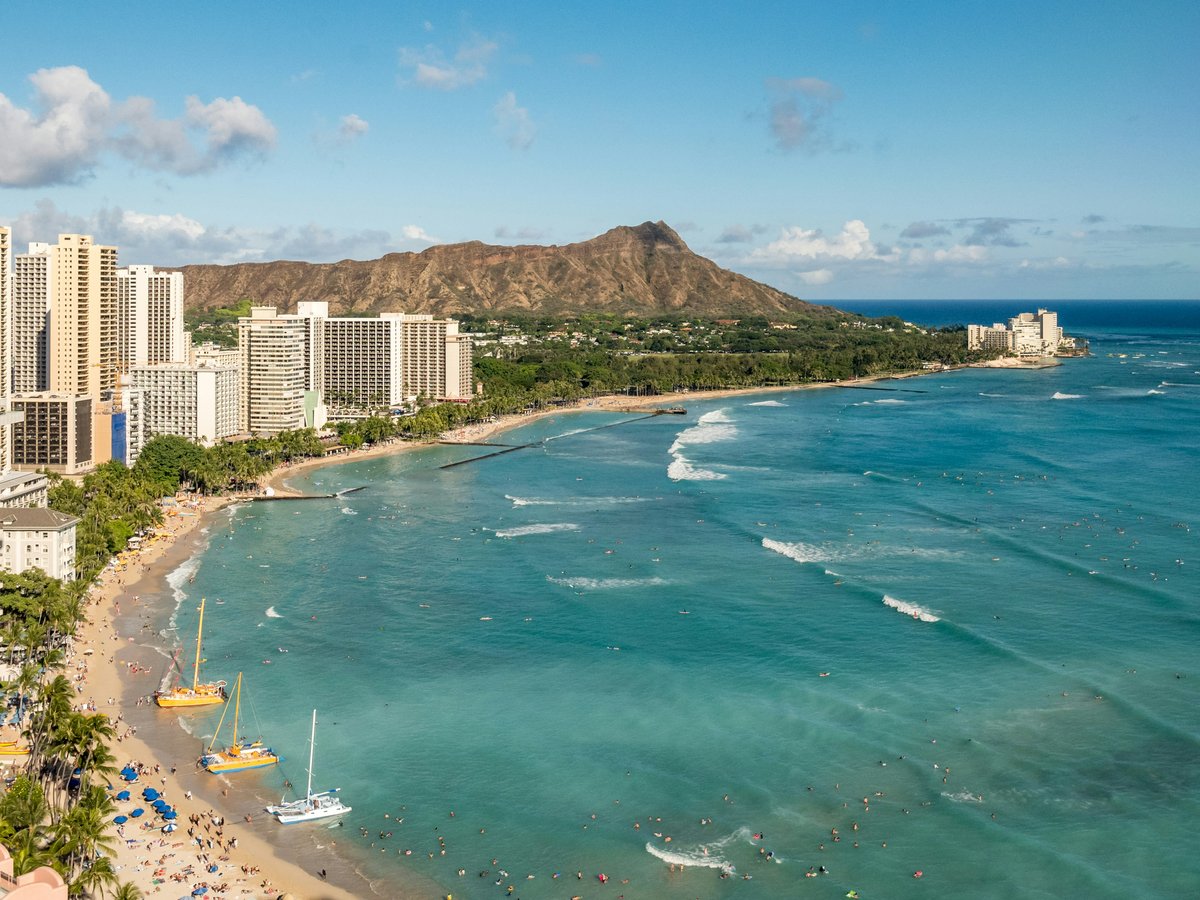
landmarkThe 232-meter volcanic tuff cone is Honolulu's most recognizable landmark. The summit trail passes through World War I-era military tunnels and bunkers before reaching a panoramic lookout. Best tackled before 9am in September to avoid the midday heat on the exposed switchbacks.
Diamond HeadAla Moana Beach Park
beachA 40-hectare park with a reef-protected lagoon that offers calmer, flatter water than Waikiki. Popular with local families for picnics and paddleboarding. The adjacent Ala Moana Center is Hawaii's largest open-air shopping mall, with over 350 stores.
Ala MoanaPearl Harbor National Memorial
culturalThe site where the December 7, 1941 attack drew the United States into World War II. The USS Arizona Memorial, accessible by boat, sits directly above the sunken battleship. The visitor center and museum are free; additional sites like the USS Missouri and USS Bowfin require separate admission.
Pearl HarborKailua Beach and Lanikai
beachTwo adjacent stretches of fine white sand on O'ahu's Windward Side, about 30 minutes from Waikiki by car. Kailua Beach runs nearly 4 km and is popular for kayaking and windsurfing. Lanikai, accessible through residential neighborhood paths, is smaller and quieter, with views of the Mokulua Islands.
KailuaHonolulu Chinatown
culturalHonolulu's oldest commercial district, spanning roughly 15 blocks between Nu'uanu Avenue and River Street. The neighborhood mixes traditional lei stands, open-air markets, and herbal shops with a newer wave of cocktail bars, galleries, and restaurants along Hotel Street.
ChinatownNorth Shore (Haleiwa)
beachThe 11 km stretch of coast from Haleiwa to Sunset Beach is famous for winter big-wave surfing, but in September the ocean is calm and swimmable at most breaks. Haleiwa town has a handful of surf shops, plate-lunch spots, and the well-known Matsumoto's shave ice, open since 1951.
North Shore
Your packing checklist
Tick items off as you pack. Your progress saves in this browser.
All packed — have a great trip.
Insider tips
The trade winds blow steadily from the northeast in September, which means the windward (east) side of O'ahu gets more passing showers than Waikiki and the south shore. If it's raining in Kailua, drive 20 minutes back to Waikiki and you'll likely find sun.
Hanauma Bay closes every Tuesday for conservation. If your schedule is tight, plan around this or you'll arrive to a locked gate and a wasted drive.
The Aloha Festivals Ho'olaule'a shuts down several blocks of Kalakaua Avenue. If you're staying in Waikiki, expect road closures and rerouted bus service that evening. Walking is faster than driving or waiting for a rideshare during the event.
Sunset times in September shift from about 6:50pm at the start of the month to around 6:25pm by month's end. If you're planning a sunset beach session, check the exact time for your dates so you don't show up 30 minutes late.
Grocery stores like Foodland and Don Quijote carry poke by the pound at their fish counters, often with 8-10 varieties. The quality rivals most sit-down restaurants, and you can eat well on the beach for a fraction of restaurant prices.
The bus system (TheBus) runs a route from Waikiki to the North Shore, but the ride takes about 90 minutes each way. For a day trip to Haleiwa, renting a car or joining a small-group tour is significantly more practical.
Avoid these mistakes
- Underestimating the UV intensity. Honolulu sits at latitude 21°N, and September's UV index regularly reaches 10-11. Tourists from temperate climates often burn badly on day one, especially in the water where reflection amplifies exposure. Apply reef-safe SPF 50 every 90 minutes.
- Skipping the Hanauma Bay reservation. Online reservations are required for non-residents and morning slots fill within minutes of the 7am HST release window. Showing up without a reservation means getting turned away.
- Driving to the North Shore without checking surf reports. September usually has calm north shore conditions ideal for swimming, but an early northwest swell can arrive without much warning and create dangerous shore-break at beaches like Waimea Bay.
- Packing only beach gear. September evenings on Waikiki are warm (23°C), but heavily air-conditioned restaurants and shopping centers can feel genuinely cold after a day in the sun. A light layer saves an uncomfortable dinner.
- Booking Waikiki hotel rooms at rack rate without comparing. September is shoulder season, and many properties offer significantly reduced rates through their own websites or loyalty programs compared to the walk-up price.
Practical tips for September
September in Honolulu is shoulder season, so booking accommodation and rental cars 3-4 weeks ahead typically secures good availability and lower rates compared to summer. The Aloha Festivals events are free but draw large crowds. Arrive early for the Ho'olaule'a to get a good position near the main stage on Kalakaua Avenue. Reef-safe sunscreen is legally required in Hawaii, so check your labels before packing. Hanauma Bay requires advance online reservations and closes on Tuesdays. If you're hiking Diamond Head, book the earliest slot available and bring at least 1 liter of water per person, since there's no shade and no water on the trail. TheBus covers most of O'ahu for a flat fare per ride, and a multi-day pass is the most economical way to get around without a rental car. Keep an eye on NOAA's Central Pacific Hurricane Center updates throughout your trip, especially if a named storm is active in the Pacific.
FAQ
Is September a good time to visit Honolulu?
September is one of the better months for Honolulu. It ranks around 3rd out of 12 overall. You get warm, dry weather (29°C highs, only 19mm of rain), significantly lower hotel rates than summer, thinner crowds at popular sites like Hanauma Bay and Diamond Head, and the Aloha Festivals for cultural events. The main trade-off is a slightly elevated hurricane risk, though direct impacts on O'ahu remain uncommon.
How hot is Honolulu in September?
Daytime highs average about 29°C (85°F) with overnight lows around 23°C (74°F). Humidity sits near 70%, which makes it feel warmer than the thermometer suggests, especially between 11am and 2pm in direct sun. The trade winds, typically blowing at 15-25 km/h from the northeast, provide noticeable relief, particularly along the coast.
Does it rain a lot in September in Honolulu?
September is one of Honolulu's driest months, averaging about 19mm of rain across 6 rainy days. Most showers are brief afternoon events lasting 15-20 minutes, concentrated on the windward slopes and Ko'olau mountains. Waikiki and the south shore tend to stay dry. The real wet season doesn't begin until November.
Can you swim on the North Shore in September?
September is typically one of the calmest months on the North Shore. The big winter swells that make spots like Pipeline and Waimea Bay dangerous don't usually arrive until late October or November. In September, beaches like Sunset Beach and Sharks Cove are generally calm enough for swimming and snorkeling, though you should always check local surf reports for any early-season swell activity.
Are there hurricanes in Honolulu in September?
September falls at the statistical peak of the Central Pacific hurricane season (June 1 through November 30). However, direct hurricane landfalls on O'ahu are rare in the historical record. The more likely scenario is a tropical system passing several hundred miles away, which can still produce 2-3 days of heavy rain, high surf, and gusty winds. Monitor NOAA's Central Pacific Hurricane Center for forecasts and consider travel insurance if you're concerned.
Things to Do in Honolulu in September
 Free cancellation
 Oahu: Full or Half Day Grand Circle Island Tour
Day trip: free cancellation.
via Viator Free cancellation
 Oahu Majestic Circle Island Tour with Waimea Falls and Byodo Inn
Outdoor experience: 9 hours, free cancellation.
via Viator Free cancellation
 Pearl Harbor Remembered Tour
Day trip: 7 hours, free cancellation.
via Viator Free cancellation
 Pearl Harbor USS Arizona Memorial Tour from Waikiki
Day trip: 4 hours, free cancellation.
via Viator Free cancellation
 Oahu Circle Island Snorkeling Tour: Dole, Pali Lookout & More
Outdoor experience: free cancellation.
via Viator Free cancellation
 Oahu Small-Group Circle Island Tour with Turtle Snorkeling
Outdoor experience: 8 hours, free cancellation.
via ViatorFind a flight to Honolulu
Live fares to Honolulu appear here once cookies are accepted.
Last verified by automated review (v1.7.2) on . What is automated review?