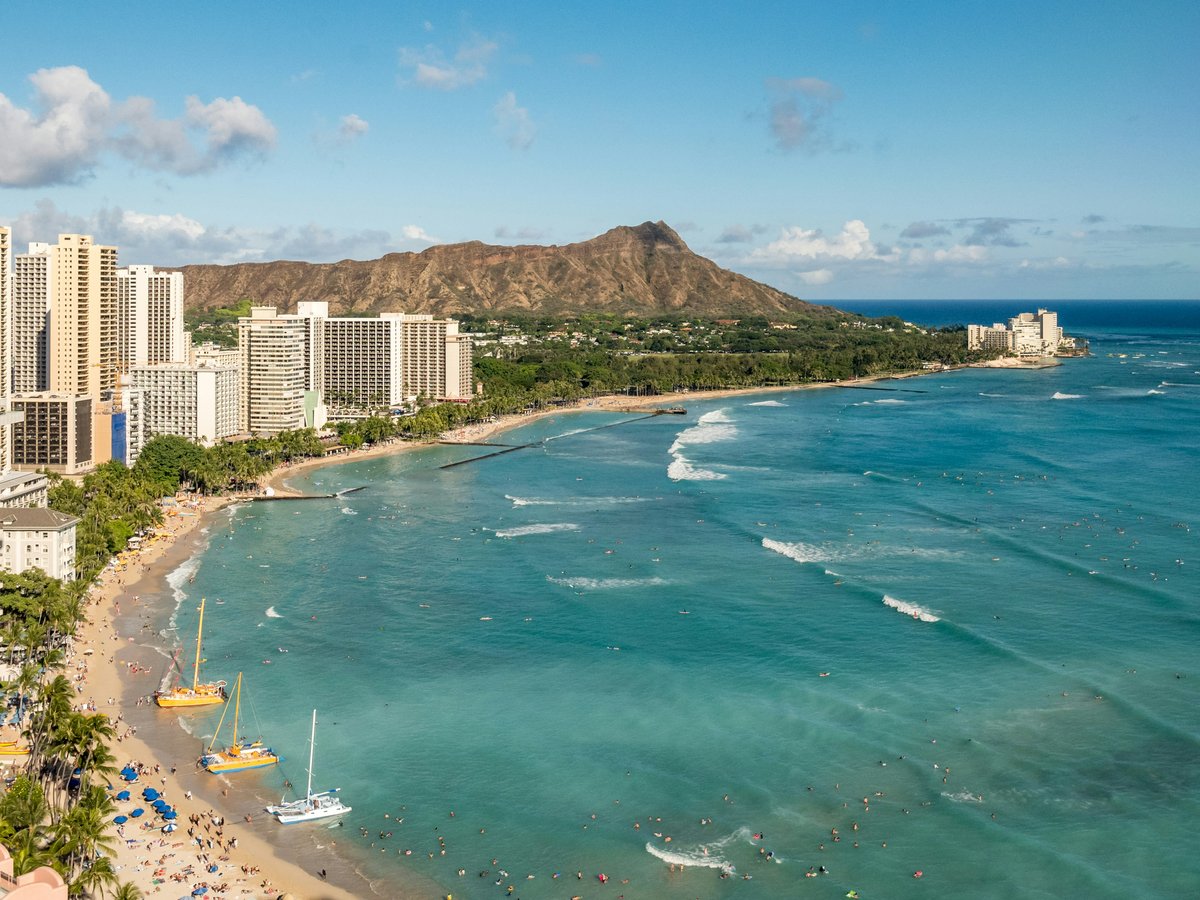
Honolulu sits in a narrow strip between the Ko'olau Range and the Pacific, compressed into about 10 miles of coastline from Pearl Harbor to Hanauma Bay. The volcanic ridgelines behind the city rise to over 3,000 feet within a 20-minute drive of Waikiki. That proximity still catches people off guard. You can be eating plate lunch on King Street at noon, and by 1 p.m. you're deep in Manoa Valley listening to nothing but white-rumped shama calls and water dripping off hau trees. The trade winds keep temperatures between 75 and 85°F for most of the year, though the leeward side around Ewa tends to run 5 to 8 degrees hotter and noticeably drier. Rainfall varies wildly by neighborhood. Manoa gets around 150 inches a year while downtown Honolulu, 3 miles away, averages closer to 25. The terrain here is old, eroded volcanic tuff, which means the trails are steep, the ridges are knife-edged, and the soil turns to red clay soup after a good rain. Worth noting, the ocean is warm year-round, rarely dropping below 75°F even in February, so water activities run 12 months without a wetsuit.
Outdoor activities
-
Surfing at Waikiki Beach
The long, rolling breaks off Waikiki are still some of the best learner waves in the Pacific. The reef break at Canoes produces 2-to-4-foot faces most of the summer, slow enough for beginners but shaped well enough that longtime locals ride them daily. Board rentals run $15 to $25 per hour from the stands along Kalakaua Avenue. Lessons from the beach boys near the Duke Kahanamoku statue typically cost $80 to $120 for 90 minutes. The water is warm, the bottom is reef and sand, and the paddle out from the seawall takes about 5 minutes. You'll share the lineup with outrigger canoes, so keep your head up.
- Difficulty
- Beginner to Intermediate
- Duration
- 2-3 hours per session
- Best season
- South swells arrive May through September, producing the most consistent surf on the south shore. Winter months tend to flatten out at Waikiki while the North Shore fires up.
-
Stand-Up Paddleboarding in Kailua Bay
Kailua Bay offers about 2.5 miles of protected turquoise water on the windward side, roughly 30 minutes from downtown via the Pali Highway. The bay stays relatively flat in the mornings before the trades kick up around 11 a.m. Several shops along Kailua Road rent boards for $30 to $50 per half day. You can paddle to Popoi'a Island (Flat Island) in about 20 minutes from Kailua Beach Park, where green sea turtles tend to rest on the sand shelf. The water is shallow enough to stand in places, which helps if you're still finding your balance.
- Difficulty
- Beginner
- Duration
- 2-4 hours
- Best season
- Year-round, though summer months (May to September) bring lighter winds and calmer conditions in the bay.
-
Outrigger Canoe Surfing off Waikiki
Riding a wave in a six-person outrigger canoe is one of the oldest sports in Hawai'i, and the beach concessions at Waikiki still offer rides for about $25 per person. The steersman positions the canoe on the outside break near Queen's Surf, and when a set rolls in, everyone paddles hard for 10 seconds before the hull catches the wave and you're gliding toward shore. The spray is warm, the speed is real, and the whole thing lasts maybe 30 seconds per ride, 3 to 4 rides per session. Aloha Beach Services near the Moana Surfrider has been running these since the 1950s.
- Difficulty
- Beginner
- Duration
- 1 hour
- Best season
- Year-round, though summer south swells make for longer rides.
-
Trail Running on the Wa'ahila Ridge
Wa'ahila Ridge Trail starts behind St. Louis Heights and climbs roughly 1,000 feet over 2 miles through Cook pine forest and native 'ohi'a. The footing is rooty and narrow in places, with steep drop-offs on both sides near the top. On clear mornings you can see Manoa Valley to the left and Palolo Valley to the right. The trailhead sits at the back of Wa'ahila Ridge State Recreation Area, where there's free parking for about 15 cars. Most runners do the out-and-back in 50 to 70 minutes. The pine needle carpet underfoot is soft enough that you don't need heavy trail shoes.
- Difficulty
- Moderate to Difficult
- Duration
- 1-1.5 hours running, 2-3 hours hiking
- Best season
- Year-round. The ridge catches the trades and stays cooler than valley trails. After heavy rain, the upper sections get slick.
-
Snorkeling at Hanauma Bay
Hanauma Bay Nature Preserve sits in a collapsed volcanic cone about 10 miles east of Waikiki. The reef inside the bay supports over 400 species of fish, and on a calm day the visibility reaches 50 to 100 feet. Entry requires a reservation through the city's online system and costs $25 per person for non-residents as of 2025. You'll need to watch a short educational video before descending to the beach. The bay is closed on Mondays and Tuesdays. Mornings before 9 a.m. tend to have the best visibility, before afternoon winds chop up the surface. The inner reef is shallow enough that you'll see convict tangs, parrotfish, and humuhumunukunukuapua'a within 3 feet of the surface.
- Difficulty
- Beginner
- Duration
- 2-4 hours
- Best season
- Summer months (May to September) bring calmer seas and clearer water inside the bay. Winter swells can stir up sand and reduce visibility.
-
Mountain Biking at Kaena Point Satellite Tracking Station Trails
The unpaved roads and singletrack around the old Ka'ena Point Satellite Tracking Station on the North Shore side offer about 8 miles of rideable terrain with ocean views down both coasts. The trails are exposed, dry, and rocky in places. You'll need to bring your own bike, as there are no rental shops nearby. The climb from the Mokuleia side gains roughly 1,200 feet over 3 miles on a gravel road before you reach the singletrack options. Bike Works in Kailua rents decent hardtails for $40 to $60 per day if you're driving up from town.
- Difficulty
- Intermediate to Advanced
- Duration
- 3-5 hours
- Best season
- Year-round, though the drier months from April through October keep the trails in better shape. Midday heat on the exposed ridge can hit 90°F, so an early start matters.
Day hikes
-
Diamond Head (Lē'ahi) Summit Trail
The Diamond Head trail climbs about 560 feet from the crater floor to the summit in roughly 0.8 miles. The route passes through two tunnels and up a 99-step staircase inside a former military fire control station. The summit bunker offers a 360-degree view of Waikiki, Koko Head, and the Wai'anae Range on clear mornings. The trail is paved in the lower section and turns to packed dirt and concrete stairs higher up. It gets crowded after 9 a.m., especially on weekends. Reservations are required and cost $5 per person for non-residents. The parking lot inside the crater fills early, so many locals park along the road outside and walk in through the tunnel.
- Difficulty
- Easy to Moderate
- Duration
- 1-1.5 hours round trip
- Best season
- Year-round. Go before 8 a.m. for fewer crowds and cooler temperatures. The crater interior heats up fast once the sun clears the rim.
-
Manoa Falls Trail
This 1.6-mile round-trip trail follows Manoa Stream through dense tropical forest to a 150-foot waterfall at the back of the valley. The canopy is thick with banyan, bamboo, and wild ginger, and the trail stays shaded for most of its length. The path is often muddy, especially in the lower sections where tree roots create uneven footing. Mosquitoes are persistent here. The falls at the end drop into a shallow pool, though swimming is discouraged due to the risk of leptospirosis in the water. The trailhead parking lot charges $7 and fills by mid-morning on weekends.
- Difficulty
- Easy to Moderate
- Duration
- 1-1.5 hours round trip
- Best season
- Year-round. Manoa Valley receives rain almost daily, so expect mud regardless of season. Mornings tend to be drier.
-
Koko Head Stairs (Koko Crater Railway Trail)
The Koko Head Stairs climb 1,048 railroad ties up the side of Koko Crater in a relentless 1-mile ascent gaining roughly 1,200 feet. There's no shade and no flat sections. The ties are uneven, some missing, and there's a bridge section about two-thirds up that spans a gap over a ravine. Locals use this as a workout, and the regulars do it in under 25 minutes. First-timers should expect 40 to 60 minutes up. The summit views extend from Hanauma Bay to Diamond Head. Your quads will let you know about this one for 2 or 3 days afterward.
- Difficulty
- Difficult
- Duration
- 1.5-2.5 hours round trip
- Best season
- Year-round, but the exposed south face bakes in afternoon sun. Start before 7 a.m. or go late afternoon. Bring at least a liter of water per person.
-
Makapu'u Point Lighthouse Trail
A 2-mile round-trip paved trail on the southeastern tip of O'ahu with views of the Molokai Channel, Rabbit Island (Manana), and the Makapu'u Point Lighthouse below the lookout. The trail gains about 500 feet on a wide, exposed path. Between December and April, this is one of the best spots on the island for watching humpback whales, which pass within a few hundred yards of the point. The pavement gets hot underfoot by mid-morning. Strollers can make it about halfway before the grade steepens.
- Difficulty
- Easy
- Duration
- 1-1.5 hours round trip
- Best season
- December through April for whale watching. The trail is good year-round, but summer heat on the exposed asphalt makes an early start important.
-
Aiea Loop Trail
The Aiea Loop Trail makes a 4.8-mile circuit through the upper reaches of Keaiwa Heiau State Recreation Area, about 20 minutes northwest of downtown. The trail winds through eucalyptus, Norfolk pine, and native koa forest on the ridge above Pearl Harbor. There's a section near the 2-mile mark where you can see the wreckage of a C-47 cargo plane that crashed in 1943. The footing is muddy in places and the trail narrows to singletrack along some ridge sections. Pig hunters use parts of this trail on weekends, so don't be surprised to see dogs and hunters in orange.
- Difficulty
- Moderate
- Duration
- 2.5-4 hours
- Best season
- Year-round, though drier months (April to October) make the muddy sections more manageable. The forest canopy keeps temperatures comfortable even in summer.
-
Kuliouou Ridge Trail
This 5-mile round-trip trail in Hawai'i Kai climbs about 1,800 feet from a residential trailhead to a viewpoint on the Ko'olau Ridge. The lower half passes through ironwood and Cook pine forest before reaching a series of switchbacks through native vegetation. The final push to the ridge involves a steep, rooty scramble with fixed ropes in a few spots. From the top, you'll likely see both the windward coast and the south shore. The ridge itself is narrow enough that the wind can push you around. This is a solid conditioning hike with a real payoff.
- Difficulty
- Moderate to Difficult
- Duration
- 3-5 hours round trip
- Best season
- Drier months from April through October are better. Winter rains make the upper switchbacks treacherous. Check recent trip reports for trail conditions, as landslides occasionally close sections.
Water activities
-
Kayaking to the Mokulua Islands from Kailua Beach
The Mokulua Islands sit about three-quarters of a mile off Lanikai Beach on the windward side. You can rent tandem kayaks from outfitters on Kailua Road for around $60 to $75 for a half day. The paddle takes 20 to 40 minutes depending on wind and current. You can land on the larger island, Moku Nui, and hike to a small cove on the back side where the water is calm enough for swimming. Moku Iki, the smaller island, is a seabird sanctuary and off-limits. The return paddle against the trade winds tends to be the harder leg, so save some energy.
- Difficulty
- Moderate
- Duration
- 3-5 hours
- Best season
- Summer months (May to September) bring lighter trade winds and calmer channel conditions. Winter can get rough enough that outfitters won't rent to inexperienced paddlers.
-
Swimming at Ala Moana Beach Park
The reef-protected lagoon at Ala Moana creates one of the calmest ocean swimming spots in Honolulu. The water inside the reef stays waist-to-chest deep for about 200 yards out, with a sandy bottom and decent visibility. Locals swim laps parallel to the shore in the deeper channel near the reef edge. The beach has lifeguards, outdoor showers, and enough shade under the ironwood trees to set up camp for the day. The water temperature hovers around 78 to 82°F year-round.
- Difficulty
- Beginner
- Duration
- 1-3 hours
- Best season
- Year-round. South swells in summer can occasionally send waves over the reef, but inside the lagoon it stays calm. Early mornings are best for lap swimmers before the weekend crowds arrive.
-
Snorkeling at Shark's Cove (Pūpūkea)
Shark's Cove on the North Shore, about 45 minutes from downtown Honolulu, offers some of the best shore snorkeling on O'ahu during summer months. The rocky tide pools and lava formations create channels where you'll see sea urchins, eels, octopus, and schools of convict tangs. The entry is over rocks, so reef shoes help. There's no sand beach here. The name is misleading. Sharks are not a particular concern, though the rocks are sharp and the surge can pin you against lava on days with any swell. A food truck lot across Kamehameha Highway sells shrimp plates for $13 to $15.
- Difficulty
- Beginner to Intermediate
- Duration
- 2-3 hours
- Best season
- May through September only. Winter brings heavy North Shore surf that makes this spot dangerous and often completely unwadeable. Do not enter the water here between October and April unless conditions are dead calm.
-
Outrigger Canoe Paddling with a Club
Several outrigger canoe clubs along the Ala Wai Canal and at Kailua Beach welcome visiting paddlers for practice sessions, typically held in the early morning or late afternoon. Hui Nalu Canoe Club and Outrigger Canoe Club near Waikiki are two of the oldest. Regatta season runs from February through August, and you'll see six-person crews training in the Ala Wai Harbor most evenings. Some clubs charge a $10 to $20 drop-in fee for visitors. The stroke technique feels different from anything else on the water, and the pace is faster than it looks from shore.
- Difficulty
- Beginner to Intermediate
- Duration
- 1.5-2 hours per session
- Best season
- Year-round, with competitive regatta season from February through August. The Ala Wai Canal is calm enough for year-round paddling regardless of ocean conditions.
-
Bodysurfing at Sandy Beach
Sandy Beach (Sandy's to locals) sits at the base of Koko Head and produces some of the heaviest shore break on O'ahu. The waves here are fast, powerful, and break in shallow water. This is not a beginner spot. Lifeguards rescue dozens of people on big days, and spinal injuries happen every year. That said, experienced bodysurfers and boogie boarders consider it one of the best spots on the island. The key is reading the sand bars and knowing when to commit. On 2-to-3-foot days, it's manageable for intermediate swimmers. On overhead days, sit on the grass and watch the show.
- Difficulty
- Intermediate to Expert
- Duration
- 1-3 hours
- Best season
- Summer south swells bring the most consistent surf from May through September. Winter can produce big days too during south wraps. Check surf reports before going.
Parks & gardens
-
Kapi'olani Park
FreeKapi'olani Park covers about 300 acres at the foot of Diamond Head, and on any given Saturday morning you'll find joggers circling the perimeter path, cricket matches on the open field, and families grilling near the banyan trees. The park dates to 1877, which makes it the oldest public park in Hawai'i. The Waikiki Shell, an open-air amphitheater on the park's north side, hosts concerts through the summer months. The park connects directly to the Honolulu Zoo and the Waikiki Aquarium along its southern edge.
Highlights: The massive banyan trees near the bandstand, the 2-mile perimeter jogging loop, weekend farmers markets, views of Diamond Head crater from the open lawn.
-
Foster Botanical Garden
Foster Botanical Garden sits on about 14 acres along Vineyard Boulevard in downtown Honolulu. It opened in 1853, making it the oldest botanical garden in Hawai'i. The canopy is dense enough that the temperature drops noticeably the moment you walk in. Some of the trees are over 150 years old, including a bo tree said to be descended from the original Bodhi tree in India. The orchid collection fills several shade houses, and the prehistoric glen features cycads, ferns, and plants that predate flowering species.
Highlights: The 150-year-old bo tree, the wild nutmeg, the exceptional orchid collection, and a prehistoric glen with plants from the Jurassic era.
-
Lyon Arboretum
Lyon Arboretum occupies nearly 200 acres in the back of Manoa Valley, at the end of a narrow road that passes through one of the wettest spots on O'ahu. The University of Hawai'i manages it as a research facility, but it's open to visitors most weekdays. The trails wind through tropical forest so thick that you can hear rain hitting the upper canopy 60 feet above before a single drop reaches you. The collection includes over 5,000 tropical plant species, many of them labeled along the trail system. Mosquito repellent is not optional here.
Highlights: The Beatrice H. Krauss Hawaiian Ethnobotanical Garden, the palm collection with over 600 species, trails through native Hawaiian plants, and the Inspiration Garden with a small waterfall.
-
Lili'uokalani Botanical Garden
FreeThis 7.5-acre garden along Nu'uanu Stream is named for Hawai'i's last reigning monarch and tends to be overlooked by visitors heading to Chinatown a few blocks south. The stream runs through the center, and there's a small waterfall near the upper end. The collection focuses on native Hawaiian plants, including endemic species you won't see in the more curated commercial gardens. It's quiet enough on weekday mornings that you might be the only person there.
Highlights: The Nu'uanu Stream cutting through the garden, native Hawaiian plant collection, the Kunawai Springs area, Jim Thompson's herb garden.
-
Ala Moana Beach Park
FreeAla Moana Beach Park stretches along a half-mile of shoreline between Waikiki and downtown, with a protected reef that creates a calm, shallow swimming area locals call the Magic Island lagoon. The park draws office workers at lunch, families on weekends, and joggers at dawn. A paved path runs the full length for walking or cycling. The lawn areas have enough shade from ironwood trees that you can sit out here midday without broiling.
Highlights: Magic Island peninsula with sunset views toward the Wai'anae Range, the protected swimming lagoon, a tennis court complex, and the jogging path that connects to Kaka'ako Waterfront Park.
-
Ho'omaluhia Botanical Garden
FreeHo'omaluhia covers 400 acres at the base of the Ko'olau cliffs in Kane'ohe, about 25 minutes from downtown via the H-3 freeway. The garden wraps around a 32-acre reservoir built for flood control, and the Ko'olau ridgeline rises directly behind it, often veiled in mist. Five distinct sections represent tropical regions from around the world, including Polynesia, the Philippines, Malaysia, Sri Lanka, and Africa. Catch-and-release fishing is allowed in the reservoir on weekends. The air here smells different from the leeward side, wetter and greener, heavy with ginger and plumeria.
Highlights: The view of the Ko'olau cliffs from the reservoir, weekend catch-and-release fishing for peacock bass, the Philippine and Sri Lankan plant sections, and the 2-mile lakeside loop trail.
Practical tips
- Sun Protection
- Honolulu sits at 21°N latitude, and the UV index regularly hits 11 or 12 between 10 a.m. and 2 p.m. Reef-safe sunscreen (zinc oxide or titanium dioxide based) is required by Hawai'i state law for ocean use. Reapply every 60 to 90 minutes in the water. A rash guard or UPF-rated shirt eliminates the problem for your torso. Hats with brims help, though they'll blow off on ridgeline hikes. Sunburn here can happen in 15 minutes on exposed skin.
- Water and Hydration
- Carry at least 1 liter of water per hour for exposed hikes like Koko Head or Makapu'u. Ridgeline trails with tree cover are more forgiving, but you'll still sweat through your shirt in 20 minutes. Most trailheads don't have water fountains. Fill up before you leave. Electrolyte packets help on anything over 2 hours. The humidity means you lose more salt than you expect.
- Footwear and Gear
- Mud is the default trail surface in windward and valley hikes (Manoa Falls, Aiea Loop, Lyon Arboretum). Shoes with aggressive lugs and good drainage help. Running shoes work on paved trails like Diamond Head and Makapu'u. Reef shoes or old sneakers are essential for rocky entries at Shark's Cove and along the North Shore. Flip-flops (slippahs) are fine for the beach but will get you hurt on any actual trail.
- Trail Conditions and Closures
- Check the DLNR Na Ala Hele trail system website or the AllTrails app for recent condition reports before heading out. Flash floods close valley trails several times a year, especially Manoa Falls. Ridge trails can become impassable after heavy rain when the clay turns to grease. The Stairway to Heaven (Ha'iku Stairs) is currently closed and illegal to access, despite what you'll see on social media. Fines run $1,000 or more.
- Permits and Reservations
- Diamond Head requires advance online reservations through the Hawai'i DLNR system. Hanauma Bay requires a separate reservation. Both fill up days in advance during peak season (December through March). Most other trails in the area are currently open without permits, though the state has been adding reservation systems to popular spots. Check before you go, as the rules have been changing regularly since 2022.
- Ocean Safety
- Rip currents, shore break, and reef cuts are the three most common ocean injuries for visitors. Swim at lifeguarded beaches when possible. Ala Moana, Waikiki, and Kailua all have regular lifeguard coverage. Never turn your back on the ocean at Sandy Beach or along the North Shore. If caught in a current, swim parallel to shore, not against it. Reef cuts get infected quickly in tropical water, so clean and cover them immediately. Carry a small first-aid kit with antiseptic if you're snorkeling at rocky spots.
FAQ
What is the best time of year to visit Honolulu for outdoor activities?
Honolulu works year-round, but the sweet spot for most outdoor activities is April through June and September through October. These shoulder months have lower humidity, fewer visitors, and manageable surf on both shores. Winter (December through March) brings larger North Shore swells for watching or experienced surfing, plus humpback whale season. Summer (July and August) is peak tourist season with higher prices and more crowded trails, though the south shore surf picks up.
Do I need a car to access hiking trails from Honolulu?
Diamond Head and Manoa Falls are reachable by TheBus (routes 2 and 5 respectively), though the Manoa Falls bus stop is still about a 15-minute walk to the trailhead. Koko Head, Makapu'u, Aiea Loop, and North Shore snorkeling spots effectively require a car or rideshare. Rental cars run $50 to $100 per day depending on season. Some hiking tour companies offer shuttle service with guided hikes for $40 to $80 per person.
Is it safe to swim at beaches in Honolulu year-round?
Protected beaches like Ala Moana and Waikiki are safe for swimming year-round. Sandy Beach, North Shore spots, and any unguarded beach require checking surf reports and understanding local conditions. The Hawai'i Beach Safety website and lifeguard stations post current conditions with a color flag system. Green means safe, yellow means caution, red means dangerous. The biggest mistake visitors make is assuming all Hawaiian beaches are gentle. Some have seriously powerful shore break.
Are there any trails in Honolulu that are currently closed or illegal to hike?
The most notable closure is the Ha'iku Stairs (Stairway to Heaven), which the city voted to remove in 2022. Accessing it has been illegal for years, and the state actively enforces trespassing fines of $1,000 or more. Several other trails, including some Ko'olau ridge trails, cross private land and require permission. The DLNR Na Ala Hele system maintains the official list of open public trails. Stick to marked trailheads with established parking areas.
What should I do if I get stung by a jellyfish in Honolulu?
Box jellyfish arrive on south-facing O'ahu beaches roughly 8 to 12 days after a full moon, most consistently between May and October. If stung, rinse with vinegar (lifeguard stations often carry it), remove tentacles with a credit card edge, and apply a hot compress at around 110°F for 20 to 45 minutes. Do not rinse with fresh water or urinate on it. Waikiki and Ala Moana post warning signs during expected arrival windows.
How difficult are the popular Honolulu hikes for someone who doesn't hike regularly?
Makapu'u Lighthouse Trail is paved and manageable for almost anyone who can walk a mile uphill. Diamond Head is a step up, with stairs and tunnels, but most people in reasonable shape finish in under 90 minutes. Manoa Falls is flat but muddy. Koko Head is genuinely hard, with over 1,000 steps on steep railroad ties and no shade. If you can climb 60 flights of stairs without stopping, you can handle Koko Head. If that sounds miserable, start with Diamond Head or Makapu'u and work your way up.
Outdoor experiences in Honolulu
 Free cancellation
 Oahu Majestic Circle Island Tour with Waimea Falls and Byodo Inn
Outdoor experience: 9 hours, free cancellation.
via Viator Free cancellation
 Oahu Circle Island Snorkeling Tour: Dole, Pali Lookout & More
Outdoor experience: free cancellation.
via Viator Free cancellation
 Oahu Small-Group Circle Island Tour with Turtle Snorkeling
Outdoor experience: 8 hours, free cancellation.
via Viator Free cancellation
 Oahu: North Shore Tour with Waimea Waterfall
Outdoor experience: 8 hours, free cancellation.
via Viator Free cancellation
 Luxury Snorkel Cruise with Dolphin Watch and Hawaiian Meal
Outdoor experience: 3.5 hours, free cancellation.
via Viator Free cancellation
 Kailua Bay, Oahu: Epic Kayak and Snorkel to Islands
Outdoor experience: 5.5 hours, free cancellation.
via Viator Free cancellation
 Oahu Day Tour with Waterfalls Food Trucks and Lookout Points
Outdoor experience: 10 hours, free cancellation.
via Viator Free cancellation
 Oahu: 60 Min Royal Crown Helicopter Tour - Doors Off or On
Outdoor experience: 1 hour, free cancellation.
via Viator Free cancellation
 Kevo's Beach Bus Paddleboard Snorkel Adventure North Shore Oahu
Outdoor experience: 8 hours, free cancellation.
via Viator Free cancellation
 Oahu: 45 Minute Sights Unseen Helicopter Tour - Doors Off or On
Outdoor experience: 45 minutes, free cancellation.
via Viator Free cancellation
 3 Zipline Adventure (Optional Waikiki Shuttle for 10am Tour)
Outdoor experience: 1 hour, free cancellation.
via Viator Free cancellation
 Oahu:6 Zipline Adventure (Optional Waikiki Shuttle for 10am Tour)
Outdoor experience: 2 hours, free cancellation.
via ViatorLast verified by automated review (v1.7.2) on . What is automated review?