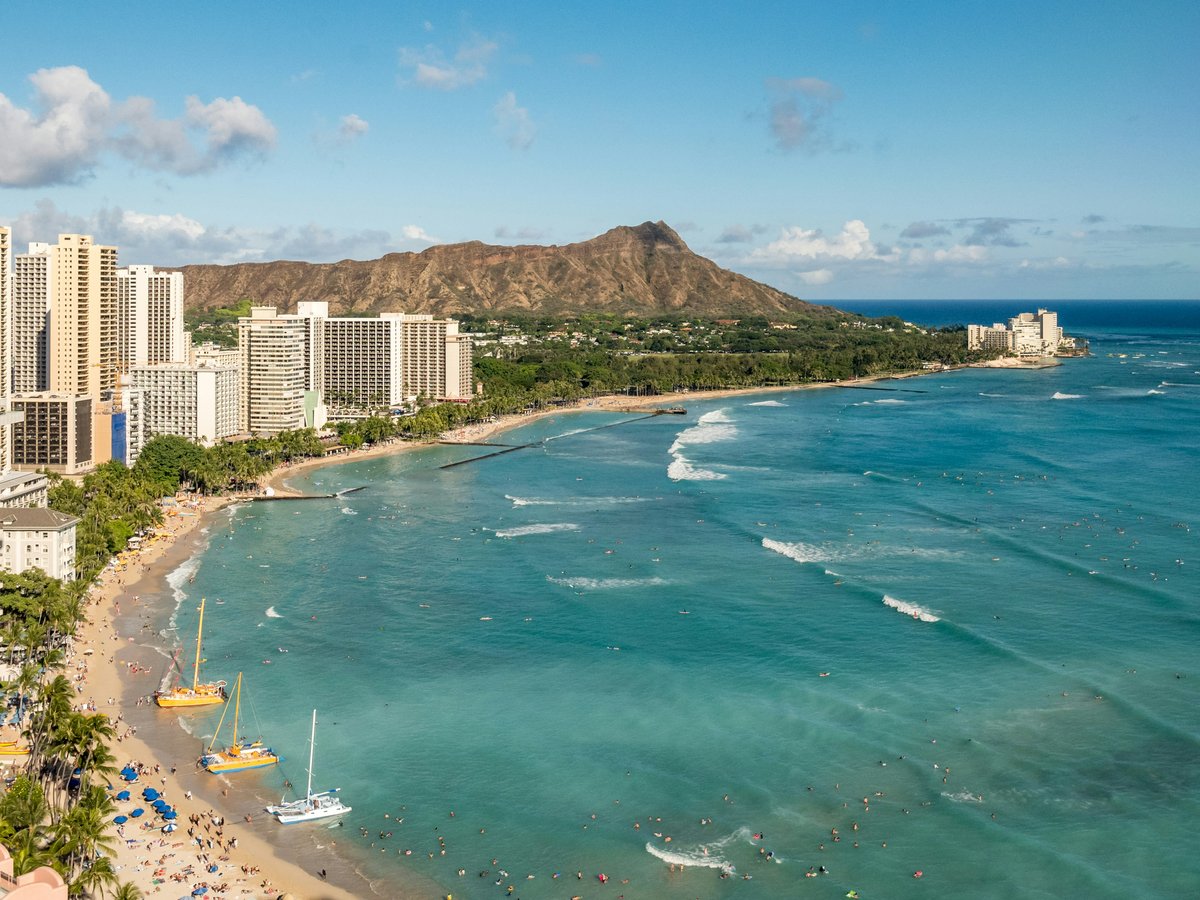
Honolulu's shopping scene splits neatly between the tourist-facing storefronts of Waikiki and the places where residents spend their money. The city has a genuine craft tradition rooted in Hawaiian quilting, woodwork from native koa trees, and aloha wear that predates the souvenir-shop knockoffs by about 80 years. Hawaii's position in the middle of the Pacific also means Japanese, Korean, and Filipino goods flow through local shops in ways you won't find on the mainland. You'll notice a lot of ABC Stores along Kalakaua Avenue, and those have their place, but the more interesting finds tend to be in Chinatown, along Kapahulu Avenue, or at weekend markets in Kakaako. Worth noting, Hawaii charges a 4.712% general excise tax on Oahu that functions like a sales tax, though it's technically levied on the business. There is no tax-free shopping program for visitors.
Shopping districts
-
Waikiki (Kalakaua Avenue)
luxury to mid-rangeKalakaua Avenue runs about 2 miles through Waikiki and carries most of the district's retail weight. The stretch between the Royal Hawaiian Center and the International Market Place leans heavily toward luxury, with Chanel, Hermès, and Tiffany & Co. all within a few blocks. Japanese tourists historically drove the luxury market here, and signage in Japanese is still common. The Royal Hawaiian Center has around 110 shops across 3 levels and tends to feel more curated than a typical American mall. The International Market Place, rebuilt in 2016 as a Taubman property, replaced the old open-air flea market with Saks Fifth Avenue and mid-to-high-end retail. T Galleria by DFS sits near the east end on Kalia Road. To be fair, much of Waikiki shopping is priced for visitors, but the convenience and evening hours keep it relevant.
Best for: Designer brands, Japanese beauty products, duty-free shopping at T Galleria
-
Ala Moana Center
mixedAla Moana Center is where Honolulu residents shop. It's the largest open-air shopping center in the world, with over 350 stores spread across 4 levels. Nordstrom, Bloomingdale's, Macy's, and Target anchor the different wings. The Ewa Wing expansion added a Foodland Farms grocery store, which is worth a stop on its own for poke bowls and local snacks. You'll find both luxury names like Gucci and Saint Laurent alongside local retailers like Tori Richard and Reyn Spooner, which have been making aloha shirts on the islands since the 1950s and 1960s respectively. The center sits on Ala Moana Boulevard, about a 10-minute walk from the west end of Waikiki. It draws a heavily local and Japanese tourist crowd, and the food court on the upper level (Makai Market) serves solid plate lunches.
Best for: One-stop shopping with both local brands and department stores, plate lunch at Makai Market
-
Chinatown
budgetHonolulu's Chinatown sits between Nu'uanu Avenue and River Street, roughly bounded by Beretania Street to the north and Nimitz Highway to the south. It's the oldest Chinatown in the U.S., established in the 1850s. The neighborhood has layers. You'll find lei stands along Maunakea Street selling plumeria and tuberose leis for about half what Waikiki charges. Herb shops sell traditional Chinese medicine. A few art galleries have moved into the old storefronts along Hotel Street and Nu'uanu Avenue. The Oahu Market, operating since 1904, sells fresh fish, pig heads, and produce that reflects the neighborhood's mix of Chinese, Vietnamese, Filipino, and Thai residents. The smell of incense drifts out of the older shops. Some of the storefronts look rough. That's part of it.
Best for: Fresh leis, herbs, produce, and a look at old Honolulu that most tourists skip
-
Kakaako and Ward Village
mid-rangeKakaako has shifted over the past decade from an industrial warehouse district into Honolulu's version of a creative quarter. Ward Village, developed by Howard Hughes Corporation, anchors the retail side with shops at South Shore Market and Ward Centre. T.J. Maxx and Nordstrom Rack draw the discount crowd. But the more interesting stuff is in the smaller storefronts and pop-ups scattered through the neighborhood. Local surf and streetwear labels tend to show up here. Salt at Our Kakaako opened in 2017 with a mix of local food vendors and boutiques. The neighborhood also hosts the monthly Kakaako farmers' market. Murals by POW! WOW! Hawaii cover many of the warehouse walls, making the walk between shops more interesting than the shopping itself, depending on your taste.
Best for: Local designers, streetwear, specialty food vendors, and browsing between murals
-
Kapahulu Avenue
budget to mid-rangeKapahulu runs from the east edge of Waikiki toward the slopes of Diamond Head, and it's the kind of street that still has mom-and-pop shops with hand-painted signs. The stretch is known more for eating than shopping. Rainbow Drive-In has been serving plate lunches since 1961. But between the restaurants you'll find a few consignment shops, a ukulele shop or two, and vintage clothing stores that locals frequent. The prices here tend to be lower than Waikiki by a noticeable margin. It feels like a neighborhood commercial strip, not a retail destination, which is part of why it's worth walking.
Best for: Ukuleles, vintage clothing, and a break from tourist-oriented retail
-
Kailua Town
mid-rangeKailua is about 30 minutes from Waikiki over the Pali Highway or H-3, and the town center has a walkable cluster of boutiques, surf shops, and gift stores along Kailua Road and Hahani Street. The vibe leans beachy and residential. It's where windward-side families shop. You'll find locally made jewelry, swimwear from small Hawaiian labels, and home goods with a relaxed island feel. Whole Foods and Target are nearby for practical needs. Kailua Beach, consistently ranked among the best in the U.S., is the real reason to make the trip, but the town shops fill an easy hour or two.
Best for: Boutique swimwear, locally made jewelry, and combining a beach day with casual browsing
Markets
-
Aloha Stadium Swap Meet & Marketplace
fleaHawaii's largest open-air flea market has operated at the old Aloha Stadium site in Halawa for decades. Hundreds of vendors sell everything from aloha shirts and macadamia nuts to carved tikis and shell jewelry. You'll find locals selling homemade goods alongside importers moving mass-produced souvenirs. The crowd is a mix of tourists and residents hunting for deals. Some vendors accept only cash. Prices here run well below Waikiki retail for comparable tourist items, and you can sometimes negotiate on higher-ticket pieces. It gets hot and there's limited shade, so bring water and go early.
Typically Wednesday, Saturday, and Sunday mornings, though hours can shift seasonally
-
KCC Farmers' Market (Kapiolani Community College)
foodThis Saturday morning market at Kapiolani Community College, near Diamond Head, is widely considered the best farmers' market on Oahu. Local farmers sell Kahuku corn, North Shore honey, Waialua chocolate, and tropical fruits like rambutan and lilikoi. Prepared food vendors serve pork belly buns, fresh acai bowls, and plate-style breakfasts. The market draws a heavy local crowd, and parking fills by 8:30 a.m. The quality of produce here tends to be noticeably higher than at supermarkets. Mind you, it's not cheap, but the freshness and variety of Hawaiian-grown products make it worthwhile. The market runs from 7:30 a.m. to 11:00 a.m., and arriving closer to 7:30 gives you the best selection before the popular stalls sell out.
Saturday mornings, 7:30 a.m. to 11:00 a.m., year-round
-
Pearlridge Night Market
nightPearlridge Center in Aiea hosts periodic night markets that draw a younger, local crowd. Food trucks and pop-up vendors set up in the parking areas, selling everything from mochi to Filipino lumpia. Retail vendors lean toward handmade goods, screen-printed tees, and small-batch skincare. The atmosphere is casual and family-friendly. It's about a 20-minute drive from Waikiki, and you'll likely be one of the few tourists there, which is part of the appeal.
Periodic events, typically monthly on weekends, check Pearlridge Center's social media for dates
-
Hyatt Regency Farmers' Market
foodA smaller Tuesday and Thursday market held at the Hyatt Regency Waikiki on Kalakaua Avenue. It's convenient if you're staying in Waikiki and don't want to drive to the KCC market. Vendors sell local jams, dried fruits, honey, and some produce. The scale is modest compared to KCC, maybe 15 to 20 vendors, but the location makes it easy to grab a few local food gifts without leaving the hotel district.
Tuesday and Thursday afternoons, typically 4:00 p.m. to 8:00 p.m.
Souvenirs worth bringing home
Koa wood is the signature Hawaiian material. Bowls, jewelry boxes, and ukuleles made from native koa carry a distinct reddish grain and tend to be the priciest souvenir category, though prices vary widely depending on the piece and the craftsman. Look for items from Big Island Koa or Martin & MacArthur, both of which source verified Hawaiian koa. Aloha shirts from Reyn Spooner or Tori Richard, made with reverse-print fabric, are a step above the generic screen-printed versions sold at ABC Stores. Hawaiian quilts in traditional breadfruit or pineapple patterns take months to hand-stitch, and you'll find both finished pieces and kits at places like Hawaiian Quilt Collection in Waikiki. Macadamia nuts from Mauna Loa or Hawaiian Host remain the default edible souvenir, though Waialua Estate chocolate from the North Shore and Kona coffee from reputable growers on the Big Island are better gifts for anyone who cares about food. Lauhala woven goods, made from pandanus leaves, are a traditional Polynesian craft still practiced on the islands. Maunakea Street in Chinatown is where locals buy fresh flower leis to bring to the airport, and the quality and selection tend to be better there than at the lei stands closer to the terminals.
Practical tips
- Bargaining
- Bargaining is generally not practiced in Honolulu retail shops or malls. At the Aloha Stadium Swap Meet, some vendors will negotiate on larger purchases, but it's low-key and polite rather than aggressive. Farmers' market prices are fixed.
- Tax and Refunds
- Hawaii's general excise tax of 4.712% on Oahu applies to nearly all purchases. There is no VAT refund or tax-free shopping program for international visitors. The tax is sometimes shown separately on receipts and sometimes folded into the listed price, which can cause mild confusion.
- Opening Hours
- Most Waikiki shops stay open until 10:00 p.m. or later. Ala Moana Center typically runs 10:00 a.m. to 8:00 p.m. on weekdays and closes at 7:00 p.m. on Sundays. Chinatown shops often open early, around 7:00 or 8:00 a.m., and close by mid-afternoon. Farmers' markets are morning-only affairs. Plan Chinatown and market visits for before noon.
- Payment Methods
- Credit cards are accepted almost everywhere in Honolulu, including most farmers' market vendors. The Aloha Stadium Swap Meet is the main exception, where many vendors are cash-only. ATMs are easy to find in Waikiki and at Ala Moana Center. Japanese yen is accepted at some Waikiki shops, though the exchange rate is rarely favorable.
- Shipping Purchases Home
- Larger koa wood pieces or fragile items can be shipped by most established shops. FedEx and UPS stores are located in Waikiki and near Ala Moana. Keep in mind that shipping from Hawaii to the mainland takes longer than domestic shipping from most other states, typically 5 to 10 business days by ground equivalent.
FAQ
What are the best areas in Honolulu for budget shopping?
Chinatown and the Aloha Stadium Swap Meet offer the lowest prices in the Honolulu area. Chinatown's Maunakea Street has affordable leis and produce, while the swap meet sells tourist souvenirs and aloha wear at well below Waikiki prices. Kapahulu Avenue also has consignment and vintage shops with reasonable pricing. For discount retail, T.J. Maxx and Nordstrom Rack at Ward Village in Kakaako are the main options.
Is Honolulu good for luxury shopping?
Kalakaua Avenue in Waikiki has a concentrated luxury corridor with Chanel, Hermès, Tiffany & Co., and T Galleria by DFS for duty-free purchases. Ala Moana Center adds Gucci, Saint Laurent, and several other high-end brands. The luxury market here has historically been driven by Japanese tourism, and many boutiques employ Japanese-speaking staff. The selection is narrower than Tokyo or Los Angeles, but the major houses are well represented.
What should I buy in Honolulu that I can't easily find elsewhere?
Koa wood products, Hawaiian quilts, fresh flower leis, and Waialua Estate chocolate from the North Shore are difficult to source outside Hawaii. Reyn Spooner's reverse-print aloha shirts are made in Hawaii and carry patterns specific to the islands. Poi, lilikoi butter, and li hing mui snacks are local food items that rarely show up on mainland shelves. Fresh tropical flowers and leis cannot be shipped easily and are best enjoyed on the island.
Are there any duty-free shopping options in Honolulu?
T Galleria by DFS on Kalia Road in Waikiki offers duty-free shopping for international travelers departing the United States. You can purchase items in the store and pick them up at the airport before your international flight. This applies only to travelers leaving the country, not to domestic travelers heading to the mainland. The store carries cosmetics, fragrances, liquor, and designer goods.
When is the best time to shop in Honolulu for sales?
After-Christmas sales in late December and early January bring markdowns at Ala Moana Center and Waikiki retailers, similar to mainland patterns. Some local shops run sales around Lei Day on May 1 and King Kamehameha Day on June 11. The Aloha Stadium Swap Meet has consistent pricing year-round since vendors set their own prices. Farmers' market prices tend to stay steady regardless of season, though tropical fruit availability peaks in summer months.
Last verified by automated review (v1.7.2) on . What is automated review?