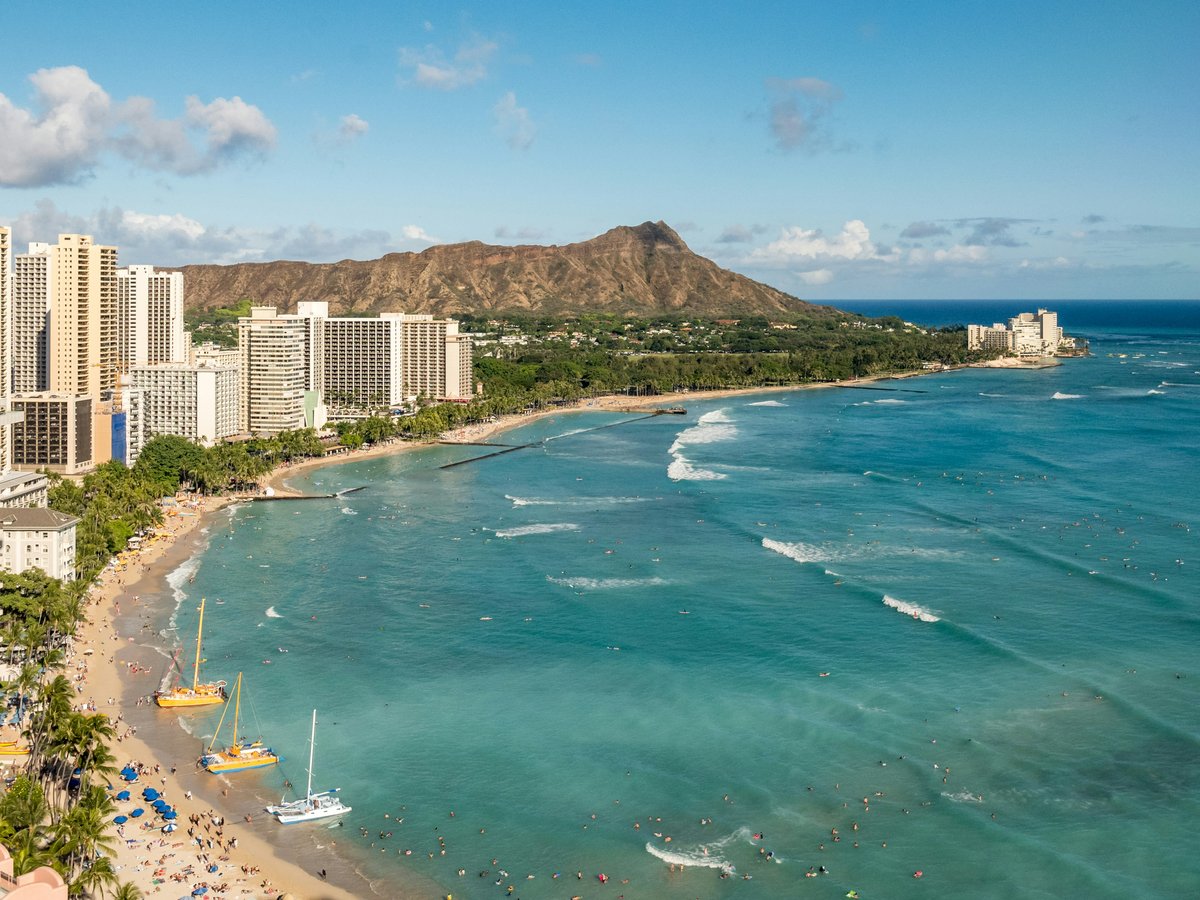
Is Honolulu safe?
Honolulu scores 7.8 out of 10 for solo-traveler safety (see the TTDI Solo-Safety Index). Violent crime against tourists is rare in Waikiki and along the south shore. The risks that matter are car break-ins at trailheads like Diamond Head, strong ocean currents on unguarded beaches, and poor lighting in Chinatown and Kalihi after 10pm. Dial 911 for any emergency.
Honolulu's crime profile looks different from most US cities of similar size. HPD bicycle patrols circle Kalakaua Avenue in Waikiki well past midnight, and violent incidents against visitors are statistically rare along the south shore. Property crime is the problem. Car break-ins at trailhead parking lots near Diamond Head and Manoa Falls happen daily. Rental cars with visible backpacks are the first targets. Leave nothing in the vehicle. Not sunglasses, not a phone charger, nothing. Encampments line the Ala Wai Canal and the western end of Ala Moana Beach Park. Most encounters stay non-confrontational, but solo travelers walking these stretches after dark report unease. The warm, plumeria-scented air changes character fast once you cross from the lit hotel blocks into the unlit canal path. Stick to Kalakaua or Kuhio Avenue after 10pm.
Waikiki after dark feels like a small American resort town with better food. The stretch between Royal Hawaiian Center and the Moana Surfrider stays busy until 1am, and the salt air carries coconut oil from the ABC Store sunscreen displays on every corner. Solo women report feeling comfortable here. Kaimuki, about 3 km east along Waialae Avenue, is quieter but well-lit, with restaurants like Mud Hen Water serving until 9pm on weeknights. Chinatown is a different story past sundown. The blocks around Hotel Street and River Street get rough, and HPD increased foot patrols in 2024 without changing the atmosphere much. Kalihi, northwest of downtown, is residential and poorly lit once the sun drops. I'd skip walking it solo at night. That said, TheBus Route 2 runs through Kalihi until about 11pm, and the bus itself feels safe. Most routes stop between 11pm and midnight.
The ocean is the risk most visitors underestimate. Shore break at Sandy Beach on the southeast coast has sent tourists to Queen's Medical Center with spinal injuries, and even Waikiki's calm-looking water carries a lateral current toward the old War Memorial Natatorium. Lifeguards staff most south shore beaches from 9am to 5:30pm, but coverage drops to zero after that. North Shore spots like Pipeline and Sunset Beach carry winter swells of 4 to 6 metres from November through February. Solo swimmers have nobody to wave down a lifeguard if a current pulls them out. Swim where others swim, stay between the red and yellow flags, and treat any beach without a lifeguard tower the way you'd treat an unmarked mountain trail. Water temperature sits near 26°C year-round, warm enough to mask how long you've been in.
Solo dining is easier here than almost anywhere on the US mainland. Plate-lunch counters like Rainbow Drive-In on Kapahulu Avenue or Helena's Hawaiian Food on North School Street put you at communal tables with no reservation and no awkward table-for-one pause. The smell of kalua pork and sticky rice fills the room at Helena's before you reach the counter. For meeting other travelers on day one, small-group surf lessons at Hans Hedemann Surf School near the Sheraton Waikiki put 4 to 6 strangers in warm water for 2 hours. That tends to be the fastest way to break the ice. HI Honolulu hostel on Seaside Avenue has a shared kitchen that gets social around 7pm, and the Friday-night fireworks off Waikiki Beach at 7:45pm draw a crowd where conversations start on their own.
Emergency number: 911
Official travel advisories
Normal precautions the most cautious of 1 government assessment
- Government of CanadaLevel 1Take normal security precautions View advisory
Verified from the issuing governments' own feeds.
Areas to avoid
- Chinatown (Hotel Street and River Street blocks) after 10pm
- Kalihi after dark
- Ala Wai Canal path after dark
- Western end of Ala Moana Beach Park at night
- Trailhead parking lots (never leave valuables in a car)
Common concerns
- Car break-ins at trailhead parking lots, especially Diamond Head and Manoa Falls
- Strong ocean currents and shore break on unguarded beaches
- Homeless encampments along the Ala Wai Canal and downtown corridors
- Limited public transit after 11pm on most TheBus routes
- Sunburn and dehydration on exposed ridge hikes without tree cover
Last verified by automated review (v1.7.2) on . What is automated review?