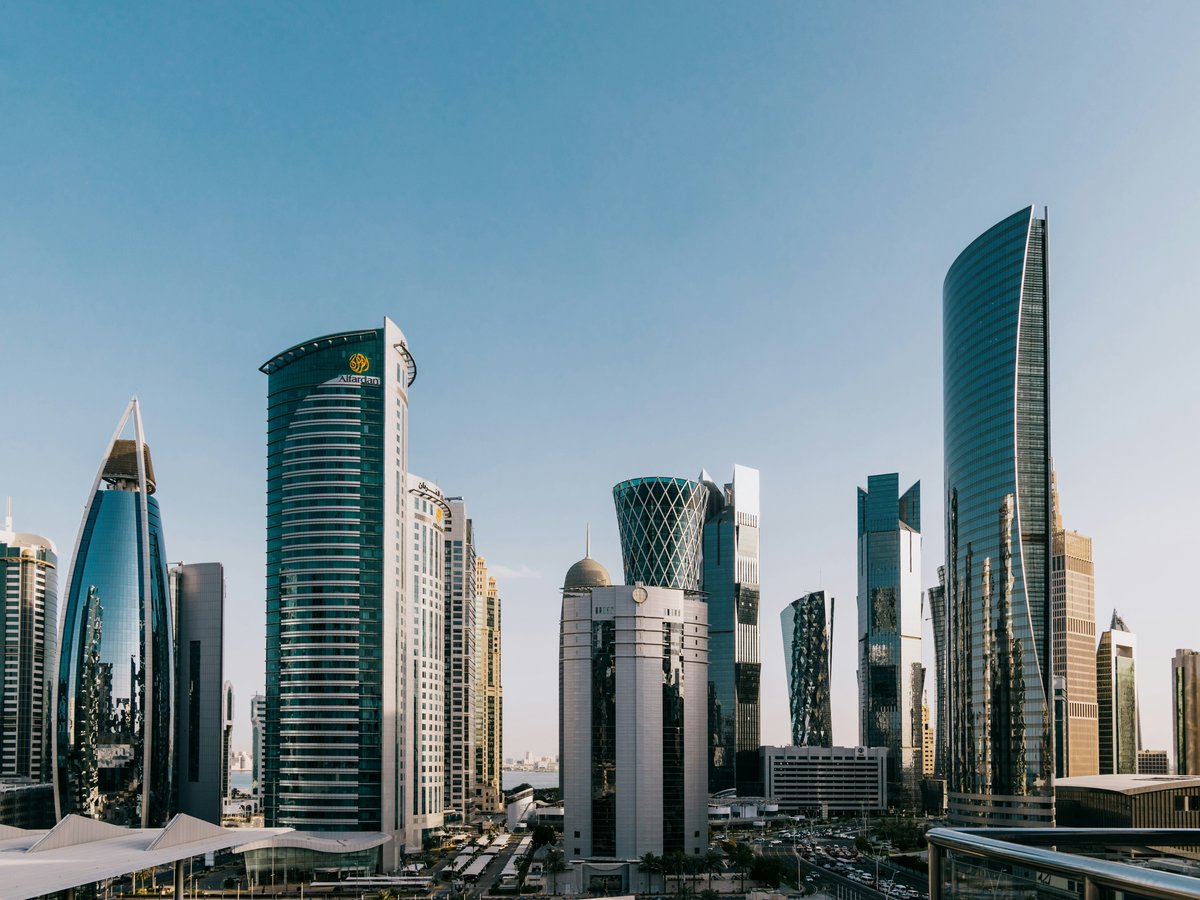
Stay in Doha in March
90 hotels in the Trip.com pool for Doha, from US$24 a night.
Opens Trip.com on Fri 5 Mar to Sun 7 Mar 2027; change the dates there.
March is likely the last month you can spend a full day outdoors in Doha without heat becoming a factor. Daytime highs average 28°C (82°F) with lows around 18°C (65°F) after dark. That 10-degree swing makes evenings along the Corniche genuinely pleasant. You can linger at Souq Waqif until midnight without breaking a sweat. By April, temperatures reach 33°C. By June, 42°C. March is the closing of a comfortable window that opened back in November.
The Qatar International Food Festival (QIFF) typically runs through March, with pop-up kitchens and cooking events spread across Katara Cultural Village and the Lusail waterfront. Galleries at the Fire Station Artist in Residence and Msheireb Museums tend to schedule spring openings around this period. One variable matters enormously, though. Depending on the year, Ramadan may fall partly or entirely within March. In 2025 and 2026, it does. When that happens, most restaurants across West Bay, The Pearl-Qatar, and the Souq Waqif district close during daylight hours. Evenings come alive with iftar gatherings and night markets, but finding a midday meal outside hotel restaurants in Al Sadd or West Bay becomes a real logistical challenge.
Hotel rates in March sit between the December peak around Qatar National Day and the deep summer discounts. A 4-star room in West Bay that costs 800-1,000 QAR per night in December might run 500-650 QAR in March. You get close to the best weather of the year at 30-40% below peak pricing.
Why visit in March
- Temperatures average 28°C (82°F), comfortable enough for full-day outdoor exploration from the 7km Corniche to the desert dunes south of Mesaieed
- Hotel rates run 30-40% below the December peak while weather remains close to the year's best
- The Qatar International Food Festival (QIFF) brings pop-up kitchens and international chef events to Katara Cultural Village and Lusail
- When Ramadan overlaps, the evening iftar spreads at Souq Waqif are open to visitors of all faiths, and the atmosphere after sunset is unlike anything in the city the rest of the year
Worth knowing
- When Ramadan falls in March, daytime dining options outside hotel restaurants nearly disappear, and attractions like the National Museum of Qatar may operate on reduced hours
- Occasional shamal winds blow dust from the interior desert, dropping visibility below 1km and coating every outdoor surface with fine sand for 1-2 days at a stretch
- Gulf water temperatures sit around 21-22°C (70-72°F) in March, too cool for comfortable swimming for most visitors
Best for
Think twice if
March in Doha brings warm, dry days and mild evenings. Daytime temperatures typically reach 28°C (82°F) and drop to about 18°C (65°F) overnight. Rain is rare, with roughly 10mm falling across 2 rainy days for the entire month. Humidity sits around 54%, noticeably more comfortable than the 70-80% readings of the Gulf summer. Morning fog occasionally rolls in off the water, usually burning off by 9 AM. Afternoon winds average 15-20 km/h from the northwest, and the occasional shamal can bring a day or two of hazy, dusty conditions.
Seasonal caution
- Shamal winds blow in from the northwest 2-3 times during a typical March, carrying fine desert dust that reduces visibility below 1km and can trigger respiratory irritation for sensitive travelers. These episodes last 24-48 hours. Check the Qatar Met Department forecast before booking desert day trips.
Year-round climate
Averages from the last 5 years.
| Month | Avg high (°C) | Avg low (°C) | Rainfall (mm) |
|---|---|---|---|
| Jan | 23 | 15 | 31 |
| Feb | 24 | 16 | 8 |
| Mar | 28 | 18 | 10 |
| Apr | 33 | 22 | 6 |
| May | 38 | 27 | 7 |
| Jun | 42 | 29 | 0 |
| Jul | 42 | 31 | 4 |
| Aug | 41 | 32 | 0 |
| Sep | 39 | 29 | 0 |
| Oct | 36 | 26 | 4 |
| Nov | 31 | 22 | 3 |
| Dec | 25 | 17 | 16 |
Best things to do in March
Walk the full Corniche from MIA Park to West Bay
outdoorThe 7km waterfront promenade connects the Museum of Islamic Art park to the West Bay skyline. March temperatures between 22-28°C make the full walk comfortable at a pace that lets you stop for photos at the dhow harbor halfway along.
March is the last month before April's 33°C heat makes the full exposed walk unpleasant. November through March is the only window for this route without heat risk.Booking tipNo booking needed. Start from MIA Park by 7 AM to catch sunrise light on the West Bay towers reflected across the bay.
Overnight desert trip to Khor Al Adaid (Inland Sea)
adventureKhor Al Adaid sits about 80km south of Doha at the Saudi border, a UNESCO-recognized inlet where the sea meets towering sand dunes. Overnight camping trips include dune driving, sandboarding, and sleeping under open skies.
March nighttime temperatures around 18°C are comfortable for sleeping outdoors. By May, overnight desert temperatures stay above 30°C and the experience becomes miserable.Booking tipBook with a licensed operator at least 1 week ahead. March weekends fill up fast because locals also take advantage of the last cool camping window.
Evening exploration of Souq Waqif
culturalDoha's restored traditional market covers several blocks of narrow lanes packed with spice shops, textile stalls, pet shops, and restaurants. The Falcon Souq section displays hunting falcons in the open air, and perfume vendors let you sample oud blends.
March evening temperatures around 20-22°C make the open-air lanes comfortable for 2-3 hours of walking. During Ramadan, the post-iftar hours (roughly 7-11 PM) bring street performers, food stalls, and a festive energy that does not exist in other months.Booking tipNo booking needed. Arrive after 5 PM for the best atmosphere. Shops close between 12-4 PM daily.
Kayaking through Al Thakira mangroves
natureAl Thakira, about 50km north of Doha near Al Khor, has Qatar's largest natural mangrove forest. Guided kayak tours paddle through narrow channels between Avicennia marina trees, with flamingos and herons feeding in the shallows.
March water and air temperatures are moderate enough for 2 hours of paddling without heat exhaustion. The winter migratory bird population, including greater flamingos, is still present before departing in April.Booking tipBook 3-4 days ahead for weekend morning slots, which sell out. Weekday mornings are quieter and easier to get.
Museum of Islamic Art and MIA Park
cultureI.M. Pei's limestone museum sits on its own artificial island off the Corniche. The collection spans 1,400 years of Islamic art across ceramics, metalwork, textiles, and manuscripts. MIA Park behind the building has waterfront walking paths and a cafe with skyline views.
March light is ideal for the museum's interior, which uses natural light through geometric windows. The park is comfortable for post-visit lingering, unlike the 42°C summer months when the outdoor areas are deserted.Booking tipFree admission. Tuesday through Sunday, 9 AM to 7 PM. Go before 11 AM to avoid school groups.
Day trip to Al Zubarah Fort
historyThis UNESCO World Heritage Site sits about 100km northwest of Doha. The 18th-century coastal fort and adjacent archaeological site preserve the remains of a pearl-trading town. The fort houses a small museum with artifacts from the excavations.
The drive through northern Qatar's flat desert landscape is best in March when roadside wildflowers appear after the sparse winter rains. Summer heat makes the exposed site dangerously hot by midday.Booking tipFree admission. No booking required. Bring water and food, as there are no services near the site. Allow 3-4 hours round trip from Doha including exploration time.
Explore Msheireb Downtown Doha
cultureQatar's heritage quarter occupies 4 restored courtyard buildings in downtown Doha, housing the Msheireb Museums. The surrounding district is a car-free zone with cafes, shops, and examples of traditional Qatari architecture rebuilt with modern sustainability features.
March is comfortable for walking the outdoor pedestrian streets. The museums cover Qatari social history, slavery abolition (the Bin Jelmood House), and the petroleum era, all in climate-controlled galleries.Booking tipFree museum admission. Open Saturday through Thursday, closed Friday mornings. The surrounding district is worth 1-2 hours of walking.
Sunset dhow cruise along the Corniche
scenicTraditional wooden dhow boats depart from the dhow harbor near Souq Waqif for 1-2 hour cruises along the Doha Corniche. Most operators include Arabic coffee and dates. The route passes the MIA museum, Katara towers, and the West Bay skyline.
March sunset hits around 5:45 PM at a low angle that lights the West Bay glass towers orange. The 22°C evening air on open water is comfortable without a jacket. Summer cruises after dark still face 35°C+ heat.Booking tipWalk to the dhow harbor and negotiate directly with captains for the best rates. Expect 100-150 QAR per person for a 90-minute cruise. Friday evenings are busiest.
What to eat in March
On menus now
Machboos with hammour
Fresh Gulf grouper (hammour) arrives at Doha's fish markets from Al Khor and Al Wakrah harbors. March catches tend to be strong before summer heat pushes fish deeper. The rice dish machboos is the traditional preparation, spiced with bezar and dried lime.
Harees
Slow-cooked wheat-and-lamb porridge that appears on nearly every iftar table when Ramadan falls in March. Souq Waqif restaurants serve it throughout the evening for around 25-35 QAR per bowl.
Balaleet
Sweet saffron vermicelli topped with a thin savory egg omelet. A traditional Qatari breakfast served at the suhoor meal during Ramadan, and at heritage restaurants in Souq Waqif year-round.
Street food peaks
Luqaimat
Crispy fried dough balls drenched in date syrup or honey. Street vendors at Souq Waqif sell them by the dozen during Ramadan evenings. A plate of 10-12 runs about 10-15 QAR.
What to drink
Karak chai
Sweet, cardamom-heavy tea brewed with evaporated milk. March evenings at 18°C are ideal karak weather. Buy from the small Pakistani and Indian cafeterias in the Al Mirqab area for 1-2 QAR per cup.
Regular events in March
Qatar International Food Festival (QIFF)Free
Doha's largest food event brings together local and international chefs for 2-3 weeks of pop-up restaurants, cooking demonstrations, and tastings. Venues typically include Katara Cultural Village and Lusail waterfront locations.
Mid-to-late March, dates vary by yearSouq Waqif Spring FestivalFree
Cultural performances, traditional music, falconry displays, and artisan markets spread through the lanes of Souq Waqif during the pleasant spring weather months.
March through April, ongoing weekend programmingEid al-Fitr celebrationsFree
When Ramadan ends in March (as in 2025-2026), Qatar marks Eid with 3 days of public holiday. Souq Waqif and Katara Cultural Village host family events, fireworks, and communal feasts. Malls extend hours and run major sales.
Dates follow the lunar calendar. Falls in late March in 2025 and 2026.Best places this March
Museum of Islamic Art
museumI.M. Pei's geometric limestone building on an artificial peninsula off the Corniche. The permanent collection spans 1,400 years. The waterfront MIA Park behind it has walking paths and one of the best skyline views in Doha. Free admission.
MIA DistrictSouq Waqif
marketDoha's restored traditional market. Several blocks of narrow lanes selling spices, textiles, perfumes, and falcons. Restaurants serve Qatari, Lebanese, and Iranian food. The Falcon Souq section is free to walk through on weekday mornings.
Souq WaqifKatara Cultural Village
cultural districtA cultural district on the coast between West Bay and The Pearl-Qatar. Includes an amphitheater, multiple galleries, Katara Mosque, and a public beach. March brings spring exhibition openings and QIFF events to the central plaza.
KataraNational Museum of Qatar
museumJean Nouvel's desert-rose-shaped building near the Corniche's south end. Exhibits trace Qatar from geological formation through the pearl-diving era to the oil age. The 1.5km interior path takes about 2 hours.
Old Airport DistrictAl Bidda Park
parkDoha's largest urban park at roughly 1.8 million square feet, connecting the Corniche to the West Bay metro station. The mature trees provide rare shade. March temperatures make the full walking loop comfortable for the first time since October.
West Bay SouthThe Pearl-Qatar
waterfrontAn artificial island development with Mediterranean-style architecture, a marina, and waterfront promenades. Medina Centrale and Qanat Quartier have outdoor dining that is enjoyable in March. Porto Arabia's marina walk takes about 40 minutes.
The Pearl-QatarMsheireb Museums
museumFour restored heritage houses in the Msheireb district, covering Qatari domestic life, the slave trade (Bin Jelmood House), the oil era (Petroleum Museum), and activist Mohammed bin Jassim House. Free admission. The surrounding car-free streets are good for walking in March weather.
Msheireb
Your packing checklist
Tick items off as you pack. Your progress saves in this browser.
All packed — have a great trip.
Insider tips
The Falcon Souq behind Souq Waqif's main spice alley is free to walk through on weekday mornings. Most visitors do not realize it exists. You can watch falconers fitting hoods and treating birds up close without paying for a tour.
Karak tea from the small cafeterias along streets in the Al Mirqab area costs 1-2 QAR per cup. The same tea at a West Bay hotel lobby costs 25-35 QAR. There is no quality difference. The cafeteria version is often better because they brew it fresh and strong.
If Ramadan falls during your March visit, get to the communal iftar area at Souq Waqif about 30 minutes before sunset. The meal is open to all visitors regardless of religion. It fills up quickly, and the experience of breaking fast with hundreds of strangers is not something you can replicate.
Friday is the main weekend day off in Qatar, not Sunday. The Corniche is packed with families on Friday mornings from 7-11 AM. Go Saturday morning instead for a quieter walk with better photo opportunities.
Al Wakrah Souq, about 15 minutes south on the Doha Metro Red Line, is a smaller waterfront market with better prices on textiles, perfumes, and handicrafts than Souq Waqif. The restored fishing-village architecture along the waterfront is worth the trip on its own.
Avoid these mistakes
- Planning outdoor sightseeing between 12 PM and 3 PM. Even at March's moderate 28°C average, direct Gulf sun with no cloud cover makes exposed areas feel closer to 33-35°C. Locals schedule outdoor time before 10 AM or after 4 PM and spend midday in air-conditioned malls or museums.
- Not checking the Ramadan calendar before booking flights. Visitors who arrive expecting normal restaurant hours during Ramadan find most non-hotel dining options closed until sunset. Check the Islamic calendar for your specific travel year and plan accordingly.
- Skipping the desert entirely. Many first-time visitors stay within Doha's city center and never see Khor Al Adaid, which is a 90-minute drive south. March is the last comfortable month for a desert overnight, and the landscape of sea meeting sand dunes is unlike anything in the city.
- Wearing shorts and sleeveless tops to Katara Cultural Village or Souq Waqif. Security at cultural sites will turn away visitors dressed too casually. This catches many visitors off guard, especially those coming from beach resorts at The Pearl-Qatar.
Practical tips for March
Book desert overnight camping trips at least 1 week ahead, as March weekends fill up with both tourists and locals taking advantage of the last cool window before summer. Check the Islamic calendar for Ramadan dates in your travel year, since this changes dining, attraction hours, and the overall rhythm of the city. The Doha Metro Red Line connects Hamad International Airport to West Bay and Lusail in about 35 minutes for 2 QAR per ride. Gold class (10 QAR) has a separate quieter car. Tipping is not expected in Qatar but 10% at sit-down restaurants is appreciated for good service. Most malls and major attractions open at 10 AM and close at 10 PM, with Friday hours shifted to a 2 PM-11 PM window at many locations. During Ramadan, expect reduced daytime hours at government offices and some private businesses, with extended evening hours after iftar. Carry a portable phone charger for desert trips where power outlets are nonexistent.
FAQ
Is March a good time to visit Doha?
March is one of the 4 best months to visit Doha, alongside December, January, and February. Temperatures average 28°C (82°F) during the day and 18°C (65°F) at night, warm but manageable for full days of outdoor sightseeing. The main variable is Ramadan. In years when it falls in March (including 2025 and 2026), daytime dining options shrink significantly, though the evening iftar culture adds a dimension you would not experience otherwise.
What is the weather like in Doha in March?
Warm and dry. Expect daytime highs around 28°C (82°F) with clear skies most days. Rain falls on roughly 2 days all month, totaling about 10mm. Evenings cool to a comfortable 18°C (65°F). Humidity averages 54%, far more tolerable than the 70-80% of summer. Occasional shamal winds may bring 1-2 days of dusty, hazy conditions.
Is Doha crowded in March?
Moderately. March sees noticeably fewer visitors than the December-January peak period around Qatar National Day (December 18) and New Year, when hotel prices and tourist numbers spike. You will not need advance restaurant reservations at most places outside Ramadan, and attractions like the Museum of Islamic Art and National Museum of Qatar have manageable queues even on weekends.
Can I eat and drink normally in Doha during March?
Outside Ramadan, yes. Doha has a wide restaurant scene across West Bay, The Pearl-Qatar, Souq Waqif, and Lusail. During Ramadan (which falls in March some years), eating, drinking, and smoking in public during daylight hours is prohibited. Hotel restaurants remain open for guests and serve non-fasting visitors, but independent restaurants close until sunset. Alcohol is available at licensed hotel bars year-round, though some reduce hours during Ramadan.
Is March too hot for outdoor activities in Doha?
Not at all. March at 28°C (82°F) is well below the dangerous 38-42°C range that makes outdoor activity risky from May through September. You can comfortably walk the 7km Corniche, explore Souq Waqif for hours, or spend a full day in the desert at Khor Al Adaid. Midday sun still warrants sunscreen and hydration, but heat is not a safety concern in March.
Things to Do in Doha in March
 Free cancellation
 Qatar Gold Dune Safari, Dune Bashing,Camel Ride,Sand Boarding,Inland Sea Desert
Day trip: 4 hours, free cancellation.
via Viator Free cancellation
 Doha Safari Dune Bashing Camel Ride Sandboarding ATV Option
Day trip: 4.5 hours, free cancellation.
via Viator Free cancellation
 Doha :Half Day Desert Safari | Camel Riding | ATV | Sand Surfing
Outdoor experience: free cancellation.
via Viator Free cancellation
 Doha: Guided City Tour With All Attractions, Pickup/Drop-Off
Day trip: 4 hours, free cancellation.
via Viator Free cancellation
 Doha Desert Safari Dune Bashing Camel Ride Sandboarding
Outdoor experience: free cancellation.
via Viator Free cancellation
 4 Hour Desert Safari, Camel Ride & Inland Sea Beach
Day trip: 4 hours, free cancellation.
via ViatorFind a flight to Doha
Live fares to Doha appear here once cookies are accepted.
Last verified by automated review (v1.7.2) on . What is automated review?