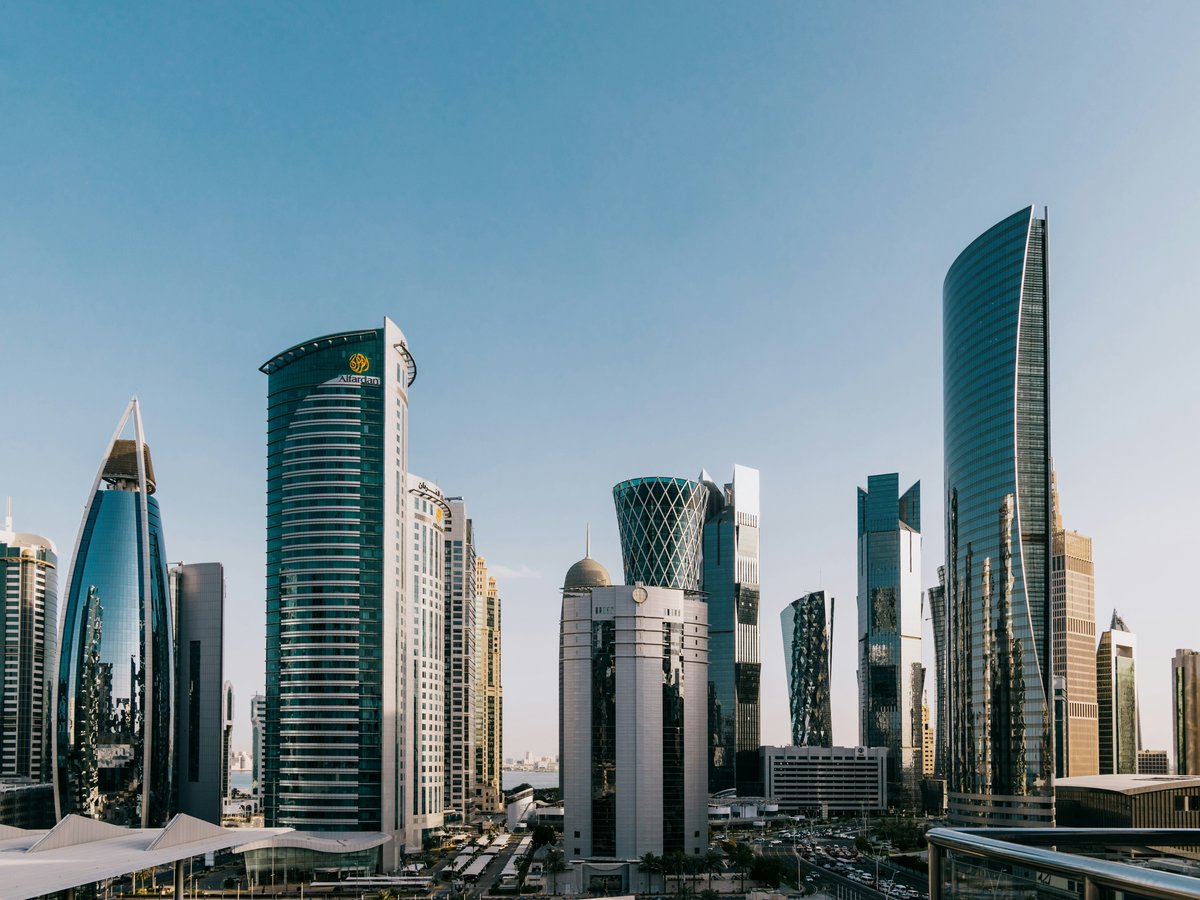
Doha might be the most underestimated free-entry city in the Gulf. The Museum of Islamic Art, one of the finest Islamic art collections on earth, charges no admission. The 7-kilometer Corniche promenade runs along the waterfront with clear sightlines to West Bay's glass towers, and it costs nothing to walk from end to end. Souq Waqif, rebuilt around 2006 to echo its early-20th-century trading days, is open to anyone willing to wander through its alleys of saffron and oud smoke. Qatar invested heavily in public spaces ahead of the 2022 FIFA World Cup, and the result shows in parks, pedestrian zones, and cultural venues that remain free year-round. From October through April, daytime temperatures sit between 20°C and 30°C, which makes the outdoor spaces comfortable. Summer months push past 45°C, but the city compensates with air-conditioned museums, libraries, and malls that charge nothing to enter. That said, Doha's free cultural offering tends to outperform cities with three times its population. Come between November and March, when evening temperatures drop to around 18°C, and the parks and promenades fill with people until well past 10 PM.
Free attractions
-
Museum of Islamic Art
I.M. Pei designed this building on an artificial peninsula off the Corniche's southern end. It opened in 2008. Pei was 91 at the time and considered it among his last major projects. The collection spans 1,400 years of Islamic art across ceramics, metalwork, carved ivory, and manuscripts from Egypt's Fatimid period through Ottoman-era calligraphy. Entry is free for all visitors. The building merits a visit on its own. Pei based the geometry on early Islamic architectural forms, and the interior light shifts throughout the day as sun moves across the atrium's floor-to-ceiling windows. You can feel cool marble underfoot even in July. The ground-floor cafe charges for food, but the atrium seating and the views across the bay toward West Bay cost nothing.
Cornichemuseum -
Msheireb Museums
Four restored heritage houses sit in the Msheireb Downtown Doha district. Each tells a different part of Qatar's modern history. Bin Jelmood House covers the history of slavery in the Indian Ocean region. Company House documents the country's oil-era transformation from the 1940s onward. Mohammed Bin Jassim House focuses on traditional domestic life. Radwani House is the oldest of the four, a preserved family home with original plaster walls and carved wooden window screens. All four are free. The interiors carry a faint smell of old wood and dried lime, and the courtyards between the buildings catch a breeze even on still afternoons.
Msheireb Downtown Dohamuseum -
Qatar National Library
Rem Koolhaas and OMA designed this building for the Qatar Foundation campus in Education City. It opened in 2018. The interior feels like a terraced canyon of books, with over 1 million volumes arranged on descending shelves that slope toward a central reading area. Entry is free, and you can use the reading spaces, Wi-Fi, and exhibition areas without a membership card. The Heritage Library section, visible through a glass floor, houses manuscripts and early printed works from across the Arab world. Cool and quiet. The air conditioning keeps the building comfortable when the outdoor temperature pushes past 40°C.
Education Citylibrary and cultural center -
Katara Cultural Village
Katara sits on the waterfront between West Bay and The Pearl-Qatar, about 15 minutes by car from central Doha. The grounds include a 5,000-seat amphitheater, rotating art galleries, a mosque with blue-and-white Iznik-style tilework, and a pigeon tower modeled on traditional Qatari dovecotes. Entry to the village grounds is free. Several galleries rotate exhibitions at no charge, though the occasional high-profile show might ticket separately. The public beach at Katara has a free-access section with soft sand and relatively calm water. Around sunset you'll likely hear the call to prayer drift across the amphitheater walls. The mosque's blue ceramic panels follow the tradition of 16th-century Iznik workshops in Turkey.
Kataracultural village -
Fanar (Qatar Islamic Cultural Center)
The spiral-shaped mosque near Souq Waqif is hard to miss from most of central Doha. Fanar serves as both a mosque and a cultural center. It offers free guided tours about Islam to non-Muslim visitors. The architecture mixes traditional Islamic forms with a modern spiral minaret that has become one of the city's more recognizable silhouettes against the skyline. Tours tend to run on weekday mornings, though it is worth confirming the schedule before your visit. The interior is cool, carpeted, and filled with natural light from geometric window screens.
Al Jasramosque and cultural center -
MIA Park
The green space around the Museum of Islamic Art runs along the waterfront south of the Corniche. Richard Serra's sculpture '7,' a stack of steel plates that stands roughly 24 meters tall, marks the park's eastern edge. The paths wind along the bay with views of the Doha skyline and traditional dhow boats moored in the nearby harbor. On cooler evenings from November through March the grass fills with families, and the smell of shisha drifts from the park's cafe terrace. The park stays open late and is free.
Cornichepark -
Aspire Park
Doha's largest public green space sits next to the Aspire Zone sports complex in the Baaya area, near Villaggio Mall. The park covers around 88 hectares and includes a man-made lake, running tracks, and shaded walking paths lined with mature trees. Aspire Tower, the 300-meter torch-shaped structure built for the 2006 Asian Games, rises overhead. Free and open daily. On winter evenings the temperature drops to around 15°C, and the park stays active with joggers and families past 9 PM.
Aspire Zonepark -
Al Bidda Park
This park runs about 1.7 kilometers along the Corniche's western side, between West Bay and the older sections of central Doha. It was extensively redeveloped for the 2022 FIFA World Cup and now includes walking trails, cycling paths, exercise stations, and open lawns. Al Bidda Metro station sits at the park's edge, which makes it accessible without a car. Free entry, open daily. After dark, the path lighting and the skyline reflections off the water make it a popular evening running route.
West Bay Southpark -
Oxygen Park
Part of the Qatar Foundation's Education City campus, Oxygen Park opened in 2018. The 130,000-square-meter space was designed around principles of physical and mental well-being, with looped running tracks, cycling paths, and shaded rest areas. It tends to be quieter than Aspire Park, partly because Education City sits about 12 kilometers west of central Doha. Free and open to the public, with water fountains and well-maintained restrooms along the paths.
Education Citypark
Free activities
-
Corniche Promenade Walk
The 7-kilometer Corniche waterfront path runs from the Museum of Islamic Art in the south to the Sheraton Grand Doha Resort roundabout in the north. The walk takes about 90 minutes at a steady pace. You pass traditional dhow boats at anchor, the angular profile of the MIA, joggers and fishermen, and eventually the steel-and-glass cluster of West Bay's financial towers. The breeze off the water takes the edge off even in warmer months. Early mornings before 7 AM tend to be the coolest and quietest time to walk.
Cornichewalking route -
Souq Waqif Browsing
Doha's restored traditional market sits on a site that has served as a trading post for over a century. The reconstruction, finished around 2006, used traditional building materials and methods. You can spend 2 to 3 hours in the spice alley, where sacks of saffron, cardamom, and dried black lime sit open for inspection. The falcon section sells hunting birds for tens of thousands of riyals, but the falconers let you watch them handle the birds at no charge. The pet section has cats, birds, and the occasional hedgehog in a wire cage. The smell of oud and bakhoor drifts through most of the alleys. Mind you, the restaurants and shops obviously charge, but the sensory experience of the souq itself is free. Thursday and Friday evenings tend to be the most crowded, with families filling the open-air restaurants.
Souq Waqifmarket browsing -
Katara Public Beach
The free public section of Katara Beach sits below Katara Cultural Village and faces north toward The Pearl-Qatar. The sand is fine and well maintained. Water temperature hovers around 28°C to 32°C from May through October, then drops to about 20°C in January. No entry fee for the public section. Weekday mornings before 10 AM tend to be the emptiest. There are separate zones for families and mixed groups. Paid beach clubs operate nearby, so confirm you are headed for the public access point.
Katarabeach -
Doha Public Art Trail
Doha has been collecting large-scale public art since the early 2010s. Richard Serra's steel sculpture '7' stands in MIA Park. Louise Bourgeois's 'Maman,' the 9-meter bronze spider, sits outside the Qatar National Convention Centre in Education City. Damien Hirst's 'The Miraculous Journey,' a series of 14 bronze sculptures that trace human development from conception to birth, lines the road to Sidra Medicine hospital. All are outdoors and free to see. Serra's '7' is taller than most of the trees around it.
Multiple locationspublic art -
The Pearl-Qatar Marina Walk
The Pearl is a man-made island off the West Bay coast. The marina promenade loops around Porto Arabia and Medina Centrale, past luxury yachts and Mediterranean-inspired architecture. The walk takes about 45 minutes to complete a full loop. The restaurants and boutiques are expensive, but the walking and the people-watching cost nothing. On winter evenings the outdoor terraces fill up and the marina reflects building lights off calm water. Weekend evenings between October and March bring the densest crowds, with the promenade staying busy past midnight.
The Pearl-Qatarwalking route -
Al Wakrah Souq and Waterfront
About 15 kilometers south of central Doha, Al Wakrah's restored souq sits near a small waterfront promenade with views of the old dhow harbor. It is smaller and quieter than Souq Waqif, with a coastal fishing-village atmosphere that Doha's center has largely outgrown. The architecture follows traditional Qatari building patterns with coral stone and wooden beams. The Doha Metro's Red Line reaches Al Wakrah station, which makes the trip straightforward without a car. Free to walk and browse. The restored waterfront section runs about half a kilometer along the shore.
Al Wakrahmarket and waterfront
Free events
-
Qatar National Day Celebrations
December 18 annuallyDecember 18 marks Qatar National Day. The Corniche and West Bay host parades, military displays, and an air show. Most Qatar Museums venues, including the National Museum of Qatar, have historically offered free admission on this day. The evening fireworks over Doha Bay draw large crowds. Arrive early for the Corniche events, as the waterfront fills up by late morning.
Corniche, West Bay, citywide -
Qatar National Sport Day
Second Tuesday of FebruaryRoads close to traffic and public sports facilities open for free across Doha. Parks, stadiums, and the Corniche fill with runners, cyclists, and group exercise sessions. The event has been observed since 2012. Aspire Zone, Katara, and the Corniche set up free activity stations. Schools and businesses close for the day, which gives the whole city an unusual, almost festive quiet on the roads.
Citywide -
Ajyal Film Festival
November or December annuallyThe Doha Film Institute's annual festival typically runs for about a week in November or December at Katara Cultural Village. It includes free outdoor screenings on the Katara Esplanade, youth jury programs, and pop-up installations. Ticketed indoor screenings tend to cost around 35 QAR, but the outdoor programming and the festival atmosphere in the Katara courtyards are free.
Katara Cultural Village -
Katara Cultural Season Events
October through April, varying scheduleKatara Cultural Village runs a schedule of free outdoor performances, art exhibitions, and cultural workshops during the cooler months from October through April. The amphitheater and open-air stages host traditional Arabic music, poetry readings, and sometimes international acts. Schedules appear on Katara's website and social channels, usually a few weeks ahead of time. Worth checking before you visit, as the lineup varies significantly from week to week.
Katara Cultural Village -
Souq Waqif Spring Festival
February or March, dates vary annuallySouq Waqif hosts a spring festival, usually in February or March, with free street performances, traditional Qatari music, falconry demonstrations, and food stalls in the market's alleyways. The souq stays open later than usual during festival periods, and temporary stages appear between the shops. Dates have varied year to year, so check local listings if you want to time your visit around it.
Souq Waqif
Education City's Free Cultural Corridor
Qatar Foundation's Education City campus, about 12 kilometers west of central Doha, has quietly become one of the city's richest free cultural zones. The Qatar National Library is there. So is the Qatar Faculty of Islamic Studies mosque, designed by Mangera Yvars Architects, with a geometric exterior that looks like folded paper from a distance. The campus itself is walkable and open to the public, with sculpture installations along the main pedestrian routes. Georgetown University, Northwestern University, Carnegie Mellon, and several other international universities maintain branch campuses here, and their public lectures are sometimes open to visitors at no charge. Oxygen Park provides the green space in between. The Doha Metro's Green Line runs to Education City station, which makes the trip from downtown straightforward.
Free Ways to Survive Doha's Summer Heat
From June through September, outdoor time in Doha becomes difficult after about 9 AM. Temperatures regularly hit 45°C with humidity above 70%. But the city's air-conditioned public spaces offer relief without a cover charge. The Museum of Islamic Art stays comfortably cool all day. Qatar National Library in Education City is open 7 days a week with free Wi-Fi and reading areas. Souq Waqif's covered alleys are tolerable in summer too, especially in the evenings after 6 PM when the worst heat has passed. If you are visiting Doha between June and September, plan your outdoor time for early mornings before 8 AM or evenings after sunset, and build your days around these free indoor spaces. The Mall of Qatar near Al Rayyan has over 500 shops under heavy air conditioning, and while shopping costs money, sitting in the public areas does not.
FAQ
Is the Museum of Islamic Art in Doha really free for everyone?
The Museum of Islamic Art has maintained free admission for all visitors regardless of nationality or residency. No ticket, no reservation required. You can walk in during opening hours. The museum is generally open Saturday through Thursday from 9 AM to 7 PM and on Fridays from 1:30 PM to 7 PM, though hours have shifted occasionally. Checking the Qatar Museums website before your visit is a good idea.
Which Doha museums charge admission and which are free?
The Museum of Islamic Art and the Msheireb Museums are free for all visitors. The Qatar National Library is also free, though it is technically a library rather than a museum. The National Museum of Qatar, designed by Jean Nouvel and opened in 2019, charges around 50 QAR for adult non-residents, though it has historically waived fees on Qatar National Day, December 18, and some public holidays. The 3-2-1 Qatar Olympic and Sports Museum similarly charges for entry. Policies have shifted in recent years, so the Qatar Museums website is the safest place to confirm current pricing.
When is the best time of year to visit Doha for free outdoor activities?
November through March offers the most comfortable weather for outdoor time. Daytime highs range from about 22°C to 28°C, and evenings drop to around 15°C to 18°C. The outdoor events calendar is also fullest during these months, with Katara and Souq Waqif running their seasonal programming. April and October are transitional, with temperatures in the mid-30s. June through September is genuinely difficult for outdoor exploration, with highs above 40°C and high humidity. If you are visiting in summer, shift your outdoor plans to early mornings before 8 AM or evenings after 6 PM.
Are there free public beaches in Doha?
Katara Cultural Village has a free public beach section accessible from the village grounds. The sand is maintained and the water is generally calm. Private beach clubs at hotels and on The Pearl-Qatar charge for access, so confirm you are heading to a designated public section. Water temperature stays swimmable year-round in Doha, from about 20°C in January to over 32°C in August. There are separate family and mixed zones at Katara's public beach.
Do I need a car to reach Doha's free attractions?
The Doha Metro, which opened in 2019, connects many of the major free sites. The Red, Green, and Gold lines reach the Corniche area via Al Bidda station for MIA Park, Education City for the library and Oxygen Park, and West Bay. A single Metro ride currently costs 2 QAR for a standard ticket. Some locations like Katara Cultural Village and Aspire Park are a short taxi ride from the nearest station. Taxis are metered. Walking between clusters of attractions is comfortable from October through April, but summer heat makes it impractical for distances beyond a few hundred meters.
Last verified by automated review (v1.7.2) on June 24, 2026. What is automated review?